Acrylic Polymer Calendering Grade
CN → US| HS编码 | 关税税率 | 原产国 | 目的国 | 文档 |
|---|---|---|---|---|
| 3906902000 | 41.3% | CN | US | 官方文档 |
| 3208200000 | 38.6% | CN | US | 官方文档 |
| 3208900000 | 38.2% | CN | US | 官方文档 |
| 3906905000 | 39.2% | CN | US | 官方文档 |
| 3906902000 | 41.3% | CN | US | 官方文档 |
商品图片


AI分析
🧪 Acrylic Polymer Calendering Grade (Calendering Grade Acrylic Resin)
🌐 HS Code Reference & Customs Clearance Guide | 2026 Latest Tariff Analysis | Professional Entry Strategy
📌 I. Product Definition: What is "Calendering Grade Acrylic Polymer"?
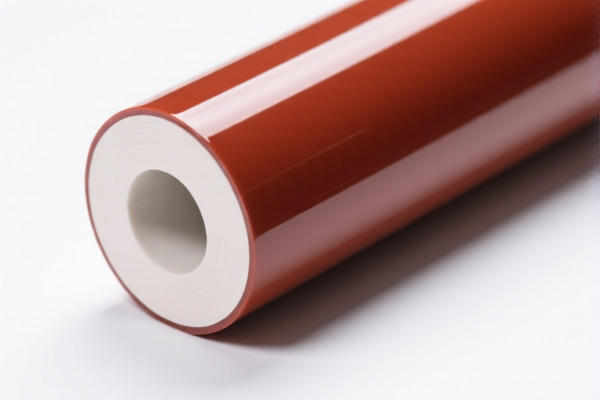
Acrylic Polymers in Calendering Grade are specialized primary form synthetic polymers derived from acrylic monomers. Unlike standard injection-molded or extruded grades, Calendering Grade resins are specifically engineered with a unique molecular weight distribution and rheological profile to withstand the high shear and pressure of the calendering process (a manufacturing method where material is passed through rollers to form sheets or films).
These polymers are primarily used for: 1. Printing Grades: High-clarity, high-gloss films used for packaging, labels, and decorative printing. 2. Synthetic Leather/PVC Blends: Used in coatings for fabrics, automotive interiors, and furniture upholstery. 3. Industrial Films: Transparent sheets for agriculture, construction, and electrical insulation.
⚠️ Key Distinction:
- Primary Shape (HS 3906): Raw pellets or powders intended for further manufacturing (e.g., making sheets/films).
- Articles/Preparations (HS 3208): Paints, varnishes, or coatings based on acrylic polymers, ready for application.
Crucial Point: If the product is shipped as pellets/resin, it falls under Chapter 39. If it is shipped as a solution/coating ready for brush/roll/spray application, it falls under Chapter 32.
📦 II. HS Code Classification Details (2026 Latest Tariff Authority)
Based on the provided data, here are the specific HS Codes and their corresponding tax structures for Acrylic Polymer, Calendering Grade, Printing Grade.
| HS Code | Product Description | Tax Detail Breakdown | Total Tax Rate |
|---|---|---|---|
3906.90.20.00 |
Acrylic polymer, primary shape, calendering/printing grade | Base: 6.3% + Section 301: 25.0% + Section 122 (IEEPA): 10% |
41.3% |
3208.20.00.00 |
Acrylic polymer, based on synthetic polymers, printing grade (Coating/Paint form) | Base: 3.6% + Section 301: 25.0% + Section 122 (IEEPA): 10% |
38.6% |
3208.90.00.00 |
Acrylic polymer, other synthetic polymers, printing grade (Other Coatings) | Base: 3.2% + Section 301: 25.0% + Section 122 (IEEPA): 10% |
38.2% |
3906.90.50.00 |
Acrylic polymer, primary shape, calendering/printing grade (Alternative Primary Subheading) | Base: 4.2% + Section 301: 25.0% + Section 122 (IEEPA): 10% |
39.2% |
🔍 Critical Note on Duplicate
3906.90.20.00:
The input data lists3906.90.20.00twice with the same tax rate (41.3%). This likely represents the standard classification for Acrylic Primary Resins (pellets/powder) intended for calendering. The slight variance between3906.90.20.00(6.3% base) and3906.90.50.00(4.2% base) may depend on specific chemical composition (e.g., homopolymer vs. copolymer) or physical form (granules vs. powder) as defined in the latest Harmonized Tariff Schedule (HTS).
💰 III. 2026 Latest Tariff Rate Detailed Breakdown
✅ Applicable Country: USA (US)
✅ Origin: China (CN)
✅ Effective Date: Post-2025 Trade Actions (Section 301 & IEEPA)
🎯 1. 3906.90.20.00 & 3906.90.50.00 —— Acrylic Polymer, Primary Shape
| Item | Content |
|---|---|
| Base Tariff | 6.3% (3906.20) or 4.2% (3906.90) ad valorem |
| Section 301 Tariff | +25.0% (Additional duty for Chinese origin) |
| Section 122 (IEEPA) Tariff | +10.0% (Executive Order 14117 / IEEPA related duties) |
| Total Effective Rate | 39.2% – 41.3% |
| Tax Calculation | CIF Value × Total Rate |
| De Minimis Exemption | ❌ Not Eligible (deny_de_minimis) |
| Legal Path | HTS:3906.90.20.00 → Footnote: Section 301 → IEEPA: 10% surcharge |
📌 Explanation:
- Base Rate: Acrylic polymers are generally duty-free or low-duty (0-6.3%) under normal MFN rates.
- Section 301 (25%): Applied to "Plastics and articles thereof" from China.
- Section 122/IEEPA (10%): Recent executive actions impose an additional 10% tariff on certain Chinese goods, effectively stacking on top of Section 301.
- Result: Even though the base tax is low, the additional 35% (25%+10%) drives the total cost significantly higher.
🎯 2. 3208.20.00.00 & 3208.90.00.00 —— Acrylic Coatings/Prints
| Item | Content |
|---|---|
| Base Tariff | 3.6% (3208.20) or 3.2% (3208.90) ad valorem |
| Section 301 Tariff | +25.0% |
| Section 122 (IEEPA) Tariff | +10.0% |
| Total Effective Rate | 38.2% – 38.6% |
| Tax Calculation | CIF Value × Total Rate |
| De Minimis Exemption | ❌ Not Eligible |
📌 Explanation:
- These codes apply if the acrylic polymer is sold as a liquid coating or paint (not raw pellets).
- The base rate is slightly lower than raw resin (3208.20vs3906.90), but the add-on duties remain identical, resulting in a total tax burden of ~38-39%.
🛠️ IV. Customs Clearance Practical Advice (Pitfall Avoidance Guide)
✅ 1. Documentation Checklist (Non-Negotiable)
| Document | Required | Purpose |
|---|---|---|
| ✅ Product Specification Sheet | ✔️ | Must state "Primary Shape: Pellets/Powder" OR "Form: Liquid Coating". This determines HS 39 vs 32. |
| ✅ Material Safety Data Sheet (MSDS) | ✔️ | Confirms chemical composition and physical state. |
| ✅ Certificate of Origin (CO) | ✔️ | Required for Section 301 and IEEPA determination. Must explicitly state "Made in China". |
| ✅ Commercial Invoice | ✔️ | Must describe product as "Acrylic Polymer Resin, Calendering Grade" not just "Plastic". |
| ✅ Packing List | ✔️ | Detail net/gross weight and quantity. |
| ✅ FDA Declaration (if applicable) | ✔️ | If intended for food-contact packaging films, FDA clearance is needed. |
✅ 2. Classification Strategy (Key Mnemonics)
🔥 "Resin Pellets = Ch39; Coating Liquid = Ch32; Both Pay ~39%!"
| Scenario | Correct HS Code | Error Consequence |
|---|---|---|
| Raw Acrylic Pellets for calendering | 3906.90.20.00 / 3906.90.50.00 |
Misclassified as 3208 → Potential penalty for incorrect value declaration. |
| Liquid Acrylic Coating for printing | 3208.20.00.00 / 3208.90.00.00 |
Misclassified as 3906 → Undervaluation risk (liquid is heavier per unit, but resin is more expensive per kg). |
| Acrylic Sheets/Films (Finished Product) | Not in Data | Usually 3920.10.xxx or 3921.13. Tax may differ. Do not misdeclare as resin! |
✅ 3. Special Circumstances Handling
| Situation | Handling Advice |
|---|---|
| OEM Custom Resin | Provide customer formula sheet. Avoid "Generic Plastic" description. |
| Mixed Shipments | If resin (HS 39) is mixed with coatings (HS 32), separate line items must be declared. Mixed clearance leads to seizure. |
| Small Samples (<800 USD) | ❌ Cannot use De Minimis. Section 301 and IEEPA taxes still apply. Declare formally. |
| Re-export from 3rd Country | If shipped from Vietnam/Malaysia but Chinese Origin, HS Code and Tax remain the same. Provide Chinese CO. |
🌍 V. Global Market Comparison (2026 Latest)
| Country/Region | Recommended HS Code | Total Tax Rate | Certification | Notes |
|---|---|---|---|---|
| 🇺🇸 USA | 3906.90.20.00 / 3208.20.00.00 |
38.2% – 41.3% | FDA (if food contact) | High burden due to 301+122. |
| 🇨🇳 China | 3906.90.20.00 |
6.3% (Import Duty) | CCC (if applicable) | Low import duty, but VAT applies. |
| 🇪🇺 EU | 3906.90 / 3208.20 |
6.5% – 7.5% | REACH Registration | No Section 301 equivalent. REACH compliance mandatory. |
| 🇬🇧 UK | 3906.90 / 3208.20 |
6.5% – 7.5% | UK REACH | Post-Brexit tariffs similar to EU. |
| 🇯🇵 Japan | 3906.90 / 3208.20 |
4.0% – 6.0% | PSE (if electrical) | Moderate tariffs, no punitive surcharges. |
📌 Conclusion:
- USA is the most expensive market due to stacked punitive tariffs (Section 301 + IEEPA).
- EU/Japan/China offer standard MFN rates without political surcharges.
- Strategic Suggestion: If exporting to the US, consider Value Engineering (reducing product value) or Supply Chain Diversification (sourcing from non-China origins) to mitigate the ~39% tax burden.
📌 VI. Common Mistakes & Pitfalls (Lessons Learned)
❌ Mistake 1: Declaring "Acrylic Resin" as "Plastic Parts"
👉 Consequence: Wrong HS Code (e.g., 3926.90). Customs will reclassify, impose penalties, and delay clearance.
❌ Mistake 2: Ignoring Section 122 (IEEPA) 10% Surcharge
👉 Consequence: Underpayment of duties. CBP will demand back payment + interest. Total tax is not just 25%.
❌ Mistake 3: Using "General Purpose Acrylic" without specifying "Calendering Grade"
👉 Consequence: Customs may question if it fits the specific subheading for printing/calendering grades. Provide technical specs.
❌ Mistake 4: Confusing "Primary Shape" (Ch39) with "Coating" (Ch32)
👉 Consequence: If shipped as pellets but declared as paint (or vice versa), it’s a false declaration. Form must match!
✅ Correct Declaration Example:
"Acrylic Polymer Resin, Primary Shape, Calendering Grade, For Printing Films, 25kg Bags, Chinese Origin"
🎯 VII. Conclusion: Precision Classification Saves Costs!
🎯 Remember the Rules:
🔹 "Pellets = Ch39 (41.3%); Paint = Ch32 (38.6%); Both pay ~39%!"
🔹 "Section 301 (25%) + IEEPA (10%) = Stacked Tariffs!"
🔹 "De Minimis is OFF. Formal entry is MANDATORY."
📌 Pro Tip:
If your Acrylic Polymer is sourced from Vietnam, Thailand, or Malaysia (with substantial transformation), you MAY claim exemption from Section 301/IEEPA tariffs. Apply for an Advance Ruling or Country of Origin Determination before shipping.
📣 Immediate Action:
📞 Consult a licensed US Customs Broker.
📤 Provide Technical Data Sheets + MSDS + Commercial Invoice.
🚀 Pre-clear your HS Code to avoid detention and storage fees!
✨ Accurate Classification, Smooth Clearance, Maximized Profit!
💼 Every percentage point matters in cross-border trade!
用户评价
关于 HS 编码归类
协调制度(HS)是由世界海关组织(WCO)制定的国际贸易商品分类标准。全球 200 多个国家采用 HS 系统作为海关关税、贸易统计和进出口监管的基础。
每个 HS 编码遵循以下层级结构:
- 章(2 位)——商品大类(例如:第 84 章:机器和机械设备)
- 品目(4 位)——章内的更具体分类
- 子目(6 位)——国际通用细分,所有 WCO 成员国统一使用
- 本国细分(8-10 位)——各国自行扩展的细分编码,如美国 HTSUS 10 位编码
正确的 HS 编码归类对于顺利通关、准确缴纳关税和遵守贸易法规至关重要。错误归类可能导致海关延误、多缴关税或罚款。
从CN进口到US时,适用的关税税率可能包括:
- 最惠国(MFN)税率——适用于 WTO 成员国的标准关税税率
- 普通税率——适用于无贸易协定国家
- 贸易救济关税——附加关税,如 301 条款(反倾销)、232 条款(国家安全)或反补贴税
本页内容仅供参考。如需正式归类,请咨询当地海关或持牌报关代理。