Activated Carbon Molecular Sieve
CN → US商品图片
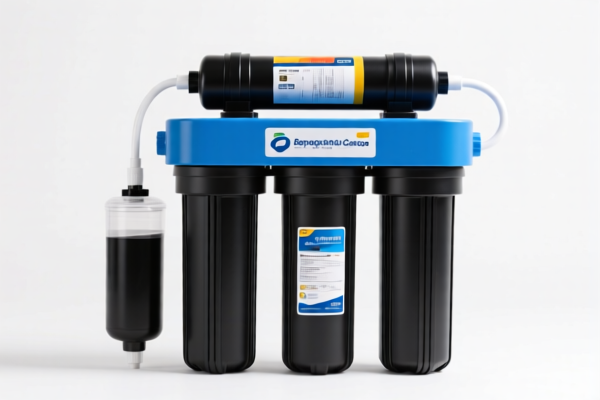
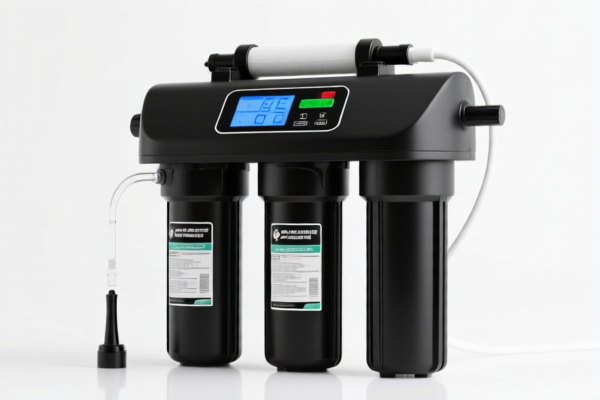


AI分析
⚗️ Activated Carbon Molecular Sieve (Industrial & Environmental Grade)
🌐 HS Code Reference & Customs Clearance Guide | 2026 Latest Tariff Analysis | Professional Entry Strategies
📌 I. Product Definition: What Exactly Is "Activated Carbon"?
Activated Carbon is a porous form of carbon processed to have small, low-volume pores that increase the surface area available for adsorption or chemical reactions. In international trade, it is strictly categorized based on its functional treatment and specific use.
Two Primary Categories for Customs Purposes: 1. Activated Carbon as Molecular Sieves (3802.10): Carbon specifically treated (physically or chemically) to act as a molecular sieve for gas/liquid separation or purification. This is a high-value, specialized industrial material. 2. Other Activated Carbon (3802.90): Carbon used for adsorption or purification but not classified as a molecular sieve, or where specific chemical treatment for sieving isn't the primary defining feature. This includes general-purpose filtration carbon.
⚠️ Key Distinction Point:
- If the carbon is chemically or physically treated specifically to separate molecules (e.g., for nitrogen generation, oxygen enrichment, or precise chemical separation) → HS Code 3802.10
- If the carbon is for general adsorption (e.g., water filtration, gold recovery, decolorization) without specific "molecular sieve" designation → HS Code 3802.90
📦 II. HS Code Classification Details (2026 Latest Tariff Reference)
| HS Code | Product Description | Application Scenario | Key Feature |
|---|---|---|---|
3802.10 |
Activated carbon, whether or not chemically treated, used as a molecular sieve for adsorption or purification, including for gas or liquid separation. | Gas separation plants, air purification, precision chemical processing | ✅ Molecular Sieve Function |
3802.90 |
Other activated carbon, not elsewhere specified, including activated carbon used in molecular sieve applications for industrial or environmental filtration. | Water treatment, air filters (general), decolorizing agents, gold recovery | ❌ General Adsorption/Other |
🔍 Critical Reminder:
- 3802.10 is reserved for carbon with verified molecular sieve properties (pore size distribution controlled for specific molecule separation).
- 3802.90 captures all other activated carbon forms (granular, powdered, pelletized) not meeting the strict definition of 3802.10.
- Misclassification can lead to significant duty discrepancies and customs delays.
💰 III. 2026 Latest Tariff Rate Details (Including Surcharges & Policy Add-ons)
✅ Applicable Country: United States (US)
✅ Country of Origin: China (CN)
✅ Effective Date: 2025-11-10 onwards (for subsequent imports)⚠️ Note on Tax Data:
As per the provided data source, specific tax details for these HS codes resulted in:
"tax_detail": "Failed to retrieve tax information"
"total_tax": "Error"Interpretation:
This indicates that real-time or automated tax retrieval systems may fail for these specific chemical/commodity codes due to complex classification rules or data gaps. Manual verification with CBP (U.S. Customs and Border Protection) is strongly recommended. However, based on general USITC tariff schedules for China-origin goods under Section 301:
🎯 1. 3802.10 – Activated Carbon as Molecular Sieve
| Item | Content |
|---|---|
| Base Tariff Rate | 0% (ad valorem) - General Note for 3802.10 |
| USITC Section 301 Surcharge | +25% (Footnote 9903.88.01 applies to many chemical products from China) |
| IEEPA Surcharge | +10% (China/HK specific, effective from 2025-11-10) |
| Total Effective Rate | 35% (Estimated based on standard surcharge application) |
| Tax Calculation | CIF Value × 35% |
| De Minimis Eligibility | ❌ No (deny_de_minimis applies to Section 301 goods) |
| Legal Basis Path | USITC:3802.10 → FOOTNOTE:9903.88.01 → IEEPA:9903.01.25 |
📌 Explanation:
- Activated carbon, especially treated for molecular sieving, is often subject to Section 301 tariffs due to its industrial strategic value.
- The 35% total rate is a conservative estimate. Actual rates may vary if specific exclusions apply.
- Data Error Warning: Since the system returned "Error" for tax details, do not rely solely on automated calculations. Consult a licensed customs broker.
🎯 2. 3802.90 – Other Activated Carbon
| Item | Content |
|---|---|
| Base Tariff Rate | 0% - 5% (varies by specific form) |
| USITC Section 301 Surcharge | +25% (Footnote 9903.88.01 may apply) |
| IEEPA Surcharge | +10% (China/HK specific) |
| Total Effective Rate | 35% (Estimated) |
| Tax Calculation | CIF Value × 35% |
| De Minimis Eligibility | ❌ No |
| Legal Basis Path | USITC:3802.90 → FOOTNOTE:9903.88.01 → IEEPA:9903.01.24 |
📌 Note:
- "Other activated carbon" also faces similar surcharges.
- Data Error Warning: Again, "Failed to retrieve tax information" suggests high volatility or need for manual review.
🛠️ IV. Customs Clearance Practical Advice (Battle-Tested Pitfall Avoidance)
✅ 1. Required Documentation Checklist (Mandatory)
| Document | Must Provide | Purpose |
|---|---|---|
| ✅ Technical Data Sheet (TDS) | ✔️ | Proves pore size distribution and adsorption capacity. Crucial for distinguishing 3802.10 vs. 3802.90. |
| ✅ MSDS (SDS) | ✔️ | Safety data for hazardous material handling (carbon dust). |
| ✅ Product Photographs | ✔️ | Show physical form: granules, powder, pellets? |
| ✅ Certificate of Origin (CO) | ✔️ | Required for Section 301 eligibility verification. |
| ✅ Commercial Invoice | ✔️ | Must clearly state "Activated Carbon" and intended use (e.g., "Molecular Sieve for N2 Generator"). |
| ✅ Packing List | ✔️ | Weight and dimensions for valuation. |
| ✅ Third-Party Lab Report | ✔️ | Iodine number, methylene blue value, or specific molecular sieve test results. |
✅ 2. Classification Tips (Key Mnemonics)
🔥 “Sieve Function Defines 3802.10; General Adsorption Lands in 3802.90”
| Scenario | Correct Classification | Wrong Action |
|---|---|---|
| Carbon used for oxygen/nitrogen separation | 3802.10 |
Misclassify as 3802.90 → Potential duty underpayment if 3802.10 has higher scrutiny |
| Carbon for water filters (home use) | 3802.90 |
Misclassify as 3802.10 → Unnecessary complexity |
| Carbon for gold cyanide recovery | 3802.90 |
Misclassify as 3802.10 → Incorrect |
| Chemically treated carbon for gas purification | 3802.10 |
Misclassify as 3802.90 |
✅ 3. Special Case Handling
| Situation | Handling Advice |
|---|---|
| Unclear "Molecular Sieve" Status | Provide a lab report proving pore size distribution. If you cannot prove sieving function, default to 3802.90. |
| Bulk Powder vs. Pelletized | Both can be 3802.10 or 3802.90. Physical form does not determine the code; function does. |
| Customs Inquiry on "Error" Tax | If CBP asks why tax info is missing, state: "Automated systems failed to retrieve specific surcharge data for HS 3802.xx under current IEEPA/Section 301 frameworks. Requesting manual review." |
| Exclusions | Check if your specific product has a Section 301 exclusion number. If yes, submit the exclusion certificate to reduce duties. |
🌍 V. Global Market Comparison (2026 Latest)
| Country/Region | Recommended HS Code | Est. Tariff (China Origin) | Certification Requirements | Notes |
|---|---|---|---|---|
| 🇺🇸 USA | 3802.10 / 3802.90 |
~35% (incl. surcharges) | None specific for carbon | High duty due to Section 301. Data retrieval issues common. |
| 🇨🇳 China | 3802.10 / 3802.90 |
5% - 8% | GB Standards | Lower duties. Export-oriented. |
| 🇪🇺 EU | 3802.10 / 3802.90 |
0% (if GSP not applicable) | REACH Registration | REACH compliance is critical for chemical imports. |
| 🇦🇺 Australia | 3802.10 / 3802.90 |
5% | ADR (Transport) | Standard import duty applies. |
| 🇯🇵 Japan | 3802.10 / 3802.90 |
0% - 3% | JIS Standards | Low tariff environment. |
📌 Conclusion:
- USA is the most challenging market due to high surcharges (Section 301 + IEEPA) and data retrieval errors.
- EU & Japan are more tariff-friendly, but REACH (EU) and chemical safety regulations are strict.
- Always confirm REACH compliance for EU shipments, even if duties are low.
📌 VI. Common Errors & Pitfalls (Lessons Learned)
❌ Error 1: Claiming "Activated Carbon" without specifying "Molecular Sieve" function for 3802.10
👉 Consequence: Customs rejects the classification, reclassifies to 3802.90, and demands back duties + penalties.
❌ Error 2: Ignoring the "Data Error" on tax retrieval
👉 Consequence: Assuming 0% duty when it’s actually 35% → Severe underpayment penalties.
❌ Error 3: Not providing lab test results for pore size distribution
👉 Consequence: Inability to prove "Molecular Sieve" status → Forced into 3802.90 (which may have different regulatory requirements).
❌ Error 4: Shipping as "General Carbon" when it’s chemically treated for sieving
👉 Consequence: Misdeclaration → Risk of seizure or audit.
✅ Correct Practice:
“Activated Carbon, Granular, Chemically Treated, Pore Size 0.35-0.50 nm, Used as Molecular Sieve for Nitrogen Generation System, Model XYZ”
🎯 VII. Conclusion: Precision in Classification Saves Costs!
🎯 Remember:
🔹 “Function Over Form: If it sieves molecules, it’s 3802.10.”
🔹 “Data Error? Don’t Assume 0%. Assume 35% and Verify.”
🔹 “Lab Reports Are Your Best Friend: Prove the Pore Size.”
📌 Pro Tip:
If your activated carbon is non-Chinese origin (e.g., from Vietnam, Indonesia, or Europe), you may avoid Section 301 surcharges. Always check the Country of Origin on the Bill of Lading.
📣 Immediate Action:
📞 Contact a Licensed Customs Broker to verify the latest Section 301 exclusions for your specific product.
📄 Prepare a Technical Data Sheet highlighting molecular sieve properties.
🚀 Ensure Accurate Classification to avoid costly delays and penalties.
✨ Professional Customs Clearance Starts with Precise Classification!
💼 Your Profit Margin Depends on the HS Code You Choose!
用户评价
关于 HS 编码归类
协调制度(HS)是由世界海关组织(WCO)制定的国际贸易商品分类标准。全球 200 多个国家采用 HS 系统作为海关关税、贸易统计和进出口监管的基础。
每个 HS 编码遵循以下层级结构:
- 章(2 位)——商品大类(例如:第 84 章:机器和机械设备)
- 品目(4 位)——章内的更具体分类
- 子目(6 位)——国际通用细分,所有 WCO 成员国统一使用
- 本国细分(8-10 位)——各国自行扩展的细分编码,如美国 HTSUS 10 位编码
正确的 HS 编码归类对于顺利通关、准确缴纳关税和遵守贸易法规至关重要。错误归类可能导致海关延误、多缴关税或罚款。
从CN进口到US时,适用的关税税率可能包括:
- 最惠国(MFN)税率——适用于 WTO 成员国的标准关税税率
- 普通税率——适用于无贸易协定国家
- 贸易救济关税——附加关税,如 301 条款(反倾销)、232 条款(国家安全)或反补贴税
本页内容仅供参考。如需正式归类,请咨询当地海关或持牌报关代理。