Adjustable Height Work Stool
CN → US| HS编码 | 关税税率 | 原产国 | 目的国 | 文档 |
|---|---|---|---|---|
| 9403200050 | 85.0% | CN | US | 官方文档 |
| 3926909930 | 22.8% | CN | US | 官方文档 |
| 9401390030 | 35.0% | CN | US | 官方文档 |
| 9403100040 | 85.0% | CN | US | 官方文档 |
| 3926305000 | 22.8% | CN | US | 官方文档 |
商品图片
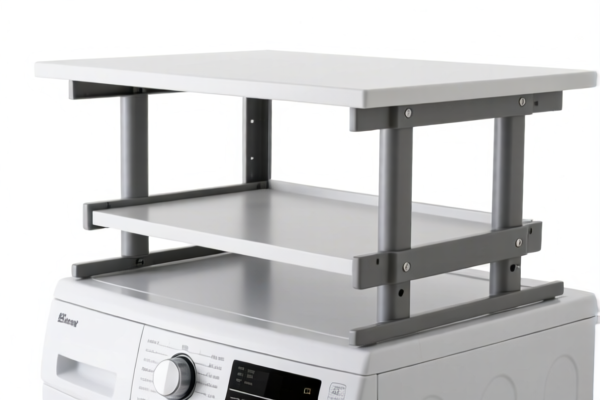
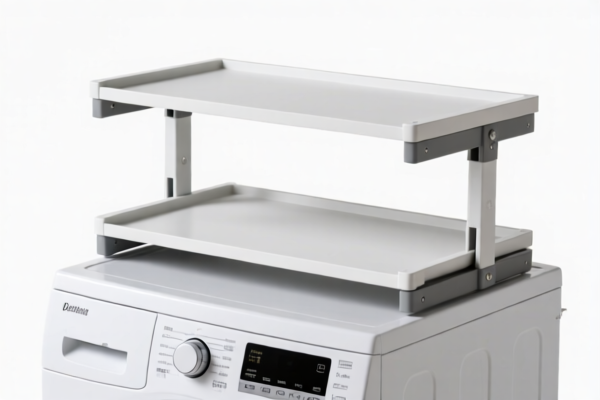
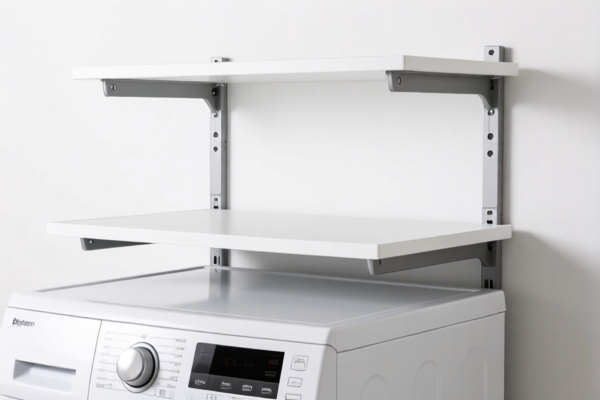

AI分析
🪑 Adjustable Height Work Stool (Industrial & Office Seating)
🌐 HS Code Reference & Customs Clearance Guide | 2026 Latest Tariff Analysis | Professional Strategy 📌 I. Product Definition & Classification: Do You Really Know "Work Stools"?
An Adjustable Height Work Stool is a versatile seating solution widely used in laboratories, assembly lines, workshops, and modern offices. In international trade, its classification depends heavily on material composition, specific function, and design features.
The data provides four distinct classification pathways based on different interpretations of the product's primary characteristics:
1. Metal Furniture Pathway (9403.20.00.50):
* Core Logic: Classified under "Other metal furniture."
* Key Feature: Emphasizes the adjustable function and the metal structure. If the stool is predominantly metal with height-adjustment mechanisms, it falls into this broad category.
2. Plastic/Other Material Pathway (3926.90.99.30):
* Core Logic: Classified under "Other articles of plastics."
* Key Feature: Used when the material is not clearly defined as metal or is primarily plastic/composite. The summary infers it is made of plastic or other non-metallic materials.
3. Seating/Chair Pathway (9401.39.00.30):
* Core Logic: Classified under "Seats with wooden frames" or specific seat types (Note: The summary mentions "seating characteristics" and "adjustable height").
* Key Feature: Focuses on the seating function and height variability. If the primary identity is a "chair/seat" rather than general "furniture," this code may apply.
4. Office Metal Furniture Pathway (9403.10.00.40):
* Core Logic: Classified under "Metal furniture of a kind used in offices."
* Key Feature: Specifically for office environments. If the stool is intended for office use (e.g., drafting stools, high-density office seating), this is the most precise fit.
📦 II. HS Code Classification Details (2026 Latest Tariff Authority Comparison)
| HS Code | Product Description | Application Scenario | Material/Function Focus |
|---|---|---|---|
9403.20.00.50 |
Other metal furniture (with adjustable functions) | Industrial workstations, laboratory settings, heavy-duty use | ✅ Metal Frame + Adjustability |
3926.90.99.30 |
Other articles of plastics (ladders/stools type) | Light-duty use, plastic construction, ambiguous material | ✅ Plastic/Composite Material |
9401.39.00.30 |
Seats (other than codes 9401.10–20), adjustable height | General seating, ergonomic chairs, studio seating | ✅ Seating Function + Height Adjust |
9403.10.00.40 |
Metal furniture of a kind used in offices | Office environments, drafting tables, computer workstations | ✅ Office Use + Metal Frame |
🔍 Critical Distinction: - Material is Key: If the frame is metal, choose between
9403.20(General Metal) or9403.10(Office Metal). - Usage is Key: If for office,9403.10is preferred. If for industrial/lab,9403.20is better. - Non-Metal: If plastic,3926.90applies, but with a different tax structure.
💰 III. 2026 Latest Tariff Rate Breakdown (Detailed Tax Clauses)
✅ Applicable Country: United States (US) ✅ Origin: China (CN) ✅ Effective Date: 2025/2026 (Subject to current trade policies)
🎯 1. 9403.20.00.50 & 9403.10.00.40 —— Metal Furniture (High Risk)
| Item | Content |
|---|---|
| Basic Tariff | 0.0% (ad valorem) |
| Section 301 Tariff (25%) | +25.0% (Additional tariff on Chinese goods) |
| Section 301 Tariff (10%) | +10.0% (Additional tariff under Section 301 Part II) |
| Section 232 Tariff (Steel/Aluminum) | +50.0% (If classified as Steel, Aluminum, or Copper articles) |
| Total Tariff | 85.0% |
| Tax Calculation | CIF Value × 85% |
| De Minimis Exemption | ❌ Not Eligible (Denied due to high tariffs) |
| Legal Basis Path | USITC:9403.20.00.50 / 9403.10.00.40 → Section 301 → Section 232 |
📌 Explanation: - These codes attract the highest combined tariffs. - The 25% + 10% comes from Section 301 trade wars. - The 50% is critical: If Customs determines the stool is made of steel, aluminum, or copper (common for work stools), the Section 232 tariff applies, pushing the total to 85%. - Warning: This is an extremely high cost burden.
🎯 2. 3926.90.99.30 & 3926.30.50.00 —— Plastic/Other Articles (Lower Risk)
| Item | Content |
|---|---|
| Basic Tariff | 5.3% (ad valorem) |
| Section 301 Tariff (7.5%) | +7.5% (Reduced rate for some plastic articles) |
| Section 301 Tariff (10%) | +10.0% (Additional tariff) |
| Total Tariff | 22.8% |
| Tax Calculation | CIF Value × 22.8% |
| De Minimis Exemption | ❌ Not Eligible (Still subject to Section 301) |
| Legal Basis Path | USITC:3926.90.99.30 / 3926.30.50.00 → Section 301 |
📌 Explanation: - Plastic-based classifications (
3926) have significantly lower tariffs. - The 5.3% base + 7.5% + 10% = 22.8%. - This is ~62% lower than the metal furniture tax rate. - Strategy: If the product allows, emphasize non-metal materials or plastic components to benefit from this lower rate.
🎯 3. 9401.39.00.30 —— Seating (Medium Risk)
| Item | Content |
|---|---|
| Basic Tariff | 0.0% (ad valorem) |
| Section 301 Tariff (25%) | +25.0% |
| Section 301 Tariff (10%) | +10.0% |
| Total Tariff | 35.0% |
| Tax Calculation | CIF Value × 35% |
| De Minimis Exemption | ❌ Not Eligible |
| Legal Basis Path | USITC:9401.39.00.30 → Section 301 |
📌 Explanation: - Classified under "Seats," it avoids the Section 232 (50%) steel/aluminum tariff if not deemed "metal furniture" primarily. - Total 35% is moderate compared to 85% or 22.8%. - Caution: Customs may reclassify to
9403(Furniture) if they deem it "furniture" rather than "seat," risking the 85% rate.
🛠️ IV. Customs Clearance Practical Advice (Battle-Tested Strategies)
✅ 1. Documentation Checklist (Non-Negotiable)
| Document | Required? | Description |
|---|---|---|
| ✅ Product Spec Sheet | ✔️ | Must detail material composition (e.g., "Steel frame with plastic seat") |
| ✅ Photos (Clear) | ✔️ | Show adjustment mechanism, material texture, and labels |
| ✅ Commercial Invoice | ✔️ | Specify "Adjustable Work Stool, Model XYZ, Material: Steel/Plastic" |
| ✅ Packing List | ✔️ | List components separately if applicable (e.g., gas lift cylinder, seat pad) |
| ✅ Certificate of Origin | ✔️ | Confirm Chinese origin to calculate correct tariffs |
| ✅ Material Declaration | ✔️ | Explicitly state if any part is steel, aluminum, or copper to avoid Section 232 surprises |
✅ 2. Classification Strategy (Key Rules)
🔥 "Material Dictates Tax, Function Dictates Code!"
| Scenario | Recommended HS Code | Reason |
|---|---|---|
| Office Use, Metal Frame | 9403.10.00.40 |
Best fit for office context, but high tax (85%) |
| Industrial/Lab Use, Metal Frame | 9403.20.00.50 |
Best fit for industrial context, high tax (85%) |
| Plastic/Composite Body | 3926.90.99.30 |
Lowest Tax (22.8%), but must prove non-metal dominance |
| General Seating, Adjustable | 9401.39.00.30 |
Middle ground (35%), but risky if deemed "furniture" |
⚠️ Critical Warning: - Do NOT claim "Plastic" if the frame is Steel/Aluminum. Customs will reclassify to
9403, applying the 85% tariff. - Section 232 is the Killer: If steel/aluminum is >50% of the value or structure, the 50% surcharge is automatic.
✅ 3. Special Case Handling
| Situation | Action |
|---|---|
| Mixed Materials | Declare the primary material. If steel frame + plastic seat, it’s likely 9403. |
| Gas Lift Cylinder | Usually considered part of the stool. Do not separate unless it’s a standalone spare part. |
| OEM Customization | Provide design files to prove intended use (Office vs. Industrial) for precise 9403 sub-classification. |
| High-Value Stools | Consider Advance Ruling from US Customs (CBP) to lock in the HS Code and avoid post-clearance audits. |
🌍 V. Global Market Comparison (2026)
| Country/Region | Recommended HS Code | Est. Tariff (China Origin) | Notes |
|---|---|---|---|
| 🇺🇸 USA | 9403.20.00.50 / 9403.10.00.40 |
85% | High Section 301 + Section 232 |
| 🇺🇸 USA | 3926.90.99.30 |
22.8% | Low tax if plastic |
| 🇨🇳 China | 9403.20.00.50 |
0-5% | Import into China is cheap |
| 🇪🇺 EU | 9403.20.00.00 |
0-4% | No Section 301/232 equivalents |
| 🇦🇺 Australia | 9403.20.00.00 |
5-10% | Low tariffs, no major surcharges |
📌 Conclusion: - The USA is the most challenging market due to layered tariffs. - Material strategy is critical: Shifting from steel to reinforced plastic/composite can save ~62% in taxes. - EU/Australia are more favorable with standard low tariffs.
📌 VI. Common Mistakes & Pitfalls (Lessons Learned)
❌ Mistake 1: Declaring a steel stool as "Plastic Stool"
👉 Consequence: Customs audit → Re-classification to 9403 → 85% tariff + penalties.
❌ Mistake 2: Ignoring Section 232 for metal products 👉 Consequence: Unexpected 50% surcharge on steel/aluminum content.
❌ Mistake 3: Vague description "Work Stool" 👉 Consequence: Customs ambiguity → Delays → Potential incorrect classification.
✅ Correct Practice:
"Adjustable Height Work Stool, Steel Frame, Plastic Seat, Gas Lift Mechanism, Model XYZ"
🎯 VII. Conclusion: Precision Classification Saves Money
🎯 Remember This Rule:
🔹 "Steel = 85%, Plastic = 22.8%." 🔹 "Office vs. Industrial changes the code, but not the tax." 🔹 "Always declare material composition accurately."
📌 Pro Tip: If your work stool is shipped from Vietnam or Mexico, you may avoid Section 301 tariffs, reducing the effective tax burden significantly. Always check origin rules.
📣 Immediate Action:
📞 Contact a Customs Broker → Provide material specs → Request Pre-Classification Ruling. 🚀 Optimize Material Choice → Use composites/plastics to lower tariffs → Maximize Profit Margins.
✨ Professional clearance starts with accurate classification! 💼 Your cost is in the details.
用户评价
关于 HS 编码归类
协调制度(HS)是由世界海关组织(WCO)制定的国际贸易商品分类标准。全球 200 多个国家采用 HS 系统作为海关关税、贸易统计和进出口监管的基础。
每个 HS 编码遵循以下层级结构:
- 章(2 位)——商品大类(例如:第 84 章:机器和机械设备)
- 品目(4 位)——章内的更具体分类
- 子目(6 位)——国际通用细分,所有 WCO 成员国统一使用
- 本国细分(8-10 位)——各国自行扩展的细分编码,如美国 HTSUS 10 位编码
正确的 HS 编码归类对于顺利通关、准确缴纳关税和遵守贸易法规至关重要。错误归类可能导致海关延误、多缴关税或罚款。
从CN进口到US时,适用的关税税率可能包括:
- 最惠国(MFN)税率——适用于 WTO 成员国的标准关税税率
- 普通税率——适用于无贸易协定国家
- 贸易救济关税——附加关税,如 301 条款(反倾销)、232 条款(国家安全)或反补贴税
本页内容仅供参考。如需正式归类,请咨询当地海关或持牌报关代理。