Agricultural Grade Ethylene Polymer Monofilament
CN → US| HS编码 | 关税税率 | 原产国 | 目的国 | 文档 |
|---|---|---|---|---|
| 3916903000 | 41.5% | CN | US | 官方文档 |
| 3916905000 | 40.8% | CN | US | 官方文档 |
| 5404198080 | 41.9% | CN | US | 官方文档 |
| 5404198040 | 41.9% | CN | US | 官方文档 |
| 3916903000 | 41.5% | CN | US | 官方文档 |
商品图片


AI分析
🚜 Agricultural Grade Ethylene Polymer Monofilament
🌐 HS Code Reference & Customs Clearance Guide | 2026 Latest Tariff Analysis | Professional Clearance Strategy
📌 I. Product Definition & Classification: What is "Agricultural Grade Monofilament"?
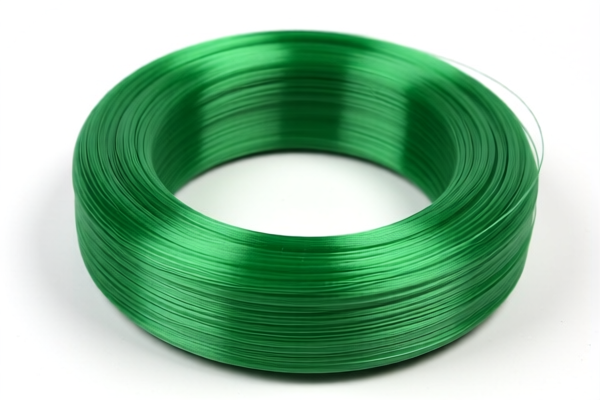
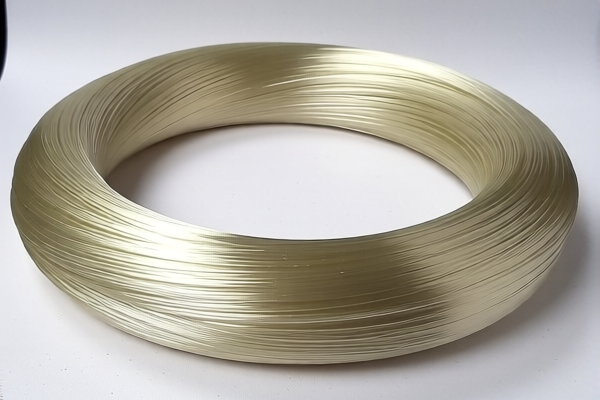
Agricultural Grade Ethylene Polymer Monofilament refers to synthetic filaments made primarily from polyethylene (PE) or other ethylene-based polymers, formed into single continuous strands. These are widely used in farming for fencing, trellising, crop support, and erosion control.
In international trade, classification depends on whether the material is classified under Chapter 39 (Plastics) or Chapter 54 (Synthetic Filaments), and whether it is considered a "plastic article" or a "textile-like filament."
⚠️ Key Classification Distinction:
- If made from polyethylene (PE) and classified as a generic plastic product → HS 3916
- If made from other synthetic polymers (e.g., polyester, nylon, or non-PE ethylene copolymers treated as synthetic fibers) → HS 5404
- Application (agricultural use) does NOT change the HS code, but may affect duty exemptions in specific countries (not applicable in the US data provided).
📦 II. HS Code Classification Details (2026 Latest Tariff Alignment)
Based on the provided data, here are the valid HS codes and their justifications:
| HS Code | Product Description | Key Material/Shape | Agricultural Use? | Total Tax Rate (China→US) |
|---|---|---|---|---|
3916.90.30.00 |
Plastic monofilaments, of polymers of ethylene | ✅ Polyethylene (Ethylene Polymer) | ✅ Yes | 41.5% |
3916.90.50.00 |
Plastic monofilaments, other plastics | ✅ Other plastics (if not PE) | ✅ Yes | 40.8% |
5404.19.80.80 |
Synthetic monofilaments, other synthetic materials | ⚠️ Non-PE synthetic (e.g., polyester) | ✅ Yes | 41.9% |
5404.19.80.40 |
Synthetic monofilaments, synthetic filaments | ⚠️ Synthetic (e.g., polyester/nylon) | ✅ Yes | 41.9% |
🔍 Critical Note:
- Ethylene polymer typically refers to Polyethylene (PE), which falls under Chapter 39. Therefore,3916.90.30.00is the most accurate code for "Ethylene Polymer Monofilament."
- If the monofilament is made from polyester (even if derived from ethylene glycol), it falls under Chapter 54, hence5404.19.80.80or5404.19.80.40.
- Do not misclassify PE monofilaments as synthetic fibers (Chapter 54) to avoid audits.
💰 III. 2026 Latest Tariff Rate Breakdown (Including Additional Duties & Policy Surcharges)
✅ Applicable Country: United States (US)
✅ Origin: China (CN)
✅ Effective Date: November 10, 2025 (and subsequent imports)
🎯 1. 3916.90.30.00 — Plastic Monofilaments, of Polymers of Ethylene
| Item | Content |
|---|---|
| Base Tariff | 6.5% (ad valorem) |
| Section 301 Additional Duty | +25.0% |
| Section 122 Duty | +10.0% |
| Total Tax Rate | 41.5% |
| Tax Calculation | CIF Value × 41.5% |
| De Minimis Exemption? | ❌ No (deny_de_minimis) |
| Legal Authority Path | Base: 3916.90.30.00 → 301: Footnote 9903.88.01 → 122: IEEPA:9903.01.25 |
📌 Explanation:
- 6.5%: Standard MFN tariff for plastic monofilaments.
- 25%: Section 301 tariff under US Trade Act of 1974, targeting Chinese plastic products.
- 10%: Section 122 tariff under IEEPA, specifically targeting certain Chinese agricultural/industrial goods.
- Total: 41.5%. This is a high-cost import. Pre-clearance planning is essential.
🎯 2. 3916.90.50.00 — Plastic Monofilaments, Other Plastics
| Item | Content |
|---|---|
| Base Tariff | 5.8% |
| Section 301 Additional Duty | +25.0% |
| Section 122 Duty | +10.0% |
| Total Tax Rate | 40.8% |
| Tax Calculation | CIF Value × 40.8% |
| De Minimis Exemption? | ❌ No |
| Legal Authority Path | Base: 3916.90.50.00 → 301: Footnote 9903.88.01 → 122: IEEPA:9903.01.24 |
📌 Note:
- Slightly lower than3916.90.30.00due to a lower base tariff (5.8% vs 6.5%).
- Applies only if the monofilament is NOT made of polyethylene (e.g., PVC, PP, etc.).
- Do not use this code for PE monofilaments — it will trigger customs penalties.
🎯 3. 5404.19.80.80 & 5404.19.80.40 — Synthetic Monofilaments (Non-PE)
| Item | Content |
|---|---|
| Base Tariff | 6.9% |
| Section 301 Additional Duty | +25.0% |
| Section 122 Duty | +10.0% |
| Total Tax Rate | 41.9% |
| Tax Calculation | CIF Value × 41.9% |
| De Minimis Exemption? | ❌ No |
| Legal Authority Path | Base: 5404.19.80.x0 → 301: Footnote 9903.88.01 → 122: IEEPA:9903.01.25/24 |
📌 Note:
- Applies to synthetic filaments like polyester or nylon.
- Even if "derived from ethylene," if processed as a textile fiber, it falls under Chapter 54.
- 41.9% is the highest rate among the options. Avoid if possible unless material is genuinely non-PE synthetic.
🛠️ IV. Customs Clearance Practical Advice (Avoiding Pitfalls)
✅ 1. Required Documentation Checklist
| Document | Mandatory? | Purpose |
|---|---|---|
| ✅ Product Specification Sheet | ✔️ | Confirms material (PE vs. Polyester), diameter, tensile strength |
| ✅ Material Safety Data Sheet (MSDS) | ✔️ | Proves chemical composition (e.g., "100% Polyethylene") |
| ✅ Commercial Invoice | ✔️ | Must state: "Agricultural Grade Ethylene Polymer Monofilament, HS 3916.90.30.00" |
| ✅ Packing List | ✔️ | Net/gross weight, quantity, package type |
| ✅ Certificate of Origin (CO) | ✔️ | Required for tariff calculation; may be needed for Section 122 |
| ✅ Photos of Product & Label | ✔️ | Shows packaging, branding, and product form (monofilament spool) |
✅ 2. Declaration Tips (Critical for Success)
🔥 "Material First, Shape Second, Application Third!"
| Scenario | Correct Declaration | Wrong Declaration |
|---|---|---|
| Polyethylene (PE) Monofilament | 3916.90.30.00 – "Plastic monofilaments, of polymers of ethylene" |
5404.19.80.80 – "Synthetic filament" → Audited & Penalties |
| Polyester Monofilament | 5404.19.80.80 – "Synthetic monofilaments, other" |
3916.90.30.00 – "Plastic monofilament" → Misclassification |
| Packaged with Fencing Posts | Declare separately if different HS | Bundling may trigger complex valuation |
| "Agricultural Use" Mentioned | Include in description but not as HS classifier | HS code must reflect material, not use |
✅ 3. Special Cases & Risk Mitigation
| Situation | Recommendation |
|---|---|
| Mixed Materials | If monofilament is coated or blended, provide MSDS to prove primary material |
| Re-imports | Ensure Form A is submitted to avoid double taxation |
| Low-Value Shipments | ❌ No De Minimis Exemption – All shipments are subject to 41.5%+ duties |
| Supplier Claims "Cheaper Code" | Verify MSDS. If PE, using Chapter 54 is fraudulent and risks seizure |
🌍 V. Global Market Comparison (2026)
| Country/Region | Recommended HS Code | Tariff (China Origin) | Notes |
|---|---|---|---|
| 🇺🇸 USA | 3916.90.30.00 |
41.5% | High due to 301 + 122 duties |
| 🇨🇳 China (Import) | 3916.90.30.00 |
~5-6% | Low base tariff, no 301/122 |
| 🇪🇺 EU | 3916.90.30.00 |
0-2% | No Section 301; CE/RoHS may apply |
| 🇦🇺 Australia | 3916.90.30.00 |
5% | Free Trade Agreement benefits may apply |
| 🇯🇵 Japan | 3916.90.30.00 |
0-3% | JETPA benefits possible |
📌 Conclusion:
- The US market is the most expensive due to punitive tariffs.
- EU, Japan, and Australia offer significant cost advantages.
- Consider supply chain diversification (e.g., Vietnam, Thailand) if shipping to the US.
📌 VI. Common Mistakes & Pitfalls (Lessons Learned)
❌ Mistake 1: Using 5404.19.80.80 for Polyethylene (PE) monofilaments
👉 Result: Customs audit, back taxes + 25% penalty, possible seizure.
👉 Fix: Always confirm material via MSDS. PE = Chapter 39.
❌ Mistake 2: Claiming "Agricultural Use" to get lower duty
👉 Result: HS code is based on material/shape, not use.
👉 Fix: Declare accurately by material; use agricultural exemption only in countries that allow it (not US).
❌ Mistake 3: Ignoring Section 122 Duty
👉 Result: Unexpected 10% surcharge at border.
👉 Fix: Factor in 122 duty from the start. Total rate is Base + 25% + 10%.
❌ Mistake 4: Splitting shipment to avoid De Minimis
👉 Result: No de minimis applies anyway, so splitting doesn’t help and increases administrative costs.
👉 Fix: Consolidate and pay duties upfront.
✅ Correct Declaration Example:
"Agricultural Grade Polyethylene Monofilament, 2mm diameter, spooled, for crop support. Material: 100% HDPE. HS Code: 3916.90.30.00."
🎯 VII. Conclusion: Precision in Classification Saves Money!
🎯 Remember:
🔹 "PE is 3916, Not 5404 – Don’t Risk Your Shipment!"
🔹 "41.5% is the Real Cost – Plan Ahead!"
🔹 "MSDS is Your Best Friend – No Paper, No Problem Solved."
📌 Pro Tip:
If you are shipping large volumes to the US, consider:
1. Applying for a Tariff Engineering Exception (if possible).
2. Sourcing from non-China origins (Vietnam, Mexico) to bypass 301/122 duties.
3. Obtaining an Advance Ruling from CBP to confirm HS code before shipping.
📣 Immediate Action:
📞 Contact a licensed customs broker
📄 Provide MSDS + Product Photos
🚀 Declare accurately – Save time, money, and avoid penalties!
✨ Professional clearance starts with correct classification!
💼 Your profit margin depends on getting the HS code right!
用户评价
关于 HS 编码归类
协调制度(HS)是由世界海关组织(WCO)制定的国际贸易商品分类标准。全球 200 多个国家采用 HS 系统作为海关关税、贸易统计和进出口监管的基础。
每个 HS 编码遵循以下层级结构:
- 章(2 位)——商品大类(例如:第 84 章:机器和机械设备)
- 品目(4 位)——章内的更具体分类
- 子目(6 位)——国际通用细分,所有 WCO 成员国统一使用
- 本国细分(8-10 位)——各国自行扩展的细分编码,如美国 HTSUS 10 位编码
正确的 HS 编码归类对于顺利通关、准确缴纳关税和遵守贸易法规至关重要。错误归类可能导致海关延误、多缴关税或罚款。
从CN进口到US时,适用的关税税率可能包括:
- 最惠国(MFN)税率——适用于 WTO 成员国的标准关税税率
- 普通税率——适用于无贸易协定国家
- 贸易救济关税——附加关税,如 301 条款(反倾销)、232 条款(国家安全)或反补贴税
本页内容仅供参考。如需正式归类,请咨询当地海关或持牌报关代理。