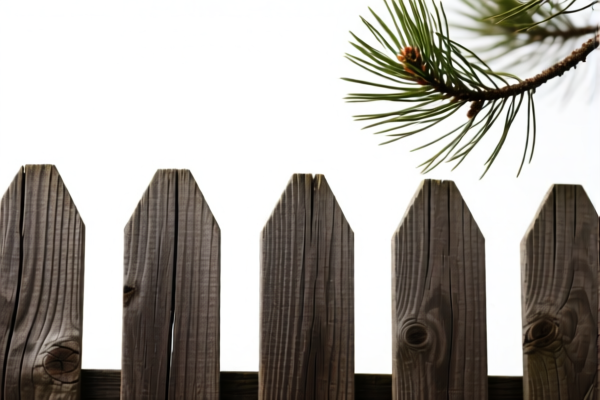
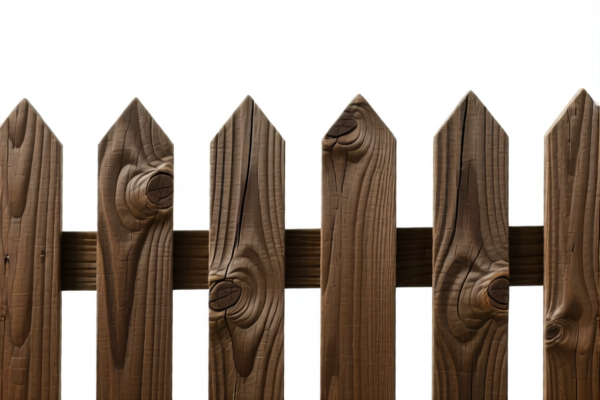
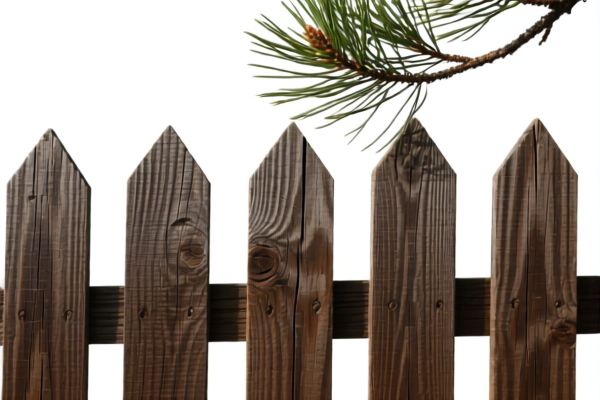
Agricultural Pine Wood Stack
CN → US| HS编码 | 关税税率 | 原产国 | 目的国 | 文档 |
|---|---|---|---|---|
| 4407110046 | 35.0% | CN | US | 官方文档 |
| 4407110043 | 35.0% | CN | US | 官方文档 |
商品图片
AI分析
🪵 Agricultural Pine Wood Stack (Sawn Timber)
🌐 HS Code Reference & Customs Clearance Guide | 2026 Latest Tariff Analysis | Professional Clearance Strategy
📌 I. Product Definition and Classification: Do You Really Understand "Pine Wood Stacks"?
Pine Wood Stacks (specifically sawn wood of coniferous origin) are fundamental raw materials in construction, furniture manufacturing, and agricultural infrastructure. In international trade, specifically under US Harmonized Tariff Schedule (HTSUS), these are classified based on species, processing depth, and treatment status.
The term "Agricultural" here refers to the use case or stockpile context, but the HS Code classification depends strictly on the botanical species and physical dimensions (thickness > 6mm), not the end-use.
⚠️ Key Distinction Point:
- If the wood is Rough (not planed, sanded, or finished) and falls under specific Southern Pine species → 4407.11.00.46
- If the wood is Other (not rough, or different pine species like Eastern White or Red) → 4407.11.00.43
- Crucial Note: The description provided in specifies "Rough" for Southern Yellow Pine and "Other" for Eastern/Red Pine. "Rough" means planed, sanded, or end-jointed processes have not been fully applied to smooth the surface.
📦 II. HS Code Classification Details (Based on Provided Data)
| HS Code | Product Description | Applicable Species | Processing Status |
|---|---|---|---|
4407.11.00.46 |
Sawn wood, thickness > 6mm, Rough | Southern Yellow Pine: • Loblolly (Pinus taeda) • Long leaf (Pinus palustris) • Pitch (Pinus rigida) • Short leaf (Pinus echinata) • Slash (Pinus elliottii) • Virginia (Pinus virginiana) |
Not Treated (Rough sawn, unplaned/un-sanded) |
4407.11.00.43 |
Sawn wood, thickness > 6mm, Other | Eastern White Pine (Pinus strobus) Red Pine (Pinus resinosa) |
Not Treated (Other forms of processed sawn wood not classified as "Rough") |
🔍 Critical Clarification:
- "Coniferous": Both entries fall under Chapter 44 (Wood and wood articles), Heading 44.07 (Wood sawn or chipped lengthwise...).
- "Thickness Exceeding 6 mm": Must verify physical dimensions. Wood ≤ 6mm is classified differently (e.g., veneer sheets).
- "Not Treated": Neither entry includes preservative treatment (creosote, copper, etc.). If treated, the HS code would change entirely (e.g., Heading 44.03 or 44.04).
💰 III. 2026 Latest Tariff Rate Details (Including Additional Duties)
✅ Applicable Country: United States (US)
✅ Origin: China (CN) (Assumed based on typical 25% Section 301 duties context; verify actual origin)
✅ Effective Time: Current US Trade Policy (Section 301 Duties)
🎯 1. 4407.11.00.46 —— Southern Yellow Pine (Rough, Untreated)
| Item | Content |
|---|---|
| Base Tariff Rate | 0.0% (Ad valorem) |
| Section 301 Additional Tariff | +25.0% (46 CFR Part 301) |
| Total Tariff Rate | 25.0% |
| Tax Calculation | CIF Value × 25% |
| De Minimis Exemption | ❌ Not Applicable (Wood products are generally excluded from de minimis waivers for Section 301 duties) |
| Legal Basis | HTSUS: 4407.11.00.46 → Section 301 Footnote |
📌 Explanation:
- The base duty for many pine sawn woods is 0%, reflecting low protection for raw materials.
- The 25% additional duty is imposed under US Trade Law Section 301 on products from China. This is a significant cost driver.
- "Rough" definition is strict: If the wood is planed or sanded to a smooth finish, it may fall under a different subheading, but the data provided specifically lists this as "Rough". Ensure your product matches this physical description exactly.
🎯 2. 4407.11.00.43 —— Eastern White / Red Pine (Other, Untreated)
| Item | Content |
|---|---|
| Base Tariff Rate | 0.0% (Ad valorem) |
| Section 301 Additional Tariff | +25.0% (46 CFR Part 301) |
| Total Tariff Rate | 25.0% |
| Tax Calculation | CIF Value × 25% |
| De Minimis Exemption | ❌ Not Applicable |
| Legal Basis | HTSUS: 4407.11.00.43 → Section 301 Footnote |
📌 Note:
- Despite being a different species (Eastern White/Red Pine), the tariff structure is identical to Southern Pine in this specific classification block.
- The term "Other" in4407.11.00.43implies it is not "Rough" in the same sense as4407.11.00.46, OR it covers other processed forms of these specific pines. Verify if your wood is planed/sanded. If it is planed, ensure it doesn't fall into a "Planed" subheading which might have different 301 lists (though data shows 25% here too).
🛠️ IV. Customs Clearance Practical Advice (Avoid Pitfalls)
✅ 1. Required Documentation Checklist (Must-Have)
| Document | Mandatory? | Description |
|---|---|---|
| ✅ Commercial Invoice | ✔️ | Must explicitly state: "Sawn Pine Wood, [Species], Rough/Other, Thickness > 6mm, Untreated" |
| ✅ Packing List | ✔️ | Detail number of bundles, total volume (MBF or CBM), and weight |
| ✅ Phytosanitary Certificate | ✔️ | CRITICAL for wood products. Issued by origin country's agricultural authority to prove pest-free status (ISPM 15 compliant if packaged) |
| ✅ Species Declaration | ✔️ | Scientific names (Pinus taeda, etc.) must be accurate. Misidentification leads to delays |
| ✅ Treatment Certificate | ✔️ | If "Not Treated" is claimed, provide a letter stating no chemical treatment was applied |
| ✅ Bill of Lading/Air Waybill | ✔️ | Standard shipping documents |
✅ 2. Declaration Tips (Key Mnemonics)
🔥 "Species Must Match, Rough vs. Planed, Phytosanitary is King!"
| Scenario | Correct Declaration | Wrong Practice |
|---|---|---|
| Southern Yellow Pine, Rough Cut | 4407.11.00.46 + "Rough" |
Declaring as "Planed Lumber" → Risk of misclassification penalty |
| Eastern White Pine, Planed/Sanded | 4407.11.00.43 + "Other" |
Declaring as "Rough" → Discrepancy with physical goods |
| Treated Wood (Creosote) | Different HS Code (e.g., 44.03) | Using 4407... codes → Seizure Risk |
| Wood < 6mm Thick | Different Chapter (Veneer) | Using 4407... codes → Rejection |
✅ 3. Special Situations
| Situation | Handling Advice |
|---|---|
| Mixed Species Stack | Do not mix Southern and Eastern Pine in one HS Code declaration. Split the shipment or declare separately. Customs may reject mixed-origin/species claims. |
| ISPM 15 Packaging | Wood packaging materials (pallets/crates) must be heat-treated/fumigated and marked. If not, the entire shipment may be quarantined or destroyed. |
| FSC/Chain of Custody | While not mandatory for US customs, many US buyers require FSC certification. Ensure documentation aligns with buyer requirements to avoid commercial disputes. |
| Section 301 Exclusions | Check if the specific pine product code was excluded from the 25% tariff in the current year. If excluded, the rate may drop to 0%. (Note: Data provided shows 25%, so assume exclusion is not active). |
🌍 V. Global Market Comparison (2026 Overview)
| Country/Region | Recommended HS Code | Tariff (China Origin) | Key Requirement | Notes |
|---|---|---|---|---|
| 🇺🇸 USA | 4407.11.00.46 / .43 |
25% (Total) | Phytosanitary Cert | High duty due to Section 301 |
| 🇨🇳 China | 4407.11.00 | 0% - 5% | Wood Pest Control | Lower duties, strict phytosanitary |
| 🇪🇺 EU | 4407.11.00 | 0% - 5% | Timber Regulation (EUTR) | Requires due diligence on legality |
| 🇬🇧 UK | 4407.11.00 | 0% - 5% | UK Timber Regulation | Post-Brexit rules similar to EU |
| 🇦🇺 Australia | 4407.11.00 | 0% - 5% | Biosecurity Import Permit | Strict biosecurity checks |
📌 Conclusion:
- The USA imposes the highest duty (25%) on these pine woods from China due to trade tensions.
- Phytosanitary compliance is more critical than duty cost in other markets, but in the US, both are critical.
- Consider sourcing from non-China origins (e.g., Canada, US domestic, or Southeast Asia) if available, to avoid the 25% surcharge.
📌 VI. Common Errors & Pitfalls (Lessons Learned)
❌ Error 1: Confusing "Rough" with "Planed"
👉 Consequence: If you declare "Rough" (4407.11.00.46) but ship planed wood, Customs may inspect and reclassify, leading to delays or fines.
👉 Fix: Accurately describe surface finish. "Rough" = sawn marks visible; "Planed" = smooth surface.
❌ Error 2: Ignoring Phytosanitary Certificates
👉 Consequence: Shipment held at port, fumigated at your expense, or returned.
👉 Fix: Obtain valid Phytosanitary Certificate from origin country before shipment.
❌ Error 3: Mixing Species in One Declaration
👉 Consequence: Customs cannot verify species, leading to rejection or highest-duty assessment.
👉 Fix: Declare each species separately in the Commercial Invoice and Packing List.
❌ Error 4: Assuming "Agricultural Use" Lowers Duty
👉 Consequence: No duty reduction. HS codes are based on physical properties, not end-use.
👉 Fix: Focus on Species and Processing for classification, not use case.
✅ Correct Declaration Example:
"Sawn Southern Yellow Pine (Pinus taeda), Rough, Untreated, Thickness 50mm, for Agricultural Construction, No. 100 Bundles, Phytosanitary Cert No. ABC123"
🎯 VII. Conclusion: Professional Declaration, Cost Control, Smooth Clearance!
🎯 Remember the Golden Rules:
🔹 "Rough vs. Planed, Get it Right First Time!"
🔹 "Phytosanitary Certificate is Your Passport!"
🔹 "25% Duty is Fixed, Avoid It with Origin Diversification!"
📌 Pro Tip:
If your pine wood is treated (e.g., with preservatives for outdoor agricultural use), DO NOT use
4407codes. Use Heading 44.03 (Wood treated with preservatives). The tariff and regulations differ significantly.
📣 Immediate Action:
📞 Contact a licensed customs broker.
📄 Ensure Phytosanitary Certificate and Species Declaration are ready.
🚀 Clearance is faster when documentation is precise!
✨ Professional Customs Clearance Starts with Accurate Classification!
💼 Every 1% of duty saved is pure profit!
用户评价
关于 HS 编码归类
协调制度(HS)是由世界海关组织(WCO)制定的国际贸易商品分类标准。全球 200 多个国家采用 HS 系统作为海关关税、贸易统计和进出口监管的基础。
每个 HS 编码遵循以下层级结构:
- 章(2 位)——商品大类(例如:第 84 章:机器和机械设备)
- 品目(4 位)——章内的更具体分类
- 子目(6 位)——国际通用细分,所有 WCO 成员国统一使用
- 本国细分(8-10 位)——各国自行扩展的细分编码,如美国 HTSUS 10 位编码
正确的 HS 编码归类对于顺利通关、准确缴纳关税和遵守贸易法规至关重要。错误归类可能导致海关延误、多缴关税或罚款。
从CN进口到US时,适用的关税税率可能包括:
- 最惠国(MFN)税率——适用于 WTO 成员国的标准关税税率
- 普通税率——适用于无贸易协定国家
- 贸易救济关税——附加关税,如 301 条款(反倾销)、232 条款(国家安全)或反补贴税
本页内容仅供参考。如需正式归类,请咨询当地海关或持牌报关代理。