Air Fryer Rack
CN → US| HS编码 | 关税税率 | 原产国 | 目的国 | 文档 |
|---|---|---|---|---|
| 8516604070 | 35.0% | CN | US | 官方文档 |
| 8438800000 | 35.0% | CN | US | 官方文档 |
| 8516604074 | 35.0% | CN | US | 官方文档 |
商品图片
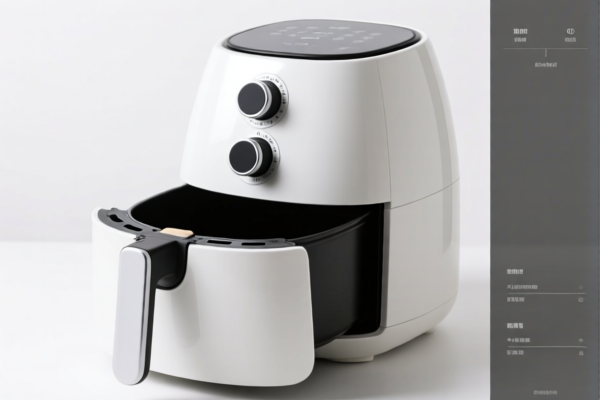
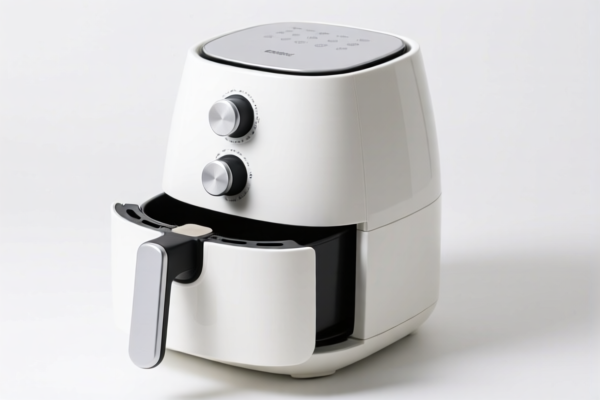
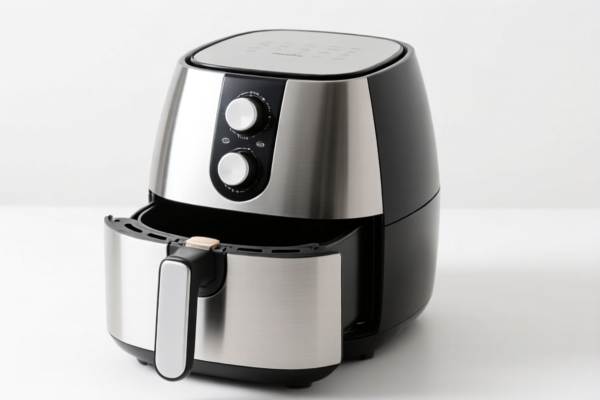
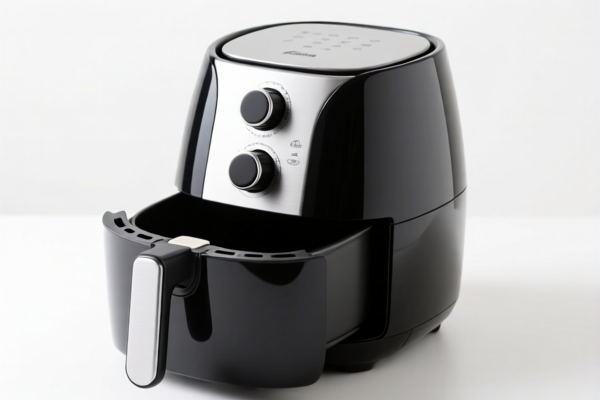
AI分析
🍟 Air Fryer Rack (Air Fryers)
🌐 HS Code Reference & Clearance Guide | 2026 Latest Tariff Analysis | Professional Clearance Strategy
📌 I. Product Definition & Classification: Do You Really Understand the "Air Fryer"?
An Air Fryer Rack is essentially a portable, small household appliance belonging to electric cooking appliances. In international trade, it is primarily classified based on its heating mechanism and intended use. The core function is to cook food using rapid air technology, placing it squarely in the realm of electric ovens or food preparation machinery.
⚠️ Key Classification Distinction:
- If classified as an Electric Cooking Appliance: It falls under Chapter 85, specifically for electric domestic appliances. - If classified as Food Preparation Machinery: It falls under Chapter 84, specifically for mechanical preparation of food/drink. - Note: The specific HS Code determines the nuance of "portability" and "industrial vs. domestic" use.
📦 II. HS Code Classification Details (2026 Latest Tariff Authority Comparison)
Based on the provided data, there are three primary HS Codes for Air Fryers. Below is the detailed breakdown:
| HS Code | Product Description | Usage Scenario | Key Classification Criteria |
|---|---|---|---|
8516.60.40.70 |
Electric Cooking Appliances | Portable/Small Household Appliance | Matches stoves, ranges, and ovens; specifically for portable/small household use. |
8516.60.40.74 |
Electric Cooking Equipment | Non-Portable Household Appliance | Functionally an oven; non-portable; width usually ≤ 70cm. |
8438.80.00.00 |
Food/Drink Preparation Machinery | Industrial or Household Food Prep | Fits under "Other Machinery" for preparing food/beverages; broader mechanical classification. |
🔍 Critical Reminder:
- 8516 Codes: Focus on the electrical heating element and domestic appliance status. The distinction between.70(portable) and.74(non-portable/large) is vital for accurate declaration. - 8438 Code: Focuses on the mechanical function of food preparation. This is often used if the device is viewed more as a specialized mechanical processor than a simple electric heater.
💰 III. 2026 Latest Tariff Rate Breakdown (Including Surcharges & Policy Add-ons)
✅ Applicable Country: United States (US)
✅ Origin: China (CN)
✅ Total Effective Tax Rate: 35.0%
✅ Validity: Current as per provided data
🎯 1. Universal Tariff Structure for All Listed Codes
For all three HS Codes (8516.60.40.70, 8516.60.40.74, and 8438.80.00.00), the tariff structure is identical according to the provided data:
| Item | Content |
|---|---|
| Base Tariff Rate | 0.0% (ad valorem) |
| Section 301 Additional Tariff | +25.0% |
| Section 122 Tariff (IEEPA) | +10.0% |
| Total Tax Rate | 35.0% |
| Tax Calculation | CIF Value × 35% |
| De Minimis Exemption | ❌ Not Applicable (High tariff rates typically exclude low-value exemptions for direct shipments from China) |
| Legal Basis Path | Base Tariff (0%) + Section 301 (25%) + Section 122 (10%) |
📌 Detailed Explanation:
- "Base Tariff 0%": The standard MFN (Most Favored Nation) duty for these specific subheadings is zero.
- "Section 301 Additional Tariff 25%": This is the standard retaliatory tariff imposed by the US under the Trade Act of 1974, Section 301, on Chinese goods.
- "Section 122 Tariff 10%": This refers to tariffs imposed under Section 122 of the Trade Act of 1974 (often associated with national defense or emergency powers, though in recent trade contexts, it may refer to specific additional surcharges or legacy designations depending on the specific customs ruling period). Note: In many current trade contexts, this 10% is often linked to specific administrative measures or 301 Phase 4 rulings, but here it is explicitly labeled as "122 clause tariff".
- Combined Impact: The 35% total rate significantly increases the landed cost. Accurate HS Code selection is crucial because an incorrect code might trigger different penalties or higher rates if misclassified as a non-listed item.
🛠️ IV. Customs Clearance Practical Advice (Battle-Tested Pitfall Avoidance)
✅ 1. Document Checklist (None are Optional)
| Document | Required | Explanation |
|---|---|---|
| ✅ Product Specification Sheet | ✔️ | Must clearly state: Power (Watts), Voltage, Dimensions (Width/Depth/Height), Capacity, and Material. |
| ✅ Product Photos (with Nameplate) | ✔️ | Clear image showing model number, brand, and input/output ratings. |
| ✅ Commercial Invoice | ✔️ | Must describe the item as "Electric Air Fryer" or "Food Preparation Machine," not just "Rack." |
| ✅ Packing List | ✔️ | Detailing gross/net weight and dimensions to prove "portable" vs. "non-portable" status if claiming .70 vs .74. |
| ✅ Certificate of Origin (CO) | ✔️ | Essential for verifying Chinese origin to apply the correct 301/122 tariffs (and check for any future exemptions). |
| ✅ Safety Certifications | ✔️ | UL, ETL, or Energy Star certification is often requested by CBP for electrical appliances to ensure compliance with safety standards. |
✅ 2. Declaration Tips (Key Mnemonic)
🔥 "Heating Mechanism, Portability, Purpose: The Triad of Classification!"
| Situation | Correct Declaration Approach | Wrong Practice |
|---|---|---|
| Small, Countertop Air Fryer | 8516.60.40.70 (Portable/Small) |
Declare as "Oven" without specifying portability → Potential audit |
| Large, Built-in or Heavy-Duty Air Fryer | 8516.60.40.74 (Non-portable, ≤70cm width) |
Declare as "Portable" → Mismatch with physical description |
| Industrial/Commercial Air Fryer | 8438.80.00.00 (Food Prep Machinery) |
Declare as "Household Appliance" → Wrong Chapter |
| Accessories Only (Rack/Tray) | Separate HS Code (e.g., 7323 for stainless steel) |
Bundle into main unit → Undervaluation risk |
⚠️ Note: If importing only the "Air Fryer Rack" (accessory) and not the machine, do not use the air fryer HS codes. Use codes for stainless steel cookware/accessories (e.g.,
7323.93.00.00). The provided data applies to the complete appliance.
✅ 3. Special Handling Cases
| Situation | Handling Advice |
|---|---|
| OEM/White Label Products | Provide original design drawings and OEM contract to prove value and origin accurately. |
| "Smart" Air Fryers | Ensure all electrical components are covered under the main appliance HS Code; do not split electronics into separate codes unless exported separately. |
| Mixed Container (Household + Industrial) | Strictly separate 8516 (Household) and 8438 (Industrial) in different commercial invoices to avoid confusion. |
| Value Fluctuation | Since the base tariff is 0%, the added duties (35%) are the main cost driver. Ensure declared value is accurate to avoid underpayment penalties on the 35% base. |
🌍 V. Global Market Clearance Comparison (2026 Latest)
| Country/Region | Recommended HS Code | Base Tariff | Total Effective Rate (China) | Certification Requirements | Remarks |
|---|---|---|---|---|---|
| 🇺🇸 USA | 8516.60.40.70 / 8516.60.40.74 / 8438.80.00.00 |
0% | 35% (25% Sec 301 + 10% Sec 122) | UL/ETL, FCC (if smart) | High tariff burden; pre-audit recommended. |
| 🇨🇳 China | 8516.60.40 series |
8-10% | ~10% | CCC, CQC | Domestic market standards. |
| 🇪🇺 EU | 8516.60.90 |
0-4% | ~4% | CE, RoHS, WEEE | Low base duty; strict energy labeling. |
| 🇬🇧 UK | 8516.60.90 |
0-4% | ~4% | UKCA, RoHS | Post-Brexit standards apply. |
📌 Conclusion:
- The US market is the most expensive for Air Fryers due to the 35% cumulative tariff.
- Accurate HS Code selection between.70and.74is critical for compliance, even though the tariff rate is the same in this dataset.
- Documentation must be flawless to justify the classification and avoid delays caused by CBP verifying the "portable" vs. "non-portable" distinction.
📌 VI. Common Errors & Pitfall Guide (Lessons Learned)
❌ Error 1: Declaring a complete Air Fryer under an accessory code (e.g., stainless steel rack)
👉 Consequence: Severe underpayment of duties (35% vs. ~0-4%) + Penalties + Seizure Risk.
❌ Error 2: Mixing "Portable" (.70) and "Non-Portable" (.74) descriptions
👉 Consequence: Customs may flag the entry for manual examination if dimensions on the invoice don't match the HS Code definition.
❌ Error 3: Ignoring the Section 122 10% surcharge
👉 Consequence: Under-budgeting for landed costs. The 35% total must be calculated on CIF value, not just product cost.
❌ Error 4: Using "Food Processor" generic description without specifying "Electric Air Fryer"
👉 Consequence: Ambiguity may lead CBP to assign a higher default rate or require additional proof of function.
✅ Correct Practice:
"Electric Air Fryer, Model XYZ, 1500W, 120V, Portable, Countertop Appliance, UL Certified, Origin: China"
🎯 VII. Conclusion: Professional Declaration, Cost Optimization
🎯 Remember the Mnemonic:
🔹 "Electric Heating, Chapter 85; Mechanical Prep, Chapter 84."
🔹 "Portability defines .70 vs .74; Base 0%, But Add 35% for China."
🔹 "Accurate Description Saves Time, Correct Code Saves Money!"
📌 Pro Tip:
- If your Air Fryers are manufactured in Vietnam, Malaysia, or Thailand, they may be eligible for Section 301 Exclusions or lower tariffs. Verify origin carefully.
- Consider applying for an Advance Ruling from US Customs and Border Protection (CBP) if importing large volumes to ensure classification certainty and avoid post-entry audits.
📣 Immediate Action:
📞 Contact a licensed Customs Broker
📄 Provide detailed specs + Photos
🚀 Clear customs smoothly, minimize costs, maximize profit!
✨ Professional Customs Clearance Starts with Accurate Classification!
💼 Every Cent of Duty Counts!
用户评价
关于 HS 编码归类
协调制度(HS)是由世界海关组织(WCO)制定的国际贸易商品分类标准。全球 200 多个国家采用 HS 系统作为海关关税、贸易统计和进出口监管的基础。
每个 HS 编码遵循以下层级结构:
- 章(2 位)——商品大类(例如:第 84 章:机器和机械设备)
- 品目(4 位)——章内的更具体分类
- 子目(6 位)——国际通用细分,所有 WCO 成员国统一使用
- 本国细分(8-10 位)——各国自行扩展的细分编码,如美国 HTSUS 10 位编码
正确的 HS 编码归类对于顺利通关、准确缴纳关税和遵守贸易法规至关重要。错误归类可能导致海关延误、多缴关税或罚款。
从CN进口到US时,适用的关税税率可能包括:
- 最惠国(MFN)税率——适用于 WTO 成员国的标准关税税率
- 普通税率——适用于无贸易协定国家
- 贸易救济关税——附加关税,如 301 条款(反倾销)、232 条款(国家安全)或反补贴税
本页内容仅供参考。如需正式归类,请咨询当地海关或持牌报关代理。