Airplane Parts
CN → US| HS编码 | 关税税率 | 原产国 | 目的国 | 文档 |
|---|---|---|---|---|
| 9401104000 | 17.5% | CN | US | 官方文档 |
| 9401108000 | 17.5% | CN | US | 官方文档 |
| 8802200160 | 35.0% | CN | US | 官方文档 |
| 8802300160 | 35.0% | CN | US | 官方文档 |
商品图片
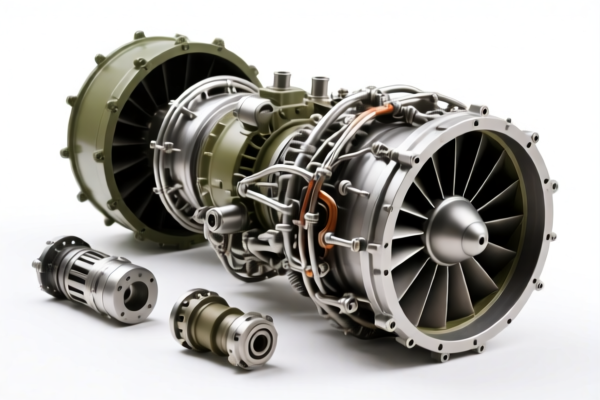
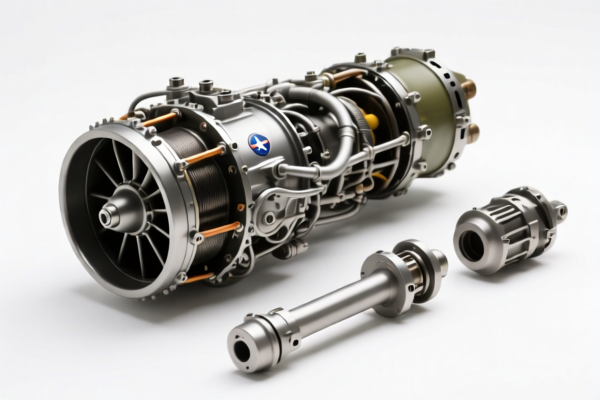
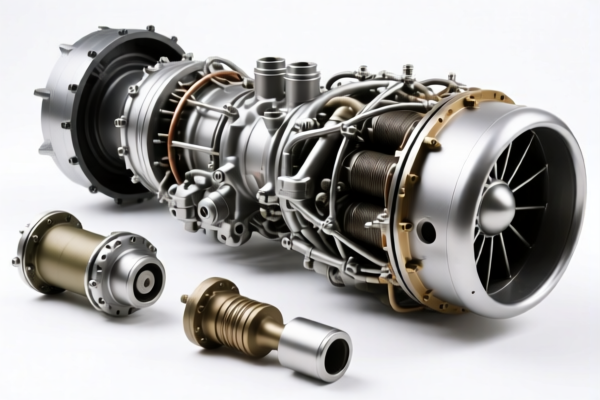
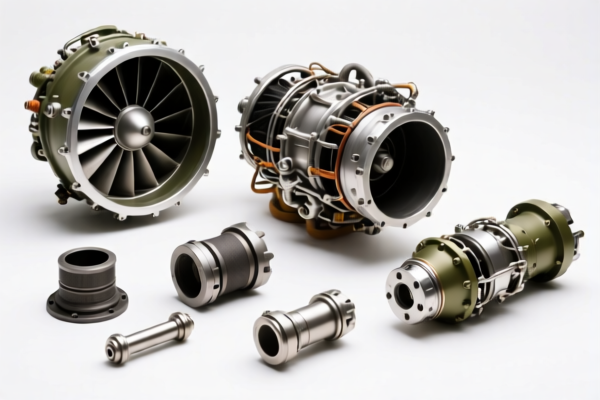
AI分析
🛫 Airplane Parts (Aircraft Components)
🌐 HS Code Reference & Customs Clearance Guide | 2026 Latest Tariff Analysis | Professional Strategy for Aviation Imports
📌 I. Product Definition & Classification: Do You Truly Understand "Aircraft Parts"?
Aircraft parts are critical components used for the maintenance, repair, and operation of airplanes and aircraft. In international trade, the classification depends heavily on the specific function and material composition of the part. The provided data highlights two main categories based on customs logic:
- Seats/Interiors (Part of Passenger/Crew Accommodation): Specifically classified under 9401 (Seats), but treated as "Aircraft Components" with no material conflict.
- General Aircraft Components: Classified under 8802 (Parts of aircraft), serving as a fallback or specific fit-for-purpose category.
⚠️ Key Distinction Point:
- If the part is a seat or similar furnishing for aircraft → It falls under Chapter 94 (Furniture), specifically 9401.
- If the part is a general mechanical/structural component of the aircraft → It falls under Chapter 88 (Aircraft), specifically 8802.
- No Material Conflict: The data indicates that for these specific HS codes, the material does not cause classification conflicts, allowing for straightforward matching based on function.
📦 II. HS Code Classification Details (2026 Latest Tariff Authority Comparison)
| HS Code | Product Description | Application Scenario | Material/Conflict Status |
|---|---|---|---|
9401.10.40.00 |
Aircraft Parts: Seats (Specific Subheading) | Passenger/crew seats, no material conflict, fits "Component" default preference | ✅ No Conflict |
9401.10.80.00 |
Aircraft Parts: Seats (Other/General) | General aircraft seating, obvious "Component" class matching | ✅ No Conflict |
8802.20.01.60 |
Aircraft-Related Components (Fallback Category) | General parts, no material or form conflict, fits "Fallback" logic | ✅ No Conflict |
8802.30.01.60 |
Aviation Domain Components (Default Fallback) | Parts with no obvious material conflict, defaults to "Fallback" category | ✅ No Conflict |
🔍 Critical Reminder:
- Seats are technically "Furniture" (Chapter 94) but are imported as Aircraft Parts due to their specific application. They carry a lower additional tariff compared to general aircraft parts.
- General Parts fall under Chapter 88. These carry a higher additional tariff (25% USITC vs. 7.5% for seats).
- Do not misclassify a seat as a general mechanical part to avoid higher duties, but ensure it truly fits the "Seat" definition. Conversely, do not misclassify a structural wing part as a seat.
💰 III. 2026 Latest Tariff Rate Details (Including Surcharges & Policy Add-ons)
✅ Applicable Country: United States (US)
✅ Origin: China (CN)
✅ Effective Date: 2025/2026 (Current Trade Policies)
🎯 1. 9401.10.40.00 & 9401.10.80.00 —— Aircraft Seats/Interior Components
| Item | Content |
|---|---|
| Base Duty Rate | 0.0% (Ad Valorem) |
| USITC Additional Duty | +7.5% (Section 301/Specific Line Item) |
| Section 122 Duty | +10% (Specific 122 Clause Tariff) |
| Total Duty Rate | 17.5% |
| Tax Calculation | CIF Value × 17.5% |
| De Minimis Exemption | ❌ Not Applicable (Standard commercial import rules apply) |
| Legal Basis Path | USITC:9401.10.40.00 → Add-On: 7.5% + Sec 122: 10% |
📌 Explanation:
- Although these are classified under "Furniture" (HS 9401), they are imported for aircraft use.
- The Total Duty is significantly lower (17.5%) compared to general aircraft parts (35%).
- Why? Customs often applies lower "Section 301" rates to certain furniture-related items or specific line items under 9401 for aircraft use.
- Savings Tip: If your part is a seat or seat component, ensure it is declared under 9401 rather than 8802 to save 17.5% in tariffs!
🎯 2. 8802.20.01.60 & 8802.30.01.60 —— General Aircraft Components (Fallback)
| Item | Content |
|---|---|
| Base Duty Rate | 0.0% (Ad Valorem) |
| USITC Additional Duty | +25.0% (Standard Section 301 Rate for Aircraft Parts) |
| Section 122 Duty | +10% (Specific 122 Clause Tariff) |
| Total Duty Rate | 35.0% |
| Tax Calculation | CIF Value × 35.0% |
| De Minimis Exemption | ❌ Not Applicable |
| Legal Basis Path | USITC:8802.xx.xx.xx → Add-On: 25.0% + Sec 122: 10% |
📌 Explanation:
- These HS codes represent the general "Parts of Aircraft" category.
- The Total Duty is 35.0%, which is double the rate of aircraft seats.
- This is the default classification for most mechanical, structural, or electronic parts not specifically covered under other preferential subheadings.
- Risk: Misclassifying a seat as a general part here results in overpaying 17.5% in duties.
🛠️ IV. Customs Clearance Practical Advice (Pitfall Avoidance Guide)
✅ 1. Preparation Checklist (All Documents Required)
| Document | Mandatory | Explanation |
|---|---|---|
| ✅ Product Specification Sheet | ✔️ | Must clearly state: "For Use in Aircraft," Part Number, Model, and Function. |
| ✅ Technical Drawings/Pictures | ✔️ | Visual proof that the item is a seat (9401) vs. a general part (8802). |
| ✅ Commercial Invoice | ✔️ | Description must match HS Code exactly (e.g., "Aircraft Seat Assembly" vs. "Aircraft Component"). |
| ✅ Packing List | ✔️ | Detailed breakdown of items; avoid vague terms like "Spares." |
| ✅ Certificate of Origin (CO) | ✔️ | Essential for verifying Chinese origin and applying correct tariffs. |
| ✅ Letter of Authorization | ✔️ | If OEM, provide authorization from aircraft manufacturer to avoid counterfeit issues. |
✅ 2. Declaration Tactics (Key Mantras)
🔥 “Seats go to 9401 (17.5%), General Parts go to 8802 (35%). Classify Correctly to Save 17.5%!”
| Scenario | Correct Declaration | Error Consequence |
|---|---|---|
| Aircraft Seat | 9401.10.40.00 or 9401.10.80.00 |
Declaring as 8802 → Pay 35% instead of 17.5% (Overpayment!) |
| General Mechanical Part | 8802.20.01.60 or 8802.30.01.60 |
Declaring as 9401 → Misclassification Risk, Customs may penalize. |
| Mixed Shipment | Declare separately by HS Code | Mixing in one line item → Customs may audit entire shipment. |
| Kit of Parts | Main component determines class | If a kit is mostly seats, declare as seats? No, declare individually. |
✅ 3. Special Situations Handling
| Situation | Handling Advice |
|---|---|
| Seats with Electronics | If the seat has integrated entertainment systems, it may still fall under 9401 if the primary function is seating. Provide detailed breakdown. |
| Structural Components | Wings, fuselage parts, landing gear → Definitely 8802. Do not attempt to reclassify. |
| Urgent Repairs | For urgent airline repairs, ensure documentation explicitly states "For Immediate Aircraft Repair" to potentially expedite customs, but tariff rates remain the same. |
| Origin Marking | Ensure the part is marked "Made in China" to avoid country-of-origin disputes which can trigger higher scrutiny. |
🌍 V. Global Market Comparison (2026 Latest)
| Country/Region | Recommended HS Code | Total Duty (China Origin) | Key Certification | Notes |
|---|---|---|---|---|
| 🇺🇸 USA | 9401.10.40.00 (Seats)8802.xx.xx.xx (Parts) |
17.5% (Seats) 35.0% (Parts) |
FAA Compliance, ITAR (if dual-use) | Highest tariff disparity between seats and parts. |
| 🇨🇳 China | 9401.10.40.008802.xx.xx.xx |
Varies (0%-10%) | CCC (if applicable) | Lower base duties, fewer surcharges. |
| 🇪🇺 EU | 9401.10.40.008803.30.xx |
Varies (0%-6%) | EASA Approval | No Section 122 equivalent. |
| 🇬🇧 UK | 9401.10.40.008803.30.xx |
Varies (0%-6%) | UKCA Approval | Post-Brexit rules apply. |
📌 Conclusion:
- The USA is unique in its 17.5% vs. 35% split for aircraft-related items based on Chapter 94 vs. Chapter 88.
- Optimization Opportunity: If your product is a seat or interior component, strictly use HS Code 9401.
- General parts cannot be reclassified, so ensure your supply chain accounts for the 35% duty cost.
📌 VI. Common Errors & Pitfall Guide (Blood & Tears Lessons)
❌ Error 1: Declaring an Aircraft Seat under 8802
👉 Consequence: Pay 35% duty instead of 17.5%. Unnecessary loss of 17.5% profit margin!
❌ Error 2: Declaring a General Mechanical Part under 9401
👉 Consequence: Customs rejection, penalty for misdeclaration, and potential seizure. Seats are not general parts!
❌ Error 3: Vague Description ("Aircraft Spares")
👉 Consequence: Customs cannot determine the correct HS Code → Delayed clearance, additional inspections, and possible retroactive duty assessment.
❌ Error 4: Ignoring Section 122 Tariff
👉 Consequence: Underestimating total landed cost. The 10% surcharge applies to both categories. Total cost = Base + 7.5%/25% + 10%.
✅ Correct Practice:
"Aircraft Seat Assembly, Model ABC, For Boeing 737, Made in China, HS Code 9401.10.40.00"
vs.
"Landing Gear Component, Part No. XYZ, For Airbus A320, Made in China, HS Code 8802.20.01.60"
🎯 VII. Conclusion: Precision Classification, Cost Savings!
🎯 Remember the Mantra:
🔹 "Seats = 9401 = 17.5% Duty"
🔹 "General Parts = 8802 = 35% Duty"
🔹 "One Line Item Difference = 17.5% Savings!"
📌 Pro Tip:
If you are importing a mix of parts, separate the seats in your commercial invoice. Group all seats under 9401 and all other parts under 8802. This ensures correct duty calculation and avoids customs audits for mixed classifications.
📣 Immediate Action:
📞 Consult a licensed customs broker to pre-classify your specific part.
📄 Provide detailed technical drawings and function descriptions.
🚀 Optimize your landed cost by choosing the right HS Code!
✨ Professional clearance starts with precise classification!
💼 Every 1.75% of duty saved is pure profit!
用户评价
关于 HS 编码归类
协调制度(HS)是由世界海关组织(WCO)制定的国际贸易商品分类标准。全球 200 多个国家采用 HS 系统作为海关关税、贸易统计和进出口监管的基础。
每个 HS 编码遵循以下层级结构:
- 章(2 位)——商品大类(例如:第 84 章:机器和机械设备)
- 品目(4 位)——章内的更具体分类
- 子目(6 位)——国际通用细分,所有 WCO 成员国统一使用
- 本国细分(8-10 位)——各国自行扩展的细分编码,如美国 HTSUS 10 位编码
正确的 HS 编码归类对于顺利通关、准确缴纳关税和遵守贸易法规至关重要。错误归类可能导致海关延误、多缴关税或罚款。
从CN进口到US时,适用的关税税率可能包括:
- 最惠国(MFN)税率——适用于 WTO 成员国的标准关税税率
- 普通税率——适用于无贸易协定国家
- 贸易救济关税——附加关税,如 301 条款(反倾销)、232 条款(国家安全)或反补贴税
本页内容仅供参考。如需正式归类,请咨询当地海关或持牌报关代理。