Alginate Derivatives
CN → US商品图片

AI分析
🧪 Alginate Derivatives: The "Smart" Biopolymers of the Modern Era
🌐 HS Code Reference & Customs Clearance Guide | 2026 Latest Tariff Analysis | Professional Clearance Strategy
📌 I. Product Definition & Classification: What Are "Alginate Derivatives"?
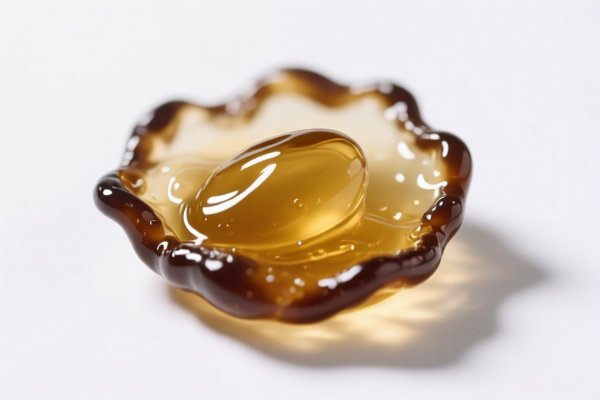
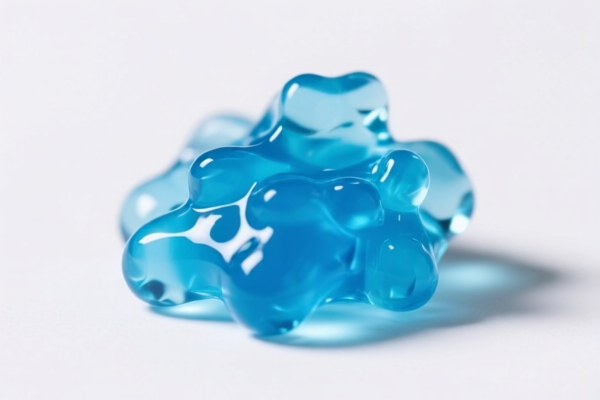
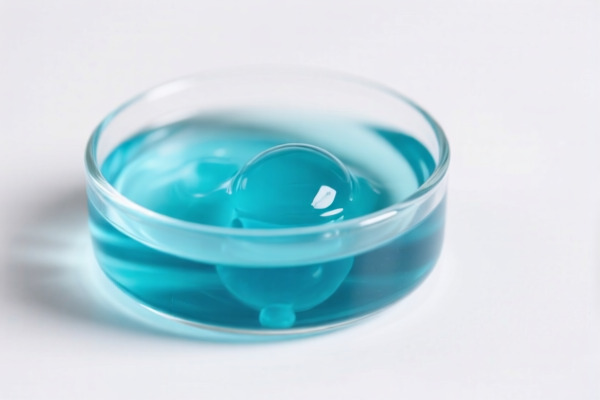
Alginate derivatives are semi-synthetic polymers derived from alginic acid (naturally extracted from brown seaweed like Laminaria, Macrocystis, and Sargassum). Unlike native sodium alginate, derivatives undergo chemical modification to alter solubility, stability, viscosity, or reactivity.
Common derivatives include: 1. Propylene Glycol Alginate (PGA): Modified with propylene oxide; soluble in acidic liquids, used as a stabilizer in dairy and beer. 2. Calcium Alginate: Insoluble in water; used in food thickeners and wound dressings. 3. Alginate Esters (e.g., Sodium Alginate Propionate): Enhanced stability in high-acid environments. 4. Graft Copolymers: Alginate chains grafted with synthetic polymers (e.g., acrylic acid) for super-absorbent or drug-delivery applications.
⚠️ Key Distinction:
- Native Sodium Alginate → HS 1302.32.00 (Simple extraction/purification)
- Chemically Modified Alginate (e.g., PGA, esters, grafts) → HS 3906.90 (Polymer derivatives) or 3824.99 (Industrial chemical products)
- Pharmaceutical-grade Derivatives → HS 3004.90 (If packaged for medical use) or 3906.90 (If raw material)
📦 II. HS Code Classification Details (2026 Latest Tariff Authority)
| HS Code | Product Description | Application Scenario | Chemical Modification? |
|---|---|---|---|
3906.90.90 |
Other polymers in primary forms (e.g., PGA, Alginate Esters) | Food additives, thickeners, stabilizers | ✅ Yes (Chemical modification) |
1302.32.00 |
Sodium Alginate (Native) | Food, textile, pharmaceuticals | ❌ No (Physical extraction) |
3824.99.60 |
Industrial chemical products (e.g., modified alginates for non-food use) | Industrial adhesives, paper coating | ✅ Yes |
3004.90.99 |
Medicaments (if formulated for therapeutic use) | Wound dressings, drug delivery systems | ✅ Yes + Formulated |
2915.39.00 |
Other saturated acyclic mono-carboxylic acids (if alginate is hydrolyzed to acids) | Precursor chemicals | ⚠️ N/A (Not derivative) |
🔍 Critical Reminder:
- Sodium Alginate is classified under 1302.32.00 (Alkaloidal resins and other vegetable saps and extracts).
- Alginate Derivatives (PGA, esters, grafts) are classified under 3906.90 (Acrylic polymers, vinyl polymers, or other polymers) because they are chemically modified to alter polymer properties.
- Do NOT confuse with "food additives" (Chapter 21) — raw polymer derivatives go to Chapter 39.
💰 III. 2026 Latest Tariff Rate Breakdown (Including Supplementary Taxes)
✅ Applicable Country: United States (US)
✅ Origin: China (CN)
✅ Effective Date: November 10, 2025 (and subsequent imports)
🎯 1. 3906.90.90 — Alginate Derivatives (e.g., Propylene Glycol Alginate)
| Item | Content |
|---|---|
| Base Tariff | 5.3% (ad valorem) |
| USITC Supplementary Tax | +25% (under USITC Footnote 9903.88.01) |
| IEEPA Supplementary Tax | +10% (for Chinese/Hong Kong products, effective Nov 10, 2025) |
| Total Tariff | 40.3% |
| Tax Calculation | CIF Value × 40.3% |
| De Minimis Exemption | ❌ Not Eligible (deny_de_minimis) |
| Legal Basis Path | IEEPA:9903.01.25 → IEEPA:9903.01.24 → USITC:3906.90.90 → FOOTNOTE:9903.88.01 |
📌 Explanation:
- The 25% USITC tax is part of the Section 301 tariffs on Chinese imports.
- The 10% IEEPA tax is an additional surcharge under the International Emergency Economic Powers Act for Chinese origin.
- Total 40.3% is a high tariff rate, requiring careful cost planning.
🎯 2. 1302.32.00 — Native Sodium Alginate (For Comparison)
| Item | Content |
|---|---|
| Base Tariff | 0% |
| USITC Supplementary Tax | +25% |
| IEEPA Supplementary Tax | +10% |
| Total Tariff | 35% |
| Tax Calculation | CIF Value × 35% |
| De Minimis Exemption | ❌ Not Eligible |
📌 Note:
- Even native alginate faces high tariffs.
- Derivatives (3906.90) are taxed at 40.3%, which is 5.3% higher than native alginate due to the higher base tariff (5.3% vs. 0%).
🛠️ IV. Customs Clearance Practical Advice (Battle-Tested Pitfall Guide)
✅ 1. Required Documentation Checklist (Non-Negotiable)
| Document | Mandatory? | Description |
|---|---|---|
| ✅ Product Specification Sheet | ✔️ | Must detail chemical structure, molecular weight, degree of substitution (DS), and solubility. |
| ✅ Certificate of Analysis (COA) | ✔️ | Confirms purity, heavy metals, and microbial limits. |
| ✅ Chemical Structure Diagram | ✔️ | Critical for customs to distinguish between native alginate (1302.32) and derivatives (3906.90). |
| ✅ FCC/CE/RoHS Certificates | ✔️ | If used in food or pharma, compliance certificates are required. |
| ✅ Commercial Invoice | ✔️ | Clearly state "Alginate Derivative (e.g., Propylene Glycol Alginate)" — NOT "Sodium Alginate". |
| ✅ Certificate of Origin (CO) | ✔️ | Essential for claiming any potential exemptions or verifying origin. |
| ✅ MSDS/SDS | ✔️ | Safety Data Sheet for hazardous material handling (if applicable). |
✅ 2. Declaration Tips (Key Mantra)
🔥 "Derivative ≠ Native; Structure Determines Code; Code Determines Cost!"
| Scenario | Correct Declaration | Incorrect Practice |
|---|---|---|
| Propylene Glycol Alginate | 3906.90.90 - "Chemically Modified Alginate Derivative" |
Misdeclare as 1302.32.00 → 25% underpayment risk + penalties |
| Sodium Alginate (Native) | 1302.32.00 - "Sodium Alginate, Vegetable Extract" |
Misdeclare as 3906.90.90 → Overpayment of 5.3% base tariff |
| Alginate-based Wound Dressing (Formulated) | 3004.90.99 - "Medicated Wound Dressing" |
Misdeclare as raw material 3906.90.90 → Wrong chapter, delay in clearance |
| Industrial Alginate Coating | 3824.99.60 - "Industrial Chemical Product" |
Misdeclare as food additive 3906.90.90 → Regulatory mismatch |
✅ 3. Special Case Handling
| Scenario | Handling Advice |
|---|---|
| OEM Custom Alginate Derivatives | Provide customer order + technical drawings + DS (Degree of Substitution) report. |
| Mixed Shipments (Native + Derivative) | Declare separately. Do not mix codes. Mixed declarations will trigger audit. |
| Small Samples (< $800) | ❌ No de minimis exemption for alginate derivatives under current IEEPA/USITC rules. |
| Re-export from Third Country | Ensure Substantial Transformation proof is available. Otherwise, origin may still be deemed China. |
🌍 V. Global Market Customs Comparison (2026 Latest)
| Country/Region | Recommended HS Code | Tariff (China Origin) | Certification Required | Notes |
|---|---|---|---|---|
| 🇺🇸 USA | 3906.90.90 |
40.3% | FDA (if food/pharma), FCC | High tariff due to Section 301 |
| 🇨🇳 China | 3906.90.90 |
6.5% | N/A | No additional tariffs |
| 🇪🇺 EU | 3906.90.90 |
6.5% | REACH, ECHA Registration | No Section 301 equivalent |
| 🇦🇺 Australia | 3906.90.90 |
5% | AICIS | Low tariff |
| 🇯🇵 Japan | 3906.90.90 |
6.0% | JIS, PMDA (if pharma) | No major surcharges |
📌 Conclusion:
- USA is the most expensive market for alginate derivatives due to 40.3% total tariff.
- EU, Japan, and Australia are more favorable, with tariffs between 5–6.5%.
- Supply Chain Strategy: Consider sourcing from Vietnam, Thailand, or Mexico to avoid US tariffs (if substantial transformation occurs).
📌 VI. Common Mistakes & Pitfall Guide (Lessons Learned)
❌ Mistake 1: Declaring Propylene Glycol Alginate (PGA) as Sodium Alginate
👉 Consequence: Customs detects chemical difference via COA → Penalty + Back-tariff + Seizure
❌ Mistake 2: Using vague description "Alginates" without specifying derivative type
👉 Consequence: Customs assigns highest duty rate → Uncertainty and delay
❌ Mistake 3: Not providing Degree of Substitution (DS) report for derivatives
👉 Consequence: Customs cannot verify if it’s a derivative → Classification dispute
❌ Mistake 4: Assuming de minimis applies to small shipments
👉 Consequence: Denied entry for shipments <$800 due to IEEPA restrictions on Chinese goods
✅ Correct Declaration Example:
"Propylene Glycol Alginate (PGA), Chemical Derivative of Sodium Alginate, Degree of Substitution 0.8, Food Grade, CAS No. 9005-02-7 (modified), HS Code 3906.90.90, Origin: China"
🎯 VII. Conclusion: Precision Classification Saves Millions!
🎯 Remember the Mantra:
🔹 "Derivative = Chapter 39; Native = Chapter 13"
🔹 "Code Determines Cost; Description Prevents Audit"
🔹 "USA Tariff 40.3%; Plan Ahead or Relocate"
📌 Pro Tip:
If your alginate derivatives are used in pharmaceutical formulations (e.g., drug delivery systems), consider declaring under Chapter 30 (Pharmaceuticals) if properly packaged and labeled for medical use. This may bypass some industrial chemical regulations but requires FDA registration.
📣 Immediate Action Required:
📞 Contact Customs Broker + Provide COA + Chemical Structure + Apply for Advance Ruling (US)
🚀 Optimize Your Supply Chain to mitigate 40.3% US tariff impact.
✨ Professional Classification Starts with Precision!
💼 Your Every Dollar of Tariff Is Worth Calculating!
用户评价
关于 HS 编码归类
协调制度(HS)是由世界海关组织(WCO)制定的国际贸易商品分类标准。全球 200 多个国家采用 HS 系统作为海关关税、贸易统计和进出口监管的基础。
每个 HS 编码遵循以下层级结构:
- 章(2 位)——商品大类(例如:第 84 章:机器和机械设备)
- 品目(4 位)——章内的更具体分类
- 子目(6 位)——国际通用细分,所有 WCO 成员国统一使用
- 本国细分(8-10 位)——各国自行扩展的细分编码,如美国 HTSUS 10 位编码
正确的 HS 编码归类对于顺利通关、准确缴纳关税和遵守贸易法规至关重要。错误归类可能导致海关延误、多缴关税或罚款。
从CN进口到US时,适用的关税税率可能包括:
- 最惠国(MFN)税率——适用于 WTO 成员国的标准关税税率
- 普通税率——适用于无贸易协定国家
- 贸易救济关税——附加关税,如 301 条款(反倾销)、232 条款(国家安全)或反补贴税
本页内容仅供参考。如需正式归类,请咨询当地海关或持牌报关代理。