Aluminum Foil Tube
CN → US| HS编码 | 关税税率 | 原产国 | 目的国 | 文档 |
|---|---|---|---|---|
| 7608100030 | 40.7% | CN | US | 官方文档 |
| 7608200030 | 40.7% | CN | US | 官方文档 |
| 3917390010 | 38.1% | CN | US | 官方文档 |
| 7609000000 | 40.7% | CN | US | 官方文档 |
| 7604210010 | 11.5% | CN | US | 官方文档 |
商品图片
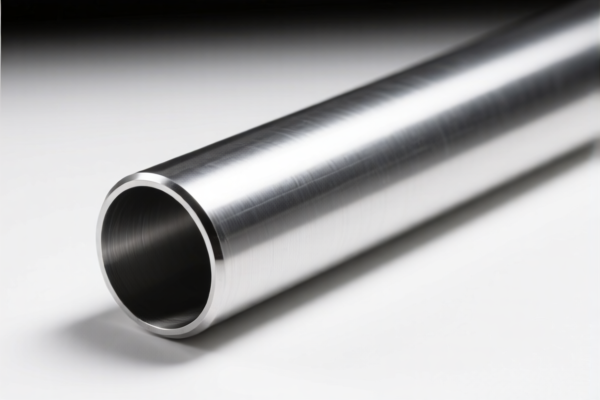
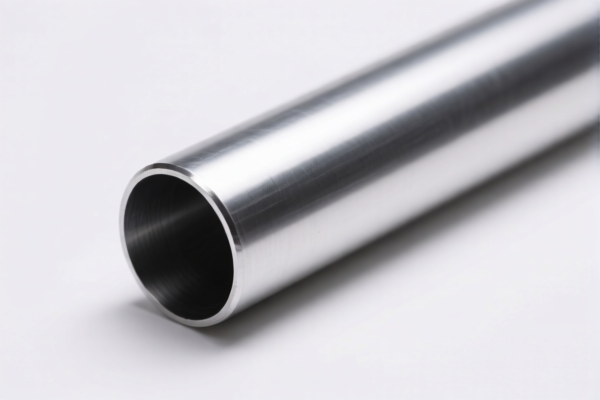
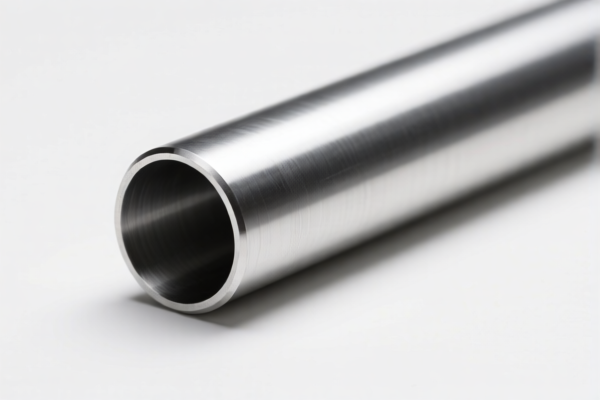
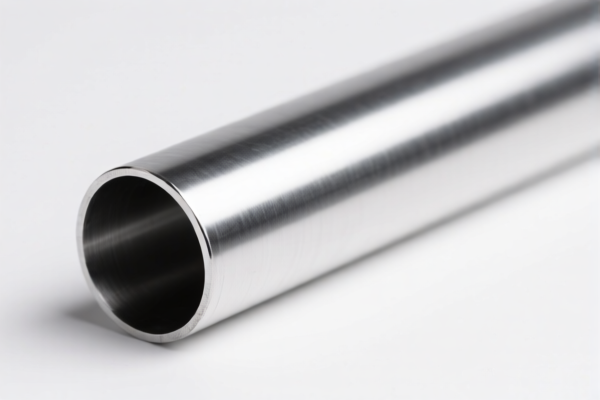
AI分析
🏭 Aluminum Foil Tube: HS Code Classification & 2026 US Customs Clearance Guide
🌐 HS Code Reference & Clearance Strategy | 2026 Latest Tariff Analysis | Professional Compliance Guide
📌 Part 1: Product Definition & Classification: What is an "Aluminum Foil Tube"?
"Aluminum Foil Tube" is a versatile industrial product in international trade, primarily categorized based on its material composition (pure aluminum vs. alloy) and structural characteristics (seamless, extruded, or reinforced). In the Harmonized System (HS), it falls broadly under Chapter 76 (Aluminum) or potentially Chapter 39 (Plastics/Rubber) if heavily reinforced with polymer layers, though metal content usually dictates classification under Chapter 76.
Two Main Categories: 1. Aluminum Tubes/Pipes (HS 7608/7609): Hollow products made from non-alloy or alloy aluminum, extruded or drawn. 2. Tube-like Structures with Aluminum Foil Reinforcement (HS 3917): Plastic or rubber tubes internally/externally reinforced with aluminum foil, where the aluminum provides structural integrity but the base is polymer.
⚠️ Key Distinction Point:
- If the product is purely aluminum (solid wall, hollow center) → Chapter 76.
- If the product is plastic/rubber with aluminum foil layers (composite) → Chapter 39.
- If it is an accessory for tubes (e.g., couplings, flanges) made of aluminum → HS 7609.
📦 Part 2: HS Code Classification Details (2026 Latest Tariff Authority对照)
Based on the provided data, here are the exact HS codes applicable to "Aluminum Foil Tube" variations, depending on material and form:
| HS Code | Product Description | Applicable Scenario | Material/Form Match |
|---|---|---|---|
7608.10.00.30 |
Non-alloy Aluminum Tubes and Pipes | Pure aluminum tubes, no alloying elements | ✅ Matches: Aluminum + Tube |
7608.20.00.30 |
Alloy Aluminum Tubes and Pipes | Aluminum alloy tubes, extruded/drawn | ✅ Matches: Aluminum + Tube |
3917.39.00.10 |
Other Tubes, Pipes & Hoses with Aluminum Foil Reinforcement | Plastic/rubber base + aluminum foil layer | ✅ Matches: Tube + Aluminum Foil (Metal Reinforced) |
7609.00.00.00 |
Aluminum Tube Fittings (Flanges, Rings, etc.) | Accessories for aluminum tubes | ✅ Matches: Aluminum Alloy + Tube Fitting |
7604.21.00.10 |
Aluminum Alloy Profiles (Hollow) | Extruded hollow profiles (often used as tubes in industry) | ✅ Matches: Aluminum Alloy + Hollow Profile |
🔍 Critical Note:
-7608.10&7608.20: These are for solid aluminum tubes. The "foil" aspect might refer to the surface finish or thin-wall construction, but if it's purely metal, it goes here.
-3917.39: This is for composite tubes where aluminum foil is a reinforcing layer within a plastic/rubber matrix.
-7604.21: This is for hollow profiles. In industrial contexts, many "aluminum tubes" are technically classified as hollow profiles under this code if they are extruded alloy shapes.
💰 Part 3: 2026 US Tariff Rate Breakdown (Including Duties & Surcharges)
✅ Applicable Country: United States (US)
✅ Origin: China (CN)
✅ Effective Date: November 10, 2025 (and subsequent imports)
🎯 1. 7608.10.00.30 & 7608.20.00.30 —— Aluminum Tubes (Non-Alloy & Alloy)
| Item | Content |
|---|---|
| Base Duty Rate | 5.7% |
| Section 301 Surcharge | +25.0% |
| Section 122 Surcharge | +10.0% |
| Total Tariff Rate | 40.7% |
| Tax Calculation | CIF Value × 40.7% |
| De Minimis Exemption? | ❌ Not Eligible (deny_de_minimis) |
| Legal Basis Path | Section 301 → Section 122 → USITC:7608.10.00.30 / 7608.20.00.30 |
📌 Explanation:
- "Base Duty (5.7%)": Standard MFN rate for aluminum tubes under Chapter 76.
- "Section 301 (25%)": Standard USITC surcharge on Chinese aluminum products.
- "Section 122 (10%)": Additional surcharge under International Emergency Economic Powers Act (IEEPA) for specific Chinese imports, effective from Nov 2025.
- Total Cost Impact: 40.7% is a high tariff burden. Must be accounted for in pricing strategy.
🎯 2. 3917.39.00.10 —— Aluminum-Foil Reinforced Tubes (Composite)
| Item | Content |
|---|---|
| Base Duty Rate | 3.1% |
| Section 301 Surcharge | +25.0% |
| Section 122 Surcharge | +10.0% |
| Total Tariff Rate | 38.1% |
| Tax Calculation | CIF Value × 38.1% |
| De Minimis Exemption? | ❌ Not Eligible |
| Legal Basis Path | Section 301 → Section 122 → USITC:3917.39.00.10 |
📌 Explanation:
- "Base Duty (3.1%)": Lower base rate for composite plastic/rubber tubes.
- Still High Total: Even with a lower base, the 25% Section 301 and 10% Section 122 push the total to 38.1%.
- Key Risk: If customs determines the product is primarily aluminum rather than composite, they may reclassify to 7608, increasing the base duty to 5.7%.
🎯 3. 7604.21.00.10 —— Aluminum Alloy Hollow Profiles
| Item | Content |
|---|---|
| Base Duty Rate | 1.5% |
| Section 301 Surcharge | +0.0% |
| Section 122 Surcharge | +10.0% |
| Total Tariff Rate | 11.5% |
| Tax Calculation | CIF Value × 11.5% |
| De Minimis Exemption? | ❌ Not Eligible |
| Legal Basis Path | Section 122 → USITC:7604.21.00.10 |
📌 Explanation:
- "Base Duty (1.5%)": Very low base rate for hollow profiles.
- "Section 301 (0%)": Crucial Difference! Some hollow profiles under7604.21may be exempt from the 25% Section 301 surcharge, depending on specific product type lists.
- "Section 122 (10%)": Still applies.
- Result: 11.5% is significantly lower than the 40.7% for standard tubes. This makes7604.21a preferred classification if the product fits the definition of "hollow profile."
🎯 4. 7609.00.00.00 —— Aluminum Tube Fittings
| Item | Content |
|---|---|
| Base Duty Rate | 5.7% |
| Section 301 Surcharge | +25.0% |
| Section 122 Surcharge | +10.0% |
| Total Tariff Rate | 40.7% |
| Tax Calculation | CIF Value × 40.7% |
| De Minimis Exemption? | ❌ Not Eligible |
| Legal Basis Path | Section 301 → Section 122 → USITC:7609.00.00.00 |
📌 Explanation:
- Applies only if the product is an accessory (e.g., flanges, couplings) and not the tube itself.
- Same high tariff burden as7608.
🛠️ Part 4: Clearance Practical Advice (Pitfall Avoidance Guide)
✅ 1. Document Checklist (Mandatory)
| Document | Required | Notes |
|---|---|---|
| ✅ Product Specification Sheet | ✔️ | Must specify: Material (Alloy vs. Pure), Wall Thickness, Outer Diameter, Reinforcement Type (if composite). |
| ✅ Material Certification | ✔️ | Mill certificate proving aluminum grade (e.g., 6061, 1100). Critical for distinguishing 7608 vs. 7604. |
| ✅ Product Photos | ✔️ | Clear images of cross-section to show if it's solid metal, hollow profile, or composite (foil layer visible). |
| ✅ Commercial Invoice | ✔️ | Must clearly state "Aluminum Tube" or "Aluminum Alloy Hollow Profile" – avoid vague terms like "Foil Pipe." |
| ✅ Packing List | ✔️ | Detail units per carton, gross/net weight. |
| ✅ Country of Origin Certificate | ✔️ | Essential for tariff determination. |
✅ 2. Declaration Strategy (Key Mnemonic)
🔥 "Profile Low, Tube High, Composite Middle, Clear Structure!"
| Scenario | Correct HS Code | Tariff | Wrong Approach |
|---|---|---|---|
| Hollow Extruded Aluminum Shape | 7604.21.00.10 |
11.5% | Misclassifying as 7608 (Tube) → 40.7% |
| Standard Aluminum Tube/Pipe | 7608.10/20 |
40.7% | Misclassifying as 7604 → Risk of audit |
| Plastic Tube with Aluminum Foil Layer | 3917.39.00.10 |
38.1% | Misclassifying as 7608 → Overpayment |
| Aluminum Tube Accessory | 7609.00.00.00 |
40.7% | Including in tube shipment without separate code |
📌 Strategic Tip:
If your product is an extruded hollow shape with complex cross-sections, try to justify classification under7604.21(Hollow Profiles) to save 29.2% in tariffs compared to standard tubes. Provide detailed cross-sectional drawings to prove it's a "profile" and not a simple cylindrical "tube."
✅ 3. Special Case Handling
| Situation | Recommendation |
|---|---|
| Composite Tube (Plastic + Foil) | Provide lab test results showing primary material is plastic/rubber, with aluminum as reinforcement. Justify 3917.39. |
| Thin-Wall Aluminum Tube | If wall thickness is < 1mm, still likely 7608. Ensure specs are clear. |
| OEM Custom Profiles | Provide customer design drawings. If the shape is non-circular (e.g., square, hexagonal), it strongly supports 7604.21. |
| Mixed Shipment | Separate tubes (7608) and profiles (7604) on different lines of the commercial invoice to avoid customs confusion and potential misclassification of the entire shipment. |
🌍 Part 5: Global Market Clearance Comparison (2026)
| Country/Region | Recommended HS Code | Tariff (China Origin) | Certification | Notes |
|---|---|---|---|---|
| 🇺🇸 USA | 7604.21.00.10 |
11.5% (Best Case) | None | 7608 faces 40.7%. Profile classification is key. |
| 🇺🇸 USA | 7608.10.00.30 |
40.7% | None | Standard tube classification. High cost. |
| 🇨🇳 China | 7608.10.00.30 |
5-6% | CCC (if applicable) | No additional surcharges for domestic trade. |
| 🇪🇺 EU | 7608.10.00.00 |
4.5% | CE (if applicable) | No Section 301/122 equivalents. Standard duty. |
| 🇦🇺 Australia | 7608.10.00.00 |
5% | RCM | Standard duty. |
📌 Conclusion:
- USA is the most challenging market due to Section 122 and Section 301 surcharges.
- Maximize savings by correctly classifying products as Hollow Profiles (7604.21) rather than standard Tubes (7608) where structurally justified.
- Composite tubes (3917.39) offer a middle-ground tariff (38.1%) but require strict proof of composite nature.
📌 Part 6: Common Mistakes & Pitfalls (Lessons Learned)
❌ Mistake 1: Calling all aluminum tubes "Aluminum Pipe" and classifying under 7608 when they are actually hollow profiles.
👉 Consequence: Pay 40.7% instead of 11.5%. Loss: 29.2% of value.
❌ Mistake 2: Shipping composite tubes as pure aluminum (7608) to avoid plastic duties.
👉 Consequence: Customs may reclassify to 3917 (38.1%) if foil reinforcement is visible, leading to delay and storage fees.
❌ Mistake 3: Omitting "Section 122" in cost calculations.
👉 Consequence: Unexpected 10% surcharge on all aluminum products from China starting Nov 2025. Budget accordingly.
✅ Correct Practice:
Use precise terminology:
- "Aluminum Alloy Hollow Profile, Extruded, 6061-T6" →7604.21.00.10
- "Aluminum Tube, Seamless, Pure Aluminum" →7608.10.00.30
- "Plastic Tube with Aluminum Foil Reinforcement" →3917.39.00.10
🎯 Part 7: Conclusion: Professional Classification, Cost Control, Compliance!
🎯 Remember the Key Rule:
🔹 "Profile (7604) = 11.5%, Tube (7608) = 40.7%, Composite (3917) = 38.1%."
🔹 "Structure dictates code. Shape dictates savings."
🔹 "Section 122 (+10%) applies to all. Section 301 (+25%) may not apply to profiles."
📌 Pro Tip:
If your aluminum tube has a non-circular cross-section (e.g., square, rectangular, oval) or complex internal features, strongly argue for classification under 7604.21.00.10. Provide CAD drawings and cross-sections to customs brokers to support the "Hollow Profile" classification and save nearly 30% in tariffs.
📣 Immediate Action:
📞 Consult with a licensed customs broker before shipment.
📄 Prepare cross-sectional drawings and material specs.
🚀 Apply for an Advance Ruling (Ruling Letter) if shipment value is high, to lock in the lower 11.5% tariff rate for hollow profiles.
✨ Professional Clearance Starts with Precise Classification!
💼 Your every cent of cost is worth precise calculation!
用户评价
关于 HS 编码归类
协调制度(HS)是由世界海关组织(WCO)制定的国际贸易商品分类标准。全球 200 多个国家采用 HS 系统作为海关关税、贸易统计和进出口监管的基础。
每个 HS 编码遵循以下层级结构:
- 章(2 位)——商品大类(例如:第 84 章:机器和机械设备)
- 品目(4 位)——章内的更具体分类
- 子目(6 位)——国际通用细分,所有 WCO 成员国统一使用
- 本国细分(8-10 位)——各国自行扩展的细分编码,如美国 HTSUS 10 位编码
正确的 HS 编码归类对于顺利通关、准确缴纳关税和遵守贸易法规至关重要。错误归类可能导致海关延误、多缴关税或罚款。
从CN进口到US时,适用的关税税率可能包括:
- 最惠国(MFN)税率——适用于 WTO 成员国的标准关税税率
- 普通税率——适用于无贸易协定国家
- 贸易救济关税——附加关税,如 301 条款(反倾销)、232 条款(国家安全)或反补贴税
本页内容仅供参考。如需正式归类,请咨询当地海关或持牌报关代理。