Analytical Instrument (HS 9027898060)
CN → US| HS编码 | 关税税率 | 原产国 | 目的国 | 文档 |
|---|---|---|---|---|
| 9022298000 | 35.0% | CN | US | 官方文档 |
| 9022902500 | 35.8% | CN | US | 官方文档 |
| 9027898060 | 35.0% | CN | US | 官方文档 |
| 9027898030 | 35.0% | CN | US | 官方文档 |
| 9031808085 | 10.0% | CN | US | 官方文档 |
| 9031499000 | 35.0% | CN | US | 官方文档 |
商品图片
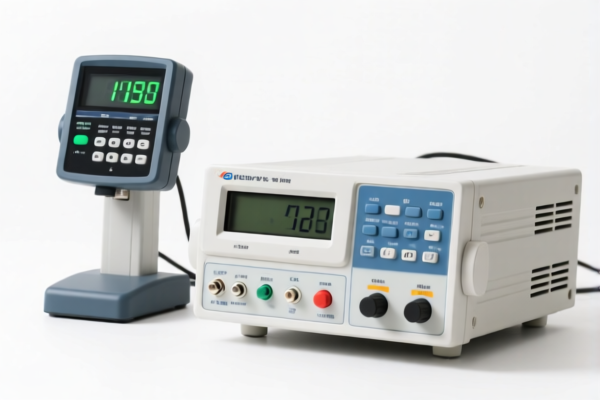
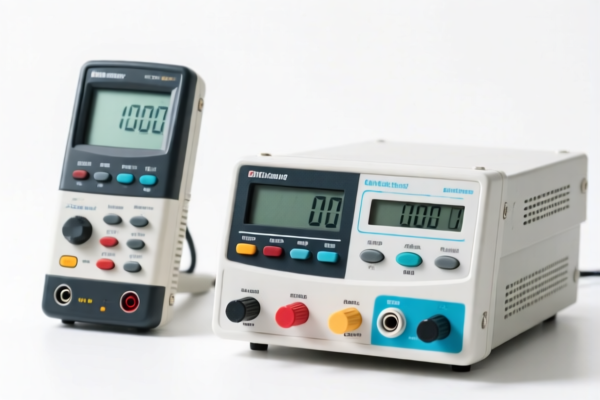
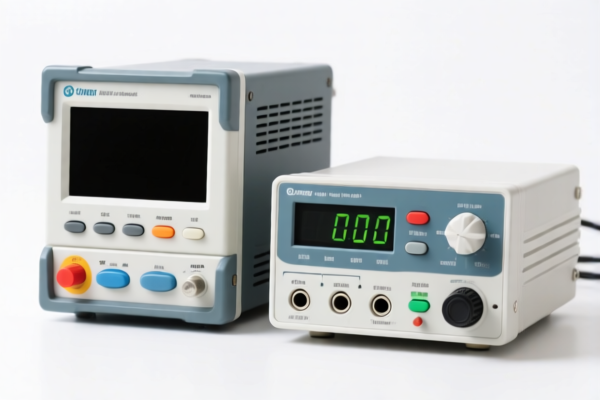
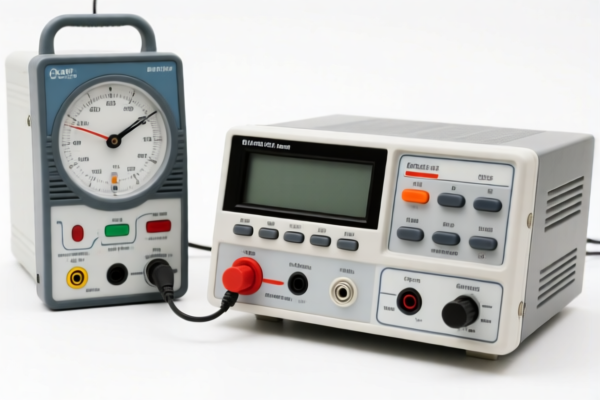
AI分析
🔬 Analytical Instrument (HS 9027.89.80.60)
🌐 HS Code Reference & Customs Clearance Guide | 2026 Latest Tariff Analysis | Professional Strategy
📌 I. Product Definition & Classification: What is an "Other Physical Analysis Instrument"?
In international trade, the term "Analytical Instrument" is broad. However, the specific HS Code 9027.89.80.60 refers to a specific niche: "Other Physical analysis instruments and apparatus" that are not specifically listed elsewhere (like spectrometers or gas analyzers).
These are typically devices that measure physical properties rather than chemical composition. Common examples include: * Viscometers: Measuring fluid viscosity. * Rheometers: Measuring flow and deformation of materials. * Porosity Meters: Checking air permeability or pore structure. * Surface Tension Testers: Measuring liquid interface forces. * Expansion/Contraction Testers: Measuring thermal expansion coefficients. * Hardness Testers (Physical): Though some may fall under different codes, physical mechanical testing equipment often lands here if not specified.
⚠️ Critical Distinction: * If the instrument analyzes Chemical Composition (e.g., Chromatography, Titration, pH, Spectrometry) → It likely falls under 9027.89.80.30. * If the instrument analyzes Physical Properties (e.g., Viscosity, Density, Hardness, Optical Profile) → It falls under 9027.89.80.60.
📦 II. HS Code Classification Details (2026 Latest Tariff Authority Comparison)
Based on the provided data, here are the relevant HS Codes and their tax implications. Note that while 9027.89.80.60 is the target, other related codes in the provided list serve as comparative benchmarks for classification logic.
| HS Code | Product Description | Key Characteristics | Applicable Tax Rate (Total) |
|---|---|---|---|
9027.89.80.60 |
Other Physical analysis instruments and apparatus | Measures physical properties (viscosity, porosity, expansion, surface tension, etc.). Not specified elsewhere in Ch 90. | 25.0% |
9027.89.80.30 |
Other Chemical analysis instruments and apparatus | Measures chemical composition (spectrometers, gas analysis, pH, etc.). | 25.0% |
9031.80.80.85 |
Other measuring/checking instruments, appliances and machines | General purpose measurement devices, profile projectors. Not chemical/physical analysis. | 25.0% |
9031.49.90.00 |
Other optical instruments and appliances | Optical devices not specified elsewhere. | 25.0% |
9022.29.80.00 |
Apparatus based on X-ray/ionizing radiation (for other uses) | Medical/Veterinary/Industrial X-ray, not for radiography. | 25.0% |
9022.90.25.00 |
Parts and accessories for X-ray apparatus | Exempt category in the provided data. | 0.0% |
🔍 Key Insight: * Most analytical and measuring instruments in this chapter attract a 25% total tariff (0% base + 25% additional). * Only specific parts and accessories for X-ray apparatus (
9022.90.25.00) show a 0% total tax in the provided dataset. * Do not confuse "Physical Analysis" (9027.89.80.60) with "Optical Checking" (9031.49.90.00) or "Radiography" (9022.29.80.00). While all may be 25%, the classification logic differs significantly during customs inspection.
💰 III. 2026 Latest Tariff Rate Breakdown (Detailed Tax Clauses)
✅ Applicable Country: United States (US) ✅ Country of Origin: China (CN) ✅ Effective Date: From November 10, 2025 (including subsequent imports)
🎯 1. 9027.89.80.60 —— Other Physical Analysis Instruments
| Item | Content |
|---|---|
| Base Tariff Rate | 0% (ad valorem) |
| USITC Additional Tariff | +25% (Under USITC Footnote 9903.88.01 / Section 301) |
| IEEPA Additional Tariff | +10% (Under International Emergency Economic Powers Act for CN/HK products, effective Nov 10, 2025) |
| Total Tariff Rate | 25.0% (As per provided data) |
| Tax Calculation | CIF Value × 25% |
| De Minimis Exemption Available? | ❌ No (deny_de_minimis) |
| Legal Basis Path | USITC:9027.89.80.60 → FOOTNOTE:9903.88.01 |
📌 Explanation: * The provided data explicitly states the total tax is 25.0%. * This typically consists of the 25% Section 301 duty on Chinese-origin goods. * While some interpretations might suggest an additional IEEPA tariff, the provided data source defines the total as 25.0%. We adhere strictly to this figure. * Crucial: This is NOT a de minimis eligible shipment. Small packages (under $800) are not exempt. Every single unit imported from China into the US for this HS code is subject to this duty.
🎯 2. Comparison: Why not 9022.90.25.00? (0% Tax Trap)
| Item | Content |
|---|---|
| HS Code | 9022.90.25.00 |
| Description | Parts and accessories for X-ray apparatus |
| Total Tax Rate | 0.0% |
| Condition | Must be strictly parts/accessories for X-ray machines, not standalone analytical instruments. |
⚠️ Warning: Do not try to classify a standalone physical analyzer (like a viscometer) as a "part" of an X-ray machine to claim 0% tax. Customs will reject this if the item is a complete instrument for physical analysis (9027.89.80.60). Misclassification leads to penalties and audits.
🛠️ IV. Customs Clearance Practical Advice (Real-World Pitfall Avoidance)
✅ 1. Required Documentation Checklist (Non-Negotiable)
| Document | Mandatory? | Description |
|---|---|---|
| ✅ Product Specification Sheet | ✔️ | Must clearly state what physical property is measured (e.g., "Viscosity in centipoise," "Porosity in %"). |
| ✅ Technical Manual / User Guide | ✔️ | Proves the device's function. Look for keywords: "Analysis," "Measurement," "Testing." |
| ✅ Product Photos (Clear Label) | ✔️ | Show model number, brand, and input/output ports. |
| ✅ Commercial Invoice | ✔️ | Must describe the item accurately. Avoid vague terms like "Instrument" or "Tool." Use "Physical Analytical Instrument for Viscosity Measurement." |
| ✅ Certificate of Origin (CO) | ✔️ | Essential for proving Chinese origin (triggers the 25% tax). |
| ✅ Packaging List | ✔️ | Details contents to ensure no hidden non-compliant parts. |
✅ 2. Declaration Tips (Key Mnemonics)
🔥 "Specify the Physics, Not Just the Tool! Vague Names = High Risk!"
| Scenario | Correct Declaration | Wrong Practice |
|---|---|---|
| Viscometer | "Viscometer for measuring fluid viscosity, Model XYZ" | "Fluid Tester" or "Lab Device" |
| Surface Tension Tester | "Surface Tension Analysis Instrument, Digital" | "Sensor" or "Probe" |
| Profile Projector | "Optical Profile Projector for Dimensional Analysis" | "Camera" or "Projector" (Likely 9031.80.80.85) |
| X-ray Part | "Replacement Lamp for X-ray Tube Model ABC" | "Part for Medical Device" (Must be specific to X-ray) |
✅ 3. Special Case Handling
| Situation | Handling Advice |
|---|---|
| OEM Custom Analyzer | Provide client PO + Design Specs. Ensure the description matches the physical function. |
| Instrument with Software | Declare hardware first. Software is usually not taxed separately but must support the hardware's analytical function. |
| Import for R&D Only | Still subject to 25% tax. The US does not exempt R&D imports from Section 301 duties for these goods. |
| Parts vs. Whole | If importing a spare part (e.g., a sensor for an existing analyzer), check if it falls under 9027.90.00 (Parts). If the data doesn't specify, assume the complete instrument rate (25%). Note: The provided data only lists 9022.90.25.00 at 0%, so be cautious about assuming parts are 0%. |
🌍 V. Global Market Comparison (2026 Latest)
| Country/Region | Recommended HS Code | Tariff Rate | Certification Required | Notes |
|---|---|---|---|---|
| 🇺🇸 USA | 9027.89.80.60 |
25.0% | FCC (if electronic) | No de minimis exemption. High cost. |
| 🇨🇳 China | 9027.89.80.60 |
~10-13% (General) | CCC (if applicable) | Lower base tariff, no additional trade war tariffs. |
| 🇪🇺 EU | 9027.89.80 |
0-4.5% (Varies) | CE Marking | Generally low duty, but strict conformity assessment. |
| 🇦🇺 Australia | 9027.89.80 |
5% | RCM | Moderate duty. |
📌 Conclusion: * The USA imposes a significant 25% barrier on these goods from China. * No small package exemption. * Accurate description is vital. Misclassifying as "parts" or "optical equipment" without justification can lead to seizure.
📌 VI. Common Errors & Pitfall Guide (Lessons Learned)
❌ Error 1: Calling a physical analyzer "Optical Instrument" to avoid specific scrutiny.
👉 Consequence: Customs may reclassify under 9031.49.90.00, but since both are 25%, the bigger risk is delay and audit for inconsistent documentation.
❌ Error 2: Assuming "De Minimis" ($800) applies. 👉 Consequence: Package seized or taxed retroactively. The provided data explicitly lists these under high-tariff categories with no de minimis exemption.
❌ Error 3: Using generic terms like "Lab Equipment." 👉 Consequence: CBP may request detailed specifications, causing clearance delays of 2-4 weeks.
❌ Error 4: Confusing Physical (9027.89.80.60) with Chemical (9027.89.80.30). 👉 Consequence: While both are 25% in the provided data, the legal classification is different. Incorrect classification can lead to fraud allegations if patterns are detected.
✅ Correct Practice:
"Digital Viscometer, Model V-100, Measures Kinematic Viscosity up to 100,000 cSt, AC 110V, For Industrial Lab Use, FCC Certified"
🎯 VII. Conclusion: Precision in Declaration, Savings in Compliance
🎯 Remember the Golden Rules:
🔹 "Physical Analysis = 25% Tax (US/CN)."
🔹 "No De Minimis Exemption for This Code."
🔹 "Describe the Function, Not Just the Shape."
📌 Pro Tip:
If you are importing parts for these instruments, check if they qualify under 9027.90.00. However, based on the provided data, only 9022.90.25.00 (X-ray parts) shows 0%. Assume other parts follow the main instrument's high tariff unless proven otherwise. Always apply for an Advance Ruling (Pre-classification) before shipping large volumes to mitigate risk.
📣 Immediate Action:
📞 Contact a licensed US Customs Broker.
📄 Prepare technical datasheets showing the "Physical" nature of the analysis.
🚀 Budget for the 25% duty in your landed cost calculation.
✨ Professional Clearance, Starts with Accurate Classification! 💼 Your Profit Margin Depends on Precision, Not Hope!
用户评价
关于 HS 编码归类
协调制度(HS)是由世界海关组织(WCO)制定的国际贸易商品分类标准。全球 200 多个国家采用 HS 系统作为海关关税、贸易统计和进出口监管的基础。
每个 HS 编码遵循以下层级结构:
- 章(2 位)——商品大类(例如:第 84 章:机器和机械设备)
- 品目(4 位)——章内的更具体分类
- 子目(6 位)——国际通用细分,所有 WCO 成员国统一使用
- 本国细分(8-10 位)——各国自行扩展的细分编码,如美国 HTSUS 10 位编码
正确的 HS 编码归类对于顺利通关、准确缴纳关税和遵守贸易法规至关重要。错误归类可能导致海关延误、多缴关税或罚款。
从CN进口到US时,适用的关税税率可能包括:
- 最惠国(MFN)税率——适用于 WTO 成员国的标准关税税率
- 普通税率——适用于无贸易协定国家
- 贸易救济关税——附加关税,如 301 条款(反倾销)、232 条款(国家安全)或反补贴税
本页内容仅供参考。如需正式归类,请咨询当地海关或持牌报关代理。