Animal Hair Non slip Floor Mat
CN → US| HS编码 | 关税税率 | 原产国 | 目的国 | 文档 |
|---|---|---|---|---|
| 5705002015 | 38.3% | CN | US | 官方文档 |
| 5705002005 | 38.3% | CN | US | 官方文档 |
| 3926909989 | 22.8% | CN | US | 官方文档 |
| 4016910000 | 37.7% | CN | US | 官方文档 |
| 4016990500 | 20.9% | CN | US | 官方文档 |
商品图片
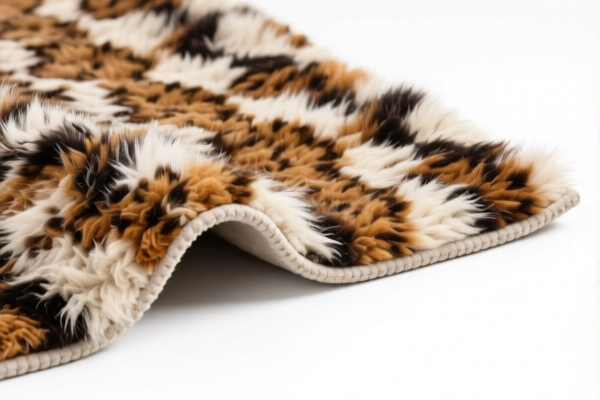
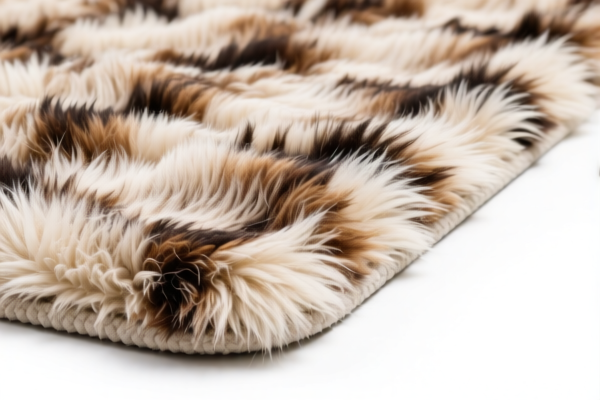
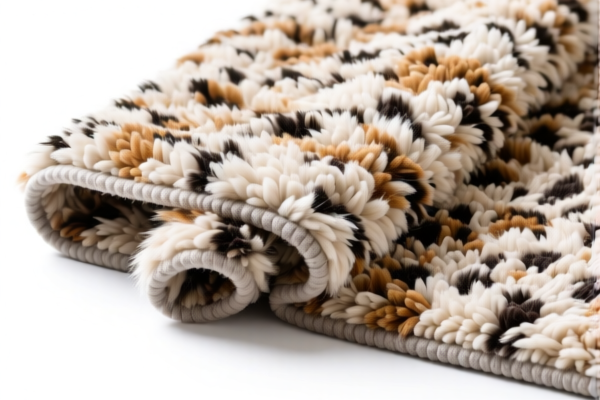
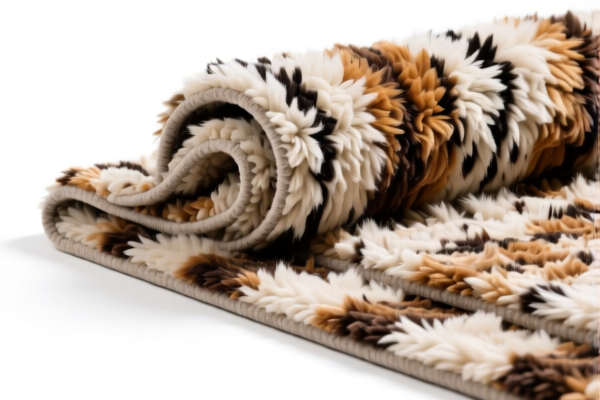
AI分析
🧶 Animal Hair Non-Slip Floor Mat (Rug Gripper)
🌐 HS Code Reference & Customs Clearance Guide | 2026 Latest Tariff Analysis | Professional Strategy for Textile & Rubber Products
📌 Part 1: Product Definition & Classification – What Exactly Is It?
An "Animal Hair Non-Slip Floor Mat" is a composite product. It typically consists of two distinct components working together: 1. The Top Layer: Made of natural animal fibers (wool, goat hair, etc.), functioning as a rug or textile floor covering. 2. The Bottom Layer: A rubber or plastic backing designed to prevent slipping.
⚠️ Critical Classification Challenge:
Customs authorities will classify this based on the primary material or the essential character of the good. Because it involves both textile (animal hair) and non-textile (rubber/plastic) materials, there are multiple potential HS Codes depending on how the backing is constructed and its proportion.
Key Distinction Point:
- If the rubber backing is merely a thin coating or thin layer and the wool/animal hair provides the essential character → Chapter 57 (Carpeting).
- If the product is predominantly a rubber article with only surface decoration → Chapter 40 (Rubber Articles) or Chapter 39 (Plastics).
📦 Part 2: HS Code Classification Details (2026 Latest Tariff Reference)
Below are the 5 specific HS Codes derived from the input data, covering the spectrum from pure textile classification to inferred rubber/plastic classification.
| HS Code | Product Description | Material Inference | Primary Category |
|---|---|---|---|
| 5705.00.20.15 | Animal Hair Rug Non-Slip Pad; Material: Wool or Fine Animal Hair; Use: Carpet & Textile Floor Covering | Wool/Animal Hair | Carpeting (Textile) |
| 5705.00.20.05 | Animal Hair Rug Non-Slip Pad; Form: Carpet/Rug; Material: Wool or Fine Animal Hair | Wool/Animal Hair | Carpeting (Textile) |
| 4016.91.00.00 | Animal Hair Rug Non-Slip Pad; Inferred: Rubber Bottom/Coating; Classified as Vulcanized Rubber Article | Vulcanized Rubber | Rubber Articles |
| 4016.99.05.00 | Animal Hair Rug Non-Slip Pad; Inferred: Vulcanized Rubber or Rubber-Like Material for Household Items | Rubber/Rubber-like | Rubber Articles |
| 3926.90.99.89 | Animal Hair Rug Non-Slip Pad; Inferred Material: Plastic or Rubber-like; Classified as Other Unspecified Articles | Plastic/Rubber | Plastics/Other |
🔍 Analysis Note:
- Codes 5705.00.20.15 & 05: These are the most accurate if the product is primarily a rug with a non-slip treatment. They fall under "Other carpets and other textile floor coverings."
- Codes 4016.91.00.00 & 99.05: These apply if customs views the rubber backing as the essential character, or if the product is considered a "rubber household article."
- Code 3926.90.99.89: A fallback classification for "other articles of plastics" if the material is deemed plastic or if it doesn't fit specific rubber/textile descriptions.
💰 Part 3: 2026 Latest Tariff Rate Breakdown (Detailed Tax Clauses)
✅ Applicable Country: United States (US)
✅ Origin: China (CN) (Implied by "122 Clause" and specific tax rates typical of US-China trade context)
✅ Effective Time: Current Trade Policies (Section 301 & IEEPA)
🎯 1. For Textile Classifications: 5705.00.20.15 & 5705.00.20.05
| Item | Detail |
|---|---|
| Base Tariff Rate | 3.3% (Standard MFN Rate for Carpets) |
| Section 301 Additional Tariff | +25.0% (Retaliatory tariff on Chinese textiles) |
| IEEPA "122 Clause" Tariff | +10.0% (Additional levy on Chinese goods under International Emergency Economic Powers Act) |
| Total Effective Tax Rate | 38.3% |
| Tax Calculation | CIF Value × 38.3% |
| De Minimis Exemption? | ❌ No (Items >$800 may face scrutiny; high tariffs usually disqualify small package exemptions in practice for bulk/commercial) |
📌 Interpretation:
- Even though carpets have a low base duty (3.3%), the Section 301 (25%) and IEEPA (10%) taxes dominate the cost.
- Total 38.3% is a significant cost burden. This classification is best if you can prove the product is primarily a textile rug.
🎯 2. For Rubber Classifications: 4016.91.00.00
| Item | Detail |
|---|---|
| Base Tariff Rate | 2.7% (Standard Rate for Other Vulcanized Rubber Articles) |
| Section 301 Additional Tariff | +25.0% |
| IEEPA "122 Clause" Tariff | +10.0% |
| Total Effective Tax Rate | 37.7% |
| Tax Calculation | CIF Value × 37.7% |
📌 Interpretation:
- Slightly cheaper than the textile classification (0.6% savings).
- Applies if the rubber backing is thick or essential to the product's function (non-slip).
- Legal Path:IEEPA:9903.01.24→USITC:4016.91.00.00.
🎯 3. For Other Rubber Household Items: 4016.99.05.00
| Item | Detail |
|---|---|
| Base Tariff Rate | 3.4% |
| Section 301 Additional Tariff | +7.5% (Note: Lower Section 301 rate for this specific subheading) |
| IEEPA "122 Clause" Tariff | +10.0% |
| Total Effective Tax Rate | 20.9% |
| Tax Calculation | CIF Value × 20.9% |
🚀 KEY INSIGHT:
- This is the MOST COST-EFFICIENT classification among the options!
- Why is the Section 301 tax only 7.5% here? Some specific rubber household articles are excluded from the full 25% penalty or fall under a different rate category in the current trade matrix.
- Strategy: If your product can be legally argued as a "rubber household item" rather than a "carpet," you save 17.4% in taxes.
🎯 4. For Plastic/Other Articles: 3926.90.99.89
| Item | Detail |
|---|---|
| Base Tariff Rate | 5.3% |
| Section 301 Additional Tariff | +7.5% |
| IEEPA "122 Clause" Tariff | +10.0% |
| Total Effective Tax Rate | 22.8% |
| Tax Calculation | CIF Value × 22.8% |
📌 Interpretation:
- Also relatively low (22.8%).
- Applies if the non-slip layer is plastic or if the product is considered an "other plastic article."
- Risk: Higher risk of customs reclassification to Textile (38.3%) if animal hair is prominently visible.
🛠️ Part 4: Customs Clearance Practical Advice (Avoiding Pitfalls)
✅ 1. Documentation Checklist (Must-Haves)
| Document | Required? | Notes |
|---|---|---|
| Product Photos | ✅ Yes | Must show both the animal hair side and the rubber/plastic backing clearly. |
| Material Composition Ratio | ✅ Yes | e.g., "60% Wool, 40% Rubber Backing." Crucial for determining "Essential Character." |
| Bill of Materials (BOM) | ✅ Yes | Detail the type of rubber (vulcanized? latex?) and type of hair (wool? goat hair?). |
| Commercial Invoice | ✅ Yes | Description should be precise: "Non-slip Rug Backing" OR "Textile Floor Covering with Rubber Backing." |
| Certificate of Origin | ✅ Yes | Required for Section 301/IEEPA verification. |
✅ 2. Classification Strategy (How to Choose)
| Scenario | Recommended HS Code | Reasoning |
|---|---|---|
| Product is primarily a RUG (thick wool, thin glue) | 5705.00.20.15 |
Essential character is the textile. High tax (38.3%) but accurate. |
| Product is primarily a RUBBER MAT (thick rubber, hair glued on top) | 4016.91.00.00 |
Essential character is rubber. Moderate tax (37.7%). |
| Product is a HOUSEHOLD RUBBER ITEM (flexible, non-rug shape) | 4016.99.05.00 |
Best for Cost Savings (20.9%). Argue it's a "rubber household article," not a carpet. |
| Material is Plastic/TPR | 3926.90.99.89 |
Alternative if rubber is not present. Low tax (22.8%). |
🔥 Pro Tip:
To benefit from the 20.9% rate (4016.99.05.00), avoid using the word "Carpet" or "Rug" in your commercial invoice if possible. Use terms like "Non-Slip Floor Grip Pad," "Rubberized Floor Protector," or "Animal Hair Floor Mat with Rubber Backing." Emphasize the rubber/plastic non-slip function over the textile appearance.
✅ 3. Common Errors & Risks
| Error | Consequence |
|---|---|
| Misdeclaring as "Home Decor" without HS Code | ❌ Seizure, Delay, Heavy Penalties. |
| Declaring as Carpet (5705) when it's mostly Rubber | ⚠️ Unnecessary high tax (38.3% vs 20.9%). |
| Declaring as Rubber (4016) when it's mostly Wool | ⚠️ High risk of Customs Rejection/Reclassification. CBP may audit and demand back taxes + interest. |
| Ignoring IEEPA 122 Clause | ❌ Underpayment of duties. The 10% IEEPA tax is mandatory for Chinese-origin goods in many categories. |
🌍 Part 5: Global Market Comparison (2026 Context)
| Market | Best HS Code Approach | Estimated Total Tax (China Origin) | Note |
|---|---|---|---|
| 🇺🇸 USA | 4016.99.05.00 (if feasible) |
20.9% - 38.3% | Highly sensitive to Section 301 & IEEPA. |
| 🇨🇳 China | 5705.00.20.15 |
~10-13% | Import duties for rugs. No Section 301. |
| 🇪🇺 EU | 5705.00.20 |
~12% | No IEEPA/Section 301. VAT extra. |
| 🇬🇧 UK | 5705.00.20 |
~12% | Post-Brexit tariffs apply. |
📌 Conclusion for US Importers:
The US tax burden is the highest globally due to trade wars. Optimize your HS Code classification carefully.
- If you can prove the product is a rubber household item, you save nearly half the tax compared to a textile carpet classification.
- Consult a customs broker to review your product's physical properties (weight ratio of rubber to wool) before shipping.
📌 Part 6: Final Clearance Checklist
✅ Step 1: Determine the weight ratio of Animal Hair vs. Rubber/Plastic.
✅ Step 2: If Rubber > 50% by weight or essential character, lean towards Chapter 40.
✅ Step 3: If Wool > 50% or essential character, lean towards Chapter 57.
✅ Step 4: Use the lowest tax HS Code that is legally defensible based on material composition.
✅ Step 5: Prepare photos and BOM to support your chosen classification during customs audit.
🎯 Expert Tip:
"Don't just say 'Rug'. Say 'Non-Slip Rubber Mat with Animal Hair Top'."
The name you choose on the invoice can influence the initial classification. However, physical evidence (photos, samples) is what ultimately decides the HS Code. Always be prepared to justify your choice.
✨ Clear Customs, Save Money, Ship Efficiently!
💼 Your Profit Margin Depends on Your HS Code!
用户评价
关于 HS 编码归类
协调制度(HS)是由世界海关组织(WCO)制定的国际贸易商品分类标准。全球 200 多个国家采用 HS 系统作为海关关税、贸易统计和进出口监管的基础。
每个 HS 编码遵循以下层级结构:
- 章(2 位)——商品大类(例如:第 84 章:机器和机械设备)
- 品目(4 位)——章内的更具体分类
- 子目(6 位)——国际通用细分,所有 WCO 成员国统一使用
- 本国细分(8-10 位)——各国自行扩展的细分编码,如美国 HTSUS 10 位编码
正确的 HS 编码归类对于顺利通关、准确缴纳关税和遵守贸易法规至关重要。错误归类可能导致海关延误、多缴关税或罚款。
从CN进口到US时,适用的关税税率可能包括:
- 最惠国(MFN)税率——适用于 WTO 成员国的标准关税税率
- 普通税率——适用于无贸易协定国家
- 贸易救济关税——附加关税,如 301 条款(反倾销)、232 条款(国家安全)或反补贴税
本页内容仅供参考。如需正式归类,请咨询当地海关或持牌报关代理。