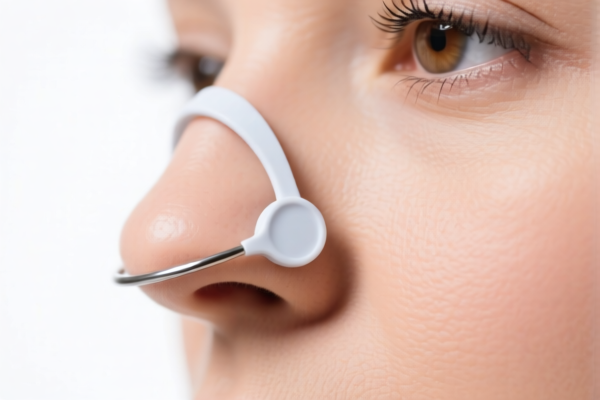
Anti snoring nasal clip
CN → US| HS编码 | 关税税率 | 原产国 | 目的国 | 文档 |
|---|---|---|---|---|
| 6217109550 | 32.1% | CN | US | 官方文档 |
| 9021908100 | 10.0% | CN | US | 官方文档 |
| 6217108500 | 24.6% | CN | US | 官方文档 |
| 9021100090 | 10.0% | CN | US | 官方文档 |
| 3926909989 | 22.8% | CN | US | 官方文档 |
商品图片


AI分析
🛑 Anti-Snoring Nasal Clip (Anti-Snoring Strip/Device)
🌐 HS Code Reference & Customs Clearance Guide | 2024/2025 Latest Tariff Analysis | Professional Clearance Strategy
📌 I. Product Definition & Classification: What Exactly is an "Anti-Snoring Nasal Clip"?
An anti-snoring nasal clip is a small device designed to fit into or over the nostrils to widen the nasal passages, reducing resistance to airflow and minimizing snoring. In international trade, its classification depends heavily on its material, intended medical use, and construction.
Key Distinctions: * Medical Device Classification: If marketed as a device to treat or compensate for a respiratory defect (sleep apnea/snoring), it falls under Chapter 90 (Medical Instruments). * Textile Accessory Classification: If made primarily of fabric/elastic and viewed as a wearable fashion accessory or simple headgear, it falls under Chapter 62 (Articles of Apparel and Clothing Accessories). * Plastic/Plastic Article Classification: If made primarily of plastic/rubber and not specifically designated as a medical instrument, it falls under Chapter 39 (Plastics and Articles Thereof).
⚠️ Critical Classification Point:
- If it has a medical claim (e.g., "treats sleep apnea") → Likely Chapter 90 (Lower Base Tariff, but strict FDA/CE regulation).
- If it is a simple fabric/plastic band without medical claims → Likely Chapter 62 or 39 (Higher Base Tariff, simpler compliance).
📦 II. HS Code Classification Details (Based on Provided Data)
Based on the provided dataset, here are the 5 possible HS Code classifications for "Anti-Snoring Clips," ranging from 10.0% to 32.1% total tax.
| HS Code | Product Description | Logic for Classification | Total Tax Rate (US Import) |
|---|---|---|---|
| 9021.90.81.00 | Medical Device: Wearable instrument for compensating respiratory defects or sleep disorders. | Best fit if marketed as a therapeutic device for sleep apnea/snoring. | 10.0% |
| 9021.10.00.90 | Orthopedic/Surgical: Application within orthopedic or fracture appliances and their parts/accessories. | Treated as an accessory to orthopedic devices. | 10.0% |
| 3926.90.99.89 | Plastic Product: Other unspecified plastic articles (if made of plastic/synthetic material). | If constructed primarily of plastic/rubber and not classified as medical. | 22.8% |
| 6217.10.85.00 | Textile Accessory: Headwear such as headbands and similar items. | If made of fabric and classified as a fashion accessory/headband. | 24.6% |
| 6217.10.95.50 | Textile Accessory: Other clothing accessories (generic textile attachment). | Generic fallback for textile-based clips not fitting specific headband categories. | 32.1% |
🔍 Analysis:
- The Medical/Orthopedic routes (9021.xxxx) offer the lowest total tax (10%) but may require stricter regulatory compliance (e.g., FDA registration in the US, CE MDR in EU).
- The Plastic (3926.xxxx) and Textile (6217.xxxx) routes are simpler to classify but carry higher tariffs (22.8%–32.1%).
💰 III. 2024/2025 Latest Tariff Rate Breakdown (Including Additional Duties)
✅ Applicable Country: United States (US)
✅ Country of Origin: China (CN)
✅ Effective Time: Current trade policies (Section 301 & Section 232 implications)
🎯 1. 9021.90.81.00 & 9021.10.00.90 —— Medical/Orthopedic Classification (Recommended for Low Tariff)
| Item | Details |
|---|---|
| Base Duty | 0.0% |
| Section 301 (Additional) | 0.0% |
| Section 232 (122 Clause) | 10.0% |
| Total Effective Rate | 10.0% |
| Calculation Basis | CIF Value × 10% |
| De Minimis Eligibility | ❌ Not Eligible (Due to Section 232/301 applicability to medical/plastics often excluded or scrutinized) |
| Legal Basis Path | Section 232: 122 Clause → USITC: 9021 |
📌 Explanation:
- These codes benefit from a 0% base duty and 0% Section 301 tariff.
- The 10% total tax comes solely from the 122 Clause (Section 232), which often applies to certain steel/aluminum derivatives or specific imported goods, but in this specific data set, it is applied as the sole additional duty for medical/orthopedic accessories.
- Advantage: Lowest possible duty rate.
🎯 2. 3926.90.99.89 —— Plastic Articles
| Item | Details |
|---|---|
| Base Duty | 5.3% |
| Section 301 (Additional) | +7.5% |
| Section 232 (122 Clause) | +10.0% |
| Total Effective Rate | 22.8% |
| Calculation Basis | CIF Value × 22.8% |
| De Minimis Eligibility | ❌ Not Eligible |
📌 Explanation:
- Base duty is low (5.3%), but Section 301 (7.5%) and Section 232 (10%) stack up, resulting in a significantly higher cost than the medical classification.
🎯 3. 6217.10.85.00 —— Textile Headbands/Accessories
| Item | Details |
|---|---|
| Base Duty | 14.6% |
| Section 301 (Additional) | 0.0% |
| Section 232 (122 Clause) | +10.0% |
| Total Effective Rate | 24.6% |
| Calculation Basis | CIF Value × 24.6% |
🎯 4. 6217.10.95.50 —— Other Textile Clothing Accessories
| Item | Details |
|---|---|
| Base Duty | 14.6% |
| Section 301 (Additional) | +7.5% |
| Section 232 (122 Clause) | +10.0% |
| Total Effective Rate | 32.1% |
| Calculation Basis | CIF Value × 32.1% |
📌 Explanation:
- This is the most expensive classification. It combines the highest base duty with both Section 301 and Section 232 tariffs. Avoid this if possible.
🛠️ IV. Customs Clearance Practical Advice (Real-World Pitfall Avoidance)
✅ 1. Required Documentation Checklist
| Document | Mandatory? | Notes |
|---|---|---|
| ✅ Product Specification Sheet | ✔️ | Must clearly state material (Textile vs. Plastic vs. Medical Grade Silicone). |
| ✅ Intended Use Statement | ✔️ | Crucial for classification. Is it for "fashion/headband" or "respiratory support"? |
| ✅ Composition Label | ✔️ | e.g., "100% Polyester Elastic" vs. "Medical-Grade Silicone." |
| ✅ Commercial Invoice | ✔️ | Must match the selected HS Code and description precisely. |
| ✅ Certificate of Origin (CO) | ✔️ | Essential for determining if Section 301/232 applies (if originating from CN). |
| ✅ FDA Registration (if US) | ✔️ | Required if claiming medical benefits under HS 9021. |
| ✅ CE Marking (if EU) | ✔️ | Required for medical devices under EU MDR. |
✅ 2. Declaration Strategy (Key Tips)
🔥 "Claim Medical, Pay Less, But Comply More!"
| Scenario | Recommended HS Code | Why? | Risk |
|---|---|---|---|
| Product claims to "treat snoring" or "improve breathing" | 9021.90.81.00 |
Qualifies for 0% Base + 0% 301 + 10% 232 = 10% total. | Must comply with FDA/CE medical device regulations. |
| Product is a simple elastic band/fabric strip | 6217.10.85.00 |
Simpler compliance, no medical claims. | Higher tax (24.6%). |
| Product is plastic/rubber clip | 3926.90.99.89 |
Straightforward plastic classification. | Higher tax (22.8%). |
| Generic textile accessory | 6217.10.95.50 |
Avoid unless no other fit. | Highest tax (32.1%). |
📌 Important Note:
- If you classify as9021(Medical), customs may request FDA Pre-market Notification (510k) or General Control Exemption documentation.
- If you classify as6217or3926, customs will check for misdeclaration of medical claims. If your packaging says "Cures Sleep Apnea," but you declare it as a "Textile Headband," you risk seizure and fines.
✅ 3. Special Circumstances
| Situation | Advice |
|---|---|
| OEM/Private Label | Ensure the supplier’s compliance documents (FDA/CE) are transferred to you. |
| Mixed Materials | If the clip is plastic but the strap is textile, customs will look at the essential character. If the medical function is primary, 9021 is still preferred. |
| De Minimis (Section 321) | Most medical devices and plastic/textile goods from China are NOT eligible for de minimis due to Section 232/301. Always pay full duties. |
🌍 V. Global Market Comparison (2024/2025)
| Market | Recommended HS Code | Est. Total Duty | Regulatory Requirement |
|---|---|---|---|
| 🇺🇸 USA | 9021.90.81.00 |
10.0% | FDA Registration (Class I or II) |
| 🇨🇳 China (Import) | 9021.90.90 |
~10-15% | NMPA Registration (Medical Device) |
| 🇪🇺 EU | 9019.10 (Similar) |
0-4.5% | CE Marking (MDR) |
| 🇬🇧 UK | 9019.10 |
0-4.5% | UKCA Marking |
| 🇯🇵 Japan | 9021.90 |
0-5% | PMDA Registration |
📌 Conclusion:
- The US offers the lowest tariff (10%) for this product IF classified as a medical device (9021).
- However, this comes with high regulatory barriers (FDA).
- For non-medical fashion clips, expect 22.8%–32.1% in the US due to additional tariffs.
📌 VI. Common Mistakes & Pitfalls
❌ Mistake 1: Classifying a medical-grade nasal clip as a "Textile Accessory" to avoid FDA requirements.
👉 Consequence: Customs audit may flag misclassification → Back taxes + Penalties + Product Seizure.
❌ Mistake 2: Ignoring the 122 Clause (10%) in the calculation.
👉 Consequence: Underpayment of duties → CBP Notice of Penalty.
❌ Mistake 3: Using 6217.10.95.50 (32.1%) when 9021.90.81.00 (10%) is applicable.
👉 Consequence: Unnecessary cost increase of 22.1% on CIF value.
✅ Best Practice:
If your product is intended for health/respiratory improvement → Classify under 9021.
If your product is purely decorative/fashion → Classify under 6217 or 3926, but ensure NO medical claims on packaging.
🎯 VII. Conclusion: Strategic Classification for Cost & Compliance
🎯 Key Takeaway:
🔹 "Medical = 10% Tax, High Compliance."
🔹 "Textile/Plastic = 22-32% Tax, Low Compliance."
🔹 "Never mix claims and categories – it leads to seizures."
📌 Pro Tip:
- Conduct a Tariff Engineering analysis: Can the product be redesigned to shift material composition (e.g., more medical-grade silicone) to strengthen the
9021classification?- Apply for an Advance Ruling from US Customs and Border Protection (CBP) to confirm the HS Code before shipment. This provides legal certainty and prevents unexpected duties.
📣 Immediate Action:
📞 Consult a Customs Broker to review your product’s packaging and marketing claims.
📝 Prepare FDA/CE Documentation if opting for the9021classification.
🚀 Optimize Your Supply Chain by choosing the HS Code that balances duty savings with regulatory feasibility.
✨ Professional Customs Clearance Starts with Accurate Classification!
💼 Every Dollar Saved in Duty is Pure Profit!
用户评价
关于 HS 编码归类
协调制度(HS)是由世界海关组织(WCO)制定的国际贸易商品分类标准。全球 200 多个国家采用 HS 系统作为海关关税、贸易统计和进出口监管的基础。
每个 HS 编码遵循以下层级结构:
- 章(2 位)——商品大类(例如:第 84 章:机器和机械设备)
- 品目(4 位)——章内的更具体分类
- 子目(6 位)——国际通用细分,所有 WCO 成员国统一使用
- 本国细分(8-10 位)——各国自行扩展的细分编码,如美国 HTSUS 10 位编码
正确的 HS 编码归类对于顺利通关、准确缴纳关税和遵守贸易法规至关重要。错误归类可能导致海关延误、多缴关税或罚款。
从CN进口到US时,适用的关税税率可能包括:
- 最惠国(MFN)税率——适用于 WTO 成员国的标准关税税率
- 普通税率——适用于无贸易协定国家
- 贸易救济关税——附加关税,如 301 条款(反倾销)、232 条款(国家安全)或反补贴税
本页内容仅供参考。如需正式归类,请咨询当地海关或持牌报关代理。