Anti static Plant Fiber Rubber Conveyor Belt
CN → US| HS编码 | 关税税率 | 原产国 | 目的国 | 文档 |
|---|---|---|---|---|
| 5911310080 | 38.8% | CN | US | 官方文档 |
| 3926905600 | 40.1% | CN | US | 官方文档 |
| 8431390010 | 35.0% | CN | US | 官方文档 |
| 5911320080 | 38.8% | CN | US | 官方文档 |
| 5911310080 | 38.8% | CN | US | 官方文档 |
商品图片
AI分析
🛡️ Anti-Static Plant Fiber Rubber Conveyor Belt
🌐 HS Code Reference & Customs Clearance Guide | 2026 Latest Tariff Analysis | Professional Compliance Strategy
📌 I. Product Definition & Classification: Do You Truly Understand "Plant Fiber Rubber Conveyor Belts"?
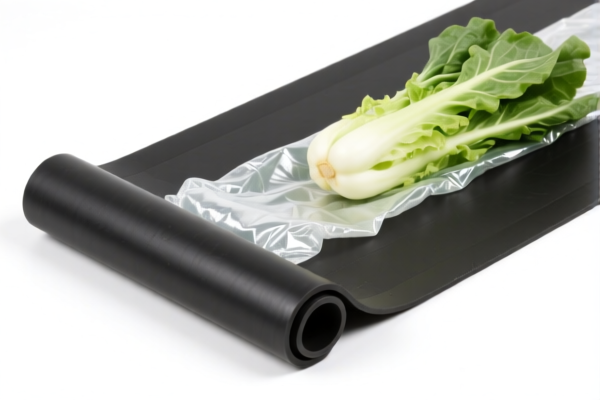
The Anti-Static Plant Fiber Rubber Conveyor Belt is a critical industrial component used in sectors like mining, forestry, and chemical processing. Its defining characteristics are the plant fiber reinforcement (providing flexibility and heat resistance) and the rubber cover (providing abrasion resistance and electrical conductivity).
In international trade, classification depends heavily on the material composition and intended use. Key distinctions include:
1. Textile-Based Belts (Chapter 59): Belts where the fabric (plant fiber) is the primary structural element, impregnated with rubber or plastic. 2. Plastic/Synthetic Articles (Chapter 39): Belts primarily viewed as processed plastic items, regardless of internal fiber reinforcement. 3. Machinery Parts (Chapter 84): Belts classified strictly as functional parts for specific machinery (like lifters/conveyors), distinct from the material itself.
⚠️ Key Classification Logic:
- If the belt is primarily seen as a textile product coated with rubber →归入 5911 series
- If the belt is viewed as a rubber/plastic molded article → 归入 3926 series
- If the belt is declared strictly as a spare part for lifting/conveying machinery → 归入 8431 series
📦 II. HS Code Classification Details (2026 Latest Tariff Authority Comparison)
| HS Code | Product Description | Application Scenario | Classification Logic |
|---|---|---|---|
5911.31.00.80 |
Textile fabric, coated with rubber or plastic, used for textile machinery or similar machines (e.g., paper making) | Industrial textile machinery, paper machine felts | ✅ Textile/Rubber Composite |
3926.90.56.00 |
Other articles of plastics, other | General purpose plant fiber belts viewed as plastic/rubber composite articles | ✅ Plastic/Rubber Article |
8431.39.00.10 |
Parts suitable for use solely or principally with the machinery of headings 8425 to 8430 | Parts for lifters, conveyors, and cranes | ✅ Machinery Part |
5911.32.00.80 |
Textile fabric, felt, woven bands or clothing for similar technical uses, other than goods of heading 5910 | Industrial transmission belts, felt-like plant fiber belts | ✅ Industrial Textile/Felt |
🔍 Important Reminder:
-5911codes apply when the textile nature is dominant. Even with rubber coating, if it's a "textile fabric" product, it goes here. -3926code applies when the item is classified broadly as an "article of plastics/rubber," often due to high rubber content or specific manufacturing processes that blur the line. -8431code applies only if the belt is declared explicitly as a part for machinery (e.g., "Conveyor Belt Part for Crane"), not just as a generic conveyor belt.
💰 III. 2026 Latest Tariff Rate Breakdown (Including Surtaxes & Policy Add-ons)
✅ Applicable Country: United States (US)
✅ Origin: China (CN)
✅ Effective Date: 2025/2026 (Includes subsequent imports)
🎯 1. 5911.31.00.80 —— Textile Fabric Coated with Rubber (Plant Fiber, Paper/Textile Use)
| Item | Content |
|---|---|
| Base Tariff Rate | 3.8% (ad valorem) |
| USITC Surtax (Section 301) | +25.0% |
| 122 Clause Surtax | +10.0% |
| Total Tariff Rate | 38.8% |
| Tax Calculation | CIF Value × 38.8% |
| De Minimis Eligibility | ❌ No (Deny De Minimis) |
| Legal Basis Path | Base: 3.8% → Sec301: 25% → 122Clause: 10% |
📌 Explanation:
- The 3.8% is the standard Most Favored Nation (MFN) duty for textile-rubber composites. - The 25% is the Section 301 surtax on Chinese goods. - The 10% is an additional surtax under Section 122 (or similar administrative trade measures) targeting specific industrial materials. - Total 38.8% is a significant cost barrier for low-margin textile goods.
🎯 2. 3926.90.56.00 —— Other Plastic/Articles of Plastic/Rubber (Plant Fiber Belt)
| Item | Content |
|---|---|
| Base Tariff Rate | 5.1% (ad valorem) |
| USITC Surtax (Section 301) | +25.0% |
| 122 Clause Surtax | +10.0% |
| Total Tariff Rate | 40.1% |
| Tax Calculation | CIF Value × 40.1% |
| De Minimis Eligibility | ❌ No (Deny De Minimis) |
| Legal Basis Path | Base: 5.1% → Sec301: 25% → 122Clause: 10% |
📌 Note:
- Although this looks like a "higher base rate" (5.1% vs 3.8%), it reflects the classification of the item as a plastic/rubber article rather than a textile. - This classification is often used when the rubber coating is thick or the belt structure is dominated by polymer materials. - Total 40.1% is the highest among the options, making this the least favorable if a5911classification is possible.
🎯 3. 8431.39.00.10 —— Parts for Lifters/Conveyors (Plant Fiber Belt)
| Item | Content |
|---|---|
| Base Tariff Rate | 0.0% (ad valorem) |
| USITC Surtax (Section 301) | +25.0% |
| 122 Clause Surtax | +10.0% |
| Total Tariff Rate | 35.0% |
| Tax Calculation | CIF Value × 35.0% |
| De Minimis Eligibility | ❌ No (Deny De Minimis) |
| Legal Basis Path | Base: 0.0% → Sec301: 25% → 122Clause: 10% |
📌 Key Advantage:
- The 0% base duty for machinery parts under Chapter 84 is a major cost saver. - Total 35.0% is the lowest total tariff among the four options. - CRITICAL: This classification requires that the belt be declared as a part for specific machinery (Headings 8425-8430), such as a conveyor system or lifter. It cannot be declared as a generic "conveyor belt" for general use.
🎯 4. 5911.32.00.80 —— Industrial Textile/Felt (Plant Fiber, Transmission)
| Item | Content |
|---|---|
| Base Tariff Rate | 3.8% (ad valorem) |
| USITC Surtax (Section 301) | +25.0% |
| 122 Clause Surtax | +10.0% |
| Total Tariff Rate | 38.8% |
| Tax Calculation | CIF Value × 38.8% |
| De Minimis Eligibility | ❌ No (Deny De Minimis) |
| Legal Basis Path | Base: 3.8% → Sec301: 25% → 122Clause: 10% |
📌 Note:
- Similar to5911.31, this applies to industrial transmission belts made of plant fiber/felt with rubber/plastic coating. - Suitable for belts used in general industrial machinery, not just paper/textile machines. - Total 38.8% is identical to5911.31, but the application scenario differs (general industry vs. paper/textile specific).
🛠️ IV. Customs Clearance Practical Advice (Real-World Pitfall Avoidance)
✅ 1. Preparation Checklist (All Required)
| Document | Mandatory? | Description |
|---|---|---|
| ✅ Product Specification Sheet | ✔️ | Must detail: Plant fiber type (e.g., cotton, hemp), rubber compound, anti-static properties (ohm rating), width, length. |
| ✅ Material Composition Breakdown | ✔️ | Percentage of plant fiber vs. rubber/plastic. Crucial for deciding between 5911 and 3926. |
| ✅ Anti-Static Certification | ✔️ | Lab report proving surface resistance (e.g., 10^4 - 10^9 ohms). Required for safety compliance. |
| ✅ Commercial Invoice | ✔️ | Clearly state: "Anti-Static Plant Fiber Rubber Conveyor Belt" or "Conveyor Belt Part for [Machine Name]". |
| ✅ Packing List | ✔️ | Detail rolls/pieces, gross/net weight. |
| ✅ Origin Certificate (Form A/F/etc.) | ❌ | Note: US does not have free trade agreements with China for these codes, so preferential origin certs don't help reduce duty. |
✅ 2. Declaration Strategy (Key Mantras)
🔥 “Material Defines Code, Part Defines Duty, Name Defines Accuracy!”
| Scenario | Correct Declaration | Wrong Practice |
|---|---|---|
| Generic Belt | 5911.31.00.80 or 5911.32.00.80 (Textile focus) |
Declaring as 8431 without machinery context → Rejection |
| Part for Specific Machine | 8431.39.00.10 (Part focus) |
Declaring as 3926 → Higher duty (40.1% vs 35%) |
| High Rubber Content | 3926.90.56.00 (Plastic focus) |
Declaring as 5911 → Risk of misclassification audit |
| Vague "Rubber Belt" | Specific HS Code + Description | Using "Rubber Belt" without HS code → Delay/Fine |
✅ 3. Special Case Handling
| Situation | Handling Advice |
|---|---|
| OEM for Specific Conveyor System | Use 8431.39.00.10. Provide machine model numbers and proof that the belt is a replacement part. Saves 3.8% base duty. |
| General Stock for Multiple Machines | Use 5911.31.00.80 or 5911.32.00.80. These are more flexible for general textile-rubber classifications. |
| High Anti-Static Requirement | Ensure lab reports are included. If rejected as "anti-static," it may be reclassified as standard rubber, potentially affecting safety compliance but not necessarily HS code. |
| Plant Fiber vs. Synthetic Fiber | Clearly state "Plant Fiber" (e.g., Cotton, Jute, Hemp). If it contains synthetic fibers >50%, it may fall under different textile codes. |
🌍 V. Global Market Comparison (2026 Latest)
| Country/Region | Recommended HS Code | Tariff (China Origin) | Certification Requirements | Notes |
|---|---|---|---|---|
| 🇺🇸 USA | 8431.39.00.10 |
35.0% | No specific US certification needed for generic industrial use | 5911 is 38.8%, 3926 is 40.1%. 8431 is best if declared as part. |
| 🇨🇳 China | 5911.31.00.80 |
3.8% - 5.1% | CCC (if applicable for machinery) | No Section 301 or 122 surtaxes. |
| 🇪🇺 EU | 5911.31.00.80 |
0% - 2% | REACH (Chemicals in rubber/plant fibers) | No high surtaxes. Focus on REACH compliance. |
| 🇬🇧 UK | 5911.31.00.80 |
0% - 2% | UK REACH | Post-Brexit rules apply, but generally low duty. |
| 🇯🇵 Japan | 5911.31.00.80 |
0% - 3% | JIS Standards | Low duty, strict quality standards for anti-static ratings. |
📌 Conclusion:
- The US market imposes heavy surtaxes (35-40%) on these industrial goods. -8431.39.00.10is the most cost-effective if the goods are clearly parts of machinery. -5911codes are safer for general textile-rubber belts but cost more than8431. -3926is the most expensive and should be avoided unless the product is unmistakably a plastic article.
📌 VI. Common Mistakes & Pitfalls (Blood Lessons)
❌ Mistake 1: Declaring a general conveyor belt as 8431.39.00.10 without evidence it's a part for a specific machine.
👉 Consequence: Customs will reclassify to 5911 or 3926 → Higher duty + Penalty.
❌ Mistake 2: Ignoring the "Plant Fiber" aspect and declaring as pure rubber.
👉 Consequence: Misclassification → Audit → Seizure or Fine.
❌ Mistake 3: Not providing anti-static test reports.
👉 Consequence: Buyers may reject goods for safety non-compliance → Return/Refund.
❌ Mistake 4: Using "Rubber Belt" as the description.
👉 Consequence: Ambiguous → Customs Delay. Use "Anti-Static Plant Fiber Rubber Conveyor Belt" with HS Code.
✅ Correct Approach:
"Conveyor Belt Part for Model XYZ Lifter, Material: Plant Fiber/Cotton with Rubber Coating, Anti-Static, HS Code: 8431.39.00.10"
🎯 VII. Conclusion: Precision in Classification Saves Money!
🎯 Remember the Mantra:
🔹 "Part vs. Product:
8431wins if it's a part!"
🔹 "Textile vs. Plastic:5911is cheaper than3926!"
🔹 "Base Duty Matters: 0% is better than 3.8% or 5.1%!"
📌 Pro Tip:
If your conveyor belt is sold as a replacement part for a specific lifting or conveying machine (Headings 8425-8430), always use 8431.39.00.10. It offers the lowest total tariff (35.0%). For general stock, use 5911.31.00.80 or 5911.32.00.80 (38.8%). Avoid 3926.90.56.00 (40.1%) unless necessary.
📣 Immediate Action:
📞 Consult with a customs broker to determine if your belt qualifies as a "part" for machinery.
📄 Prepare lab reports for anti-static performance.
🚀 Optimize your HS Code to save 3.8% - 5.1% on every shipment!
✨ Professional Clearance Starts with Accurate Classification!
💼 Every percentage point of duty reduction adds to your bottom line!
用户评价
关于 HS 编码归类
协调制度(HS)是由世界海关组织(WCO)制定的国际贸易商品分类标准。全球 200 多个国家采用 HS 系统作为海关关税、贸易统计和进出口监管的基础。
每个 HS 编码遵循以下层级结构:
- 章(2 位)——商品大类(例如:第 84 章:机器和机械设备)
- 品目(4 位)——章内的更具体分类
- 子目(6 位)——国际通用细分,所有 WCO 成员国统一使用
- 本国细分(8-10 位)——各国自行扩展的细分编码,如美国 HTSUS 10 位编码
正确的 HS 编码归类对于顺利通关、准确缴纳关税和遵守贸易法规至关重要。错误归类可能导致海关延误、多缴关税或罚款。
从CN进口到US时,适用的关税税率可能包括:
- 最惠国(MFN)税率——适用于 WTO 成员国的标准关税税率
- 普通税率——适用于无贸易协定国家
- 贸易救济关税——附加关税,如 301 条款(反倾销)、232 条款(国家安全)或反补贴税
本页内容仅供参考。如需正式归类,请咨询当地海关或持牌报关代理。