Anti tamper
CN → US| HS编码 | 关税税率 | 原产国 | 目的国 | 文档 |
|---|---|---|---|---|
| 8309900085 | 37.6% | CN | US | 官方文档 |
| 8301106080 | 23.6% | CN | US | 官方文档 |
| 8301406060 | 23.2% | CN | US | 官方文档 |
| 8309900080 | 37.6% | CN | US | 官方文档 |
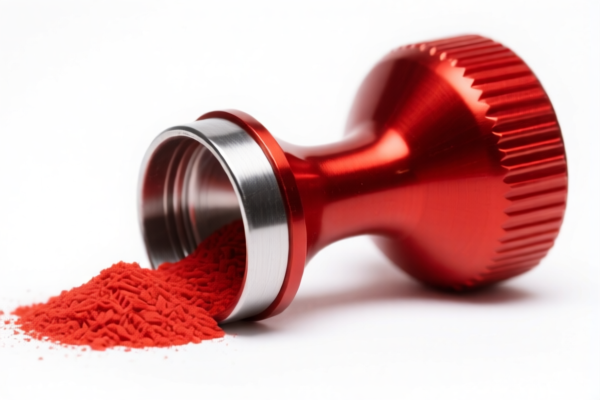
商品图片



AI分析
🛡️ Anti-Tamper Devices & Accessories: The Ultimate HS Code & Duty Guide
🌐 HS Code Reference & Customs Clearance Guide | 2026 Latest Tariff Analysis | Professional Compliance Strategy
📌 I. Product Definition & Classification: What Exactly is "Anti-Tamper"?
Anti-tamper products are specialized security components designed to prevent unauthorized access, modification, or removal of seals, locks, or packaging. In international trade, these items are broadly categorized into two main groups based on their primary function and material composition:
1. Locking Mechanisms (Ch 8301): Metal or composite items that actively lock or seal (e.g., padlocks, hasps, electronic locks with tamper-proof features).
2. Sealing/Packaging Accessories (Ch 8309): Passive or semi-passive components like bottle caps, stoppers, and seals that indicate if a package has been opened.
⚠️ Key Distinction:
- If the item is a lock (requires a key, combination, or electronic credential to open) → Look at 8301.
- If the item is a seal/cap/stopper (used for closure or tamper-evidence on containers) → Look at 8309.
- Note: The "Anti-Tamper" feature often pushes complex items into "Other/Subheading" categories (ending in .xx) rather than simple generic listings.
📦 II. HS Code Classification Details (Based on Provided Data)
| HS Code | Product Description | Application Scenario | Key Functional Attribute |
|---|---|---|---|
8301.10.60.80 |
Locks of a kind used for motor vehicles | Vehicle security locks, high-security hasps | High-Security Locking |
8301.40.60.60 |
Other locks (e.g., for buildings, furniture, containers) | Cabinet locks, industrial container locks | General Security Locking |
8309.90.00.80 |
Other caps, stoppers, and covers (Packaging) | Tamper-evident bottle caps, safety seals | Sealing/Packaging |
8309.90.00.85 |
Other articles of base metal (General Catch-all) | Non-standard anti-tamper fasteners, complex seals | General Base Metal Articles |
🔍 Critical Insight:
- The 8309 codes generally attract higher total duties due to specific trade measures.
- The 8301 codes are considered locking devices, often with slightly lower or different duty structures depending on the specific subheading.
💰 III. 2026 Latest Tariff Rate Breakdown (Including Surcharges)
✅ Applicable Country: United States (US)
✅ Origin: China (CN)
✅ Effective Time: Current Trade Policies (Section 301 & IEEPA)
🎯 1. 8309.90.00.80 & 8309.90.00.85 —— Anti-Tamper Seals & Caps
| Item | Content |
|---|---|
| Base Duty Rate | 2.6% (Ad Valorem) |
| Section 301 Additional Duty | +25.0% (From USITC Footnote 9903.88.01) |
| IEEPA Additional Duty | +10.0% (Targeting China/HK origin, from Nov 10, 2025) |
| Total Tax Rate | 37.6% |
| Tax Calculation | CIF Value × 37.6% |
| De Minimis Eligibility | ❌ Not Eligible (High duty prevents small shipment exemption) |
| Legal Basis Path | Base Tariff → Section 301: 25% → IEEPA: 10% |
📌 Explanation:
- The 37.6% total rate is driven by the 25% Section 301 tariff on base metal articles and 10% IEEPA surcharge.
- Even though the base rate is low (2.6%), the political trade measures significantly increase the cost.
- This applies to all "Other" caps, stoppers, and covers listed under 8309.90.
🎯 2. 8301.10.60.80 —— High-Security Locks (e.g., Vehicle/Industrial)
| Item | Content |
|---|---|
| Base Duty Rate | 6.1% |
| Section 301 Additional Duty | +7.5% |
| IEEPA Additional Duty | +10.0% |
| Total Tax Rate | 23.6% |
| Tax Calculation | CIF Value × 23.6% |
| De Minimis Eligibility | ❌ Not Eligible |
| Legal Basis Path | Base Tariff → Section 301: 7.5% → IEEPA: 10% |
📌 Explanation:
- The Section 301 rate for this specific subheading is 7.5%, not 25%.
- This is a significant cost advantage compared to the 8309 sealing products.
- If your product can be argued as a lock (even a simple hasp or tamper-evident lock), it may qualify for this lower rate.
🎯 3. 8301.40.60.60 —— Other Locks (General Purpose)
| Item | Content |
|---|---|
| Base Duty Rate | 5.7% |
| Section 301 Additional Duty | +7.5% |
| IEEPA Additional Duty | +10.0% |
| Total Tax Rate | 23.2% |
| Tax Calculation | CIF Value × 23.2% |
| De Minimis Eligibility | ❌ Not Eligible |
| Legal Basis Path | Base Tariff → Section 301: 7.5% → IEEPA: 10% |
📌 Explanation:
- This is the lowest duty option among all four codes at 23.2%.
- Applicable to general-purpose locks (e.g., padlocks, cabinet locks) that have anti-tamper features.
- Strategic Tip: If your "anti-tamper" item functions primarily as a lock (requires a mechanism to open/remove), prioritize classifying under 8301 to save ~14.4% in taxes compared to 8309.
🛠️ IV. Customs Clearance Practical Advice (Real-World Pitfall Guide)
✅ 1. Essential Documentation Checklist
| Document | Required? | Purpose |
|---|---|---|
| ✅ Product Specification Sheet | ✔️ | Must explicitly state "Anti-Tamper Function" and mechanism (e.g., "breaks if removed"). |
| ✅ Technical Diagrams | ✔️ | Critical to distinguish between a Lock (8301) and a Seal/Cap (8309). Show internal mechanisms. |
| ✅ Product Photos | ✔️ | Clear images of the item in use, showing how it secures the package/container. |
| ✅ Commercial Invoice | ✔️ | Describe item as "Lock Assembly" or "Tamper-Evident Seal" accurately. Avoid vague terms like "Security Part." |
| ✅ Certificate of Origin | ✔️ | Required for IEEPA 10% application. |
| ✅ Packaging List | ✔️ | Ensure no disassembly of kits; declare as a complete unit. |
✅ 2. Declaration Strategy (Key Mantra)
🔥 "Function Dictates Code: Lock vs. Seal. 8301 Saves Money, 8309 is Expensive!"
| Scenario | Recommended HS Code | Reasoning | Risk if Misclassified |
|---|---|---|---|
| Item has a keyhole, combination dial, or electronic sensor to open | 8301.40.60.60 or 8301.10.60.80 |
It is a Lock. Anti-tamper is a secondary feature. | If declared as 8309, you pay 37.6% instead of 23.2%. Customs may audit for underpayment. |
| Item is a plastic/metal cap or strip that breaks upon removal | 8309.90.00.80 |
It is a Seal/Cap. No locking mechanism, just indication. | Generally safe, but ensure it's not a complex "locking seal" which could be argued as 8301. |
| Item is a unique base metal clip/fastener | 8309.90.00.85 |
Fallback "Other" category for base metal articles. | Higher duty (37.6%). Only use if no other code fits. |
✅ 3. Special Case Handling
| Situation | Advice |
|---|---|
| Hybrid Products (e.g., a smart lock with a tamper sensor) | Argue for 8301 (Lock). The locking function is primary. |
| Electronic Anti-Tamper Tags | Check if they fall under Chapter 85 (Electrical) or remain 8309. Usually, if they are just indicators, 8309 applies. |
| Kit Components (Lock + Seal) | Declare as the primary component (the Lock). Do not split the declaration. |
| Customs Audit | Provide a Letter of Explanation detailing the anti-tamper mechanism. Emphasize that it is a security locking device, not just a passive seal. |
🌍 V. Global Market Comparison (2026 Overview)
| Country/Region | Recommended HS Code | Est. Total Duty (China Origin) | Key Requirement | Notes |
|---|---|---|---|---|
| 🇺🇸 USA | 8301.40.60.60 (Lock) |
23.2% | IEEPA Compliance | Lowest risk/cost if classified as lock. |
| 🇺🇸 USA | 8309.90.00.80 (Seal) |
37.6% | IEEPA Compliance | High cost due to 25% Section 301. |
| 🇨🇳 China | 8301.40.60.60 |
~5-6% | Standard Declaration | No Section 301/IEEPA. |
| 🇪🇺 EU | Varies (83.01/83.09) | ~2.5-6.5% | CE/RoHS (if applicable) | No major trade wars; lower duties. |
| 🇬🇧 UK | Varies (83.01/83.09) | ~2.5-6.5% | UKCA Mark | Post-Brexit rules apply; generally favorable. |
📌 Conclusion:
- USA is the most challenging market due to Section 301 (25%) and IEEPA (10%).
- Classification Strategy: If possible, structure your product or declare it as a Lock (8301) rather than a Seal (8309) to save ~14.4% in duties.
- Documentation: Clear distinction between "Locking Function" and "Sealing Function" is vital.
📌 VI. Common Mistakes & Pitfalls (Lessons Learned)
❌ Mistake 1: Classifying a smart lock with a tamper alarm as a "Security Seal" (8309).
👉 Consequence: Pay 37.6% instead of 23.2%. Loss of ~14% margin.
❌ Mistake 2: Declaring a bottle cap as a "Lock".
👉 Consequence: Customs rejects classification; goods detained; fines and delays.
❌ Mistake 3: Ignoring IEEPA 10% on all 83xx goods.
👉 Consequence: Underpayment penalties if origin is China.
❌ Mistake 4: Vague description: "Security Part."
👉 Consequence: Customs assigns a generic, higher tariff code automatically.
✅ Correct Approach:
"Electronic Padlock, Anti-Tamper Sensor, Steel Body, Model XYZ" →
8301.40.60.60
"Tamper-Evident Bottle Cap, Plastic, Color Blue" →8309.90.00.80
🎯 VII. Conclusion: Professional Classification, Cost Optimization!
🎯 Remember the Mantra:
🔹 "Lock is Low (23.2%), Seal is High (37.6%)."
🔹 "If it locks, it's 8301. If it seals, it's 8309."
🔹 "Always declare the Primary Function!"
📌 Pro Tip:
If you are importing large volumes, consider Advanced Rulings (ACE Portal) from US Customs and Border Protection (CBP) to get a binding classification decision, especially for hybrid products. This ensures predictability and avoids surprise audits.
📣 Immediate Action:
📞 Consult your freight forwarder or customs broker.
📄 Provide detailed product specs highlighting the locking mechanism.
🚀 Optimize your HS Code to save thousands in duties!
✨ Precision in Classification Saves Money!
💼 Every percentage point matters in the supply chain.
用户评价
关于 HS 编码归类
协调制度(HS)是由世界海关组织(WCO)制定的国际贸易商品分类标准。全球 200 多个国家采用 HS 系统作为海关关税、贸易统计和进出口监管的基础。
每个 HS 编码遵循以下层级结构:
- 章(2 位)——商品大类(例如:第 84 章:机器和机械设备)
- 品目(4 位)——章内的更具体分类
- 子目(6 位)——国际通用细分,所有 WCO 成员国统一使用
- 本国细分(8-10 位)——各国自行扩展的细分编码,如美国 HTSUS 10 位编码
正确的 HS 编码归类对于顺利通关、准确缴纳关税和遵守贸易法规至关重要。错误归类可能导致海关延误、多缴关税或罚款。
从CN进口到US时,适用的关税税率可能包括:
- 最惠国(MFN)税率——适用于 WTO 成员国的标准关税税率
- 普通税率——适用于无贸易协定国家
- 贸易救济关税——附加关税,如 301 条款(反倾销)、232 条款(国家安全)或反补贴税
本页内容仅供参考。如需正式归类,请咨询当地海关或持牌报关代理。