Anti wear Gasket
CN → US| HS编码 | 关税税率 | 原产国 | 目的国 | 文档 |
|---|---|---|---|---|
| 8484900000 | 37.5% | CN | US | 官方文档 |
| 4016935010 | 37.5% | CN | US | 官方文档 |
| 3926904510 | 38.5% | CN | US | 官方文档 |
| 4016931010 | 37.5% | CN | US | 官方文档 |
| 8487900080 | 88.9% | CN | US | 官方文档 |
商品图片
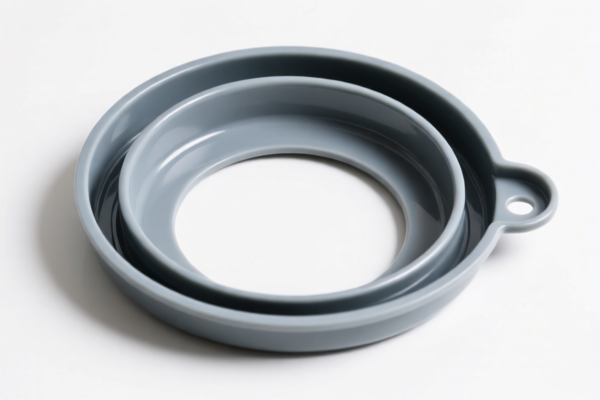
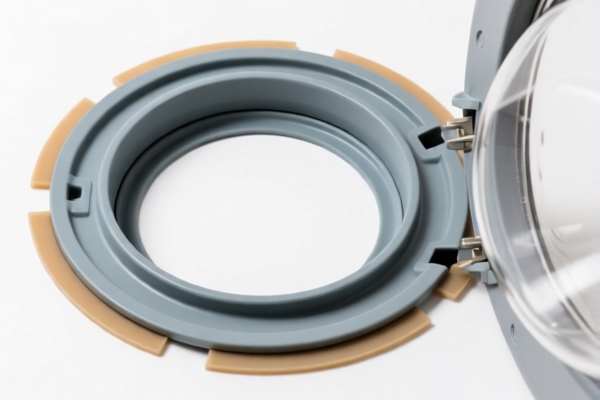
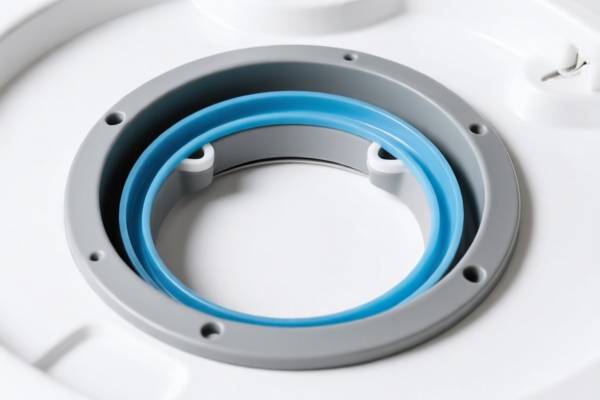
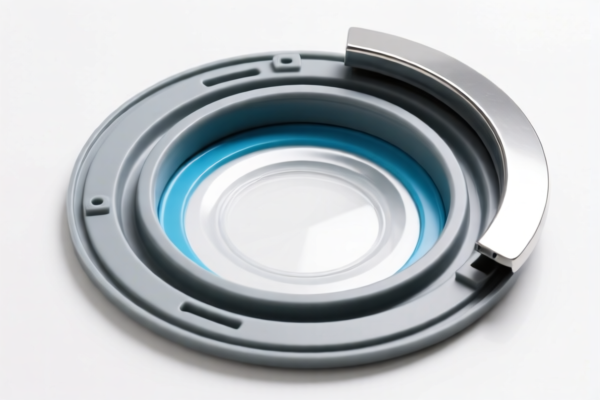
AI分析
🛡️ Anti-Wear Gaskets: The Silent Guardians of Industrial Integrity
🌐 HS Code Reference & Clearance Guide | 2026 Latest Tariff Analysis | Professional Customs Strategy
📌 I. Product Definition & Classification: What Exactly Is an "Anti-Wear Gasket"?
An Anti-Wear Gasket is a specialized sealing component designed to prevent leakage and withstand mechanical stress, vibration, and friction in industrial machinery, automotive engines, and hydraulic systems. Unlike standard gaskets, these are engineered for durability, often using composite materials (rubber + fabric/metal) or advanced elastomers.
In international trade, the classification depends heavily on: 1. Material Composition: Is it primarily rubber, plastic, or a composite? 2. Function: Is it a general seal or a specific mechanical part? 3. Industry Application: Automotive, hydraulic, or general machinery?
⚠️ Key Distinction:
- If made primarily of rubber and used as a seal → Likely Chapter 40 (Rubber) or Chapter 39 (Plastics).
- If considered a mechanical part without a specific rubber/plastic heading → Likely Chapter 84 (Machinery Parts).
- Misclassification Risk: Declaring a rubber gasket as a generic "mechanical part" (8487) can lead to higher tariffs or customs delays due to material mismatch.
📦 II. HS Code Classification Details (2026 Latest Tariff Authority Comparison)
Based on the provided data, here are the four most probable HS Codes for Anti-Wear Gaskets, along with the matching logic and tax implications.
| HS Code | Product Description | Matching Logic Summary | Total Tax Rate (China to US) |
|---|---|---|---|
| 8484.90.00.00 | Mechanical Seals & Similar Gaskets | Logic: Classified as "Mechanical Seals." Even though rubber is non-metallic, it falls under the "Other" category for gaskets where no specific material conflict exists. | 37.5% |
| 4016.93.50.10 | Rubber Seals & Gaskets (Other) | Logic: Matches "Rubber" material and "Seat Ring Seal" usage. Specifically targets rubber-based sealing elements. | 37.5% |
| 4016.93.10.10 | Rubber Seals (Specific Sub-type) | Logic: Direct match for "Rubber" material and "Seat Ring Seal" form. No material/form conflicts with rubber sealing definitions. | 37.5% |
| 3926.90.45.10 | Plastic/Resin Seals | Logic: Interprets "Rubber" as falling under plastic/synthetic rubber products. Matches "Gasket/Seal" usage and "Seat Ring" form. | 38.5% |
| 8487.90.00.80 | Other Mechanical Parts | Logic: Note: Data suggests softwood/non-metal, but for rubber gaskets, this is a fallback "Other Mechanical Parts" category if rubber/plastic headings don't fit perfectly. High risk of misclassification if material is clearly rubber. | 88.9% |
🔍 Critical Warning:
- HS Code8487.90.00.80has a shocking 88.9% tax rate. This is likely a misclassification for rubber gaskets. Rubber items should generally be classified under Chapter 40.
- HS Codes4016.93.xxxxand8484.90.00.00offer the most competitive rates at 37.5%.
💰 III. 2026 Latest Tariff Rate Breakdown (Including Surcharges & Policy Add-ons)
✅ Applicable Country: United States (US)
✅ Country of Origin: China (CN)
✅ Effective Date: Post-November 2025 (Including subsequent imports)
🎯 1. 4016.93.50.10 & 4016.93.10.10 — Rubber Gaskets/Seals
| Item | Details |
|---|---|
| Base Duty Rate | 2.5% (Standard Most Favored Nation rate for rubber articles) |
| USITC Section 301 Surcharge | +25.0% (Targeting Chinese imports) |
| IEEPA Section 122 Surcharge | +10.0% (Specific Chinese import restriction) |
| Total Effective Tax Rate | 37.5% |
| Tax Calculation | CIF Value × 37.5% |
| De Minimis Exemption | ❌ Not Applicable (High-value industrial parts usually excluded or below threshold but subject to full duty) |
| Legal Basis Path | IEEPA:9903.01.25 → USITC:4016.93.50.10 → FOOTNOTE:301 |
📌 Explanation:
- The 2.5% base is standard for rubber goods.
- The 25% + 10% = 35% surcharge brings the total to 37.5%.
- This is a moderate-high tariff, but far better than the 88.9% trap.
🎯 2. 8484.90.00.00 — Mechanical Seals / Gaskets
| Item | Details |
|---|---|
| Base Duty Rate | 2.5% |
| USITC Section 301 Surcharge | +25.0% |
| IEEPA Section 122 Surcharge | +10.0% |
| Total Effective Tax Rate | 37.5% |
| Tax Calculation | CIF Value × 37.5% |
| De Minimis Exemption | ❌ Not Applicable |
| Legal Basis Path | IEEPA:9903.01.25 → USITC:8484.90.00.00 → FOOTNOTE:301 |
📌 Explanation:
- Even though classified under Machinery Parts (Ch 84), the base duty is still 2.5%, leading to the same 37.5% total.
- This code is appropriate if the gasket is considered a precision mechanical seal rather than a simple rubber item.
🎯 3. 3926.90.45.10 — Plastic/Resin Gaskets
| Item | Details |
|---|---|
| Base Duty Rate | 3.5% |
| USITC Section 301 Surcharge | +25.0% |
| IEEPA Section 122 Surcharge | +10.0% |
| Total Effective Tax Rate | 38.5% |
| Tax Calculation | CIF Value × 38.5% |
| De Minimis Exemption | ❌ Not Applicable |
📌 Explanation:
- Slightly higher base rate (3.5%) results in a 38.5% total.
- Use this only if the gasket is primarily plastic/synthetic rubber and not natural rubber.
🚫 4. 8487.90.00.80 — Other Mechanical Parts (High Risk!)
| Item | Details |
|---|---|
| Base Duty Rate | 3.9% |
| USITC Section 301 Surcharge | +25.0% |
| IEEPA Section 122 Surcharge | +10.0% |
| Additional Metal Surcharge | +50% (If applicable, though gaskets are non-metal) |
| Total Effective Tax Rate | 88.9% |
| Tax Calculation | CIF Value × 88.9% |
⚠️ CRITICAL WARNING:
- Do NOT use this code for rubber gaskets.
- This high rate (88.9%) suggests a misclassification or a catch-all category with punitive tariffs.
- Customs may reject this code for rubber products, leading to reclassification, penalties, and delays.
🛠️ IV. Practical Customs Clearance Advice (Pitfall Avoidance Guide)
✅ 1. Documentation Checklist (Non-Negotiable)
| Document | Required? | Purpose |
|---|---|---|
| ✅ Product Specification Sheet | ✔️ | Must clearly state: Material (e.g., Nitrile Rubber, Viton), Hardness (Shore A), Dimensions, Temperature Range. |
| ✅ Material Safety Data Sheet (MSDS) | ✔️ | Proves composition (rubber vs. plastic vs. composite). Critical for HS Code justification. |
| ✅ Commercial Invoice | ✔️ | Describe as "Rubber Anti-Wear Gasket for Hydraulic System," not just "Gasket." |
| ✅ Packing List | ✔️ | Separate gaskets from machinery to avoid "parts of machinery" confusion. |
| ✅ Certificate of Origin (CO) | ✔️ | Essential for claiming any potential exemptions (though unlikely for CN origin). |
| ✅ Photos of Product | ✔️ | Show cross-section if composite, to prove material composition. |
✅ 2. Classification Strategy (Key Mantra)
🔥 "Rubber First, Then Function. Don't Guess 'Other'!"
| Scenario | Recommended HS Code | Why? |
|---|---|---|
| Pure Rubber Gasket | 4016.93.50.10 or 4016.93.10.10 |
Direct match for rubber material. Low risk, 37.5% tax. |
| Composite Gasket (Rubber + Fabric/Metal) | 8484.90.00.00 |
If metal/rubber seal, "Mechanical Seal" is safer. 37.5% tax. |
| Plastic/PTFE Gasket | 3926.90.45.10 |
Matches plastic/resin category. 38.5% tax. |
| Any Gasket | ❌ Avoid 8487.90.00.80 |
88.9% tax is punitive. Only use if truly a non-rubber, non-plastic mechanical part. |
✅ 3. Special Considerations
| Situation | Advice |
|---|---|
| OEM Custom Gaskets | Provide mold designs to prove custom nature, but still classify by material. |
| Gaskets Sold with Machinery | Declare separately. Do not bundle under machinery HS code to avoid "parts" scrutiny. |
| High-Pressure Hydraulic Gaskets | Emphasize "Sealing" function. Use 8484 if it's a precision seal. |
| Automotive Gaskets | Can often use 4016.93 for rubber. Avoid 8708 (auto parts) unless specifically declared as auto parts, which may have different surcharges. |
🌍 V. Global Market Comparison (2026 Latest)
| Market | Recommended HS Code | Base Duty | Surcharges | Total Estimate |
|---|---|---|---|---|
| 🇺🇸 USA | 4016.93.50.10 |
2.5% | +35% (301+122) | 37.5% |
| 🇨🇳 China | 4016.93.50.10 |
5-10% | None | ~10% |
| 🇪🇺 EU | 4016.93.50.10 |
4.5% | None | ~4.5% |
| 🇬🇧 UK | 4016.93.50.10 |
4.5% | None | ~4.5% |
| 🇨🇦 Canada | 4016.93.50.10 |
5% | None | ~5% |
📌 Conclusion:
- The US is the most expensive market due to Section 301 and IEEPA surcharges.
- 37.5% is the realistic cost for rubber gaskets imported from China to the US.
- Diversify sourcing if possible (e.g., Vietnam, Thailand) to potentially access lower tariff regimes (though rubber rules of origin are strict).
📌 VI. Common Mistakes & Pitfall Guide (Blood Lessons)
❌ Mistake 1: Using 8487.90.00.80 for Rubber Gaskets
👉 Result: 88.9% tax! Avoid at all costs. This is a "catch-all" with punitive rates.
❌ Mistake 2: Declaring "Gasket" without material specification
👉 Result: Customs may assign the highest default duty or demand expensive testing to determine material.
❌ Mistake 3: Confusing "Anti-Wear" with "Anti-Friction Bearings"
👉 Result: Bearings go to 8482. Gaskets go to 4016 or 8484. Wrong code = Seizure.
❌ Mistake 4: Assuming "Plastic" HS Code for Rubber Composites
👉 Result: If rubber >50%, use 4016. If plastic >50%, use 3926. Mixed materials require careful justification.
✅ Correct Approach:
"Nitrile Rubber Anti-Wear Gasket, 2-inch OD, 1-inch ID, for Hydraulic Pump, Shore A 70"
🎯 VII. Conclusion: Precision Classification Saves Money
🎯 Remember the Mantra:
🔹 "Rubber = Ch40, Plastic = Ch39, Mechanical Seal = Ch84. Never guess 'Other'!"
🔹 "37.5% is the target. 88.9% is the trap."
🔹 "Document your material. Declare your function."
📌 Pro Tip:
If your gaskets are high-value precision seals, consider applying for an Advance Ruling from US Customs (CBP) to lock in the HS Code and tax rate before shipping. This avoids post-clearance audits and back taxes.
📣 Immediate Action:
📞 Contact a licensed customs broker with material test reports.
🚀 Clear, classify, and ship with confidence.
💼 Your gaskets are small, but your tariff costs are big. Get it right.
✨ Professional Clearance Starts with Accurate Classification!
💼 Every percentage point counts in the supply chain!
用户评价
关于 HS 编码归类
协调制度(HS)是由世界海关组织(WCO)制定的国际贸易商品分类标准。全球 200 多个国家采用 HS 系统作为海关关税、贸易统计和进出口监管的基础。
每个 HS 编码遵循以下层级结构:
- 章(2 位)——商品大类(例如:第 84 章:机器和机械设备)
- 品目(4 位)——章内的更具体分类
- 子目(6 位)——国际通用细分,所有 WCO 成员国统一使用
- 本国细分(8-10 位)——各国自行扩展的细分编码,如美国 HTSUS 10 位编码
正确的 HS 编码归类对于顺利通关、准确缴纳关税和遵守贸易法规至关重要。错误归类可能导致海关延误、多缴关税或罚款。
从CN进口到US时,适用的关税税率可能包括:
- 最惠国(MFN)税率——适用于 WTO 成员国的标准关税税率
- 普通税率——适用于无贸易协定国家
- 贸易救济关税——附加关税,如 301 条款(反倾销)、232 条款(国家安全)或反补贴税
本页内容仅供参考。如需正式归类,请咨询当地海关或持牌报关代理。