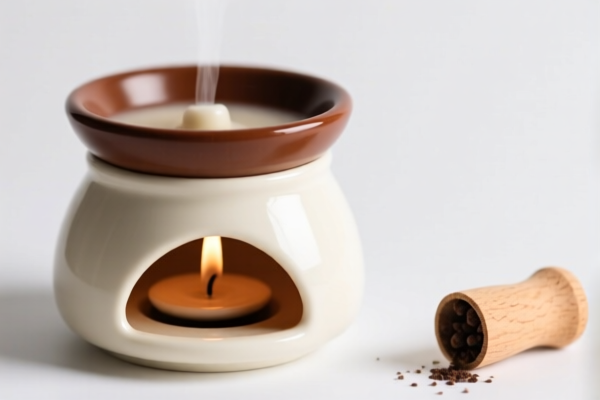
Aromatherapy Burner
CN → US| HS编码 | 关税税率 | 原产国 | 目的国 | 文档 |
|---|---|---|---|---|
| 7326908688 | 87.9% | CN | US | 官方文档 |
| 7326190080 | 87.9% | CN | US | 官方文档 |
| 6913105000 | 17.5% | CN | US | 官方文档 |
| 6913905000 | 23.5% | CN | US | 官方文档 |
| 9405504000 | 16.0% | CN | US | 官方文档 |
| 9405503000 | 40.7% | CN | US | 官方文档 |
商品图片


AI分析
🪵 Aromatherapy Burner: HS Code Classification & 2026 Duty Strategy Guide
🌐 Global Trade Compliance | HS Code Breakdown | 2026 Maximum Tax Impact Analysis | Professional Customs Strategy
📌 一、Product Definition & Classification: What is an "Aromatherapy Burner"?
An Aromatherapy Burner is a device designed to heat essential oils (via a candle, electric element, or ultrasonic mechanism) to release fragrance into the air. In international trade, its classification depends entirely on material composition and function.
The data indicates three primary material scenarios: 1. Metallic (Iron/Steel/Copper): High heat conductors, often decorative. 2. Ceramic (Porcelain/Earthenware): Decorative, heat-resistant vessels. 3. Non-Electric Decorative/Lighting: Treated as a fixture rather than a functional appliance.
⚠️ Critical Distinction:
- Material Drives Classification: Is it Iron (7326...), Ceramic (6913...), or a Lighting Fixture (9405...)? - Material Drives Tax: Metallic items face 87.9% tax due to Section 232 & Section 301; Ceramic items face 17.5%~23.5%; Non-electric fixtures face 16.0%.
📦 二、HS Code Classification Matrix (2026 Tax Data)
| HS Code | Material | Classification Logic | Total Tax (China Export) |
|---|---|---|---|
| 7326.90.86.88 | Iron/Steel | "Other articles of iron or steel" based on material inference. | 87.9% |
| 7326.19.00.80 | Iron/Steel | "Other articles of base metal," unprocessed or minimally processed. | 87.9% |
| 6913.10.50.00 | Porcelain | "Decorative ceramic articles" (Porcelain). High-value ceramic inference. | 17.5% |
| 6913.90.50.00 | Ceramic | "Other ceramic articles" (Small figurines/Decor). Lower-grade ceramic inference. | 23.5% |
| 9405.50.40.00 | Mixed/Other | "Other non-electric lamps and lighting fixtures" (Decorative/Functional). | 16.0% |
🔍 Key Insight:
- Metallic Burners are penalized heavily due to Section 232 (Steel/Aluminum) and Section 301 tariffs. - Ceramic Burners are significantly cheaper to import but must be classified correctly as "Porcelain" (0% base) vs. "Other Ceramic" (6% base). - Non-Electric Classification (9405) offers the lowest total tax (16.0%) but requires proof that it is not an electric device.
💰 三、2026 Detailed Duty & Tariff Breakdown
✅ Market Focus: USA (US)
✅ Origin: China (CN)
✅ Effective Date: 2025–2026 Trade Rules
🎯 1. Metallic Burners: 7326.90.86.88 & 7326.19.00.80
⚠️ Highest Risk Category
| Tax Component | Rate | Source/Logic |
|---|---|---|
| MFN Base Duty | 2.9% | Standard Most-Favored-Nation rate for iron/steel articles. |
| Section 301 (Add-on) | 25.0% | "China-specific" additional tariff on steel/iron products. |
| Section 232 (Add-on) | 50.0% | Critical: "122条款" (Section 232) on Steel/Aluminum/Copper products. |
| Total Effective Rate | 87.9% | Base + 301 + 232 = 87.9% |
📌 Explanation:
- If the burner is made of Iron, Steel, or Copper, it triggers the 50% Section 232 surcharge on top of the standard 25% Section 301 tariff.
- Result: For every $100 of goods, you pay $87.90 in duties alone. This makes metallic aromatherapy burners extremely expensive to import into the US.
🎯 2. Ceramic Burners: 6913.10.50.00 & 6913.90.50.00
✅ Lower Risk, Material Dependent
| Tax Component | Rate (Porcelain 6913.10) |
Rate (Other Ceramic 6913.90) |
|---|---|---|
| MFN Base Duty | 0.0% | 6.0% |
| Section 301 (Add-on) | 7.5% | 7.5% |
| Section 122 (Add-on) | 10.0% | 10.0% |
| Total Effective Rate | 17.5% | 23.5% |
📌 Explanation:
- Porcelain (fine ceramic) has 0% base duty, resulting in the lowest tax burden (17.5%).
- Other Ceramic has a 6% base duty, pushing the total to 23.5%.
- Crucial: You must prove the material is "Porcelain" (high firing temp, translucent) to get the 0% base rate.
🎯 3. Non-Electric Lighting/Decor: 9405.50.40.00
✅ Best Tax Efficiency (If Applicable)
| Tax Component | Rate |
|---|---|
| MFN Base Duty | 6.0% |
| Section 301 (Add-on) | 0.0% |
| Section 122 (Add-on) | 10.0% |
| Total Effective Rate | 16.0% |
📌 Explanation:
- This classification applies if the burner is non-electric (e.g., candle-only) and treated as a decorative fixture.
- No Section 301 tariff (0%) applies here, making it the cheapest option (16.0% total).
- Risk: Must strictly avoid being classified as an "Electric Appliance" or "Metal Product."
🛠️ 四、Customs Clearance Strategy & Practical Advice
✅ 1. Product Material Verification (The "Golden Rule")
Before shipping, verify the Material Composition with your supplier.
- If Metal: Expect 87.9% tax. Consider re-classifying as non-electric (9405) if design allows, or sourcing Ceramic (6913) alternatives to save ~70% in duties.
- If Ceramic: Ensure it meets the definition of Porcelain (6913.10) for the 0% base rate. If it's standard stoneware/clay, you pay the 6% base.
- If Non-Electric: Ensure the product lacks wires, plugs, or heating elements to secure the 9405 classification.
✅ 2. Declaration Wording (Crucial for Classification)
🔥 Do NOT use generic terms like "Incense Burner" without material specs.
| Scenario | ✅ Correct Declaration (Example) | ❌ Wrong Declaration (Risk) |
|---|---|---|
| Ceramic (Porcelain) | "Porcelain Aromatherapy Burner, Non-Electric, Candle-Heated, Decorative" | "Incense Holder" (Vague, might trigger metal classification) |
| Ceramic (Other) | "Ceramic Fragrance Diffuser, Decorative Vessel" | "Copper Incense Burner" (If actually ceramic) |
| Non-Electric | "Non-Electric Lighting Fixture: Candle-Base Aromatherapy Burner" | "Electric Aromatherapy Burner" (Triggers higher appliance tax) |
| Metal | "Iron Aromatherapy Burner (Decorative)" | Avoid if possible due to 87.9% tax |
✅ 3. Special Handling for Section 232 (Steel/Aluminum)
- Risk Alert: The 50% Section 232 tax applies to Steel, Iron, and Aluminum products.
- Strategy: If your burner is Copper, it also falls under Section 232. Check if any exemptions apply (rare for consumer goods).
- Mitigation: Switch production to Ceramic or Glass to avoid Section 232 entirely.
✅ 4. Documentation Checklist
| Document | Requirement | Why? |
|---|---|---|
| Material Test Report | ✔️ Required | Proves "Porcelain" vs. "Ceramic" vs. "Metal". |
| Product Photos | ✔️ Required | Must show no electrical components (for 9405 classification). |
| Structure Diagram | ✔️ Required | Confirms heating method (Candle vs. Electric). |
| Bill of Lading | ✔️ Required | Must match declared HS Code exactly. |
🌍 五、Global Market Comparison (2026)
| Destination | Recommended HS Code | Tax Burden | Strategy |
|---|---|---|---|
| 🇺🇸 USA | 9405.50.40.00 or 6913.10.50.00 |
16.0% or 17.5% | Avoid Metal (7326). Choose Ceramic or Non-Electric. |
| 🇨🇳 China | 6913.10.50.00 |
~2.5% (Low) | Domestic market prefers decorative ceramics. |
| 🇪🇺 EU | 6913.90.50.00 |
~4.5% | Low tariffs, but strict CE safety for electric versions. |
| 🇯🇵 Japan | 9405.50.40.00 |
~0-3% | High value on non-electric decor. |
📌 Conclusion:
- USA is the most hostile market for Metallic Burners (87.9% tax).
- Ceramic (6913) and Non-Electric (9405) are the only viable options for the US market in 2026.
- Switching from Metal to Porcelain can reduce duties by ~70% ($87.90 vs $17.50 per $100 goods).
📌 六、Common Pitfalls & Avoidance Guide
❌ Mistake 1: Classifying a Metal Burner as Ceramic.
👉 Result: Customs audit, seizure, and retroactive 87.9% tax + fines.
✅ Fix: Ensure material test reports match the HS Code.
❌ Mistake 2: Classifying an Electric Burner as Non-Electric (9405).
👉 Result: Rejection, as electric appliances have different safety/tax rules.
✅ Fix: Clearly state "Non-Electric" or "Candle-Only" on the invoice.
❌ Mistake 3: Ignoring Section 232 on Copper items.
👉 Result: Unexpected 50% surcharge on Copper products.
✅ Fix: Verify if Copper falls under the specific "122 clause" for your region.
🎯 七、Final Verdict: The 2026 Strategy
🎯 The "Cost-Saving Formula":
🔹 Metal = 87.9% (Avoid for US Market)
🔹 Porcelain = 17.5% (Best Balance of Cost & Quality)
🔹 Non-Electric Decor = 16.0% (Lowest Tax, High Design Flexibility)
🚀 Action Plan:
1. Audit Inventory: Identify all metallic aromatherapy burners.
2. Pivot Production: Shift design to Porcelain or Non-Electric Decor.
3. Re-Classify: Use 6913.10.50.00 (Porcelain) or 9405.50.40.00 (Non-Electric) for US shipments.
4. Verify: Get material test reports to support the 0% base duty claim.
Professional Advice:
"In 2026, material is the currency. A $10 ceramic burner pays $1.75 in tax; a $10 metal burner pays $8.79. Design for ceramics, not metals, to stay profitable."
✨ Customs Compliance, Simplified.
💼 Your Margin, Protected.
用户评价
关于 HS 编码归类
协调制度(HS)是由世界海关组织(WCO)制定的国际贸易商品分类标准。全球 200 多个国家采用 HS 系统作为海关关税、贸易统计和进出口监管的基础。
每个 HS 编码遵循以下层级结构:
- 章(2 位)——商品大类(例如:第 84 章:机器和机械设备)
- 品目(4 位)——章内的更具体分类
- 子目(6 位)——国际通用细分,所有 WCO 成员国统一使用
- 本国细分(8-10 位)——各国自行扩展的细分编码,如美国 HTSUS 10 位编码
正确的 HS 编码归类对于顺利通关、准确缴纳关税和遵守贸易法规至关重要。错误归类可能导致海关延误、多缴关税或罚款。
从CN进口到US时,适用的关税税率可能包括:
- 最惠国(MFN)税率——适用于 WTO 成员国的标准关税税率
- 普通税率——适用于无贸易协定国家
- 贸易救济关税——附加关税,如 301 条款(反倾销)、232 条款(国家安全)或反补贴税
本页内容仅供参考。如需正式归类,请咨询当地海关或持牌报关代理。