Aromatic Insecticide (Other)
CN → US| HS编码 | 关税税率 | 原产国 | 目的国 | 文档 |
|---|---|---|---|---|
| 3808912501 | 41.5% | CN | US | 官方文档 |
| 3808911500 | 35.0% | CN | US | 官方文档 |
商品图片
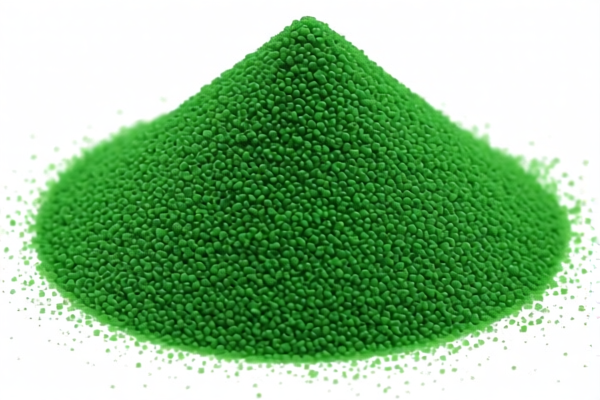


AI分析
🐛 Aromatic Insecticides (Other) | 3808.91.25.01 vs. 3808.91.15.00
🌐 HS Code Reference & Customs Clearance Guide | 2026 Latest Tariff Analysis | Strategic Entry for US Imports
📌 1. Product Definition & Classification: What Exactly is an "Aromatic Insecticide"?
In international trade, "Insecticides" are broadly categorized under Chapter 38 (Miscellaneous Chemical Products). Specifically, products classified under HS 3808 are pesticides, rodenticides, fungicides, herbicides, antisprouting products, plant-growth regulators, disinfectants, and similar products, put up in forms or packings for retail sale or as preparations or articles.
When dealing with Insecticides containing aromatic or modified aromatic compounds, the classification splits into two distinct scenarios based on chemical composition:
Scenario A: General Aromatic Insecticides (Other)
Products containing any aromatic or modified aromatic insecticide that are not specifically exempted or listed under special mixed formulations. This is the "catch-all" for most commercial aromatic insecticides.
Scenario B: Specific Mixture (CFM Insecticide)
A very specific exemption exists for mixtures of N-[[(4-chlorophenyl)amino]-carbonyl]-2,6-difluorobenzamide (commonly known as CFM or Chlorfluazuron-related compounds, though the description specifies the exact chemical name) mixed with inert substances. This is a narrow, highly specific classification.
⚠️ Key Distinction Point:
- If your product is a generic aromatic insecticide (e.g., pyrethroids, organophosphates with aromatic rings, carbamates) → HS 3808.91.25.01
- If your product is exactly the mixture described in HS 3808.91.15.00 (N-[[(4-chlorophenyl)amino]-carbonyl]-2,6-difluorobenzamide + inert substances) → HS 3808.91.15.00
📦 2. HS Code Classification Details (2026 Latest Tariff Authority Comparison)
| HS Code | Product Description | Applicable Scenario | Contains Specific Chemical? |
|---|---|---|---|
3808.91.25.01 |
Other Aromatic Insecticides (Other) | Most retail-ready insecticides containing aromatic structures (e.g., pyrethrin-based, synthetic pyrethroids, chlorpyrifos, etc.) | ❌ No (or not the specific exempted mix) |
3808.91.15.00 |
Mixtures of N-[[(4-chlorophenyl)amino]-carbonyl]-2,6-difluorobenzamide and inert substances | Specific agricultural/industrial insecticides composed only of this exact chemical and inert carriers | ✅ Yes (Exact Match Required) |
🔍 Critical Reminder:
- Most aromatic insecticides fall under 3808.91.25.01.
- Only products that precisely match the chemical definition in 3808.91.15.00 qualify for that code. Misclassification here is a high-risk compliance error.
- If your product contains multiple aromatic insecticides or non-inert active ingredients beyond the specific mixture, it cannot use 3808.91.15.00.
💰 3. 2026 Latest Tariff Rate Breakdown (Including Additional Duties & Policy Surcharges)
✅ Applicable Country: United States (US)
✅ Origin: China (CN)
✅ Effective Time: 2025 November 10 onwards (and subsequent imports)
🎯 1. 3808.91.25.01 —— Other Aromatic Insecticides (Most Common)
| Item | Content |
|---|---|
| Base Tariff Rate | 6.5% (ad valorem) |
| Section 301 Additional Duty | +25.0% |
| Total Tariff Rate | 31.5% |
| Tax Calculation | CIF Value × 31.5% |
| De Minimis Exemption Eligible? | ❌ NO (Denied due to agricultural chemical classification) |
| Legal Basis Path | USITC:3808.91.25.01 → Section 301: Footnote 9903.88.01 |
📌 Explanation:
- The 6.5% is the standard Most Favored Nation (MFN) base duty for insecticides.
- The +25% is the punitive "Section 301" tariff imposed on Chinese-origin goods under US Trade Law.
- Total: 31.5%. This is a high-cost category for importers.
- No de minimis exemption applies because these are regulated agricultural/pesticide products. Even small shipments are subject to full duty calculation.
🎯 2. 3808.91.15.00 —— Specific Mixture (N-[[(4-chlorophenyl)amino]-carbonyl]-2,6-difluorobenzamide)
| Item | Content |
|---|---|
| Base Tariff Rate | 0.0% (ad valorem) |
| Section 301 Additional Duty | +25.0% |
| Total Tariff Rate | 25.0% |
| Tax Calculation | CIF Value × 25.0% |
| De Minimis Exemption Eligible? | ❌ NO (Denied due to pesticide classification) |
| Legal Basis Path | USITC:3808.91.15.00 → Section 301: Footnote 9903.88.01 |
📌 Note:
- The base rate is 0%, which is unusually low for chemicals, reflecting a specific trade policy decision for this compound.
- However, the +25% Section 301 tariff still applies.
- Total: 25.0%. This is 6.5 percentage points lower than the general aromatic insecticide category.
- Strict Compliance Required: Only products that are exactly this mixture can use this code. If there is any other active ingredient, you must revert to3808.91.25.01(31.5%).
🛠️ 4. Customs Clearance Practical Advice (Battle-Tested Pitfall Avoidance Guide)
✅ 1. Required Documentation Checklist (Non-Negotiable)
| Document | Must Provide | Explanation |
|---|---|---|
| ✅ Product Specification Sheet | ✔️ | Must list exact chemical names (INCI or IUPAC names), CAS numbers, and concentrations. |
| ✅ Safety Data Sheet (SDS) | ✔️ | Must confirm it is an "Insecticide" and list all active ingredients. |
| ✅ EPA Registration Number | ✔️ | Critical. Insecticides entering the US must be registered with the US Environmental Protection Agency (EPA). Provide EPA Reg. No. |
| ✅ Commercial Invoice | ✔️ | Must clearly state: "Insecticide, Retail Pack, Containing [Chemical Name]" |
| ✅ Certificate of Origin | ✔️ | To prove origin is China (subject to 25% surcharge) |
| ✅ Packing List | ✔️ | Detail net/gross weights and quantity. |
| ✅ Label Copy | ✔️ | Must show EPA label statements, hazard warnings, and usage instructions as per US law. |
✅ 2. Declaration Tactics (Key Mnemonics)
🔥 "Chemical Name is King, EPA No is Key, Base 6.5 or 0, Add 25 Always!"
| Situation | Correct Declaration Method | Wrong Practice |
|---|---|---|
| Generic Aromatic Insecticide | 3808.91.25.01 |
Misdeclare as "Fertilizer" → Penalty + 31.5% |
| Specific CFM Mixture | 3808.91.15.00 |
Misdeclare as Generic → Overpay 6.5% (but safer) |
| Non-Retail Bulk Chemical | NOT 3808 (Check Chapter 29) | Force into 3808 → Incorrect Classification |
| Unregistered EPA Product | DO NOT IMPORT | Try to clear customs → Seizure & Fine |
⚠️ Critical Warning:
- EPA Registration is Mandatory. If the product does not have an EPA Registration Number, it cannot be legally imported into the US for sale or distribution. Customs will seize it.
- Do not underestimate the "Aromatic" definition. Even trace aromatic compounds can trigger this chapter if put up for retail sale.
✅ 3. Special Cases Handling
| Situation | Handling Advice |
|---|---|
| OEM/Private Label Insecticides | Ensure the EPA Reg. No. is for the manufacturer, not just the private label. Provide proof of ownership/licensing. |
| Mixtures with Multiple Active Ingredients | If the product contains the specific CFM mixture plus another insecticide, it falls under 3808.91.25.01 (31.5%). The 0% base rate is only for the pure mixture. |
| Sample Shipments (Low Value) | Even samples are subject to 31.5% or 25% duty. No de minimis exemption. Budget for taxes on all shipments. |
| Flypapers, Treated Bands, Candles | These are "articles" under 3808. If they contain aromatic insecticides, they still fall under this classification. Ensure the description matches "Put up for retail sale." |
🌍 5. Global Market Comparison (2026 Latest)
| Country/Region | Recommended HS Code | Tariff (China Origin) | Certification Requirement | Notes |
|---|---|---|---|---|
| 🇺🇸 USA | 3808.91.25.01 |
31.5% (or 25% for specific mix) | EPA Registration (Mandatory) | High compliance barrier. |
| 🇨🇳 China | 3808.91.25.01 |
6.5% (MFN) | China EPA (Ministry of Agriculture) | No Section 301 surcharge. |
| 🇪🇺 EU | 3808.91.25 |
6.5% (Standard) | EFSA Approval / Biocidal Products Regulation (BPR) | No additional surcharges. |
| 🇬🇧 UK | 3808.91.25 |
6.5% | HSE Registration | Post-Brexit regulations apply. |
| 🇯🇵 Japan | 3808.91.25 |
6.0% | Ministry of Agriculture (MAFF) | Strict residue limits. |
📌 Conclusion:
- The US is the most complex market due to the Section 301 25% surcharge and strict EPA enforcement.
- The tariff gap between the two HS codes (31.5% vs. 25%) is significant for large volumes. Ensure accurate chemical declaration.
- EPA Registration is the single biggest hurdle. Without it, clearance is impossible regardless of HS Code.
📌 6. Common Errors & Pitfall Avoidance (Blood Lessons)
❌ Error 1: Declaring as "Fertilizer" or "Plant Food" to avoid pesticide duties.
👉 Consequence: Seizure, heavy fines, and EPA enforcement action. Insecticides cannot be disguised.
❌ Error 2: Assuming "De Minimis" ($800) applies.
👉 Consequence: Full duty (31.5% or 25%) applied to every package. Pesticides are explicitly excluded from de minimis relief.
❌ Error 3: Misclassifying the specific CFM mixture as generic aromatic insecticide.
👉 Consequence: Overpaying 6.5% on a large shipment. (Note: It’s safer to misclassify down to the higher rate than to risk audit for the 0% rate if you don’t qualify).
❌ Error 4: Ignoring the "Retail Packaging" clause.
👉 Consequence: If the product is bulk (not for retail), it may fall under Chapter 29 (Organic Chemicals) instead of Chapter 38. Chapter 29 may have different duty rates. Consult a specialist for bulk shipments.
✅ Correct Approach:
"Insecticide, Pyrethroid-based, Retail Pack, EPA Reg. No. [Number], Net Weight 1L, Containing [Chemical Name]"
🎯 7. Conclusion: Precision in Classification Saves Money
🎯 Remember the Mnemonic:
🔹 "EPA First, Then HS Code. 6.5 Base or 0, Add 25 Always. De Minimis is NO."
🔹 "Specific Mixture Gets 25%, Generic Aromatic Gets 31.5%. Accuracy is Profit."
📌 Pro Tip:
If your product is the specific N-[[(4-chlorophenyl)amino]-carbonyl]-2,6-difluorobenzamide mixture, ensure your Commercial Invoice and Certificate of Origin explicitly state the full chemical name to justify the 0% base rate.
For all other aromatic insecticides, budget for 31.5% total duty.
Apply for an Advance Ruling from US Customs and Border Protection (CBP) if you are unsure about the classification. This provides legal protection against misclassification penalties.
📣 Immediate Action Required:
📞 Contact your Customs Broker + Provide EPA Reg. No. + Confirm Chemical Composition
🚀 Ensure Full Compliance, Avoid Seizure, and Optimize Tariff Liability!
✨ Professional Clearance Starts with Accurate Classification!
💼 Every Percentage Point Matters in Your Landed Cost!
用户评价
关于 HS 编码归类
协调制度(HS)是由世界海关组织(WCO)制定的国际贸易商品分类标准。全球 200 多个国家采用 HS 系统作为海关关税、贸易统计和进出口监管的基础。
每个 HS 编码遵循以下层级结构:
- 章(2 位)——商品大类(例如:第 84 章:机器和机械设备)
- 品目(4 位)——章内的更具体分类
- 子目(6 位)——国际通用细分,所有 WCO 成员国统一使用
- 本国细分(8-10 位)——各国自行扩展的细分编码,如美国 HTSUS 10 位编码
正确的 HS 编码归类对于顺利通关、准确缴纳关税和遵守贸易法规至关重要。错误归类可能导致海关延误、多缴关税或罚款。
从CN进口到US时,适用的关税税率可能包括:
- 最惠国(MFN)税率——适用于 WTO 成员国的标准关税税率
- 普通税率——适用于无贸易协定国家
- 贸易救济关税——附加关税,如 301 条款(反倾销)、232 条款(国家安全)或反补贴税
本页内容仅供参考。如需正式归类,请咨询当地海关或持牌报关代理。