Aromatic Resin Powder
CN → US| HS编码 | 关税税率 | 原产国 | 目的国 | 文档 |
|---|---|---|---|---|
| 3806100050 | 40.0% | CN | US | 官方文档 |
| 3806900000 | 39.2% | CN | US | 官方文档 |
| 2707500000 | 35.0% | CN | US | 官方文档 |
| 2707999090 | 35.0% | CN | US | 官方文档 |
| 3911902500 | 41.1% | CN | US | 官方文档 |
| 3911904500 | 40.8% | CN | US | 官方文档 |
商品图片
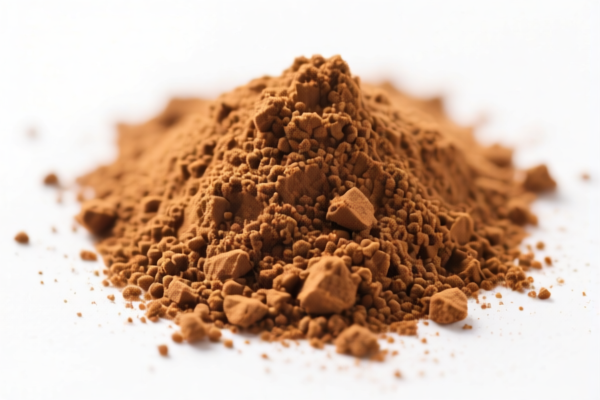
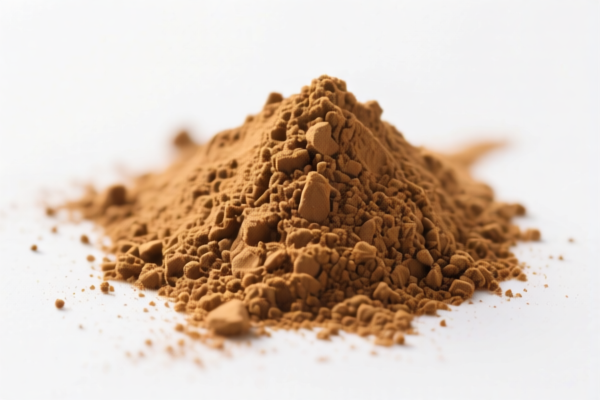
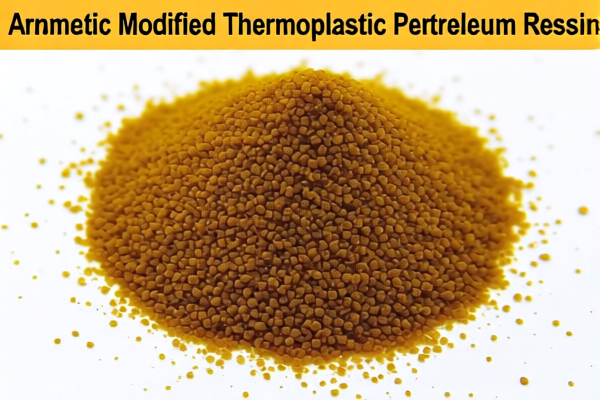
AI分析
🧪 Aromatic Resin Powder (Aromatic Petroleum Resin)
🌐 HS Code Reference & Customs Clearance Guide | 2026 Latest Tariff Analysis | Professional Clearance Strategy
Aromatic Resin Powder is a versatile chemical intermediate widely used in adhesives, sealants, coatings, and rubber compounding. In international trade, its classification is complex because it sits at the intersection of petroleum products, resins, and chemical mixtures.
Below is the authoritative breakdown based on the provided data, analyzing why it falls under specific HS Codes and the corresponding tax implications.
⚠️ Key Distinction:
- If viewed as a Rosin/Resin Acid derivative: It may fall under Chapter 38 (Miscellaneous Chemical Products).
- If viewed as an Aromatic Hydrocarbon/Aromatics: It may fall under Chapter 27 (Mineral Fuels).
- If viewed as a Synthetic Polymer/Plastic Resin: It may fall under Chapter 39 (Plastics and Articles Thereof).
📦 HS Code Classification Details (2026 Latest Tariff Authority Mapping)
| HS Code | Product Description | Classification Logic | Total Tax Rate |
|---|---|---|---|
3806.10.00.50 |
Aromatic Petroleum Resin | Classified under "Rosin and resin acids"; matches other material attributes not covered elsewhere. | 40.0% |
3806.90.00.00 |
Other Resins & Derivatives | Fallback logic for primary form chemicals under "Other" categories in Chapter 38. | 39.2% |
2707.50.00.00 |
Aromatic Hydrocarbons | Classified as an aromatic hydrocarbon product/chemical intermediate mixture. | 35.0% |
2707.99.90.90 |
Other Aromatic Components | Matches "aromatic character" where weight of aromatic components exceeds non-aromatics. | 35.0% |
3911.90.25.00 |
Synthetic Resins (Specific) | Fully matches material/component requirements for synthetic resins; fits "aromatic petroleum resin" description. | 41.1% |
3911.90.45.00 |
Synthetic Resins (Other) | Direct match for "Aromatic Petroleum Resin" in original form; fits chemical classification features. | 40.8% |
🔍 Critical Insight:
- The lowest tax rate is achieved by classifying under Chapter 27 (2707.50.00.00or2707.99.90.90) at 35.0%.
- However, customs authorities may challenge this if the product is primarily defined as a polymer/resin rather than a raw hydrocarbon.
- Classifying under Chapter 38 or 39 results in higher rates (39.2% – 41.1%).
💰 2026 Latest Tariff Rate Breakdown (Detailed Tax Components)
✅ Applicable Country: USA (US)
✅ Origin: China (CN)
✅ Effective Date: From November 10, 2025 (including subsequent imports)
🎯 1. 3806.10.00.50 —— Aromatic Resin (Rosin/Resin Acid Category)
| Item | Content |
|---|---|
| Base Duty | 5.0% |
| USITC Additional Duty (Section 301) | +25.0% |
| IEEPA Additional Duty | +10.0% |
| Total Tax Rate | 40.0% |
| Tax Calculation | CIF Value × 40.0% |
| De Minimis Exemption | ❌ Not Eligible (deny_de_minimis) |
| Legal Basis Path | IEEPA:9903.01.25 → IEEPA:9903.01.24 → USITC:3806.10.00.50 |
📌 Explanation:
- This classification treats the product similarly to rosin derivatives.
- Total 40% includes base tariff + Section 301 tariffs + IEEPA surcharge.
🎯 2. 3806.90.00.00 —— Other Resins & Derivatives
| Item | Content |
|---|---|
| Base Duty | 4.2% |
| USITC Additional Duty (Section 301) | +25.0% |
| IEEPA Additional Duty | +10.0% |
| Total Tax Rate | 39.2% |
| Tax Calculation | CIF Value × 39.2% |
| De Minimis Exemption | ❌ Not Eligible |
| Legal Basis Path | IEEPA:9903.01.25 → IEEPA:9903.01.24 → USITC:3806.90.00.00 |
📌 Note:
- Slightly lower than the previous code due to a lower base tariff (4.2% vs 5.0%).
- Used as a "catch-all" for primary form chemicals that don't fit specific subheadings.
🎯 3. 2707.50.00.00 —— Aromatic Hydrocarbons (Lowest Tax Option)
| Item | Content |
|---|---|
| Base Duty | 0.0% |
| USITC Additional Duty (Section 301) | +25.0% |
| IEEPA Additional Duty | +10.0% |
| Total Tax Rate | 35.0% |
| Tax Calculation | CIF Value × 35.0% |
| De Minimis Exemption | ❌ Not Eligible |
| Legal Basis Path | IEEPA:9903.01.25 → IEEPA:9903.01.24 → USITC:2707.50.00.00 |
📌 Explanation:
- Lowest overall rate.
- Classification logic: The product is considered an aromatic hydrocarbon mixture (chemical intermediate/raw material).
- Risk: Customs may reclassify if the product is clearly defined as a "resin" (polymer) rather than a "hydrocarbon."
🎯 4. 2707.99.90.90 —— Other Aromatic Components
| Item | Content |
|---|---|
| Base Duty | 0.0% |
| USITC Additional Duty (Section 301) | +25.0% |
| IEEPA Additional Duty | +10.0% |
| Total Tax Rate | 35.0% |
| Tax Calculation | CIF Value × 35.0% |
| De Minimis Exemption | ❌ Not Eligible |
| Legal Basis Path | IEEPA:9903.01.25 → IEEPA:9903.01.24 → USITC:2707.99.90.90 |
📌 Note:
- Also 35.0%.
- Applied when the weight of aromatic components exceeds non-aromatic components.
- Requires strong technical documentation to prove aromatic content.
🎯 5. 3911.90.25.00 —— Synthetic Resins (Specific Category)
| Item | Content |
|---|---|
| Base Duty | 6.1% |
| USITC Additional Duty (Section 301) | +25.0% |
| IEEPA Additional Duty | +10.0% |
| Total Tax Rate | 41.1% |
| Tax Calculation | CIF Value × 41.1% |
| De Minimis Exemption | ❌ Not Eligible |
| Legal Basis Path | IEEPA:9903.01.25 → IEEPA:9903.01.24 → USITC:3911.90.25.00 |
📌 Explanation:
- Highest tax rate.
- Applied when the product is strictly classified as a synthetic resin under Chapter 39.
- Only use if other classifications are rejected by customs.
🎯 6. 3911.90.45.00 —— Synthetic Resins (Other)
| Item | Content |
|---|---|
| Base Duty | 5.8% |
| USITC Additional Duty (Section 301) | +25.0% |
| IEEPA Additional Duty | +10.0% |
| Total Tax Rate | 40.8% |
| Tax Calculation | CIF Value × 40.8% |
| De Minimis Exemption | ❌ Not Eligible |
| Legal Basis Path | IEEPA:9903.01.25 → IEEPA:9903.01.24 → USITC:3911.90.45.00 |
📌 Note:
- Very similar to3911.90.25.00.
- Applies to aromatic petroleum resin in its original form.
🛠️ Customs Clearance Practical Advice (Avoid Pitfalls)
✅ 1. Document Checklist (Essential)
| Document | Required | Description |
|---|---|---|
| ✅ Technical Data Sheet (TDS) | ✔️ | Must specify chemical composition, aromatic content %, and molecular weight. |
| ✅ MSDS/SDS | ✔️ | Safety Data Sheet for chemical handling. |
| ✅ Product Photos | ✔️ | Clear images showing powder form, packaging, and labeling. |
| ✅ Commercial Invoice | ✔️ | Clearly state "Aromatic Petroleum Resin Powder" and HS Code. |
| ✅ Certificate of Origin (CO) | ✔️ | Required for tariff calculations. |
| ✅ Bill of Lading | ✔️ | Standard shipping document. |
📌 Critical Tip:
- If claiming Chapter 27 (35% tax), you must provide proof of aromatic hydrocarbon content.
- If classifying under Chapter 38/39, provide proof of resin/polymer nature.
✅ 2. Declaration Strategy (Key Tips)
🔥 “Declare Correctly, Tax Less: Chapter 27 is Cheapest, Chapter 39 is Most Expensive!”
| Scenario | Recommended HS Code | Estimated Tax | Risk Level |
|---|---|---|---|
| High Aromatic Content (>50%) | 2707.50.00.00 or 2707.99.90.90 |
35.0% | ⚠️ Medium (Requires chemical proof) |
| Standard Resin Product | 3806.90.00.00 |
39.2% | ✅ Low (Safe fallback) |
| Strict Polymer Classification | 3911.90.25.00 |
41.1% | ✅ Low (But expensive) |
📌 Warning:
- Do not split shipments into different HS codes unless justified by distinct product forms.
- Do not misdeclare as "plastic pellets" if it is clearly a "chemical resin powder."
✅ 3. Special Cases
| Case | Handling Advice |
|---|---|
| OEM/Contract Manufacturing | Provide purchase orders and technical specifications to justify HS Code. |
| Mixed Shipments | Declare each item separately with correct HS Code. |
| High-Value Shipments | Consider Advance Ruling (Pre-Classification) from US Customs to avoid post-entry audits. |
🌍 Global Market Comparison (2026 Latest)
| Country/Region | Recommended HS Code | Tax Rate | Certification | Notes |
|---|---|---|---|---|
| 🇺🇸 USA | 2707.50.00.00 (if aromatic) |
35.0% | SDS, TDS | Highest risk of reclassification to Chapter 39 (41.1%). |
| 🇨🇳 China | 3806.90.00.00 |
~5-7% | CCC (if applicable) | No Section 301 tariffs. |
| 🇪🇺 EU | 3806.90.00.00 |
~3-5% | REACH | No additional surcharges. |
| 🇯🇵 Japan | 3911.90.00.00 |
~3-5% | JIS | No additional surcharges. |
📌 Conclusion:
- USA is the most challenging market due to Section 301 and IEEPA tariffs.
- Chapter 27 classification offers the lowest rate (35%) but requires robust chemical evidence.
- Chapter 39 classification is safest but most expensive (40.8-41.1%).
📌 Common Mistakes & Pitfalls (Lessons Learned)
❌ Mistake 1: Declaring as "Plastic Resin" (Chapter 39) without justification
👉 Consequence: Higher tax (41.1%) and potential audit.
❌ Mistake 2: Claiming Chapter 27 (35%) without aromatic content proof
👉 Consequence: Customs reclassifies to Chapter 38/39 → Back taxes + penalties.
❌ Mistake 3: Using "Resin" vague terminology in invoice
👉 Consequence: Delays, inspections, and potential seizure.
✅ Correct Action:
“Aromatic Petroleum Resin Powder, CAS No. [XXX-XX-X], Aromatic Content [XX]%”
🎯 Conclusion: Professional Declaration, Save Costs!
🎯 Key Takeaway:
🔹 “For Aromatic Resin Powder: Chapter 27 = 35% (Cheapest), Chapter 38 = 39.2%, Chapter 39 = 41.1% (Most Expensive).”
🔹 “Always have TDS/SDS ready to prove aromatic content for Chapter 27 classification.”
📌 Tip:
If your product is shipped from Vietnam, Mexico, or Malaysia, you may qualify for IEEPA Exemptions, reducing the tax burden.
Consider applying for Advance Ruling before shipment to ensure smooth clearance.
📣 Immediate Action:
📞 Contact a licensed customs broker + Provide Technical Data Sheet + Apply for Pre-Classification if needed.
🚀 Ensure Aromatic Resin Powder clears US Customs efficiently and cost-effectively!
✨ Professional Clearance Starts with Accurate Classification!
💼 Every Dollar Saved is a Dollar Earned!
用户评价
关于 HS 编码归类
协调制度(HS)是由世界海关组织(WCO)制定的国际贸易商品分类标准。全球 200 多个国家采用 HS 系统作为海关关税、贸易统计和进出口监管的基础。
每个 HS 编码遵循以下层级结构:
- 章(2 位)——商品大类(例如:第 84 章:机器和机械设备)
- 品目(4 位)——章内的更具体分类
- 子目(6 位)——国际通用细分,所有 WCO 成员国统一使用
- 本国细分(8-10 位)——各国自行扩展的细分编码,如美国 HTSUS 10 位编码
正确的 HS 编码归类对于顺利通关、准确缴纳关税和遵守贸易法规至关重要。错误归类可能导致海关延误、多缴关税或罚款。
从CN进口到US时,适用的关税税率可能包括:
- 最惠国(MFN)税率——适用于 WTO 成员国的标准关税税率
- 普通税率——适用于无贸易协定国家
- 贸易救济关税——附加关税,如 301 条款(反倾销)、232 条款(国家安全)或反补贴税
本页内容仅供参考。如需正式归类,请咨询当地海关或持牌报关代理。