Artificial Fiber Daily Handbag
CN → US| HS编码 | 关税税率 | 原产国 | 目的国 | 文档 |
|---|---|---|---|---|
| 4202923120 | 52.6% | CN | US | 官方文档 |
| 6305390000 | 25.9% | CN | US | 官方文档 |
| 6305900000 | 23.7% | CN | US | 官方文档 |
| 4202923131 | 52.6% | CN | US | 官方文档 |
商品图片
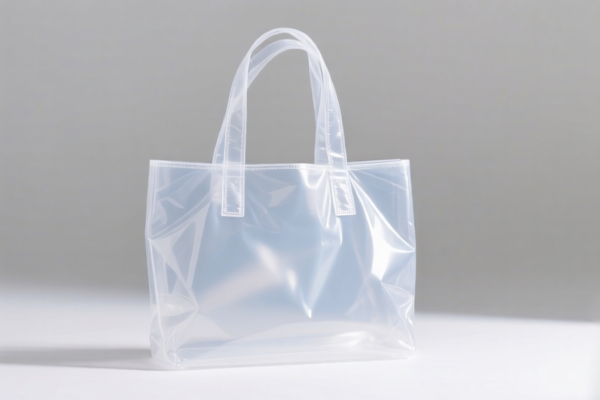
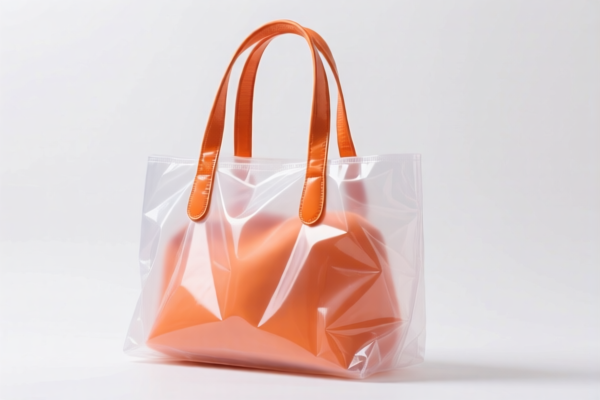
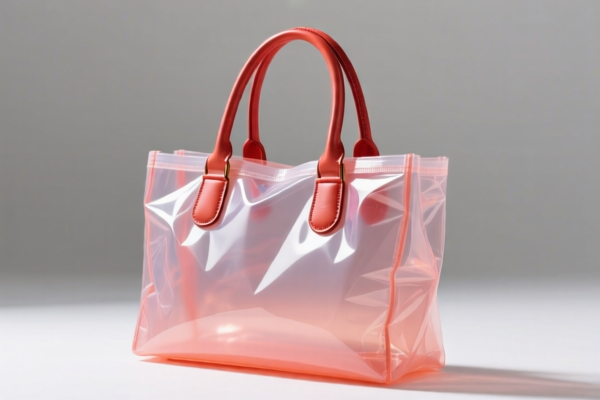
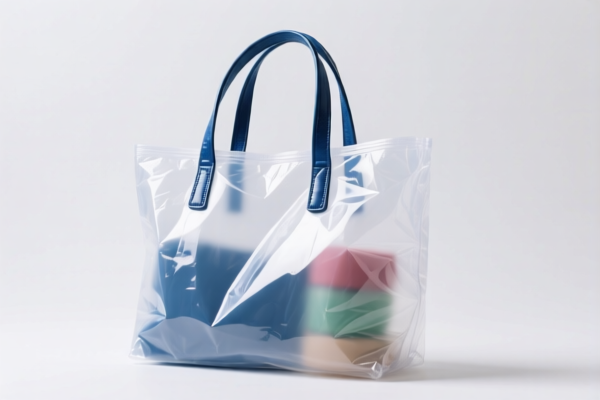
AI分析
👜 Artificial Fiber Daily Handbags (Artificial Fiber Travel/Day Bags)
🌐 HS Code Reference & Customs Clearance Guide | 2026 Latest Tariff Analysis | Professional Clearance Strategy
📌 I. Product Definition & Classification: Do You Really Understand "Artificial Fiber Handbags"?
Artificial fiber handbags, often categorized broadly as travel bags or daily carry-alls, are accessories made primarily from man-made filaments or staple fibers (e.g., polyester, nylon, rayon) rather than leather or natural fibers. In international trade, the classification is critical because it determines whether the item is treated as a travel article (Chapter 42) or a textile bag (Chapter 63).
The distinction usually hinges on: 1. Material Composition: Specific type of artificial fiber vs. general textile material. 2. Intended Use: Explicitly labeled as "travel" or "daily carry" vs. generic "bag." 3. Structure: Whether it has the structural characteristics of a travel bag (zippers, compartments) vs. a simple sack.
⚠️ Key Distinction Point:
- If the bag is explicitly marketed as a "Travel Bag" and made of specific artificial fibers → Likely Chapter 42.
- If the bag is a general "Textile Bag" (e.g., tote, pouch) made of broader textile materials → Likely Chapter 63.
- Misclassification Risk: Declaring a leather-like artificial fiber bag under Chapter 63 when it fits Chapter 42 can lead to significant duty discrepancies.
📦 II. HS Code Classification Details (2026 Latest Tariff Authority Comparison)
Based on the provided data, here are the specific HS Codes and their corresponding descriptions for Artificial Fiber Daily Handbags:
| HS Code | Product Description | Applicable Scenario | Key Material/Feature |
|---|---|---|---|
4202.92.31.20 |
Artificial Fiber Travel Bag, material is artificial fiber, purpose is travel bag | Labeled specifically as a "Travel Bag" | Specific artificial fiber, travel purpose |
4202.92.31.31 |
Artificial Fiber Travel Bag, material is artificial fiber textile, purpose is travel-type bag | Similar to above, possibly different structural nuance | Artificial fiber textile, travel-type |
6305.39.00.00 |
Artificial Fiber Travel Bag, material is artificial textile material, form is bag | General textile bag classification | Artificial textile material, bag form |
6305.90.00.00 |
Artificial Fiber Travel Bag, form is bag, material is other textile materials | Broad "other textile" category | Other textile materials, bag form |
🔍 Critical Reminder:
- Chapter 42 (4202...) generally applies to "Articles of apparel and clothing accessories, travel bags..." and often carries higher base tariffs but is specific to "travel" items. - Chapter 63 (6305...) applies to "Other made-up textile articles" and may have lower base tariffs but is less specific to "travel" functionality. - Duplicate Entry: Note that4202.92.31.20appears twice in the source data with identical details; this is a single unique classification.
💰 III. 2026 Latest Tariff Rate Breakdown (Including Surcharges & Policy Add-ons)
✅ Applicable Country: United States (US)
✅ Origin: China (CN)
✅ Effective Time: Current rates including Section 301 and IEEPA surcharges
🎯 1. 4202.92.31.20 & 4202.92.31.31 —— Artificial Fiber Travel Bags (Chapter 42)
| Item | Content |
|---|---|
| Base Tariff | 17.6% (ad valorem) |
| Section 301 Surcharge | +25.0% (From USITC Footnote 9903.88.01 / Trade Act Section 301) |
| IEEPA Surcharge | +10.0% (Against China/HK products, effective from Nov 10, 2025) |
| Total Effective Rate | 52.6% |
| Tax Calculation | CIF Value × 52.6% |
| De Minimis Exemption | ❌ Not Applicable (High duty rate exceeds threshold benefits; strict scrutiny) |
| Legal Basis Path | IEEPA:9903.01.25 → IEEPA:9903.01.24 → USITC:4202.92.31.20 → FOOTNOTE:301/122 |
📌 Explanation:
- The Base 17.6% reflects the standard MFN rate for travel articles.
- The 25% Section 301 is a longstanding punitive tariff on Chinese manufactured goods.
- The 10% IEEPA is a recent additional surcharge specifically targeting Chinese imports.
- Total 52.6% is extremely high. This makes direct shipping of these items from China to the US very costly unless mitigated by duty drawbacks or free trade zones.
🎯 2. 6305.39.00.00 —— Artificial Fiber Bags (Textile Chapter, Specific)
| Item | Content |
|---|---|
| Base Tariff | 8.4% |
| Section 301 Surcharge | +7.5% (Reduced section on specific textile subheadings in some contexts, or partial exemption applied) |
| IEEPA Surcharge | +10.0% |
| Total Effective Rate | 25.9% |
| Tax Calculation | CIF Value × 25.9% |
| De Minimis Exemption | ❌ Not Applicable for bulk/commercial shipments |
| Legal Basis Path | IEEPA:9901.25 → USITC:6305.39.00.00 → FOOTNOTE:122 |
📌 Note:
- This classification has a significantly lower total tax (25.9%) compared to Chapter 42.
- The Section 301 rate is only 7.5% here, unlike the 25% in Chapter 42. This suggests that if the product can be legally classified as a general "textile bag" rather than a "travel bag," substantial savings can be achieved.
- Risk: Misclassifying a "travel bag" as a "textile bag" to save tax is a common audit trigger. Ensure the product description matches "bag" and not "travel kit."
🎯 3. 6305.90.00.00 —— Other Textile Bags (General Category)
| Item | Content |
|---|---|
| Base Tariff | 6.2% |
| Section 301 Surcharge | +7.5% |
| IEEPA Surcharge | +10.0% |
| Total Effective Rate | 23.7% |
| Tax Calculation | CIF Value × 23.7% |
| De Minimis Exemption | ❌ Not Applicable |
| Legal Basis Path | IEEPA:9901.25 → USITC:6305.90.00.00 → FOOTNOTE:122 |
📌 Analysis:
- This is the lowest tax rate (23.7%) among the options.
- It applies to bags made of "other textile materials" not covered in specific subheadings.
- Strategic Value: If the handbag is simple, lacks specialized travel features (like hard shells, extensive compartments), and is marketed as a general tote or pouch, this code offers the best cost efficiency.
- Caution: The product description must strictly avoid the word "Travel" in a way that triggers Chapter 42. Use terms like "Daily Carry Bag," "Tote," or "Shopping Bag."
🛠️ IV. Customs Clearance Practical Advice (Real-World Pitfall Avoidance)
✅ 1. Documentation Checklist (Missing items will cause delays)
| Document | Required? | Description |
|---|---|---|
| ✅ Commercial Invoice | ✔️ | Must clearly state "Artificial Fiber Bag" or "Travel Bag." Avoid vague terms like "Accessory." |
| ✅ Product Specification Sheet | ✔️ | Detail material composition (e.g., 100% Polyester). Specify if it has zippers, handles, compartments. |
| ✅ Photos (Clear & Detailed) | ✔️ | Show the entire bag, lining, labels, and any travel-specific features (luggage straps, etc.). |
| ✅ Material Certificate | ✔️ | Proof of artificial fiber content to support Chapter 63 vs. 42 classification. |
| ✅ Packing List | ✔️ | Show quantity and weight. Bulk shipments are scrutinized more heavily. |
| ✅ Origin Certificate (if applicable) | ✔️ | To confirm China origin and apply correct IEEPA/Section 301 rates. |
✅ 2. Classification Strategy (Key Mantras)
🔥 “Chapter 42 = High Tax, Chapter 63 = Low Tax, Description is Key!”
| Scenario | Recommended HS Code | Expected Total Tax | Risk Level |
|---|---|---|---|
| Explicit "Travel Bag" with structured compartments, locks, luggage straps | 4202.92.31.20 / .31 |
52.6% | Low (Compliant) |
| General Tote/Daily Bag, soft structure, no specialized travel hardware | 6305.39.00.00 |
25.9% | Medium (Must justify "non-travel") |
| Simple Sack/Pouch, generic textile, no brand travel features | 6305.90.00.00 |
23.7% | High (Auditors may reclassify as travel if used as such) |
📌 Warning:
- Do NOT describe a6305item as a "Travel Bag" in the invoice. Use "Daily Bag," "Shopper," or "Textile Bag."
- If the product has luggage pass-through straps or hard protective cases, Customs will likely force classification into Chapter 42, triggering the 52.6% duty.
✅ 3. Special Situation Handling
| Situation | Handling Advice |
|---|---|
| OEM Custom Bags | Provide design specs showing it's a general-purpose bag, not a specialized travel system. |
| Mixed Materials | If >50% is artificial fiber but includes leather patches, it may still fall under Chapter 42 if the primary character is leather-like. Test carefully. |
| Sample Shipments | Even for samples, if the value is high, expect duty. De minimis (Section 321) does not cover goods subject to high Section 301/IEEPA duties in many enforcement cases. |
| Return/Exchange | Ensure original HS code is maintained to avoid double taxation or audit flags. |
🌍 V. Global Market Comparison (2026 Overview)
| Country/Region | Recommended HS Code | Approx. Duty (China Origin) | Key Certification | Notes |
|---|---|---|---|---|
| 🇺🇸 USA | 6305.90.00.00 |
23.7% (Best Case) | FCC (if electronic), General | High scrutiny on Chapter 42. Aim for Chapter 63 if possible. |
| 🇪🇺 EU | 4202.92 / 6305.90 |
12% - 15% (Standard) | CE (if applicable) | EU tariffs are lower but strict on material labeling. |
| 🇨🇳 China (Import) | 4202.92 / 6305.90 |
10% - 20% | CCC (if applicable) | No Section 301. Focus on proper classification for VAT. |
| 🇬🇧 UK | 4202.92 / 6305.90 |
12% - 15% | UKCA | Post-Brexit rules apply. |
📌 Conclusion:
- The US market is the most punitive due to the combination of Base Tariff + Section 301 + IEEPA.
- Chapter 63 (6305) is the strategic target for cost reduction, but requires careful product positioning to avoid being classified as a "Travel Bag."
📌 VI. Common Errors & Pitfalls (Lessons Learned)
❌ Error 1: Labeling a simple tote as a "Travel Bag" to sound premium.
👉 Result: Customs reclassifies to 4202..., charging 52.6% instead of 23.7%. Loss: ~29% of value.
❌ Error 2: Using "Artificial Fiber" without specifying "Textile" vs. "Travel."
👉 Result: Ambiguity leads to audit delays, storage fees, and potential penalties.
❌ Error 3: Ignoring the 10% IEEPA surcharge.
👉 Result: Budgeting based only on 25% or 17.6% leads to unexpected costs at customs. Total is 23.7%–52.6%.
❌ Error 4: Splitting shipments to avoid De Minimis.
👉 Result: Since these items are subject to high tariffs, they are not eligible for the $800 de minimis exemption in most cases involving China origin.
✅ Correct Approach:
“Artificial Fiber Tote Bag, 100% Polyester, No Travel Hardware, Brand: XYZ”
→ Classify under6305.90.00.00→ 23.7% Total Duty.
🎯 VII. Conclusion: Strategic Clearance for Maximum Profit
🎯 Remember the Mantra:
🔹 “Chapter 42 is for Travel, 52.6% Hurts. Chapter 63 is for Bags, 23.7% Smiles. Describe Wisely, Don’t Lie, or Customs Will Rise.”
🔹 “IEEPA 10% is Real, Section 301 Varies. Check the Code, Save Your Stares.”
📌 Pro Tip:
If your product has any features that suggest "Travel" (e.g., compression straps, lockable zippers, luggage sleeve), prepare for Chapter 42 duties. To qualify for Chapter 63, ensure the design is strictly general-purpose (shopping, daily carry, beach bag).
📣 Immediate Action:
📞 Consult a Customs Broker: Provide photos and product specs for a Pre-Ruling (Advance Ruling) from US Customs.
🚀 Optimize Description: Use "Daily Bag" or "Tote" instead of "Travel Bag" in marketing materials to support Chapter 63 classification.
💼 Calculate True Landed Cost: Include the 23.7%–52.6% duty in your pricing model to ensure profitability.
✨ Professional Customs Clearance Starts with Precise Classification!
💼 Every Percent Saved is Pure Profit!
用户评价
关于 HS 编码归类
协调制度(HS)是由世界海关组织(WCO)制定的国际贸易商品分类标准。全球 200 多个国家采用 HS 系统作为海关关税、贸易统计和进出口监管的基础。
每个 HS 编码遵循以下层级结构:
- 章(2 位)——商品大类(例如:第 84 章:机器和机械设备)
- 品目(4 位)——章内的更具体分类
- 子目(6 位)——国际通用细分,所有 WCO 成员国统一使用
- 本国细分(8-10 位)——各国自行扩展的细分编码,如美国 HTSUS 10 位编码
正确的 HS 编码归类对于顺利通关、准确缴纳关税和遵守贸易法规至关重要。错误归类可能导致海关延误、多缴关税或罚款。
从CN进口到US时,适用的关税税率可能包括:
- 最惠国(MFN)税率——适用于 WTO 成员国的标准关税税率
- 普通税率——适用于无贸易协定国家
- 贸易救济关税——附加关税,如 301 条款(反倾销)、232 条款(国家安全)或反补贴税
本页内容仅供参考。如需正式归类,请咨询当地海关或持牌报关代理。