Artificial Flower Ball
CN → US| HS编码 | 关税税率 | 原产国 | 目的国 | 文档 |
|---|---|---|---|---|
| 9505105020 | 10.0% | CN | US | 官方文档 |
| 6702104000 | 13.4% | CN | US | 官方文档 |
| 3926400090 | 15.3% | CN | US | 官方文档 |
| 6702903500 | 19.0% | CN | US | 官方文档 |
| 9505906000 | 10.0% | CN | US | 官方文档 |
商品图片
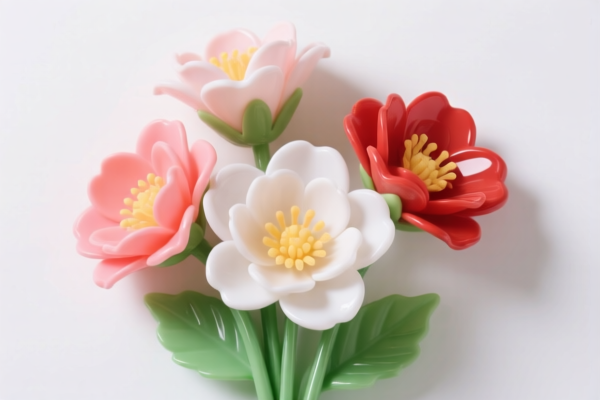
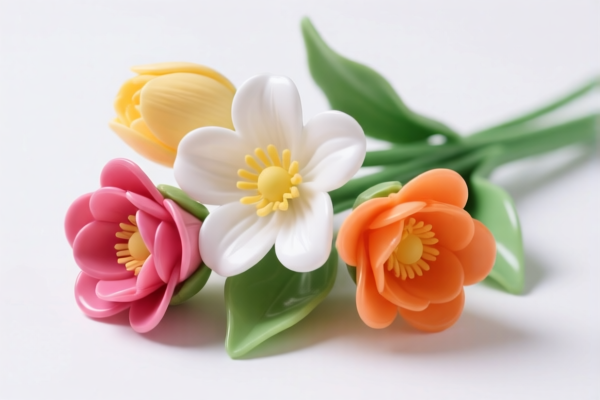
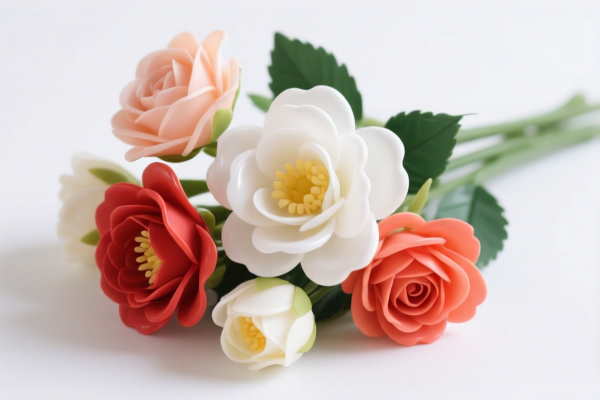
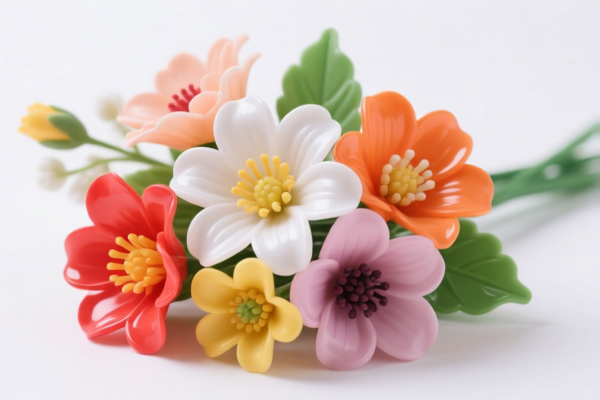
AI分析
🌸 Artificial Flower Ball (Faux Floral Sphere)
🌐 HS Code Reference & Customs Clearance Guide | 2026 Latest Tariff Analysis | Professional Clearance Strategy
📌 I. Product Definition: What is an "Artificial Flower Ball"?
An Artificial Flower Ball is a decorative item shaped like a sphere or cluster, made from non-living materials to mimic natural flowers. In international trade, the classification depends heavily on material composition, specific morphology, and intended use (e.g., holiday decoration vs. general craft).
⚠️ Key Classification Drivers:
- Primary Use: If specifically for Christmas/holiday decoration, it may fall under Chapter 95.
- Material: Plastic, textile (silk/fabric), or other fibers determine the Chapter (39, 63, 67, etc.).
- Form: Loose flowers vs. assembled balls/spheres.
📦 II. HS Code Classification Matrix (Based on Provided Data)
The following HS Codes are derived directly from the provided dataset, categorized by material and usage logic.
| HS Code | Product Description (Inferred) | Primary Material | Tax Detail Breakdown | Total Tax Rate |
|---|---|---|---|---|
9505.10.50.20 |
Holiday Decoration: Other Christmas decorations (excluding artificial trees). | Plastic / Fabric | Base: 0%, 122 Clause: 10% | 10.0% |
6702.10.40.00 |
Artificial Flowers: Plastic-made, resembling natural flora. | Plastic | Base: 3.4%, 122 Clause: 10% | 13.4% |
3926.40.00.90 |
Plastic Articles: Other decorative plastic items. | Plastic | Base: 5.3%, 122 Clause: 10% | 15.3% |
6702.90.35.00 |
Artificial Flowers: Fibers/plastic-based floral assemblies. | Fiber / Plastic | Base: 9.0%, 122 Clause: 10% | 19.0% |
9505.90.60.00 |
Other Festive Articles: Decorative balls for entertainment/festivals. | Silk / Plastic / Paper | Base: 0%, 122 Clause: 10% | 10.0% |
🔍 Critical Distinction:
- Chapter 95 (9505): Focuses on Purpose (Holiday/Festive). If the product is marketed specifically for Christmas or seasonal festivals, this is often the preferred classification due to lower base rates.
- Chapter 67 (6702): Focuses on Form (Artificial Flowers/Plants). If the item is sold as a generic craft supply or home decor item without specific holiday branding, this chapter applies.
- Chapter 39 (3926): Focuses on Material (Plastic Articles). If the "flower" aspect is secondary to the plastic material itself, or if it’s a molded plastic decor piece, this applies.
💰 III. 2026 Tariff Rate Breakdown (Detailed Analysis)
✅ Applicable Jurisdiction: United States (US)
✅ Origin: China (CN) (Implied by "122 Clause" and typical tariff structures)
✅ Effective Date: Post-2025 Trade Policy Updates
🎯 1. 9505.10.50.20 & 9505.90.60.00 —— Festival/Holiday Decorations
| Item | Details |
|---|---|
| Base Duty | 0% (ad valorem) |
| 122 Clause Tariff | +10% |
| Total Effective Rate | 10.0% |
| Calculation Basis | CIF Value × 10% |
| Key Insight | These codes have zero base duty. The only cost driver is the specific 122 Clause tariff. This makes them the most cost-effective classification if the product can be legitimately argued as a "holiday decoration." |
📌 Why 10%?
- The base rate for many festive goods is low or zero to encourage seasonal retail.
- The 10% additional tariff is a specific trade measure (often related to Section 301 or similar trade actions).
- Savings: Compared to plastic-only classifications, you save 5.3% - 9.0% on the base duty.
🎯 2. 6702.10.40.00 —— Plastic Artificial Flowers
| Item | Details |
|---|---|
| Base Duty | 3.4% |
| 122 Clause Tariff | +10% |
| Total Effective Rate | 13.4% |
| Calculation Basis | CIF Value × 13.4% |
| Key Insight | Slightly higher than holiday decor. Suitable if the product is not explicitly branded as a "Christmas Item" but rather a "General Home Decor." |
🎯 3. 3926.40.00.90 —— Other Plastic Decorative Articles
| Item | Details |
|---|---|
| Base Duty | 5.3% |
| 122 Clause Tariff | +10% |
| Total Effective Rate | 15.3% |
| Calculation Basis | CIF Value × 15.3% |
| Key Insight | This is a "basket" category for plastic goods. If customs officials dispute that it is a "flower" (Chapter 67), they may default to this plastic-based code. |
🎯 4. 6702.90.35.00 —— Other Artificial Flowers/Foliage
| Item | Details |
|---|---|
| Base Duty | 9.0% |
| 122 Clause Tariff | +10% |
| Total Effective Rate | 19.0% |
| Calculation Basis | CIF Value × 19.0% |
| Key Insight | The highest rate in the dataset. This likely applies to flower balls made from mixed fibers (e.g., silk-like fabrics, rayon) rather than pure plastic. Avoid this if you can justify a plastic or holiday classification. |
🛠️ IV. Customs Clearance Practical Advice
✅ 1. Documentation Checklist (Essential for Clearance)
| Document | Requirement | Purpose |
|---|---|---|
| Product Photos | ✔️ High-res images of the "Flower Ball" | Prove shape, texture, and lack of live plant material. |
| Material Composition Statement | ✔️ Specify % of Plastic, Fabric, Wire, etc. | Determines if HS 3926, 6702, or 9505 is appropriate. |
| Intended Use Declaration | ✔️ "For Christmas Decoration" or "General Home Decor" | Critical for distinguishing between 9505 (10%) and 6702/3926 (13-19%). |
| Commercial Invoice | ✔️ Clearly state "Artificial Plastic/Silk Flower Ball" | Avoid vague terms like "Craft Item" which may trigger higher scrutiny. |
| Packing List | ✔️ Net/Gross Weight, Dimensions | Ensure correct valuation and duty calculation. |
✅ 2. Classification Strategy (How to Save Money)
🔥 "Market as Holiday, Classify as 9505"
If your artificial flower balls are sold for Christmas, Halloween, or Spring Festivals, explicitly market and declare them as "Holiday Decorations."
Strategy HS Code Rate Risk Best Case 9505.10.50.20or9505.90.60.0010% Low, if marketing materials show holiday context. Medium Case 6702.10.40.0013.4% Medium, if sold as general decor but made of plastic. Worst Case 6702.90.35.0019% High, if made of mixed fibers and no holiday context.
✅ 3. Common Pitfalls & Avoidance
| Pitfall | Consequence | Solution |
|---|---|---|
| Misdeclaring Material | Claiming "Plastic" but using Silk/Fabric | Provide Material Test Reports. If it’s 50% silk, 6702.90 may apply. |
| Ignoring "122 Clause" | Underestimating Total Cost | Always add 10% to any base duty. Do not forget this surcharge. |
| Vague Description | "Floral Arrangement" | Customs may guess. Use "Artificial Flower Ball, Plastic/Fabric, For Decoration." |
| Splitting Shipments | Partial clearances | Ensure all items in a shipment have consistent HS Codes to avoid delays. |
🌍 V. Global Market Context (2026)
| Market | Recommended HS Code | Est. Duty (incl. Trade Measures) | Notes |
|---|---|---|---|
| 🇺🇸 USA | 9505.10.50.20 (if holiday) |
10% | Best option. Check for specific holiday season allowances. |
| 🇪🇺 EU | 6702.90 |
Varies (0-5% + VAT) | EU often has lower base duties on artificial flowers, but VAT applies. |
| 🇨🇳 China | 6702.90 |
5-10% | Import duties for decor items. |
| 🇬🇧 UK | 6702.90 |
5-12% | Post-Brexit tariffs may differ from EU. |
📌 Conclusion:
The USA market shows significant duty differences based on classification. Prioritize9505if your sales channel is seasonal/holiday-focused. This can save you 4% - 9% in duties compared to generic floral or plastic classifications.
📌 VI. Common Errors & Best Practices
❌ Error 1: Declaring as "Live Flowers"
👉 Result: Rejection, Quarantine, or Deportation.
✅ Fix: Always use keywords "Artificial," "Faux," "Synthetic."
❌ Error 2: Not specifying Material
👉 Result: Customs assigns highest default rate (e.g., 6702.90 at 19%).
✅ Fix: State "Plastic" or "Textile/Silk" clearly in the description.
❌ Error 3: Ignoring the 122 Clause
👉 Result: Budget miscalculation.
✅ Fix: Add 10% to all US imports from China, regardless of base duty.
🎯 VII. Conclusion: Optimize Your Tariff Strategy
🎯 Key Takeaway:
"Shape it as Decor, Material it as Plastic, Market it as Holiday."
- If you can argue Holiday Use → Go for 9505 (10%).
- If it’s pure Plastic → Go for 6702.10 (13.4%) or 3926 (15.3%).
- If it’s Mixed/Fiber → Expect 19% (6702.90).
📌 Action Item:
1. Review your product’s primary marketing channel. Is it holiday-specific?
2. Confirm material composition (Plastic vs. Fabric).
3. Select the lowest applicable HS Code from the list above that accurately reflects the product.
4. Include the 10% 122 Clause in your landed cost calculation.
✨ Professional Clearance Starts with Precise Classification!
💼 Every percentage point matters in global trade.
用户评价
关于 HS 编码归类
协调制度(HS)是由世界海关组织(WCO)制定的国际贸易商品分类标准。全球 200 多个国家采用 HS 系统作为海关关税、贸易统计和进出口监管的基础。
每个 HS 编码遵循以下层级结构:
- 章(2 位)——商品大类(例如:第 84 章:机器和机械设备)
- 品目(4 位)——章内的更具体分类
- 子目(6 位)——国际通用细分,所有 WCO 成员国统一使用
- 本国细分(8-10 位)——各国自行扩展的细分编码,如美国 HTSUS 10 位编码
正确的 HS 编码归类对于顺利通关、准确缴纳关税和遵守贸易法规至关重要。错误归类可能导致海关延误、多缴关税或罚款。
从CN进口到US时,适用的关税税率可能包括:
- 最惠国(MFN)税率——适用于 WTO 成员国的标准关税税率
- 普通税率——适用于无贸易协定国家
- 贸易救济关税——附加关税,如 301 条款(反倾销)、232 条款(国家安全)或反补贴税
本页内容仅供参考。如需正式归类,请咨询当地海关或持牌报关代理。