Automotive Rubber Gasket
CN → US| HS编码 | 关税税率 | 原产国 | 目的国 | 文档 |
|---|---|---|---|---|
| 3926904510 | 38.5% | CN | US | 官方文档 |
| 8484900000 | 37.5% | CN | US | 官方文档 |
| 4016935010 | 37.5% | CN | US | 官方文档 |
| 4016931010 | 37.5% | CN | US | 官方文档 |
| 4016931020 | 37.5% | CN | US | 官方文档 |
商品图片
AI分析
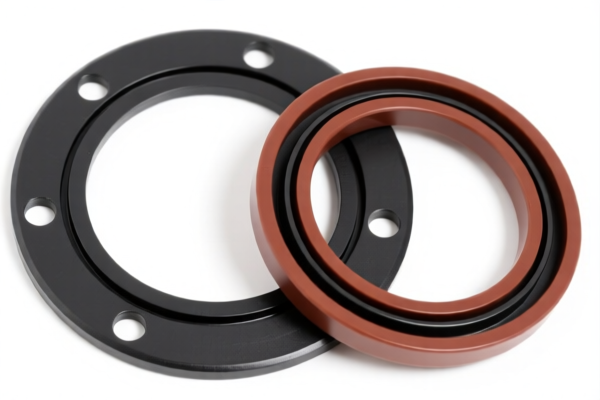
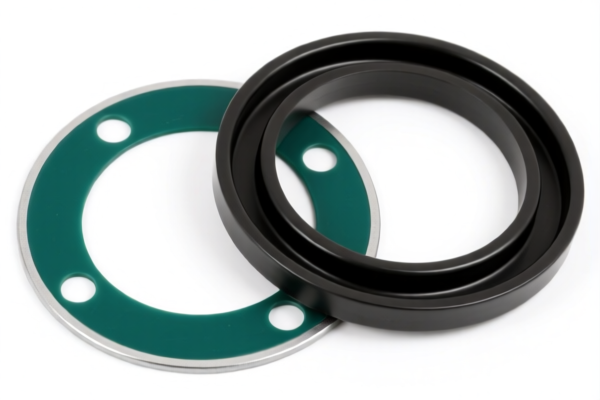
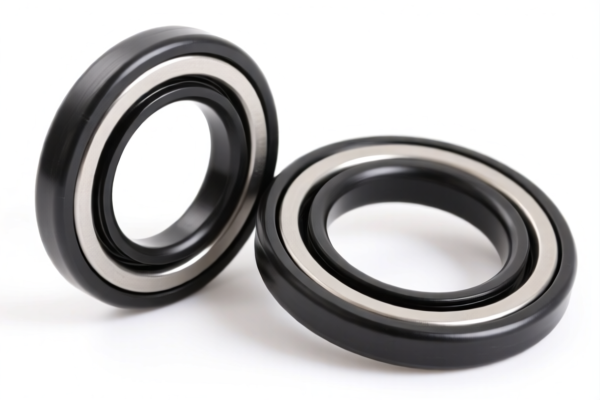
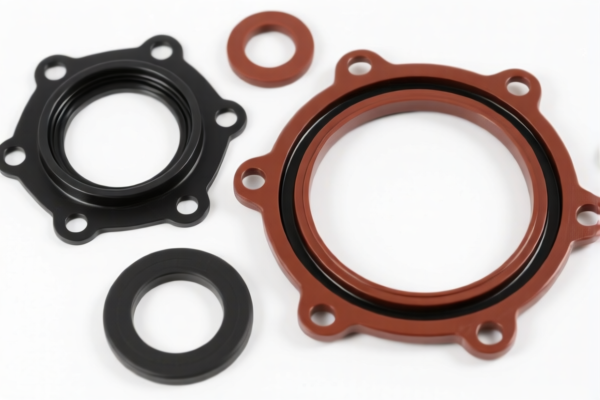
🚗 Automotive Rubber Gasket (Seal Ring & Cushion)
🌐 HS Code Reference & Customs Clearance Guide | 2026 Latest Tariff Analysis | Professional Entry Strategy
📌 I. Product Definition & Classification: Are You Classifying "Rubber" or "Function"?
An Automotive Rubber Gasket is a critical sealing component used in vehicle engines, transmissions, exhaust systems, and body assemblies to prevent leaks of fluids (oil, coolant) and gases. In international trade, the classification is highly contentious because it depends on whether Customs views the item primarily as a rubber product or a mechanical part/accessory.
Key Distinction: * Classified by Material/Shape (Chapter 40): If the item is strictly viewed as a "stopper, washer, or similar article of vulcanized rubber," it falls under 4016.93. This is the most common classification for standard rubber seals. * Classified by Function/Machine Part (Chapter 84): If the item is considered an integral part of a specific mechanical apparatus (like a pump or engine) and is defined as a "mechanical seal," it may fall under 8484.90. * Other Rubber Articles (Chapter 39/40 Edge Cases): In some specific interpretations or older tariffs, certain composite seals might be misclassified under 3926.90 (Plastic articles) or other rubber sub-headings, though this is less common for pure rubber. Note: The provided data includes a 3926.90.45.10 entry, likely due to specific material composition (e.g., plastic-rubber mix) or specific US Customs interpretation quirks, but for pure rubber, 4016 is standard.
⚠️ Critical Warning:
- Misclassifying a rubber gasket as a plastic article or a generic machine part can lead to massive duty discrepancies.
- US Tariffs heavily penalize Chinese-origin rubber goods and mechanical parts under various sections (Section 301, Section 122, IEEPA).
📦 II. HS Code Classification Details (2026 Tariff Concordance)
Based on the provided data, here are the five possible HS Codes and the logical rationale for each. Choose the one that best fits your specific product's composition and intended use.
| HS Code | Product Description | Matching Basis (Why this code?) |
|---|---|---|
| 3926.90.45.10 | Rubber Seat Ring Seal | Match Basis: Seal ring usage + Rubber material. (Note: Often applied when there is a composite nature or specific US Customs precedent treating certain seals as "other plastic/rubber articles" rather than standard vulcanized rubber washers.) |
| 8484.90.00.00 | Rubber Seat Ring Seal | Match Basis: Mechanical seal category + Non-metallic material combination. (Applied if the gasket is deemed an integral "mechanical seal" component for industrial machinery or engines, rather than just a rubber part.) |
| 4016.93.50.10 | Rubber Seat Ring Seal | Match Basis: Vulcanized rubber material + Washer/Seal function. (The standard classification for "Other articles of vulcanized rubber other than hard rubber," specifically for washers/seals.) |
| 4016.93.10.10 | Rubber Seat Ring Seal | Match Basis: Rubber material + Washer/Seal form. (Specific sub-category for rubber washers/gaskets of a certain thickness or type.) |
| 4016.93.10.20 | Black Automotive Sealant/Gasket | Match Basis: Automotive sealing application + Vulcanized rubber material. (Specifically tailored for black rubber seals used in automotive contexts.) |
🔍 Key Insight:
- 4016.93 series is the most common for standard rubber gaskets.
- 8484.90 is used when the seal is part of a mechanical assembly (e.g., a composite gasket with metal inserts).
- 3926.90 is risky unless the product is a hybrid (plastic/rubber) or specific US Customs rulings apply. However, the data shows it as a valid option, so verify material composition carefully.
💰 III. 2026 Latest Tariff Rate Breakdown (Including Surtaxes & Policy Add-ons)
✅ Applicable Country: United States (US)
✅ Origin: China (CN)
✅ Effective Time: 2025/2026 (Subject to current trade war provisions)
🎯 1. 3926.90.45.10 – Rubber/Plastic Seal Articles
| Item | Content |
|---|---|
| Base Tariff | 3.5% (Ad Valorem) |
| Section 301 Surtax | +25.0% (From USITC Footnote) |
| Section 122 Tariff | +10.0% (Import fee on Chinese goods) |
| IEEPA Tariff | Included in above or additional 10% depending on specific ruling |
| Total Tax Rate | 38.5% |
| Tax Calculation | CIF Value × 38.5% |
| De Minimis Exemption? | ❌ No (Not eligible for $800 exemption) |
📌 Explanation:
- The 3.5% base is standard for "Other plastic articles" or similar.
- The 25% is the standard Section 301 penalty on Chinese goods.
- The 10% is the Section 122 import fee.
- Total: 38.5% – This is a high-cost classification.
🎯 2. 8484.90.00.00 – Mechanical Seals (Parts of Machinery)
| Item | Content |
|---|---|
| Base Tariff | 2.5% |
| Section 301 Surtax | +25.0% |
| Section 122 Tariff | +10.0% |
| Total Tax Rate | 37.5% |
| Tax Calculation | CIF Value × 37.5% |
| De Minimis Exemption? | ❌ No |
📌 Explanation:
- 8484 covers "Gaskets and similar joints of metal sheeting combined with other material or of two or more layers of metal." However, non-metallic mechanical seals are often classified here if they are integral parts of machines.
- The base is slightly lower (2.5%) than 3926, but the surcharges are the same.
- Total: 37.5%
🎯 3. 4016.93.50.10 & 4016.93.10.10 & 4016.93.10.20 – Rubber Washers/Seals
| Item | Content |
|---|---|
| Base Tariff | 2.5% |
| Section 301 Surtax | +25.0% |
| Section 122 Tariff | +10.0% |
| Total Tax Rate | 37.5% |
| Tax Calculation | CIF Value × 37.5% |
| De Minimis Exemption? | ❌ No |
📌 Explanation:
- 4016.93 is the standard for "Other articles of vulcanized rubber."
- The base rate is 2.5%.
- Add 25% (Sec 301) + 10% (Sec 122).
- Total: 37.5%.
- Note:4016.93.10.20is specifically for "Black Automotive Sealants," which may have stricter customs scrutiny but the same tariff rate.
🛠️ IV. Customs Clearance Practical Advice (Pitfall Avoidance Guide)
✅ 1. Documentation Checklist (Non-negotiable)
| Document | Must Provide | Reason |
|---|---|---|
| ✅ Product Specification Sheet | ✔️ | Must clearly state material composition (e.g., 100% Vulcanized Rubber, NBR, EPDM) and hardness (Shore A). |
| ✅ Drawing/Technical Diagram | ✔️ | Shows dimensions, thickness, and cross-section to prove it’s a seal/gasket, not a raw rubber sheet. |
| ✅ Material Safety Data Sheet (MSDS) | ✔️ | Required for rubber products to confirm no hazardous chemicals. |
| ✅ Commercial Invoice | ✔️ | Must use precise language: "Rubber Gasket, Automotive Use, Model XYZ" – avoid vague terms like "Parts." |
| ✅ Country of Origin Certificate | ✔️ | Essential for Section 301 and 122 application. |
| ✅ Packaging List | ✔️ | Ensure packaging doesn’t look like a "set" (which could trigger different classification). |
✅ 2. Declaration Tips (Key Mantras)
🔥 “Material First, Function Second, Name Specific, Tax Clear!”
| Scenario | Correct Declaration | Wrong Practice |
|---|---|---|
| Pure Rubber Gasket | 4016.93.xx.xx |
Using 8484 without proof of mechanical integration → Audit Risk |
| Gasket with Metal Insert | 8484.90.00.00 |
Using 4016 for a composite part → Underpayment Risk |
| Plastic-Rubber Hybrid | 3926.90.45.10 |
Using 4016 for plastic-heavy items → Overpayment/Rejection |
| Automotive Specific | Mention "Automotive" in description | Generic "Seal" → Customs may assume industrial |
✅ 3. Special Handling
| Situation | Handling Advice |
|---|---|
| OEM Custom Gaskets | Provide customer design specs to prove it’s not a generic commodity. |
| Black Rubber Seals | Use 4016.93.10.20 if clearly for automotive; be ready to prove automotive application (e.g., invoice to auto manufacturer). |
| Composite Seals | If the gasket has metal rings embedded, classify under 8484.90.00.00 as a mechanical joint. |
🌍 V. Global Market Comparison (2026 Latest)
| Country/Region | Recommended HS Code | Tariff (China Origin) | Certification Requirements | Notes |
|---|---|---|---|---|
| 🇺🇸 USA | 4016.93.xx.xx |
37.5% - 38.5% | IECEx (if explosive environment), ISO 9001 | High Tariffs due to Sec 301 & 122. |
| 🇨🇳 China | 4016.93.xx.xx |
5% - 10% | CCC (if applicable) | Standard rate, no surcharges. |
| 🇪🇺 EU | 4016.93.00.00 |
0% - 6.5% | REACH, RoHS | No anti-dumping on rubber gaskets typically. |
| 🇯🇵 Japan | 4016.93.00.00 |
3% - 6% | JIS Standards | Moderate tariffs, strict quality checks. |
| 🇲🇽 Mexico | 4016.93.00.00 |
0% - 5% | NOM Certifications | Nearshoring advantage for US-bound goods. |
📌 Conclusion:
- USA is the most expensive market due to layered tariffs (Base + Sec 301 + Sec 122).
- EU and Japan are more favorable.
- Mexico/Vietnam sourcing can avoid US tariffs if rules of origin are met.
📌 VI. Common Errors & Pitfalls (Blood-Teaching Lessons)
❌ Error 1: Declaring "Rubber Parts" without specifying HS Code
👉 Consequence: Customs assigns 8484 or 3926 arbitrarily → Tax Dispute + Delay.
❌ Error 2: Using 4016.93 for a metal-reinforced seal
👉 Consequence: Customs reclassifies to 8484 → Underpayment Penalty + Back Taxes.
❌ Error 3: Ignoring Section 122 in cost calculation
👉 Consequence: Budget shortfalls. The 10% fee is often forgotten by importers.
❌ Error 4: Mislabeling as "Plastic" when it’s Vulcanized Rubber
👉 Consequence: 3926.90.45.10 may apply, but if it’s 100% rubber, 4016 is more accurate. Wrong declaration = Customs Query.
✅ Correct Approach:
"Vulcanized Rubber Gasket, Automotive Fuel System, EPDM Material, Black, Model ABC, 100% Rubber"
🎯 VII. Conclusion: Precision Classification Saves Money!
🎯 Remember the Mantra:
🔹 "Rubber = 4016 (37.5%), Metal-Mix = 8484 (37.5%), Plastic-Hybrid = 3926 (38.5%)."
🔹 "US Tariffs are Layered: Base + 25% (301) + 10% (122)."
🔹 "Clear Material, Clear Function, Clear Origin."
📌 Pro Tip:
If your gaskets are sourced from Vietnam or Mexico, apply for Free Trade Agreement (FTA) benefits to eliminate US tariffs entirely.
Consider pre-classification rulings (Ruling Letter) from US CBP if your product is composite (rubber + metal) to avoid future disputes.
📣 Immediate Action:
📞 Consult a Licensed Customs Broker
📄 Submit Product Samples & Drawings for HS Code Verification
🚀 Optimize Supply Chain to mitigate US Tariff Impact!
✨ Professional Classification, Efficient Customs Clearance!
💼 Every Percentage Point Counts in Your Profit Margin!
用户评价
关于 HS 编码归类
协调制度(HS)是由世界海关组织(WCO)制定的国际贸易商品分类标准。全球 200 多个国家采用 HS 系统作为海关关税、贸易统计和进出口监管的基础。
每个 HS 编码遵循以下层级结构:
- 章(2 位)——商品大类(例如:第 84 章:机器和机械设备)
- 品目(4 位)——章内的更具体分类
- 子目(6 位)——国际通用细分,所有 WCO 成员国统一使用
- 本国细分(8-10 位)——各国自行扩展的细分编码,如美国 HTSUS 10 位编码
正确的 HS 编码归类对于顺利通关、准确缴纳关税和遵守贸易法规至关重要。错误归类可能导致海关延误、多缴关税或罚款。
从CN进口到US时,适用的关税税率可能包括:
- 最惠国(MFN)税率——适用于 WTO 成员国的标准关税税率
- 普通税率——适用于无贸易协定国家
- 贸易救济关税——附加关税,如 301 条款(反倾销)、232 条款(国家安全)或反补贴税
本页内容仅供参考。如需正式归类,请咨询当地海关或持牌报关代理。