BBQ Shell Charcoal
CN → US| HS编码 | 关税税率 | 原产国 | 目的国 | 文档 |
|---|---|---|---|---|
| 3802100050 | 39.8% | CN | US | 官方文档 |
| 4402200000 | 35.0% | CN | US | 官方文档 |
| 4402900100 | 35.0% | CN | US | 官方文档 |
| 3606908000 | 22.5% | CN | US | 官方文档 |
| 3606904000 | 17.5% | CN | US | 官方文档 |
商品图片
AI分析
🔥 BBQ Shell Charcoal: The Ultimate HS Code & Customs Clearance Guide (2026)
🌐 HS Code Classification & Customs Strategy | 2026 Tax Regime Full Analysis | Professional Clearing Protocol
📌 I. Product Definition & Classification: Do You Really Know "BBQ Shell Charcoal"?
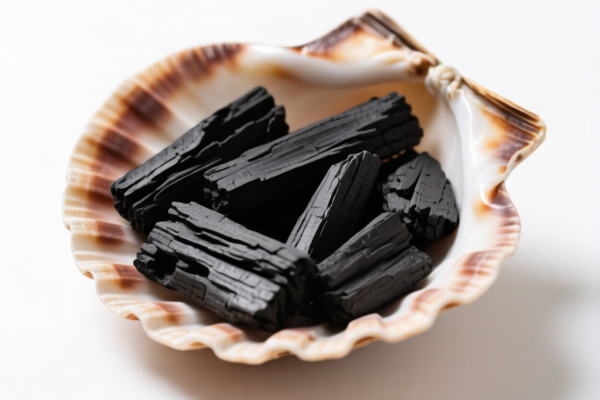
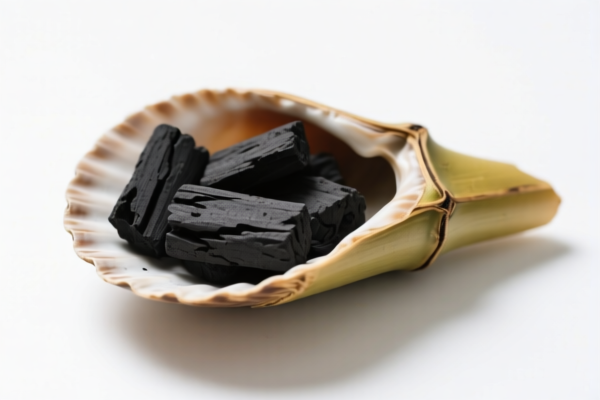
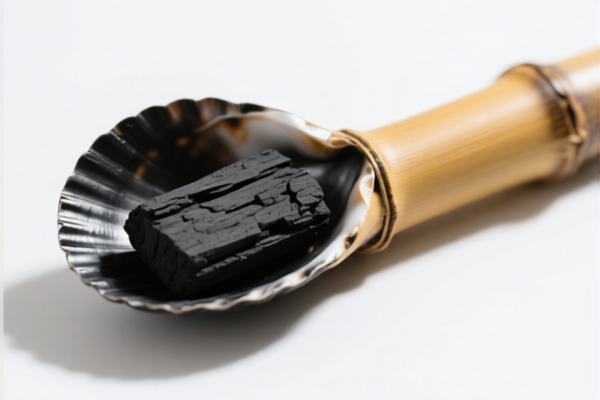
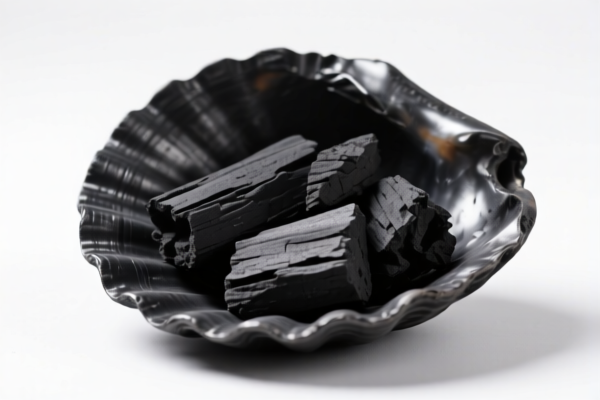
BBQ Shell Charcoal (commonly known as Shell Charcoal or Coconut Shell Charcoal) is a premium fuel source derived from the hard shells of coconuts, cashews, or other nut shells. It is prized for its: - High Carbon Content: Burns hotter and longer than wood charcoal. - Low Smoke & Ash: Ideal for outdoor grilling, smoking meats, and artistic charcoal drawings. - Natural Origin: 100% organic, often categorized under Lignocellulosic Fuels or Activated Carbon depending on processing.
International Trade Classification Challenges: In global trade, "BBQ Shell Charcoal" sits on the border between two distinct categories: 1. Activated Carbon (HS Chapter 38): If the product is highly processed, purified, and sold for filtration, catalysts, or adsorption (even if used for grilling). 2. Wood Charcoal (HS Chapter 44): If the product is simply carbonized shell material sold primarily as a fuel source for heating/grilling.
⚠️ Critical Distinction:
- Category A (Fuel): Pure carbonized shell for burning → Chapter 44 (4402.xx).
- Category B (Chemical/Industrial): Highly purified carbon for adsorption → Chapter 38 (3802.10).
- Category C (Ignition/Fuel): Classified as general combustible material → Chapter 36 (3606.xx).
📦 II. HS Code Classification Matrix (2026 Tax Regime)
Below is the exclusive breakdown based on the provided dataset, detailing why specific HS Codes apply to BBQ Shell Charcoal.
| HS Code | Product Description & Rationale | Total Tax Rate (US) | Tax Breakdown (China Origin) |
|---|---|---|---|
| 3802.10.00.50 | Activated Carbon (Other Types) 💡 Rationale: Classifies shell charcoal as "Other Types of Activated Carbon" where the primary material is carbon-based (炭类), implying high processing or specific adsorption properties. |
39.8% | Base: 4.8% Add-on: 25.0% Sec 122: 10% |
| 4402.20.00.00 | Wood Charcoal (Coconut Shell) 💡 Rationale: Directly fits the "Wood Charcoal" category. Shell charcoal (壳炭) is legally recognized as a subset of wood charcoal (木炭) under Chapter 44. |
35.0% | Base: 0.0% Add-on: 25.0% Sec 122: 10% |
| 4402.90.01.00 | Wood Charcoal (Other/Shell) 💡 Rationale: Fits the "Other Wood Charcoal" subheading. Shell charcoal meets the core material requirement (core material = shell/wood carbon). |
35.0% | Base: 0.0% Add-on: 25.0% Sec 122: 10% |
| 3606.90.80.00 | Combustible Materials (Other) 💡 Rationale: Treated as a "Combustible Material Product" (可燃材料制品). Falls under the "Other" category in Chapter 36 if not strictly defined as fuel wood. |
22.5% | Base: 5.0% Add-on: 7.5% Sec 122: 10% |
| 3606.90.40.00 | Carbonized Organic Fuel (Other) 💡 Rationale: Specifically targets "Carbonized Organic Fuel" (碳化后的有机燃料). Matches the definition of shell charcoal as an organic fuel post-carbonization. |
17.5% | Base: 0.0% Add-on: 7.5% Sec 122: 10% |
💰 III. 2026 Tariff Rate Deep Dive (China to USA)
✅ Applicable Country: United States (US)
✅ Origin: China (CN)
✅ Effective Date: Current & Projected 2026 Regime
🎯 1. The "Activated Carbon" Route (3802.10.00.50)
- Base Rate: 4.8%
- Section 301 Add-on (25%): Applied to "Other Chemical Products" from China.
- Section 122 (10%): Additional punitive tariff for specific Chinese goods.
- Total: 39.8%
- 💡 Strategy: Avoid this unless your product is certified as high-grade industrial activated carbon. For pure BBQ fuel, this is over-taxed.
🎯 2. The "Wood Charcoal" Route (4402.20.00.00 / 4402.90.01.00)
- Base Rate: 0.0% (Duty-free entry for raw wood/charcoal)
- Section 301 Add-on (25%): High penalty on "Wood Products" and "Charcoal" from China.
- Section 122 (10%): Fixed surcharge.
- Total: 35.0%
- 💡 Strategy: This is the most accurate classification for standard BBQ Shell Charcoal. While the 301 rate is high, it is lower than the Activated Carbon route.
🎯 3. The "Combustible/Other Fuel" Route (3606.90.80.00)
- Base Rate: 5.0%
- Section 301 Add-on (7.5%): Lower penalty rate for "Other Combustible Materials".
- Section 122 (10%): Fixed surcharge.
- Total: 22.5%
- 💡 Strategy: A competitive alternative if the charcoal is marketed specifically as a "general combustible material" rather than "wood charcoal." Requires strong documentation proving it's not a standard wood fuel.
🎯 4. The "Carbonized Organic Fuel" Route (3606.90.40.00)
- Base Rate: 0.0%
- Section 301 Add-on (7.5%): Same as above, lower 301 rate.
- Section 122 (10%): Fixed surcharge.
- Total: 17.5% ⭐ (Lowest Risk)
- 💡 Strategy: HIGHLY RECOMMENDED if your product can be legally defined as "Carbonized Organic Fuel." This yields the lowest total tax (17.5%). However, customs may scrutinize the "organic fuel" definition vs. "wood charcoal."
🛠️ IV. Customs Clearance实操建议 (Practical Tips for Smoother Entry)
✅ 1. Documentation Checklist (Must-Have)
| Document | Requirement | Why It Matters |
|---|---|---|
| Product Specification Sheet | Must specify "Shell Charcoal", "Coconut Shell", or "Nut Shell". | Proves origin (Shell vs. Wood) to avoid misclassification as generic wood charcoal. |
| Processing Flow Chart | Show: Shell → Carbonization → Cleaning → Sieving → Packaging. | Critical for distinguishing between 4402 (Fuel) and 3802 (Activated Carbon). |
| Safety Data Sheet (SDS) | Classify as "Combustible Solid" or "Charcoal". | Supports 3606 classification (Combustible Materials). |
| Commercial Invoice | Must use precise descriptions: "BBQ Shell Charcoal, 100% Coconut Shell". | Prevents customs from guessing and applying the highest tax (3802). |
| Test Reports | Ash content, fixed carbon %, ignition time. | High ash content? Avoid 3802. High ignition stability? Supports 4402. |
✅ 2. Classification Strategy (The "Golden Rules")
🔥 Rule 1: "Fuel First, Chemical Second"
If the product is sold for grilling, smoking, or heating, declare under Chapter 44 (4402) or Chapter 36 (3606).
DO NOT declare as3802(Activated Carbon) unless you are selling to chemical companies for filtration.🔥 Rule 2: "Shell is Wood"
Under US Customs law, nut shells are generally treated as wood (Chapter 44). Do not try to force3802unless the shell has been chemically activated (e.g., impregnated with chemicals).🔥 Rule 3: "The 17.5% Loophole"
If your marketing materials describe the product as "Carbonized Organic Fuel" rather than "Wood Charcoal," you may legally argue for3606.90.40.00(17.5%).
Risk: Customs may challenge this. Ensure your SDS supports "Organic Fuel."
🚨 V. Common Pitfalls & How to Avoid Them
| ❌ Mistake | 📉 Consequence | ✅ Correct Action |
|---|---|---|
| Calling it "Activated Carbon" | Tax jumps to 39.8% + Audit risk | Call it "Shell Charcoal" or "BBQ Charcoal" |
| Using generic "Wood Charcoal" | May be accepted, but risk of 35% tax | Specify "Shell" in description to justify 4402.20/4402.90 |
| Ignoring Section 122 | Unexpected 10% surcharge | Calculate total tax as Base + 25% + 10% (or Base + 7.5% + 10%) |
| Failing to Declare Origin | Seizure or delayed release | Always declare Origin: China to apply correct Section 122 rules |
🌍 VI. Market Comparison & Conclusion
| Classification | HS Code | Total Tax | Best For | Recommendation |
|---|---|---|---|---|
| Activated Carbon | 3802.10.00.50 |
39.8% | Industrial Filtration | ❌ Avoid for BBQ use |
| Wood Charcoal (Shell) | 4402.20.00.00 |
35.0% | Standard Grilling | ✅ Safe & Standard |
| Wood Charcoal (Other) | 4402.90.01.00 |
35.0% | Mixed Shells | ✅ Safe & Standard |
| Combustible Mat. | 3606.90.80.00 |
22.5% | Bulk Fuel | ⚠️ Possible but Risky |
| Organic Fuel | 3606.90.40.00 |
17.5% | Premium Fuel | ⭐ Optimal (If Valid) |
🎯 Final Verdict:
For BBQ Shell Charcoal, the safest and most compliant classification is 4402.20.00.00 or 4402.90.01.00 (35.0% total tax).
However, if your product documentation strongly supports it as a "Carbonized Organic Fuel", you can legally target 3606.90.40.00 for a 17.5% tax rate. Never classify as 3802 unless it is industrial-grade activated carbon.
📌 Pro Tip:
"When in doubt, declare it as Fuel (Chapter 44), not Chemical (Chapter 38). The 10% Section 122 surcharge applies to all, but the Base + 301 rate is lower for Fuel!"
✨ Clearance Success = Accurate Description + Correct HS Code!
🚀 Start your shipment today with confidence!
用户评价
关于 HS 编码归类
协调制度(HS)是由世界海关组织(WCO)制定的国际贸易商品分类标准。全球 200 多个国家采用 HS 系统作为海关关税、贸易统计和进出口监管的基础。
每个 HS 编码遵循以下层级结构:
- 章(2 位)——商品大类(例如:第 84 章:机器和机械设备)
- 品目(4 位)——章内的更具体分类
- 子目(6 位)——国际通用细分,所有 WCO 成员国统一使用
- 本国细分(8-10 位)——各国自行扩展的细分编码,如美国 HTSUS 10 位编码
正确的 HS 编码归类对于顺利通关、准确缴纳关税和遵守贸易法规至关重要。错误归类可能导致海关延误、多缴关税或罚款。
从CN进口到US时,适用的关税税率可能包括:
- 最惠国(MFN)税率——适用于 WTO 成员国的标准关税税率
- 普通税率——适用于无贸易协定国家
- 贸易救济关税——附加关税,如 301 条款(反倾销)、232 条款(国家安全)或反补贴税
本页内容仅供参考。如需正式归类,请咨询当地海关或持牌报关代理。