Baby Bottle Cap
CN → US| HS编码 | 关税税率 | 原产国 | 目的国 | 文档 |
|---|---|---|---|---|
| 3924104000 | 13.4% | CN | US | 官方文档 |
| 3924900500 | 20.6% | CN | US | 官方文档 |
| 7013492090 | 40.0% | CN | US | 官方文档 |
| 3923300090 | 38.0% | CN | US | 官方文档 |
| 3923300010 | 38.0% | CN | US | 官方文档 |
商品图片
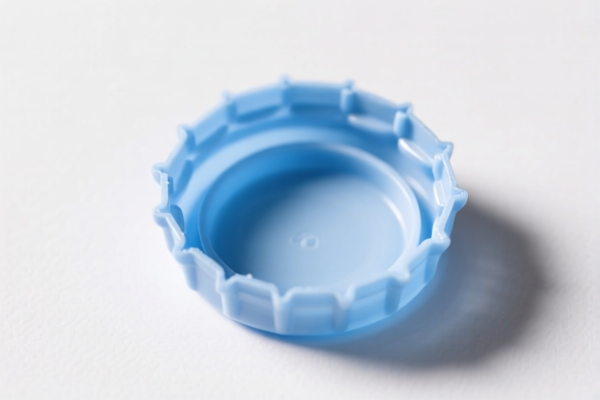
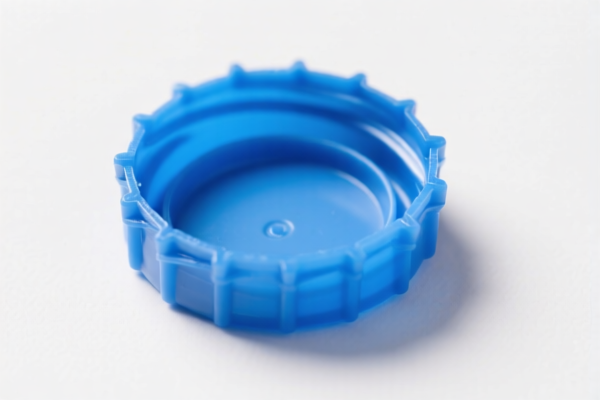
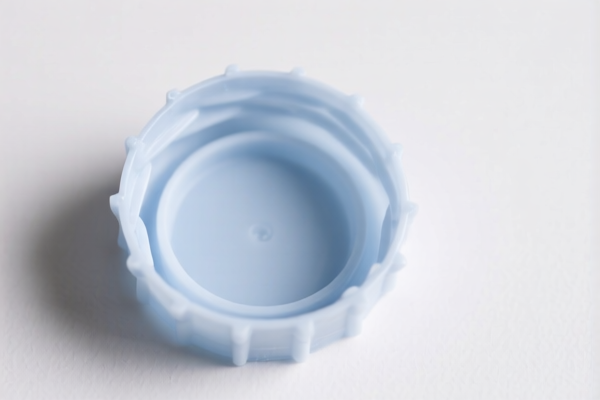
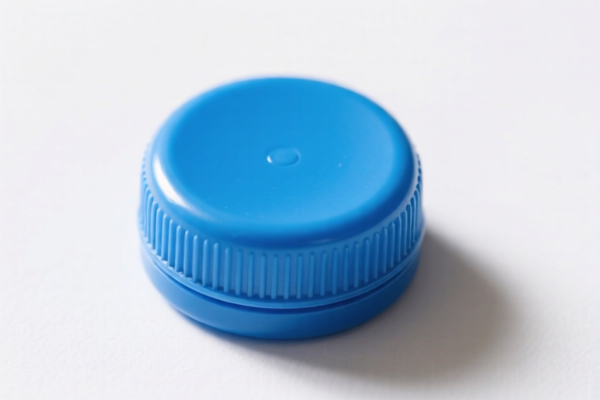
AI分析
🍼 Baby Bottle Cap: The Tiny Hero with a Huge Tax Bill
🌐 HS Code Reference & Customs Clearance Guide | 2026 Latest Tariff Analysis | Professional-Level Clearance Strategy
📌 One. Product Definition & Classification: Do You Really Understand "Baby Bottle Cap"?
A Baby Bottle Cap is not just a small plastic piece; in the eyes of customs, it can be classified into three very different categories based on its function, material, and completeness. Misclassification here can lead to a tax rate difference of 27% (from 13.4% to 40%) or even trigger additional penalties.
In international trade, the classification of "Baby Bottle Cap" usually falls into one of these three scenarios:
1. A Complete Accessory for Baby Tableware (Most Common) If the cap is part of a complete baby bottle or tableware set, or if it is clearly designed for use as baby tableware (e.g., sippy cup lids, nursing bottle caps), it falls under Baby Products/Tableware.
⚠️ Key Point: If the item is used for babies and is part of the tableware system, it belongs to Chapter 39.10.
2. A General Plastic Packaging Component If the cap is a general plastic cap used for bottles (e.g., water bottles, juice bottles, or chemical bottles) and not specifically for baby feeding, it may fall under Plastic Packaging/Containers.
⚠️ Key Point: If it's not for babies, but just a bottle cap, it belongs to Chapter 39.23.
3. A Glass/Tableware Component (Rare but Possible) If the cap is made of glass (e.g., a stopper for a glass baby bottle or a decorative lid), it falls under Glass Tableware.
⚠️ Key Point: Material determines the chapter. Glass = Chapter 70.
📦 2. HS Code Classification Details (2026 Latest Tariff Authority Comparison)
| HS Code | Product Description | Application Scenario | Tax Rate (Total) | Key Differentiator |
|---|---|---|---|---|
3924.10.40.00 |
Baby Products/Tableware (Plastic Material) | Complete baby bottles, sippy cups, or caps specifically designed for baby feeding. | 13.4% | ✅ Lowest Risk Specifically for "Baby" use. |
3924.90.05.00 |
Other Plastic Baby Products | Baby products not covered in other subheadings (e.g., specialized caps, parts). | 20.6% | ⚠️ Medium Risk Still "Baby" but not standard tableware. |
3923.30.00.90 |
Plastic Bottles, Jars, etc. | General plastic bottles/caps for packaging (not for baby feeding). | 38.0% | ❌ High Cost Classified as general packaging. |
3923.30.00.10 |
Plastic Packaging (Bottle Type) | General plastic bottle packaging components. | 38.0% | ❌ High Cost Same as above, general packaging. |
7013.49.20.90 |
Glass/Tableware Items | Glass bottle caps or glass tableware components. | 40.0% | 💸 Highest Cost Glass items face high base tariffs. |
🔍 Critical Reminder:
- If it's for Babies: Always prioritize 3924.xxxx. The tax rate is significantly lower (13.4%-20.6%).
- If it's for General Packaging: You will face 38.0%. This is a common trap! Many suppliers misdeclare "Baby Bottle Cap" as "Plastic Cap" to avoid scrutiny, but if customs sees it's for babies, they may reclassify it. However, if it's genuinely for general use, 3923 is correct.
- Material Matters: If it's glass, it's 40.0%. Plastic is much cheaper.
💰 3. 2026 Latest Tariff Rate Details (Including Surtaxes, Policy Surcharges)
✅ Applicable Country: USA (US)
✅ Origin: China (CN)
✅ Effective Date: November 10, 2025 onwards (including subsequent imports)
🎯 1. 3924.10.40.00 —— Baby Tableware (Plastic)
| Item | Content |
|---|---|
| Base Tariff | 3.4% (ad valorem) |
| Section 301 Surcharge | 0.0% (No additional 301 tariff for this specific HS code in some interpretations, but check latest updates. Note: Data says 0.0%) |
| 122 Clause Tariff | 10% (Targeting China) |
| Total Tax Rate | 13.4% |
| Tax Calculation | CIF Value × 13.4% |
| De Minimis Eligibility | ❌ No (Generally, items with Section 301/122 tariffs are not eligible for de minimis exemption if declared as such, but please verify specific CBP rulings) |
| Legal Basis Path | HTSUS:3924.10.40.00 → 122 Clause: 10% |
📌 Explanation:
- This is the most favorable code for baby bottle caps.
- Base Tariff: 3.4%
- 122 Clause: 10% (Specific anti-dumping/countervailing or policy surcharge)
- Total: 13.4%
- Why is it low? Because it's classified as "Baby Products," which often enjoys lower base tariffs, but still subject to the 10% 122 clause.
🎯 2. 3924.90.05.00 —— Other Plastic Baby Products
| Item | Content |
|---|---|
| Base Tariff | 3.1% |
| Section 301 Surcharge | 7.5% |
| 122 Clause Tariff | 10% |
| Total Tax Rate | 20.6% |
| Tax Calculation | CIF Value × 20.6% |
| De Minimis Eligibility | ❌ No |
| Legal Basis Path | HTSUS:3924.90.05.00 → Section 301: 7.5% → 122 Clause: 10% |
📌 Note:
- This code is for baby products that are not standard tableware (e.g., specialized caps, parts).
- The tax is 7.2% higher than3924.10.40.00.
- Action: If your product can be clearly defined as "Tableware" (even if it's just the cap), try to use3924.10.40.00.
🎯 3. 3923.30.00.90 / 3923.30.00.10 —— General Plastic Packaging (Bottles)
| Item | Content |
|---|---|
| Base Tariff | 3.0% |
| Section 301 Surcharge | 25.0% |
| 122 Clause Tariff | 10% |
| Total Tax Rate | 38.0% |
| Tax Calculation | CIF Value × 38.0% |
| De Minimis Eligibility | ❌ No |
| Legal Basis Path | HTSUS:3923.30.00 → Section 301: 25% → 122 Clause: 10% |
📌 Warning:
- If you misdeclare a baby bottle cap as a "general plastic cap," you might pay 38.0%.
- However, if you genuinely use it for general packaging (not babies), this is the correct code.
- Risk: Customs may investigate if the product is marketed as "Baby." If so, they may reclassify it to 3924, but you might still pay penalties for incorrect initial declaration.
- Tip: If it's for babies, do not use this code. It's too expensive and risky.
🎯 4. 7013.49.20.90 —— Glass Tableware
| Item | Content |
|---|---|
| Base Tariff | 22.5% |
| Section 301 Surcharge | 7.5% |
| 122 Clause Tariff | 10% |
| Total Tax Rate | 40.0% |
| Tax Calculation | CIF Value × 40.0% |
| De Minimis Eligibility | ❌ No |
| Legal Basis Path | HTSUS:7013.49.20.90 → Section 301: 7.5% → 122 Clause: 10% |
📌 Note:
- Glass items have a high base tariff (22.5%).
- Only use this if the cap is made of glass. Plastic is much cheaper.
🛠️ 4. Practical Customs Clearance Advice (Battlefield Pit-Avoidance Guide)
✅ 1. Documentation Checklist (All Required)
| Document | Required | Description |
|---|---|---|
| ✅ Product Specification | ✔️ | Material (Plastic/Glass), Intended Use (Baby/General), Dimensions |
| ✅ Product Photos | ✔️ | Clear images showing the cap, including any baby-related markings (e.g., "BPA Free," "For Babies") |
| ✅ Commercial Invoice | ✔️ | Clearly state "Baby Bottle Cap" or "Plastic Cap for Baby Bottle" |
| ✅ Proof of Intended Use | ✔️ | If claiming 3924.10.40.00, provide marketing materials showing it's for babies |
| ✅ Packaging List | ✔️ | Specify if caps are sold separately or with bottles |
✅ 2. Declaration Tips (Key Mantra)
🔥 “For Babies? Use 3924! General Use? Use 3923! Glass? Use 7013!”
| Scenario | Correct Declaration | Wrong Declaration | Consequence |
|---|---|---|---|
| Baby Bottle Cap (Plastic) | 3924.10.40.00 (Baby Tableware) |
3923.30.00.90 (General Packaging) |
❌ Overpaying tax (13.4% vs 38.0%) |
| General Plastic Cap | 3923.30.00.90 (General Packaging) |
3924.10.40.00 (Baby Tableware) |
❌ Risk of penalty for false declaration |
| Glass Bottle Stopper | 7013.49.20.90 (Glass Tableware) |
3924.10.40.00 |
❌ Wrong HS Code, high penalty risk |
📌 Note:
- If it's for Babies: Always use 3924.xxxx. The tax is lower, and it's more accurate.
- If it's for General Use: Use 3923.xxxx. Do not claim it's for babies if it's not.
- Material Check: If it's glass, it's 7013.
✅ 3. Special Cases
| Scenario | Handling Advice |
|---|---|
| OEM Baby Bottle Caps | Provide the customer's design drawings and marketing materials to prove it's for babies. |
| Mixed Packaging (Bottles + Caps) | Declare the entire set under the most specific code (likely 3924.10.40.00 for baby bottles). |
| Caps with Silicone Rings | If the silicone ring is integral to the cap's function as a baby bottle seal, it's still part of the 3924.10.40.00 classification. |
| Non-Baby Plastic Caps | Use 3923.30.00.90. Be prepared for a 38.0% tax rate. |
🌍 5. Global Market Customs Comparison (2026 Latest)
| Country/Region | Recommended HS Code | Tariff | Certification Requirements | Notes |
|---|---|---|---|---|
| 🇺🇸 USA | 3924.10.40.00 |
13.4% (Baby) | FDA Compliance, BPA-Free Cert | High scrutiny on "Baby" claims |
| 🇨🇳 China | 3924.10.40.00 |
~5-10% | CCC (if applicable) | Lower base tariffs |
| 🇪🇺 EU | 3924.10.40.00 |
~6-10% | CE, REACH, LFGB | Strict chemical safety standards |
| 🇦🇺 Australia | 3924.10.40.00 |
~5% | SAA Mark | Moderate tariffs |
| 🇯🇵 Japan | 3924.10.40.00 |
~0-5% | JIS, PSE | Low tariffs, strict quality control |
📌 Conclusion:
- USA: The 13.4% rate for baby products is competitive compared to 38.0% for general packaging.
- EU/China: Tariffs are generally lower, but certification requirements are strict.
- Key Takeaway: For the US market, accurately declaring "Baby" status is crucial to saving 24.6% in taxes.
📌 6. Common Errors & Pitfall Avoidance Guide (Blood and Tears Lessons)
❌ Error 1: Declaring "Baby Bottle Cap" as "Plastic Cap" (General Packaging)
👉 Consequence: You pay 38.0% instead of 13.4%. You lose 24.6% in taxes!
❌ Error 2: Declaring "General Plastic Cap" as "Baby Bottle Cap"
👉 Consequence: Customs may reject the declaration for false information, leading to delays, fines, or confiscation.
❌ Error 3: Not providing Proof of Intended Use
👉 Consequence: Customs cannot verify if it's for babies. They may default to the higher tax rate or demand additional documentation.
❌ Error 4: Using "Glass" for plastic caps
👉 Consequence: Wrong material classification, leading to 40.0% tax rate and potential penalties.
✅ Correct Practice:
"Baby Bottle Cap, Plastic, BPA-Free, 2.5cm Diameter, For Use with Baby Bottles, Model XYZ, FDA Compliant"
🎯 7. Conclusion: Professional Declaration, Save Time, Save Money!
🎯 Remember the Mantra:
🔹 "For Babies? Use 3924! Save 24%! For General? Use 3923! Pay 38%! For Glass? Use 7013! Pay 40%!"
🔹 "HS Code Determines Life, Tax Rate Differs by 25 Points, One Step Wrong, Thousands in Taxes!"
📌 Tips:
- If your baby bottle caps are originating from Vietnam, Mexico, Thailand, Malaysia, you may be eligible for IEEPA exemptions or lower tariffs.
- Apply for Advance Ruling if your product is on the borderline between "Baby Tableware" and "General Packaging."
- Always keep marketing materials that show the product is intended for babies to support your declaration.
📣 Act Now:
📞 Contact a Professional Customs Broker + Provide Product Photos + Apply for HS Code Advance Ruling
🚀 Let Your Baby Bottle Caps Clear Customs Smoothly, Export Efficiently, and Double Your Profits!
✨ Professional Customs Clearance Starts with Accurate Classification!
💼 Every Penny of Your Cost Deserves to Be Precisely Calculated!
用户评价
关于 HS 编码归类
协调制度(HS)是由世界海关组织(WCO)制定的国际贸易商品分类标准。全球 200 多个国家采用 HS 系统作为海关关税、贸易统计和进出口监管的基础。
每个 HS 编码遵循以下层级结构:
- 章(2 位)——商品大类(例如:第 84 章:机器和机械设备)
- 品目(4 位)——章内的更具体分类
- 子目(6 位)——国际通用细分,所有 WCO 成员国统一使用
- 本国细分(8-10 位)——各国自行扩展的细分编码,如美国 HTSUS 10 位编码
正确的 HS 编码归类对于顺利通关、准确缴纳关税和遵守贸易法规至关重要。错误归类可能导致海关延误、多缴关税或罚款。
从CN进口到US时,适用的关税税率可能包括:
- 最惠国(MFN)税率——适用于 WTO 成员国的标准关税税率
- 普通税率——适用于无贸易协定国家
- 贸易救济关税——附加关税,如 301 条款(反倾销)、232 条款(国家安全)或反补贴税
本页内容仅供参考。如需正式归类,请咨询当地海关或持牌报关代理。