Balcony Plant Fiber Woven Rug
CN → US| HS编码 | 关税税率 | 原产国 | 目的国 | 文档 |
|---|---|---|---|---|
| 4601299000 | 43.0% | CN | US | 官方文档 |
| 4601298000 | 35.0% | CN | US | 官方文档 |
| 6307909891 | 24.5% | CN | US | 官方文档 |
| 6307908940 | 17.0% | CN | US | 官方文档 |
商品图片
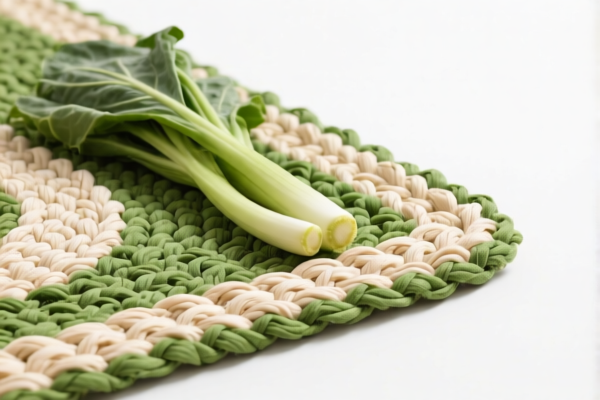
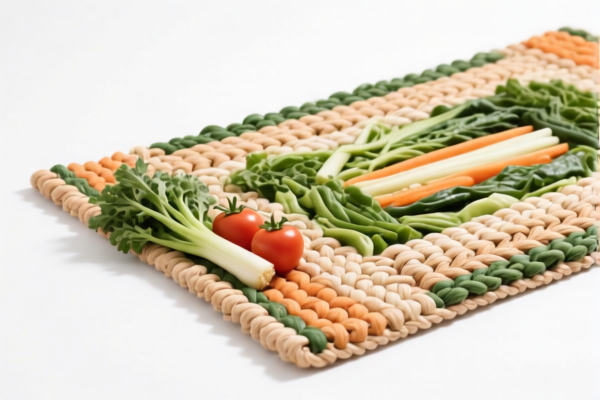
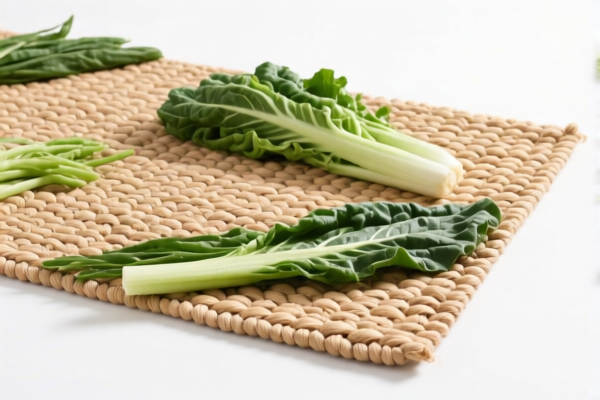
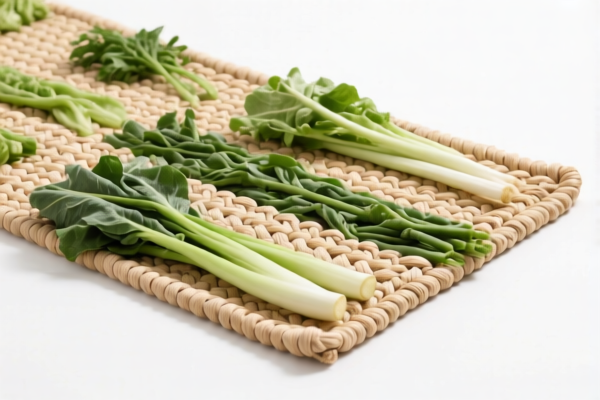
AI分析
🌿 Balcony Plant Fiber Woven Rug: The Ultimate HS Code & Duty Guide | 2026 Customs Clearance Strategy
🌐 HS Code Reference & Customs Guide | 2026 Latest Tariff Analysis | Professional Clearance Strategy
📌 Part 1: Product Definition & Classification: What Exactly is a "Balcony Rug"?
A Balcony Plant Fiber Woven Rug is a floor covering made from natural vegetable fibers (such as jute, sisal, bamboo, coir, or raffia). It is designed for indoor/outdoor use, specifically for balconies, terraces, or entryways.
In international trade, the classification depends heavily on manufacturing method and structural integrity:
- True Weaving (HS 4601): The fibers are interlaced on a loom or by hand to form a rigid or semi-rigid mat. This is considered a "Woven Fabric of Plaiting Materials."
- Finished Mat/Carpet (HS 6307): If the rug is tufted, bonded, knotted, or considered a "finished article" not meeting the strict definition of "woven fabric" in Chapter 46, it falls under "Other Made-up Articles."
⚠️ Critical Distinction Point:
- If the rug is strictly woven (interlaced warp and weft) and maintains the structural integrity of a "plaited material," it belongs to Chapter 46.
- If the rug is knotted, tufted, glued, or significantly processed into a final textile product that no longer resembles a "woven fabric," it belongs to Chapter 63 (Textile Articles).
📦 Part 2: HS Code Classification Details (2026 Latest Tariff Authority Cross-Reference)
| HS Code | Product Description | Applicability | Key Characteristics |
|---|---|---|---|
4601.29.90.00 |
Woven mats & matting of vegetable plaiting materials (Other) | Traditional woven jute/sisal rugs | ✅ True Weave: Interlaced fibers, rigid structure. |
4601.29.80.00 |
Woven mats & matting of vegetable plaiting materials (Other) | Similar to above, possibly different regional sub-category | ✅ True Weave: Interlaced fibers. |
6307.90.98.91 |
Made-up articles of textiles (Other) | Tufted, knotted, or non-woven plant fiber rugs | ❌ Finished Article: Non-woven construction, complex finishing. |
6307.90.89.40 |
Made-up articles of textiles (Other) | General floor mats, rugs made of plant fibers | ❌ Finished Article: Standard textile rug classification. |
🔍 Key Reminder:
- Woven Rugs (interlaced) → HS 4601.
- Knotted/Tufted/Adhesive Rugs → HS 6307.
- Misclassification leads to massive duty differences (from 17% to 43%).
💰 Part 3: 2026 Latest Tariff Rate Breakdown (Including Surtaxes & Policy Add-ons)
✅ Applicable Country: United States (US)
✅ Origin: China (CN)
✅ Effective Date: Post-2025 Trade Policy Adjustments (Including Section 301 & IEEPA)
🎯 1. 4601.29.90.00 —— Woven Vegetable Matting (High Duty Scenario)
| Item | Detail |
|---|---|
| Base Rate | 8.0% (Ad Valorem) |
| Section 301 Surtax | +25.0% (USITC Footnote for Chinese Goods) |
| Section 122 Tariff | +10.0% (Specific Chinese Goods Tariff) |
| Total Duty Rate | 43.0% |
| Duty Calculation | CIF Value × 43% |
| De Minimis Eligible? | ❌ No (deny_de_minimis) |
| Legal Basis Path | IEEPA:9903.01.25 → USITC:4601.29.90.00 → FOOTNOTE:9903.88.01 |
📌 Explanation:
- This HS code is classified under "Woven Plaiting Materials."
- It attracts all three layers of tariffs: Base (8%), Section 301 (25%), and Section 122 (10%).
- Result: A $1,000 shipment incurs $430 in duties. This is a high-cost classification.
🎯 2. 4601.29.80.00 —— Woven Vegetable Matting (Medium-High Duty)
| Item | Detail |
|---|---|
| Base Rate | 0.0% |
| Section 301 Surtax | +25.0% |
| Section 122 Tariff | +10.0% |
| Total Duty Rate | 35.0% |
| Duty Calculation | CIF Value × 35% |
| De Minimis Eligible? | ❌ No |
| Legal Basis Path | IEEPA:9903.01.24 → USITC:4601.29.80.00 → FOOTNOTE:9903.88.01 |
📌 Explanation:
- The base duty is 0%, but the surtaxes still apply.
- Result: A $1,000 shipment incurs $350 in duties.
- Savings: $80 compared to4601.29.90.00. Still expensive due to political tariffs.
🎯 3. 6307.90.98.91 —— Made-Up Textile Article (Moderate Duty)
| Item | Detail |
|---|---|
| Base Rate | 7.0% |
| Section 301 Surtax | +7.5% |
| Section 122 Tariff | +10.0% |
| Total Duty Rate | 24.5% |
| Duty Calculation | CIF Value × 24.5% |
| De Minimis Eligible? | ❌ No |
| Legal Basis Path | IEEPA:9903.01.24 → USITC:6307.90.98.91 |
📌 Explanation:
- Classified as a "Made-up Article" rather than "Woven Fabric."
- The Section 301 rate is lower (7.5% vs 25%).
- Result: A $1,000 shipment incurs $245 in duties.
- Strategic Note: Only valid if the rug is not strictly "woven" in the technical sense of Chapter 46 (e.g., tufted or knotted).
🎯 4. 6307.90.89.40 —— Made-Up Textile Article (Lowest Duty Scenario)
| Item | Detail |
|---|---|
| Base Rate | 7.0% |
| Section 301 Surtax | 0.0% |
| Section 122 Tariff | +10.0% |
| Total Duty Rate | 17.0% |
| Duty Calculation | CIF Value × 17.0% |
| De Minimis Eligible? | ❌ No |
| Legal Basis Path | IEEPA:9903.01.24 → USITC:6307.90.89.40 |
📌 Explanation:
- This is the most favorable tariff code in the provided data.
- Base: 7.0%, Surtax: 0%, Section 122: 10%.
- Result: A $1,000 shipment incurs only $170 in duties.
- Crucial Condition: The product must be definitively classified as a "Made-up Article" (HS 6307) and specifically fall under the subheading with 0% Section 301 surtax. This often requires proof that the item is not a "woven fabric" but a finished rug, and that the specific sub-category is exempt from the 301 list.
🛠️ Part 4: Practical Customs Clearance Advice (Avoiding Pitfalls)
✅ 1. Preparation Checklist (Mandatory Documents)
| Document | Required? | Purpose |
|---|---|---|
| ✅ Product Specification Sheet | ✔️ | Detail fiber type (Jute, Sisal, Bamboo), dimensions, weight. |
| ✅ Construction Diagram | ✔️ | Critical: Show if it is woven (interlaced) or tufted/knotted. This determines HS 4601 vs 6307. |
| ✅ Product Photos (Clear) | ✔️ | Show texture, backside, and edges. Proof of "weaving" vs "gluing/tufting." |
| ✅ Commercial Invoice | ✔️ | Must state: "Plant Fiber Woven Rug" + HS Code. |
| ✅ Packing List | ✔️ | Itemize rolls vs cut pieces. |
| ✅ Country of Origin Certificate | ✔️ | Confirm China origin to assess correct surtaxes. |
✅ 2. Declaration Tips (Key Mantras)
🔥 “Weaving Defines Chapter 46, Finished Goods Define Chapter 63. Choose Wisely for Duty!”
| Scenario | Recommended HS Code | Why? |
|---|---|---|
| Strictly Woven (Interlaced, rigid, mat-like) | 4601.29.90.00 or 4601.29.80.00 |
Legally correct as "Woven Plaiting Material." |
| Tufted/Knotted/Adhesive | 6307.90.98.91 or 6307.90.89.40 |
Legally correct as "Made-up Textile Article." |
| Ambiguous Construction | Seek Advance Ruling | High risk of misclassification. Don't guess. |
⚠️ Warning: Do not declare a woven rug as 6307 just to save duty. If customs inspects and finds it is "woven," they will reclassify it to 4601 and charge back duties + penalties.
✅ 3. Special Case Handling
| Situation | Advice |
|---|---|
| Mixed Materials (e.g., Plant Fiber + Rubber Backing) | If the backing is integral, it may still be plant fiber. If removable, it might be classified as a rubber mat. |
| Custom Sizes | Ensure the description includes "Cut to Order" if applicable, but the HS code remains based on material/construction. |
| High-Value Luxury Rugs | Ensure quality certs (e.g., OEKO-TEX) are ready to justify premium pricing and avoid fraud suspicion. |
🌍 Part 5: Global Market Comparison (2026)
| Market | Preferred HS Code | Est. Total Duty (China Origin) | Notes |
|---|---|---|---|
| 🇺🇸 USA | 6307.90.89.40 |
17.0% | Lowest duty if eligible. Avoid 4601 if possible due to 35-43% rates. |
| 🇨🇳 China | 4601.29.90.00 |
8.0% | Low duty for domestic consumption/re-export. |
| 🇪🇺 EU | 4601.29.00 |
Varies (0-6.5%) | No Section 301/122 tariffs. Lower overall cost. |
| 🇬🇧 UK | 4601.29.00 |
Varies (0-6.5%) | Post-Brexit tariffs may differ. Check UK Global Tariff. |
📌 Conclusion:
- US Market: The duty difference between 17% and 43% is massive. Proper classification is the #1 cost-saving tool.
- If the rug is truly woven, you are stuck with 35-43%.
- If the rug is tufted, knotted, or non-woven, you may qualify for 17-24.5%.
- Strategy: Design or source rugs that are not strictly "woven" (e.g., tufted plant fiber rugs) to access the lower HS 6307 brackets.
📌 Part 6: Common Errors & Pitfalls (Blood & Tears Lessons)
❌ Error 1: Declaring a Woven Rug as 6307.90.89.40 to save duty.
👉 Consequence: Customs audit finds it is woven → Rejected, back-duties, fines.
👉 Fix: Ensure construction is non-woven (tufted/knotted) if using HS 6307.
❌ Error 2: Using "Plant Fiber Rug" without specifying construction.
👉 Consequence: Customs guesses → Likely 4601.29.90.00 (43%).
👉 Fix: Explicitly state "Tufted" or "Knotted" if applicable.
❌ Error 3: Ignoring Section 122 Tariff.
👉 Consequence: Unexpected 10% charge on all Chinese goods.
👉 Fix: Factor 10% into all cost calculations for China-origin goods.
🎯 Part 7: Final Recommendation: Professional Declaration, Maximize Profit!
🎯 Key Takeaway:
🔹 "Woven = High Duty (35-43%). Tufted/Knotted = Lower Duty (17-24.5%)."
🔹 "Proof of Construction is Key. Provide Diagrams."
🔹 "Don't Guess. Get an Advance Ruling for large shipments."
📌 Pro Tip:
If your supplier can produce Tufted Plant Fiber Rugs instead of Woven Jute Mats, you can legally save up to 26% in duties in the US market. Consult with your product designer to change the manufacturing process from "weaving" to "tufting."
📣 Immediate Action:
📞 Audit Your Current Supplier: Is the rug woven or tufted?
📦 Update Product Descriptions: Be precise ("Tufted Sisal Rug" vs "Woven Jute Mat").
🚀 Optimize Cost: Move to HS 6307 if structurally possible.
✨ Professional Clearance Starts with Accurate Classification!
💼 Every 1% of Duty Saved is 1% More Profit!
用户评价
关于 HS 编码归类
协调制度(HS)是由世界海关组织(WCO)制定的国际贸易商品分类标准。全球 200 多个国家采用 HS 系统作为海关关税、贸易统计和进出口监管的基础。
每个 HS 编码遵循以下层级结构:
- 章(2 位)——商品大类(例如:第 84 章:机器和机械设备)
- 品目(4 位)——章内的更具体分类
- 子目(6 位)——国际通用细分,所有 WCO 成员国统一使用
- 本国细分(8-10 位)——各国自行扩展的细分编码,如美国 HTSUS 10 位编码
正确的 HS 编码归类对于顺利通关、准确缴纳关税和遵守贸易法规至关重要。错误归类可能导致海关延误、多缴关税或罚款。
从CN进口到US时,适用的关税税率可能包括:
- 最惠国(MFN)税率——适用于 WTO 成员国的标准关税税率
- 普通税率——适用于无贸易协定国家
- 贸易救济关税——附加关税,如 301 条款(反倾销)、232 条款(国家安全)或反补贴税
本页内容仅供参考。如需正式归类,请咨询当地海关或持牌报关代理。