Ball Joint
CN → US| HS编码 | 关税税率 | 原产国 | 目的国 | 文档 |
|---|---|---|---|---|
| 8483308055 | 39.5% | CN | US | 官方文档 |
| 8483308090 | 39.5% | CN | US | 官方文档 |
| 7326190080 | 87.9% | CN | US | 官方文档 |
| 7326190010 | 87.9% | CN | US | 官方文档 |
| 8483308090 | 39.5% | CN | US | 官方文档 |
商品图片
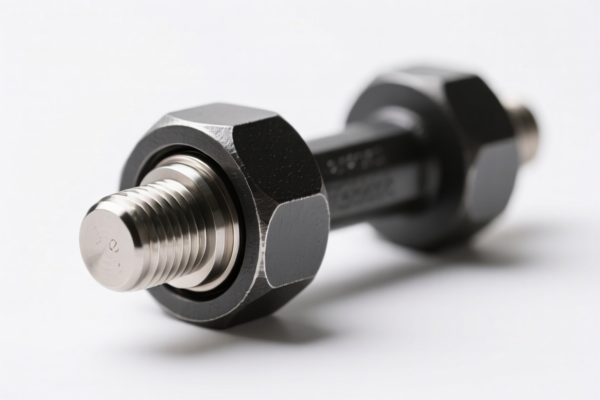
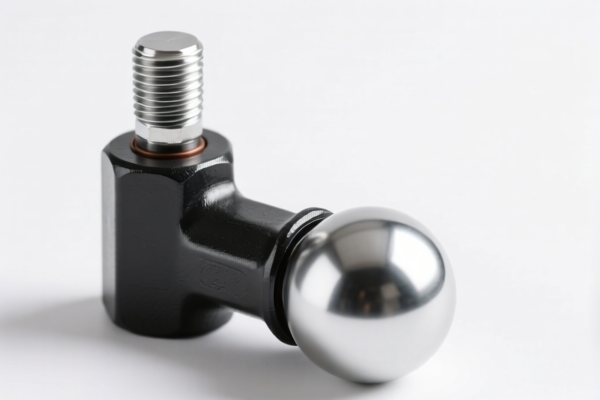
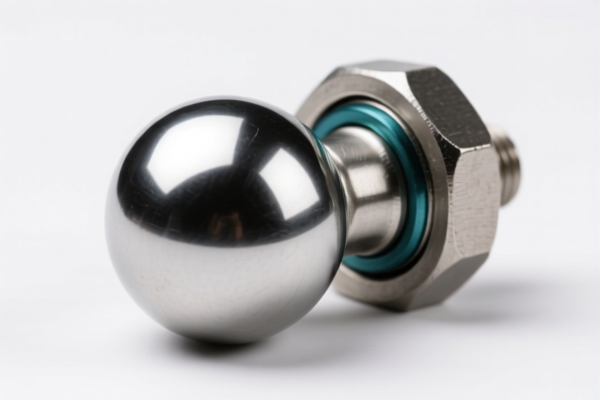
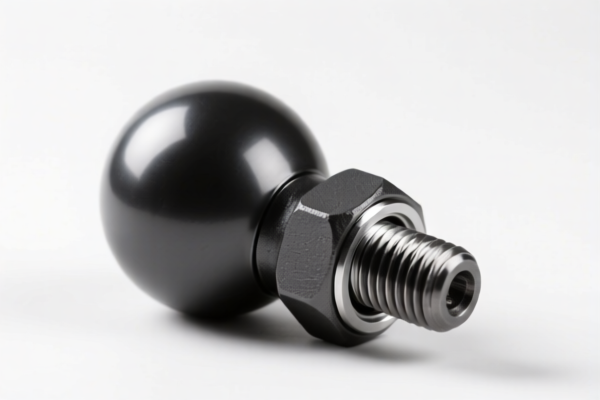
AI分析
🏗️ Ball Joints (Mechanical Linkages & Bearings)
🌐 HS Code Reference & Customs Clearance Guide | 2026 Latest Tariff Analysis | Professional Entry Strategies
📌 I. Product Definition & Classification: What Exactly is a "Ball Joint"?
A Ball Joint is a critical mechanical component used in vehicle suspension systems, steering linkages, and general machinery. It allows for angular movement between connected parts, functioning similarly to the human hip or shoulder joint.
In international trade, ball joints are classified based on their primary function and structural nature: 1. As a Mechanical Transmission Part: If it functions as part of a bearing assembly, ball screw, or universal joint mechanism, it falls under Chapter 84 (Nuclear reactors, boilers, machinery and mechanical appliances). 2. As a General Metal Article: If considered merely a generic steel forging or fastener without specific mechanical bearing classification, it falls under Chapter 73 (Articles of iron or steel).
⚠️ Key Classification Distinction:
- If the ball joint is part of a bearing assembly (e.g., rod end bearing, spherical bearing) → Classify under 8483.
- If it is a generic steel forging (e.g., simple stud, non-bearing connection) → Classify under 7326.
📦 II. HS Code Classification Details (2026 Latest Tariff Authority Comparison)
| HS Code | Product Description | Application Scenario | Classification Logic |
|---|---|---|---|
8483.30.80.55 |
Ball joints for bearings (Other than plain bearings and needle roller bearings) | Rod ends, spherical plain bearings, mechanical transmission components | ✅ Fits "Ball joints" category in machinery |
8483.30.80.90 |
Other ball joints & spherical plain bearings (Not elsewhere specified) | General spherical joints, mechanical linkages without specific bearing seat | ✅ Fits "Spherical parts" morphology |
7326.19.00.80 |
Other articles of iron or steel (Forged) | Generic steel ball joints, no bearing function implied, purely metallic connection | ✅ Inferential: Metal/Forged generic article |
7326.19.00.10 |
Other forged articles of iron or steel | Forged mechanical connectors, axle components, generic steel fittings | ✅ Inferential: Forged process + Steel material |
🔍 Critical Reminder:
- Chapter 84 (8483) is preferred if the item is explicitly a bearing component or part of a mechanical transmission system.
- Chapter 73 (7326) is a fallback if the item is a generic forged steel part with no specific bearing function described.
- Material Conflict: If material is unspecified, steel is often inferred for heavy-duty mechanical parts, leading to Chapter 73 classifications if Chapter 84 criteria aren't fully met.
💰 III. 2026 Latest Tariff Rate Breakdown (Including Additional Duties & Policy Surcharges)
✅ Applicable Country: United States (US)
✅ Origin: China (CN)
✅ Effective Date: From November 10, 2025 (Includes subsequent imports)
🎯 1. 8483.30.80.55 & 8483.30.80.90 —— Ball Joints as Mechanical Transmission/Bearing Parts
| Item | Content |
|---|---|
| Base Tariff | 4.5% (ad valorem) |
| Section 301 Additional Duty | +25.0% |
| Section 122 Duty | +10.0% |
| Total Effective Rate | 39.5% |
| Tax Calculation | CIF Value × 39.5% |
| De Minimis Exemption? | ❌ NO (deny_de_minimis) |
| Legal Basis Path | USITC:8483.30.80.55/90 → Section 301: 25% → Section 122: 10% |
📌 Explanation:
- These HS codes fall under machinery and mechanical appliances.
- The 39.5% rate is a composite of the base tariff (4.5%) plus punitive tariffs (25% + 10%).
- This is a high-cost entry for mechanical components.
🎯 2. 7326.19.00.80 & 7326.19.00.10 —— Ball Joints as Forged Steel Articles
| Item | Content |
|---|---|
| Base Tariff | 2.9% (ad valorem) |
| Section 301 Additional Duty | +25.0% |
| Section 122 Duty | +10.0% |
| Steel/Aluminum/Copper Surcharge | +50.0% (Additional penalty for steel products under certain clauses) |
| Total Effective Rate | 87.9% |
| Tax Calculation | CIF Value × 87.9% |
| De Minimis Exemption? | ❌ NO (deny_de_minimis) |
| Legal Basis Path | USITC:7326.19.00.80/10 → Section 301: 25% → Section 122: 10% → Steel Surcharge: 50% |
📌 Warning:
- If classified under Chapter 73 (Steel Articles), the additional 50% surcharge for steel products applies.
- This results in a catastrophic 87.9% total tariff.
- Avoid this classification if possible; Chapter 84 (39.5%) is significantly cheaper.
🛠️ IV. Customs Clearance Practical Advice (Battle-Tested Pitfall Avoidance)
✅ 1. Required Documentation Checklist (Mandatory)
| Document | Must Provide? | Description |
|---|---|---|
| ✅ Product Specification Sheet | ✔️ | Must detail dimensions, load capacity, material, and intended use (e.g., "suspension linkage") |
| ✅ Technical Drawing | ✔️ | Highlight if it is a bearing assembly (supports 8483) vs. generic forging (supports 7326) |
| ✅ Product Photos | ✔️ | Clear images showing the ball joint, any housing, and markings |
| ✅ Commercial Invoice | ✔️ | Clearly state "Ball Joint for Automotive Suspension" or "Mechanical Linkage Component" |
| ✅ Packing List | ✔️ | Confirm no other items are mixed that could alter classification |
| ✅ Certificate of Origin | ✔️ | Essential for verifying China origin (triggers surcharges) |
✅ 2. Declaration Strategy (Key Mnemonic)
🔥 “Bearings to 84, Steel to 73, 84 is cheaper, 73 is deadly!”
| Scenario | Correct HS Code | Incorrect HS Code | Consequence of Error |
|---|---|---|---|
| Ball Joint with Bearing Seat/Rod End | 8483.30.80.55/90 |
7326.19.00.80 |
Tariff jumps from 39.5% to 87.9% (+48.4% extra cost) |
| Generic Forged Steel Stud (No bearing function) | 7326.19.00.10 |
8483.30.80.90 |
Misclassification risk, potential penalty, but lower tax base |
| Mixed Container (Parts + Bearings) | Split Declaration | Single Declaration | Risk of audit, potential downgrade of entire shipment to 87.9% |
✅ 3. Special Handling Notes
| Situation | Recommendation |
|---|---|
| OEM Automotive Parts | Provide OE part numbers and vehicle fitment charts to prove mechanical linkage use → Supports 8483 |
| Unspecified Material | If material is not stated, Customs may infer steel → Leads to 7326 (87.9%). Always specify material! |
| Ball Screw vs. Ball Joint | Ensure it is not classified as a ball screw (which may have different rates). Ball joints are spherical, not helical. |
| Pre-Ruling Application | HIGHLY RECOMMENDED. Apply for an Advance Ruling from US CBP to confirm 8483.30.80.55 vs 7326.19.00.80. |
🌍 V. Global Market Comparison (2026 Latest)
| Country/Region | Recommended HS Code | Tariff Rate | Certification Requirements | Notes |
|---|---|---|---|---|
| 🇺🇸 USA | 8483.30.80.55 |
39.5% | No special certs | Avoid 7326 (87.9%) |
| 🇨🇳 China | 8483.30.80.55 |
4.5% | None | No additional surcharges |
| 🇪🇺 EU | 8483.30.80.55 |
0-3% | CE (if applicable) | No Section 301 equivalent |
| 🇲🇽 Mexico | 8483.30.80.55 |
0% (USMCA) | None | Zero tariff under USMCA |
| 🇻🇳 Vietnam | 8483.30.80.55 |
0-5% | Various | Check FTA eligibility |
📌 Conclusion:
- The US is the highest-cost market due to Section 301 and Section 122 duties.
- Classification is critical:8483(39.5%) is half the cost of7326(87.9%).
- Supply Chain Strategy: Consider sourcing from Mexico (USMCA) or Vietnam if possible to avoid US punitive tariffs.
📌 VI. Common Mistakes & Pitfalls (Lessons Learned)
❌ Mistake 1: Declaring Ball Joints as "Steel Fittings" (7326)
👉 Consequence: Tariff increases from 39.5% to 87.9% → Profit margin destroyed!
❌ Mistake 2: Failing to specify "Bearing" or "Transmission" function
👉 Consequence: Customs infers generic steel article → Downgrade to Chapter 73 → 87.9% tax.
❌ Mistake 3: Mixing Ball Joints with other steel parts in one HS code
👉 Consequence: Audit risk → Potential reclassification of entire shipment to highest duty rate.
✅ Correct Practice:
"Ball Joint, Spherical Bearing Type, for Automotive Suspension System, Chrome-Plated Steel, Model XYZ"
🎯 VII. Conclusion: Precision Saves Money!
🎯 Remember the Golden Rule:
🔹 “Bearings go to 84, Steel to 73. Choose 84, save half the tax!”
🔹 “8483 is 39.5%, 7326 is 87.9%. Don’t let misclassification kill your profit!”
📌 Pro Tip:
If your ball joints are assembled in Mexico under USMCA rules, you may qualify for 0% tariff.
Recommend Advance Ruling from US CBP for definitive classification of 8483.30.80.55.
📣 Take Action Now:
📞 Contact a licensed customs broker
📄 Provide technical specs proving "Bearing/Mechanical Transmission" function
🚀 Optimize your supply chain to avoid the 87.9% steel surcharge!
✨ Professional Customs Clearance Starts with Accurate Classification!
💼 Every Percentage Point of Duty is Directly Impacting Your Bottom Line!
用户评价
关于 HS 编码归类
协调制度(HS)是由世界海关组织(WCO)制定的国际贸易商品分类标准。全球 200 多个国家采用 HS 系统作为海关关税、贸易统计和进出口监管的基础。
每个 HS 编码遵循以下层级结构:
- 章(2 位)——商品大类(例如:第 84 章:机器和机械设备)
- 品目(4 位)——章内的更具体分类
- 子目(6 位)——国际通用细分,所有 WCO 成员国统一使用
- 本国细分(8-10 位)——各国自行扩展的细分编码,如美国 HTSUS 10 位编码
正确的 HS 编码归类对于顺利通关、准确缴纳关税和遵守贸易法规至关重要。错误归类可能导致海关延误、多缴关税或罚款。
从CN进口到US时,适用的关税税率可能包括:
- 最惠国(MFN)税率——适用于 WTO 成员国的标准关税税率
- 普通税率——适用于无贸易协定国家
- 贸易救济关税——附加关税,如 301 条款(反倾销)、232 条款(国家安全)或反补贴税
本页内容仅供参考。如需正式归类,请咨询当地海关或持牌报关代理。