Bamboo Braided Floor Mats
CN → US| HS编码 | 关税税率 | 原产国 | 目的国 | 文档 |
|---|---|---|---|---|
| 5705002090 | 38.3% | CN | US | 官方文档 |
| 4421919880 | 38.3% | CN | US | 官方文档 |
| 4421999880 | 38.3% | CN | US | 官方文档 |
| 4602114500 | 41.6% | CN | US | 官方文档 |
| 4602110700 | 35.0% | CN | US | 官方文档 |
商品图片
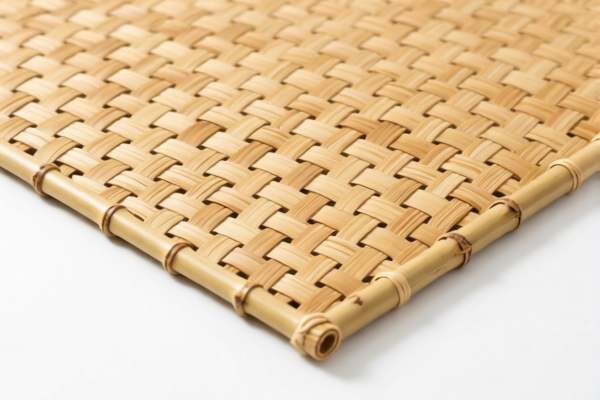
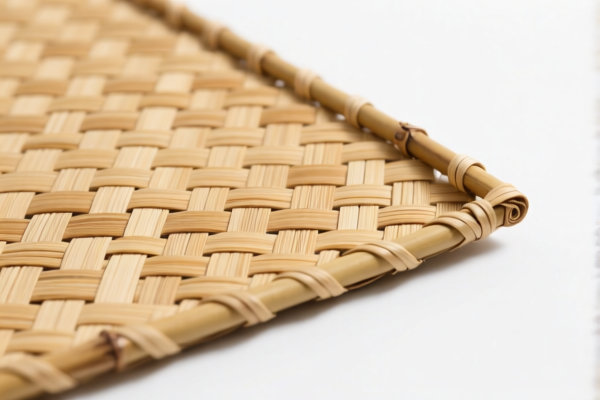
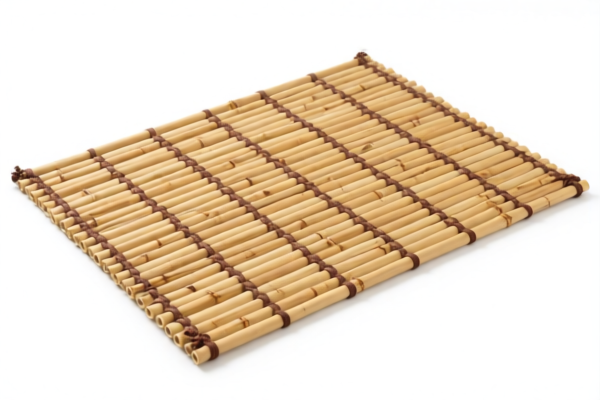
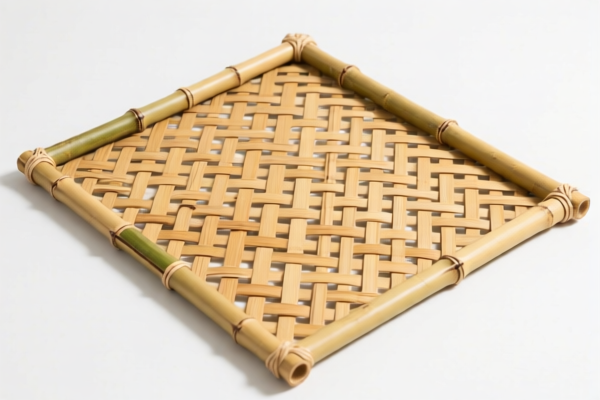
AI分析
🎋 Bamboo Braided Floor Mats: Ultimate HS Code Classification & US Customs Clearance Guide (2026)
🌐 HS Code Reference & Clearance Guide | 2026 Latest Tariff Analysis | Professional Clearance Strategy
📌 Product: Bamboo Braided Floor Mats
📍 Destination: United States (US)
🏭 Origin: China (CN)
⚠️ Critical Warning: High tariff impact due to Section 301 and IEEPA provisions. Misclassification can lead to severe penalties or double taxation.
📦 Part 1: HS Code Classification Analysis & Tax Details
Below is the precise classification breakdown for Bamboo Braided Floor Mats based on the provided data. Each HS Code represents a different interpretive path by Customs and Border Protection (CBP), leading to varying tax implications.
1️⃣ Classification A: Textile/Fiber Category
HS Code: 5705.00.20.90
Summary: The bamboo floor mat is classified as a textile/fiber floor covering. The form fits the definition of a floor covering, with no material conflict regarding the "weaved" nature being treated as a textile-like fiber product.
| Tax Component | Rate | Details |
|---|---|---|
| Base Duty | 3.3% | Standard Most Favored Nation (MFN) rate |
| Section 301 Tariff | 25.0% | Additional tariff on Chinese goods (USITC Footnote 9903) |
| IEEPA Tariff | 10.0% | Additional tariff under International Emergency Economic Powers Act |
| 💰 Total Tax Rate | 38.3% | 3.3% + 25.0% + 10.0% |
📝 Interpretation: This classification treats the mat as a "floor covering" similar to carpets or rugs made from textile fibers. While logically sound for "braided" items, CBP may argue that bamboo is a vegetable material, not a textile fiber.
2️⃣ Classification B: Wood/Bamboo Category (Specific)
HS Code: 4421.91.98.80
Summary: The material is bamboo (a type of wood/vegetable fiber) and the form is a woven mat. It falls under the subheading for "Other articles of wood/bamboo," specifically within the "other" category for woven mats.
| Tax Component | Rate | Details |
|---|---|---|
| Base Duty | 3.3% | Standard MFN rate |
| Section 301 Tariff | 25.0% | Additional tariff on Chinese goods |
| IEEPA Tariff | 10.0% | Additional tariff under IEEPA |
| 💰 Total Tax Rate | 38.3% | 3.3% + 25.0% + 10.0% |
📝 Interpretation: This is a strong candidate if the mat is considered a "woven mat" made of bamboo strips. It aligns with the material science (bamboo = wood-like) and form (mat).
3️⃣ Classification C: Wood/Bamboo Category (General/Residual)
HS Code: 4421.99.98.80
Summary: The material is bamboo, and the form is a mat. It falls under the residual "Other" category for wooden/bamboo articles, acting as a catch-all for items not specifically listed elsewhere.
| Tax Component | Rate | Details |
|---|---|---|
| Base Duty | 3.3% | Standard MFN rate |
| Section 301 Tariff | 25.0% | Additional tariff on Chinese goods |
| IEEPA Tariff | 10.0% | Additional tariff under IEEPA |
| 💰 Total Tax Rate | 38.3% | 3.3% + 25.0% + 10.0% |
📝 Interpretation: Similar to 4421.91, but used if the specific "woven mat" subheading is contested. The tax burden remains identical.
4️⃣ Classification D: Basketry/Plaiting Category (Material Restricted)
HS Code: 4602.11.45.00
Summary: The name "Bamboo Braided" fits the material restriction of plaiting materials. The floor mat is seen as an application of plaited/woven products.
| Tax Component | Rate | Details |
|---|---|---|
| Base Duty | 6.6% | Standard MFN rate (Higher base) |
| Section 301 Tariff | 25.0% | Additional tariff on Chinese goods |
| IEEPA Tariff | 10.0% | Additional tariff under IEEPA |
| 💰 Total Tax Rate | 41.6% | 6.6% + 25.0% + 10.0% |
📝 Interpretation: Chapter 46 covers "Plaiting materials... articles of plaiting materials." This is a valid classification for bamboo crafts. However, the higher base duty (6.6% vs 3.3%) makes this option more expensive than classifications 1-3.
5️⃣ Classification E: Basketry/Bag Category (Lowest Base, Same Total?)
HS Code: 4602.11.07.00
Summary: The material is bamboo, form is braided, and use is a mat. It falls under the extension of basketry, bags, and related woven products.
| Tax Component | Rate | Details |
|---|---|---|
| Base Duty | 0.0% | Free (0%) MFN rate |
| Section 301 Tariff | 25.0% | Additional tariff on Chinese goods |
| IEEPA Tariff | 10.0% | Additional tariff under IEEPA |
| 💰 Total Tax Rate | 35.0% | 0.0% + 25.0% + 10.0% |
📝 Interpretation: This is the most tax-efficient option. By classifying the mat under a specific basketry/plaiting subheading that has a 0% base duty, the total tax burden is reduced to 35.0%.
⚠️ Risk: CBP may reject this if they deem "floor mats" to be primarily floor coverings (Chapter 57) or wooden articles (Chapter 44) rather than general basketry. However, if argued correctly as a "plaited article," it offers significant savings.
📊 Comparison Summary Table
| HS Code | Classification Logic | Base Duty | Add. Tariff (301) | Add. Tariff (IEEPA) | Total Tax Rate |
|---|---|---|---|---|---|
5705.00.20.90 |
Textile Fiber Floor Covering | 3.3% | 25.0% | 10.0% | 38.3% |
4421.91.98.80 |
Woven Mat (Wood/Bamboo) | 3.3% | 25.0% | 10.0% | 38.3% |
4421.99.98.80 |
Other Wooden/Bamboo Article | 3.3% | 25.0% | 10.0% | 38.3% |
4602.11.45.00 |
Plaited Material Article | 6.6% | 25.0% | 10.0% | 41.6% |
4602.11.07.00 |
Plaited Basketry/Bag Item | 0.0% | 25.0% | 10.0% | 35.0% ✅ |
🛠️ Part 2: Customs Clearance Advice & Operational Pitfalls
✅ 1. Strategic Recommendation: Aim for 4602.11.07.00
- Why? It offers the lowest total tax rate (35.0%) due to the 0% base duty.
- How to Argue: Emphasize the manufacturing process (braiding/plaiting of bamboo strips) rather than the end-use (floor covering). Use terms like "Woven Bamboo Plaque" or "Braided Bamboo Weaving" in descriptive fields if possible, while clearly stating "Floor Mat" for safety.
- Risk: If CBP insists it is a "floor covering," they may reclassify to
5705or4421, adding 3.3-6.6% more in base duties.
✅ 2. Critical Documentation Checklist
To support any of these classifications, especially for bamboo products, you must provide:
| Document | Purpose | Key Details Required |
|---|---|---|
| Product Photos | Prove Material & Form | Clear shots of the braided texture, bamboo strips, and overall mat shape. |
| Bill of Materials (BOM) | Verify Material | Specify "100% Natural Bamboo Strips," "No synthetic backing," or "Glue type" (if any). |
| Manufacturing Process Description | Support Chapter 46 Argument | Describe the plaiting/braiding technique. E.g., "Bamboo strips are dyed, flattened, and hand-woven." |
| Commercial Invoice | Value Declaration | Must list unit price, total value, and country of origin (China). |
| Packing List | Logistics Info | Weight, dimensions, number of pieces. |
| FSC Certificate (Optional but Recommended) | Sustainability Proof | If using FSC-certified bamboo, it adds credibility and may help with certain retailer requirements. |
✅ 3. Common Clearance Pitfalls to Avoid
❌ Pitfall 1: Mislabeling as "Carpet" or "Rug"
Consequence: Triggers Chapter 57 (5705), which may have higher scrutiny for "textile" content. If bamboo is seen as non-textile, CBP may reject it or ask for clarification.
Fix: Use "Mat," "Weaving," "Plaited Article," or "Home Decor Item" instead of "Carpet."
❌ Pitfall 2: Ignoring Section 301 and IEEPA
Consequence: Failure to declare US-origin or proper exclusion numbers can lead to seizure or massive fines. All listed HS Codes above include the 25% Section 301 and 10% IEEPA tariffs.
Fix: Ensure the entry includes the correct Type 88 (Section 301) and Type 88 (IEEPA) tariff codes if required by your software, or simply calculate the total 35%-41.6% cost into your landed cost model.
❌ Pitfall 3: Overlooking the "Glue" Component
Consequence: If the mat is heavily glued (e.g., with resin or synthetic adhesives), CBP might classify it as a "composite material" or "plastic article," leading to a completely different (and potentially higher) duty rate.
Fix: If glue is used, disclose it. If it's minor, emphasize the dominant characteristic is the bamboo weaving.
❌ Pitfall 4: Incorrect Value Declaration
Consequence: Customs may audit the value if it seems too low compared to market prices.
Fix: Ensure the invoice value reflects the transaction value (price paid for the goods + shipping + insurance).
✅ 4. Pro-Tip for Smooth Clearance
📢 Pre-Arrival Review Program (PARP):
For high-volume imports, consider applying for a PARP with CBP. This allows you to get a binding determination on the HS Code before the goods arrive. This is highly recommended if you are targeting4602.11.07.00to avoid post-entry audits and potential back-taxes.
🌍 Global Market Context (2026)
| Market | Recommended HS Code | Total Tax Rate (China Origin) | Notes |
|---|---|---|---|
| 🇺🇸 USA | 4602.11.07.00 |
35.0% | Best option. Includes 25% (301) + 10% (IEEPA). |
| 🇨🇳 China | 4602.11.07.00 |
~0-5% | Import tax for domestic sale is low; VAT applies. |
| 🇪🇺 EU | 4602.11.00.00 |
0-6% | No Section 301/IEEPA. Standard EU duty. |
| 🇬🇧 UK | 4602.11.00.00 |
0-6% | Post-Brexit tariffs similar to EU. |
📌 Final Verdict & Action Plan
- Primary Strategy: Classify under
4602.11.07.00to achieve the 35.0% total tax rate. - Backup Strategy: If CBP disputes the basketry classification, expect
4421.91.98.80or5705.00.20.90at 38.3%. - Avoid:
4602.11.45.00due to the higher base duty (41.6% total). - Action: Prepare detailed photos and a process description highlighting the braiding/plaiting technique. Engage a licensed customs broker to file the entry with supporting evidence.
💡 Remember: In customs classification, form and function matter, but material and manufacturing process often win the argument. For bamboo mats, the weaving/braiding process is your strongest asset for the lower-tariff classification.
✨ Professional clearance starts with precise classification.
💼 Your cost savings are in the details.
用户评价
关于 HS 编码归类
协调制度(HS)是由世界海关组织(WCO)制定的国际贸易商品分类标准。全球 200 多个国家采用 HS 系统作为海关关税、贸易统计和进出口监管的基础。
每个 HS 编码遵循以下层级结构:
- 章(2 位)——商品大类(例如:第 84 章:机器和机械设备)
- 品目(4 位)——章内的更具体分类
- 子目(6 位)——国际通用细分,所有 WCO 成员国统一使用
- 本国细分(8-10 位)——各国自行扩展的细分编码,如美国 HTSUS 10 位编码
正确的 HS 编码归类对于顺利通关、准确缴纳关税和遵守贸易法规至关重要。错误归类可能导致海关延误、多缴关税或罚款。
从CN进口到US时,适用的关税税率可能包括:
- 最惠国(MFN)税率——适用于 WTO 成员国的标准关税税率
- 普通税率——适用于无贸易协定国家
- 贸易救济关税——附加关税,如 301 条款(反倾销)、232 条款(国家安全)或反补贴税
本页内容仅供参考。如需正式归类,请咨询当地海关或持牌报关代理。