Bamboo Fiber Pulp for Coating
CN → US| HS编码 | 关税税率 | 原产国 | 目的国 | 文档 |
|---|---|---|---|---|
| 4706920100 | 35.0% | CN | US | 官方文档 |
| 4706300000 | 35.0% | CN | US | 官方文档 |
| 1404909090 | 35.0% | CN | US | 官方文档 |
| 1404901000 | 0.0% | CN | US | 官方文档 |
| 4706920100 | 35.0% | CN | US | 官方文档 |
商品图片
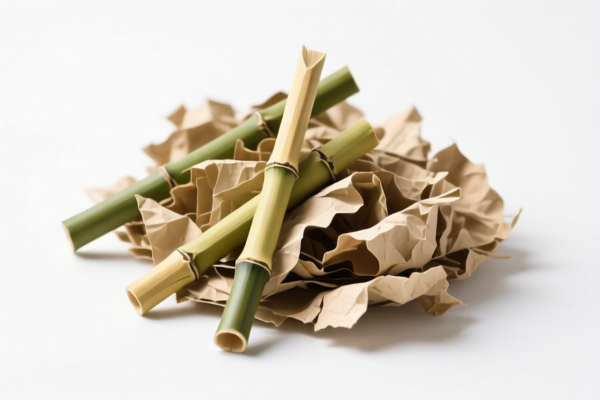
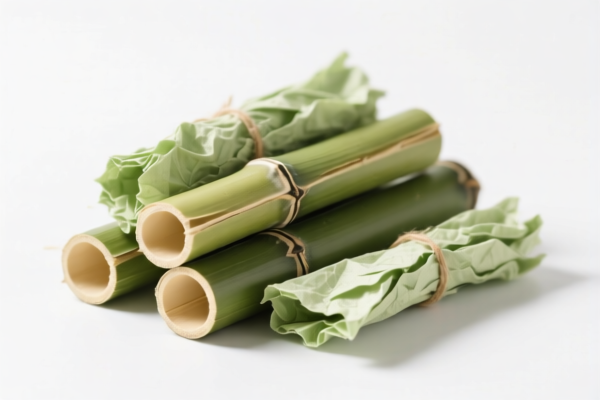
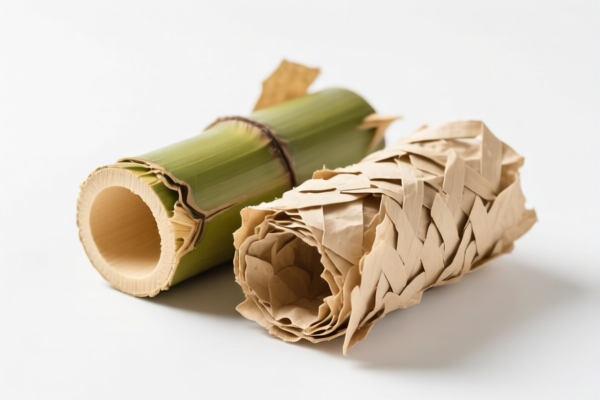
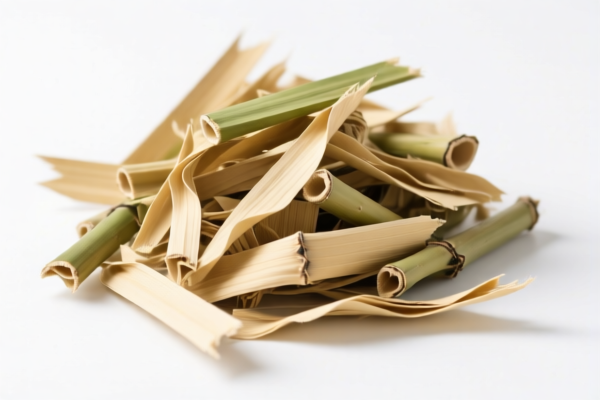
AI分析
🎋 Bamboo Fiber Pulp for Coating (印刷/涂布用竹纤维浆料)
🌐 HS Code Reference & Clearance Guide | 2026 Latest Tariff Analysis | Professional Compliance Strategy
📌 One, Product Definition: What is "Bamboo Fiber Pulp"?
Bamboo fiber pulp, specifically formulated for coating/printing applications, is a processed cellulose material derived from bamboo. In international trade, its classification hinges on its chemical state and physical form.
⚠️ Critical Distinction:
- Is it a primary plant fiber (mechanically processed, retaining natural structure)? → Chapter 14
- Is it a chemically/mechanically refined cellulose (pulped, bleached, or semi-bleached)? → Chapter 47
Because "pulp" (浆料) usually implies a refined state closer to papermaking raw materials rather than raw plant matter, it often falls under Chapter 47 (Cellulose Pulp). However, if defined loosely as "processed plant fiber" without chemical refining, it may fall under Chapter 14 (Vegetable Products).
📦 Two. HS Code Classification Details (2026 Latest Tariff Mapping)
Based on the provided data, here are the four possible HS Codes and their specific logic.
| HS Code | Product Description & Logic | Tariff Rate (Total) | Tax Breakdown |
|---|---|---|---|
4706.92.01.00 |
Bamboo Pulp for Printing: Classified under "Other pulp of fibrous cellulosic material." It fits the description of semi-bleached or bleached pulp used specifically in the printing/paper industry. | 35.0% | Base: 0% Section 301: 25% IEEPA (122): 10% |
4706.30.00.00 |
Bamboo Pulp for Printing: Directly linked to bamboo fiber origin. Classified as "Other pulp of fibrous cellulosic material" where the specific subheading aligns with bamboo-derived cellulose. | 35.0% | Base: 0% Section 301: 25% IEEPA (122): 10% |
1404.90.90.90 |
Other Vegetable Products: Treated as a general plant product. If the pulp is not fully refined to "cellulosic pulp" status but remains a "vegetable product" in paste/slurry form. | 35.0% | Base: 0% Section 301: 25% IEEPA (122): 10% |
1404.90.10.00 |
Vegetable Fiber Primary Form: Classified under "Other vegetable products" but specifically for primary forms like raw plant fibers or less processed slurry. Note: This has a specific unit tax. | 0.5¢/kg + 35.0% | Base: 0.5¢/kg Section 301: 25% IEEPA (122): 10% |
🔍 Key Insight:
- Chapter 47 (Codes4706.92...&4706.30...) is the standard and most accurate classification for "pulp" used in paper/printing.
- Chapter 14 (Codes1404.90...) is riskier and applies only if the product is not recognized as true "cellulosic pulp" but rather as a crude vegetable slurry.
- Tax Warning: Regardless of the code, the total ad valorem tax is 35% due to US trade restrictions. Code1404.90.10.00adds a per-kg unit duty, which can be significantly higher or lower depending on density.
💰 Three. 2026 Latest Tariff Rate Breakdown (Including Surcharge Policies)
✅ Applicable Country: United States (US)
✅ Origin: China (CN)
✅ Effective Date: November 10, 2025 (and subsequent imports)
🎯 1. Code 4706.92.01.00 & 4706.30.00.00 (Standard Pulp Classification)
| Item | Content |
|---|---|
| Base Tariff | 0% (Ad Valorem) |
| USITC Surcharge | +25% (Under USITC Footnote 9903.88.01, Section 301) |
| IEEPA Surcharge | +10% (For China/HK products, under IEEPA 122 Clause, effective Nov 10, 2025) |
| Total Rate | 35.0% |
| Calculation | CIF Value × 35% |
| De Minimis Exemption | ❌ Not Applicable (Denied) |
| Legal Path | IEEPA:122 → USITC:4706.30/4706.92 → FOOTNOTE:301.88.01 |
📌 Explanation:
- The 25% is the traditional Section 301 tariff on Chinese cellulose products.
- The 10% is the new IEEPA (International Emergency Economic Powers Act) surcharge added in late 2025.
- Combined Total: 35%. This is a high-cost item for US importers.
🎯 2. Code 1404.90.90.90 (Other Vegetable Products)
| Item | Content |
|---|---|
| Base Tariff | 0% |
| USITC Surcharge | +25% |
| IEEPA Surcharge | +10% |
| Total Rate | 35.0% |
| Calculation | CIF Value × 35% |
| De Minimis Exemption | ❌ Not Applicable |
📌 Note: While the ad valorem rate is the same, customs may scrutinize this code more heavily to ensure it doesn't fit the more specific Chapter 47 definition. Misclassification here can lead to penalties.
🎯 3. Code 1404.90.10.00 (Primary Vegetable Fiber Form)
| Item | Content |
|---|---|
| Base Tariff | 0.5¢ per kg (Specific Duty) |
| USITC Surcharge | +25% (Ad Valorem on Value) |
| IEEPA Surcharge | +10% (Ad Valorem on Value) |
| Total Rate | 0.5¢/kg + 35% Ad Valorem |
| Calculation | (Weight in kg × $0.005) + (CIF Value × 0.35) |
| De Minimis Exemption | ❌ Not Applicable |
📌 Warning:
- This code adds a unit duty ($0.005/kg).
- If the pulp is dense or high-volume, this extra per-kg tax can make the total cost higher than the standard 35% ad valorem only codes.
- Use this only if the product is legally confirmed as "primary form" and not refined pulp.
🛠️ Four. Clearance Practical Advice (Avoid Pitfalls)
✅ 1. Preparation Checklist (Mandatory)
| Document | Required | Purpose |
|---|---|---|
| ✅ Product Spec Sheet | ✔️ | Must specify "Bamboo," "Pulp," "Refining Process," and "Application (Coating/Printing)." |
| ✅ MSDS / Safety Data Sheet | ✔️ | To confirm chemical composition (ensure no hazardous chemicals are present). |
| ✅ Process Description | ✔️ | Detail if it is "Mechanical," "Chemical," or "Semi-Chemical." Crucial for Chapter 47 vs. 14. |
| ✅ Commercial Invoice | ✔️ | Clearly state "Bamboo Fiber Pulp for Printing/Coating." |
| ✅ Certificate of Origin | ✔️ | Proof of Chinese origin to apply correct tariffs. |
✅ 2. Declaration Tips (Key Mantra)
🔥 “Pulp goes to Ch47, Plant goes to Ch14. Be precise or pay the price!”
| Scenario | Correct Declaration | Risk if Wrong |
|---|---|---|
| Refined Bamboo Pulp | 4706.30.00.00 or 4706.92.01.00 |
If declared as Ch14, customs may assess 35% + penalties for misclassification. |
| Crude Bamboo Slurry | 1404.90.10.00 |
If declared as Ch47, no penalty, but you might miss the 0.5¢/kg if it’s actually Ch14 (though Ch47 is usually safer for "pulp"). |
| Mixed with Chemicals | Check Chapter 38 | If binders/adhesives are added, it may no longer be "pulp" but a "chemical product," changing the HS code entirely. |
✅ 3. Special Cases
| Case | Handling Advice |
|---|---|
| Is it "Pulp" or "Slurry"? | If it contains >50% water and is non-refined, argue for Chapter 14. If it's dry or semi-refined, use Chapter 47. |
| Coating Additives | If the pulp is pre-mixed with resins for direct coating, it may be classified as a preparation/paint (Chapter 32/39), not pulp. This drastically changes the HS code. |
| Bamboo vs. Wood | Ensure the origin is clearly stated as Bamboo. While both fall under Ch47, specific subheadings may vary by country. In the US, 4706 is general "Other Pulp," so bamboo vs. wood is less critical for the code itself but critical for Anti-Dumping checks. |
🌍 Five. Global Market Comparison (2026)
| Country/Region | Recommended HS Code | Tariff Rate | Notes |
|---|---|---|---|
| 🇺🇸 USA | 4706.30.00.00 |
35% | High tariffs due to Section 301 + IEEPA. |
| 🇨🇳 China | 4706.30.00.00 |
5-10% | Import tax for domestic processing. |
| 🇪🇺 EU | 4706.00.00 |
4.5% | No Section 301 surcharge. Standard MFN rate. |
| 🇬🇧 UK | 4706.00.00 |
4.5% | Post-Brexit, aligns with EU rates. |
| 🇻🇳 Vietnam | 4706.00.00 |
0% | Many Chinese manufacturers export pulp here to re-export, but US Customs scrutinizes transshipment. |
📌 Conclusion:
- The US market is extremely expensive (35%) for bamboo pulp from China.
- EU/UK offer much lower rates (~4.5%).
- Strategy: If selling to the US, consider sourcing from Vietnam/Thailand (if genuine origin) to avoid the 35% surcharge, but ensure no transshipment fraud.
📌 Six. Common Errors & Pitfalls (Lessons Learned)
❌ Error 1: Declaring "Bamboo Pulp" as "Bamboo Textiles"
👉 Result: Wrong HS Code. Textiles have different tariffs and stricter anti-dumping rules.
❌ Error 2: Ignoring the "Coating" aspect
👉 Result: If the product is a pre-mixed coating material, it might be classified under Chapter 32 (Tanning/Dyeing Extracts) or 39 (Plastics). Declaring it as "Pulp" is fraud if it contains significant binders.
❌ Error 3: Underestimating the IEEPA 122 Clause
👉 Result: Many importers only account for the 25% Section 301 tariff. Forgetting the additional 10% IEEPA tax leads to short-paid duties and seizures.
✅ Correct Declaration Example:
"Chemically Refined Bamboo Fiber Pulp, Semi-Bleached, for Paper and Printing Industry, 90% Cellulose Content, HS Code 4706.30.00.00"
🎯 Seven. Conclusion: Strategic Sourcing & Compliance
🎯 Key Takeaway:
🔹 "Pulp is 35% in the US. Don't miss the 10% IEEPA!"
🔹 "Ch47 for Pulp, Ch14 for Plants, Ch32 for Mixtures."
🔹 "Always declare origin accurately to avoid transshipment penalties."
📌 Recommendation:
1. Pre-Ruling: Apply for an Advance Ruling (CBP Ruling) from US Customs if the product's refining level is borderline between Ch14 and Ch47.
2. Supplier Audit: Ensure your supplier can provide chemical analysis to prove it is "cellulosic pulp" (Ch47) and not a crude vegetable product (Ch14) if you want consistency.
3. Cost Calculation: Always budget for the 35% total tariff (25% + 10%) when pricing for the US market.
📣 Immediate Action:
📞 Contact your freight forwarder with the MSDS and Product Spec Sheet.
📝 Confirm if the product is "Refined Pulp" (Ch47) or "Crude Slurry" (Ch14).
💡 Save Costs: Explore Vietnam-origin alternatives if the 35% US tariff is too high.
✨ Professional Clearance Starts with Accurate Classification!
💼 Your profit margin depends on getting the HS Code right!
用户评价
关于 HS 编码归类
协调制度(HS)是由世界海关组织(WCO)制定的国际贸易商品分类标准。全球 200 多个国家采用 HS 系统作为海关关税、贸易统计和进出口监管的基础。
每个 HS 编码遵循以下层级结构:
- 章(2 位)——商品大类(例如:第 84 章:机器和机械设备)
- 品目(4 位)——章内的更具体分类
- 子目(6 位)——国际通用细分,所有 WCO 成员国统一使用
- 本国细分(8-10 位)——各国自行扩展的细分编码,如美国 HTSUS 10 位编码
正确的 HS 编码归类对于顺利通关、准确缴纳关税和遵守贸易法规至关重要。错误归类可能导致海关延误、多缴关税或罚款。
从CN进口到US时,适用的关税税率可能包括:
- 最惠国(MFN)税率——适用于 WTO 成员国的标准关税税率
- 普通税率——适用于无贸易协定国家
- 贸易救济关税——附加关税,如 301 条款(反倾销)、232 条款(国家安全)或反补贴税
本页内容仅供参考。如需正式归类,请咨询当地海关或持牌报关代理。