Bamboo Fiber Pulp for Paper Labels
CN → US| HS编码 | 关税税率 | 原产国 | 目的国 | 文档 |
|---|---|---|---|---|
| 4805122000 | 35.0% | CN | US | 官方文档 |
| 4706920100 | 35.0% | CN | US | 官方文档 |
| 4805121000 | 35.0% | CN | US | 官方文档 |
| 4706300000 | 35.0% | CN | US | 官方文档 |
| 4802546100 | 35.0% | CN | US | 官方文档 |
商品图片
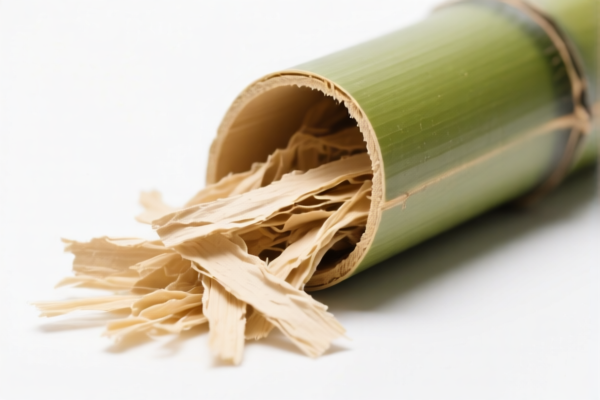
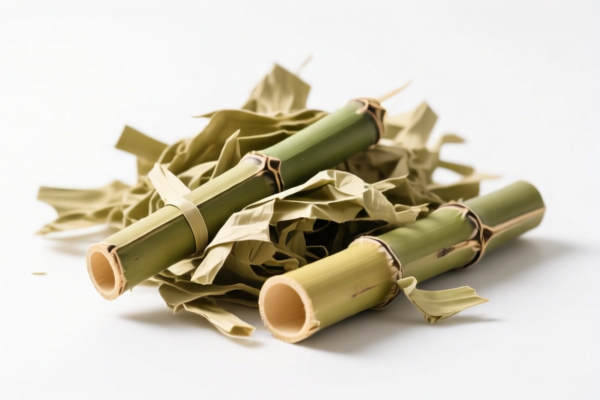
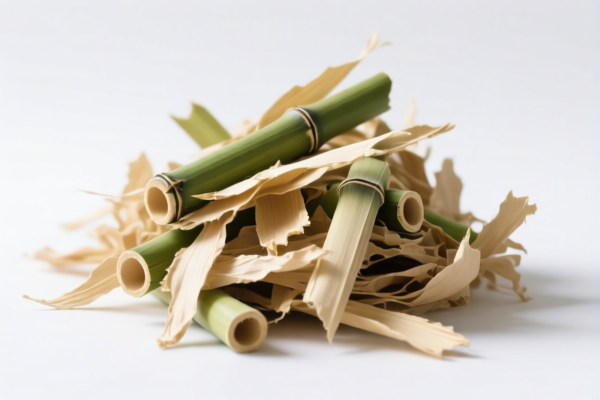

AI分析
🎋 Bamboo Pulp for Paper Labels (Bamboo Fiber Pulp)
🌐 HS Code Reference & Customs Clearance Guide | 2026 Latest Tariff Analysis | Professional Clearance Strategy 📌 I. Product Definition & Classification: Do You Really Understand "Bamboo Pulp"?
Bamboo Pulp for Paper Labels is a semi-processed fibrous material, primarily composed of cellulose fibers extracted from bamboo. In international trade, it serves as the raw material for manufacturing paper, cardboard, and specifically paper labels.
Because bamboo shares similar chemical and physical properties with wood pulp, it is classified under Cellulose Pulp rather than finished paper products. The key distinction lies in its form: it is not yet a finished sheet of paper or a labeled product, but a fibrous raw material.
⚠️ Key Distinction Point: - If the product is fibrous, unbleached/bleached bamboo cellulose, suitable for papermaking → Classified under Chapter 47 (Wood Pulp; Other Fibrous Cellulosic Pulp). - If the product is already formed into sheets of paper/cardboard, it would fall under Chapter 48. - Crucial Note: Even if marketed as "for labels," if the physical form is pulp, it is classified as Pulp (Ch 47), not Paper (Ch 48). Misclassification is a common error leading to high penalties.
📦 II. HS Code Classification Details (2026 Latest Tariff Authority Comparison)
Based on the provided data, the following HS codes are referenced for bamboo pulp/paper-related items. Note that while some codes refer to finished paper, the primary commodity "Bamboo Pulp" aligns best with Chapter 47 codes.
| HS Code | Product Description | Applicability in Data | Tax Rate |
|---|---|---|---|
4706.92.01.00 |
Bamboo Pulp: Fibrous cellulose material, fits the category of paper pulp products. | ✅ Primary Match for Pulp | 35.0% |
4706.30.00.00 |
Bamboo Pulp: Product name includes "bamboo," meeting bamboo material requirements. | ✅ Alternative for Pulp | 35.0% |
4805.12.20.00 |
Bamboo Paper: Material belongs to paper category, form fits uncoated cardboard range. | ⚠️ For Finished Paper, not Pulp | 35.0% |
4805.12.10.00 |
Paper: Inferred as paper material attribute, reasonable inference under this category. | ⚠️ For Finished Paper, not Pulp | 35.0% |
4802.54.61.00 |
Uncoated Paper: Inferred as uncoated paper, usage fits paper pulp processed products, no material conflict. | ⚠️ For Finished Paper, not Pulp | 35.0% |
🔍 Key Reminder: - Pulp vs. Paper: "Bamboo Pulp" is chemically treated bamboo fibers. It is NOT paper yet. Therefore, HS Codes starting with 47 (Chapter 47: Wood Pulp) are technically more accurate for pulp than HS Codes starting with 48 (Chapter 48: Paper). - However, customs authorities may sometimes view "paper labels" raw materials broadly. The provided data shows a consistent 35% total tax rate for all these variants, reducing the financial impact of minor classification errors, but correct classification is still vital for compliance.
💰 III. 2026 Latest Tariff Rate Breakdown (Including Additional Taxes)
✅ Applicable Country: United States (US) ✅ Origin: China (CN) ✅ Effective Time: Current as of 2025/2026 trade policies
🎯 1. 4706.92.01.00 & 4706.30.00.00 – Bamboo Pulp (Primary Classification)
| Item | Content |
|---|---|
| Base Duty Rate | 0.0% |
| Section 301 Additional Duty | +25.0% (Based on USITC Footnote) |
| Section 122 Duty (IEEPA) | +10.0% (Targeting Chinese Products) |
| Total Duty Rate | 35.0% |
| Tax Calculation | CIF Value × 35% |
| De Minimis Eligibility | ❌ No (Not eligible for de minimis exemption due to high duty rate and Section 301 inclusion) |
| Legal Basis Path | USITC:4706 → Section 301: 25% → IEEPA: 10% → Total 35% |
📌 Explanation: - Base 0%: Bamboo pulp falls under a low base tariff internationally. - +25% Section 301: This is the major tariff block for Chinese-origin goods. It applies to most pulp/paper products from China. - +10% Section 122/IEEPA: An additional layer of tariff imposed under specific emergency economic powers, adding 10% on top. - Total 35%: This is a high tariff rate. Importers must budget accordingly.
🎯 2. 4805.12.xxxxxx & 4802.54.xxxxxx – Paper Products (If Misclassified or if Product is Paper)
| Item | Content |
|---|---|
| Base Duty Rate | 0.0% |
| Section 301 Additional Duty | +25.0% |
| Section 122 Duty (IEEPA) | +10.0% |
| Total Duty Rate | 35.0% |
| Tax Calculation | CIF Value × 35% |
| De Minimis Eligibility | ❌ No |
📌 Note: - Even if classified under Chapter 48 (Paper), the tariff structure remains identical (35%) in the provided data. - This uniformity suggests that regardless of whether it's pulp or paper, the cost impact is the same, but legal compliance requires accurate HS codes.
🛠️ IV. Customs Clearance Practical Advice (Real-World Pitfall Guide)
✅ 1. Required Documentation Checklist (Non-Negotiable)
| Document | Must Provide | Explanation |
|---|---|---|
| ✅ Product Specification Sheet | ✔️ | Must specify: Bamboo Content %, Pulping Process (Chemical/Mechanical), Moisture Content, Fiber Length. |
| ✅ Material Safety Data Sheet (MSDS) | ✔️ | Proves it is non-hazardous fibrous material. |
| ✅ Commercial Invoice | ✔️ | Clearly state: "Bamboo Fiber Pulp for Paper Manufacturing" – NOT "Paper Labels" (which is a finished good). |
| ✅ Bill of Lading/Air Waybill | ✔️ | Ensure packaging details match description (e.g., bales, compressed blocks). |
| ✅ Certificate of Origin (CO) | ✔️ | Essential for verifying Chinese origin for Section 301/IEEPA application. |
| ✅ Packaging List | ✔️ | Detail net/gross weight carefully. |
✅ 2. Declaration Tips (Key Mantra)
🔥 "Declare Pulp as Pulp, Not Paper; Correct HS Saves Headaches!"
| Scenario | Correct Declaration | Incorrect Action | Consequence |
|---|---|---|---|
| Product is fibrous pulp | HS: 4706.92.01.00Name: "Bamboo Pulp" |
Declare as "Paper Labels" | ❌ High risk of customs audit, potential reclassification fines. |
| Product is finished paper for labels | HS: 4805.12.20.00Name: "Uncoated Bamboo Paper" |
Declare as "Pulp" | ❌ Under-declaration risk if duty rates differed (though here they are same). |
| Mixed Shipment (Pulp + Paper) | Separate line items | Lump-sum declaration | ❌ Complex audit, potential penalties for misclassification. |
✅ 3. Special Handling for "Bamboo"
| Situation | Recommendation |
|---|---|
| Bamboo vs. Wood Pulp | Clearly distinguish "Bamboo" on invoices. While tariffs are same in this dataset, some markets have specific rules for bamboo. |
| Moisture Content | Ensure moisture is <10-12% if required by contract. High moisture can be seen as water weight (fraud) or cause mold (rejection). |
| Chemical Residues | If bleached, provide data on chemical residues (chlorine, etc.) to meet environmental standards in destination. |
🌍 V. Global Market Comparison (2026 Latest)
| Country/Region | Recommended HS Code | Tariff (China Origin) | Key Certifications | Notes |
|---|---|---|---|---|
| 🇺🇸 USA | 4706.92.01.00 (Pulp) |
35% (25% Sec 301 + 10% IEEPA) | None specific for pulp | High Tariff. No de minimis. |
| 🇨🇳 China | 4706.92.01.00 |
0% (Import Duty) | None | Domestic use favored. |
| 🇪🇺 EU | 4706.92 (Pulp) |
0% (General) | REACH Compliance | Check for chemical bans. |
| 🇬🇧 UK | 4706.92 (Pulp) |
0% | UKCA (if applicable) | Post-Brexit rules apply. |
| 🇯🇵 Japan | 4706.92 (Pulp) |
0% | JIS Standards | High quality standards for pulp purity. |
📌 Conclusion: - USA is the most costly market due to 35% total tariffs. - EU/UK/Japan are more favorable with 0% base tariffs, but require strict chemical compliance (REACH). - China is the source, so domestic trade has no import duty.
📌 VI. Common Errors & Pitfalls (Lessons Learned)
❌ Error 1: Declaring "Bamboo Pulp" as "Paper Labels" to avoid Section 301. 👉 Consequence: Customs will detect the physical form is pulp, not paper. Penalty + Back Taxes + Seizure Risk.
❌ Error 2: Ignoring the "122 Clause" or "IEEPA" 10% surcharge. 👉 Consequence: Underpayment by 10%. Customs will issue a deficiency notice with interest.
❌ Error 3: Providing vague description "Natural Fiber." 👉 Consequence: Customs will classify under "Other" which may have higher scrutiny or different rates. Always specify "Bamboo Pulp."
✅ Correct Practice:
"Bamboo Fiber Pulp, Chemical Pulping, for Paper Manufacturing, Origin: China, HS Code: 4706.92.01.00"
🎯 VII. Conclusion: Precision Saves Money, Compliance Saves Time!
🎯 Remember the Mantra:
🔹 "Pulp is Pulp, Paper is Paper. Don't Mix Them!" 🔹 "35% US Tariff is Non-Negotiable. Budget for It!" 🔹 "Accurate Description = Smooth Clearance!"
📌 Pro Tip:
If you are importing finished paper labels (not pulp), the HS code changes to Chapter 48. While the rate in this dataset is the same (35%), legal risk remains if you misrepresent pulp as paper.
Recommendation: 1. Apply for an Advance Ruling from US Customs (CBP) if the product form is borderline. 2. Work with a licensed customs broker who specializes in pulp/paper products. 3. Keep detailed lab reports proving the product is pulp (fibrous) and not paper (sheet).
📣 Take Action Now:
📞 Consult your customs broker for HS Code Pre-Classification. 📦 Ensure your invoice matches the physical product form. 🚀 Clear your bamboo pulp smoothly, avoid penalties, and protect your profit margins!
✨ Professional Clearance Starts with Accurate Classification! 💼 Every dollar in duty is worth calculating correctly!
用户评价
关于 HS 编码归类
协调制度(HS)是由世界海关组织(WCO)制定的国际贸易商品分类标准。全球 200 多个国家采用 HS 系统作为海关关税、贸易统计和进出口监管的基础。
每个 HS 编码遵循以下层级结构:
- 章(2 位)——商品大类(例如:第 84 章:机器和机械设备)
- 品目(4 位)——章内的更具体分类
- 子目(6 位)——国际通用细分,所有 WCO 成员国统一使用
- 本国细分(8-10 位)——各国自行扩展的细分编码,如美国 HTSUS 10 位编码
正确的 HS 编码归类对于顺利通关、准确缴纳关税和遵守贸易法规至关重要。错误归类可能导致海关延误、多缴关税或罚款。
从CN进口到US时,适用的关税税率可能包括:
- 最惠国(MFN)税率——适用于 WTO 成员国的标准关税税率
- 普通税率——适用于无贸易协定国家
- 贸易救济关税——附加关税,如 301 条款(反倾销)、232 条款(国家安全)或反补贴税
本页内容仅供参考。如需正式归类,请咨询当地海关或持牌报关代理。