Bamboo Floor Mat
CN → US| HS编码 | 关税税率 | 原产国 | 目的国 | 文档 |
|---|---|---|---|---|
| 4602110700 | 35.0% | CN | US | 官方文档 |
| 4602114500 | 41.6% | CN | US | 官方文档 |
| 5705002090 | 38.3% | CN | US | 官方文档 |
| 4421919880 | 38.3% | CN | US | 官方文档 |
| 4421999880 | 38.3% | CN | US | 官方文档 |
商品图片
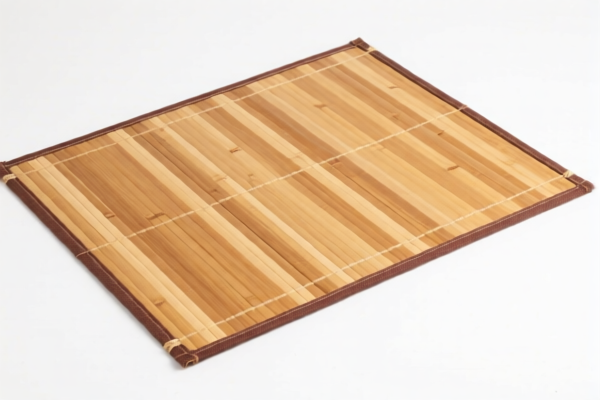
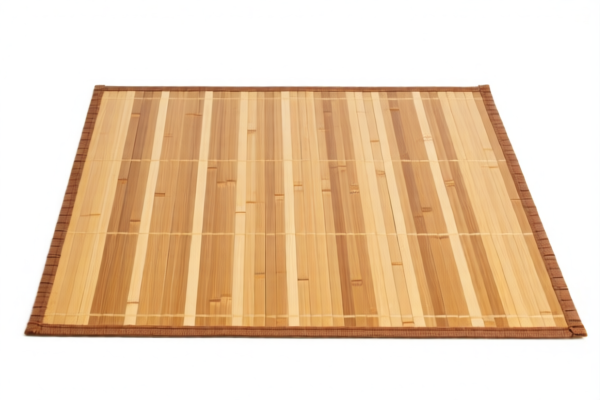
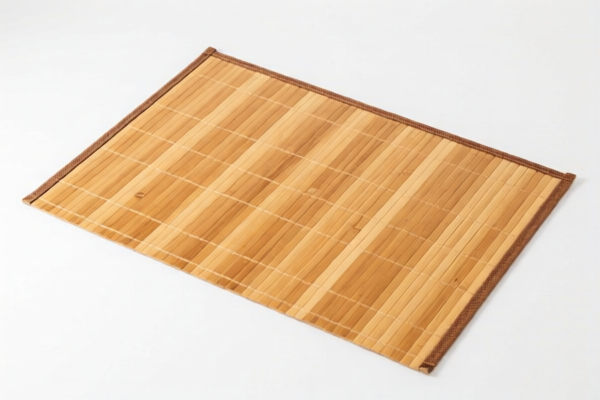
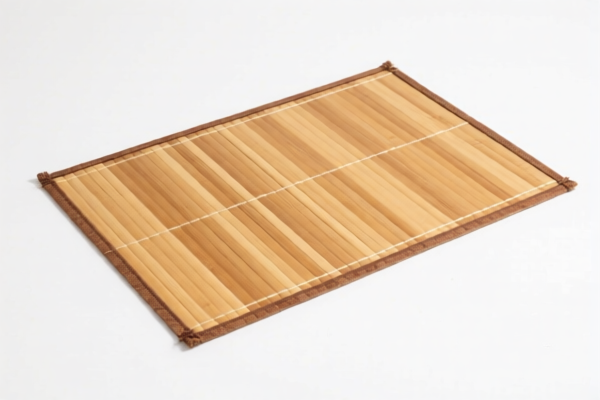
AI分析
🎋 Bamboo Floor Mat (竹编地板垫)
🌐 HS Code Reference & Customs Clearance Guide | 2026 Latest Tariff Analysis | Professional Clearance Strategy 📌 I. Product Definition & Classification: Do You Really Understand "Bamboo Floor Mats"?
Bamboo floor mats are versatile household items, typically used as doormats, kitchen mats, or decorative floor coverings. In international trade (specifically US imports), they are complex because bamboo can be classified under different chapters depending on the processing method, structure, and primary function.
The key distinction lies in whether it is treated as a basketry product, a textile/fiber covering, or a wood/bamboo article.
⚠️ Critical Distinction Points: - If classified as Basketry (Chapter 46): The mat is woven like a basket, using thin strips of bamboo. - If classified as Textile/Fiber Flooring (Chapter 57): It is treated similarly to rugs or carpets made from natural fibers. - If classified as Wood/Bamboo Articles (Chapter 44): It is considered a manufactured article made from bamboo, such as a coaster or a specific utility item.
📦 II. HS Code Classification Details (2026 Latest Tariff Authority Comparison)
| HS Code | Product Description | Application Scenario | Key Classification Logic |
|---|---|---|---|
4602.11.07.00 |
Woven mats of vegetable plaiting materials (Bamboo), not stuffed or assembled | Door mats, simple woven bamboo floor mats | Basketry Product: Classified under Chapter 46 "Products of Basketry or Wickerwork". |
4602.11.45.00 |
Other woven bamboo products (not specified elsewhere) | Complex woven bamboo mats, decorative weavings | Other Basketry: For woven items that don't fit the specific "floor mat" subheading above. |
5705.00.20.90 |
Other floor coverings of textile materials or materials considered as such (e.g., bamboo fiber mats) | Mats treated as "rugs" or "carpets" made from natural fibers | Textile/Fiber Flooring: Classified under Chapter 57 if the bamboo is processed into fiber/thread-like weave similar to textiles. |
4421.91.98.80 |
Other articles of bamboo (e.g., heat-resistant pads, specific utility mats) | Anti-scald mats, specific bamboo utility pads | Wood/Bamboo Articles: Classified under Chapter 44 "Wood and articles of wood" (bamboo is treated as wood). |
4421.99.98.80 |
Other articles of wood/bamboo (general category) | General bamboo mats not fitting other specific bamboo/wood subheadings | Other Wood/Bamboo: General catch-all for bamboo articles not specifically listed elsewhere. |
🔍 Key Reminder: - Chapter 46 (Basketry) vs. Chapter 44 (Wood) is the biggest source of classification disputes. - If the bamboo is woven into a mat structure resembling a basket, 4602 is often preferred by customs for traditional woven mats. - If the item is considered a floor covering (like a rug), 5705 may apply, but this is less common for stiff bamboo mats. - Chapter 44 is used for rigid bamboo items or those not clearly "woven" in the basketry sense.
💰 III. 2026 Latest Tariff Rate Breakdown (Including Additional Taxes & Policy Surcharges)
✅ Applicable Country: United States (US) ✅ Country of Origin: China (CN) ✅ Effective Date: 2025 onwards (including subsequent imports)
🎯 1. 4602.11.07.00 —— Woven Bamboo Mats (Basketry)
| Item | Details |
|---|---|
| Base Duty Rate | 0.0% (ad valorem) |
| Section 301 Additional Duty | +25.0% |
| Section 122 Duty | +10.0% (Under specific administrative provisions) |
| Total Tax Rate | 35.0% |
| Tax Calculation | CIF Value × 35% |
| De Minimis Exemption Eligible? | ❌ No (deny_de_minimis) |
| Legal Basis Path | Section 301: 9903.01.24 → Section 122 → USITC: 4602.11.07.00 |
📌 Explanation: - Section 301 (25%): Applies to all Chinese-made goods in this category under the Trade Promotion Authority Act. - Section 122 (10%): Additional duty applied under specific trade remedy provisions or administrative adjustments. - Total 35% is significantly higher than the base duty, reflecting the punitive tariffs on Chinese imports.
🎯 2. 4602.11.45.00 —— Other Woven Bamboo Products
| Item | Details |
|---|---|
| Base Duty Rate | 6.6% |
| Section 301 Additional Duty | +25.0% |
| Section 122 Duty | +10.0% |
| Total Tax Rate | 41.6% |
| Tax Calculation | CIF Value × 41.6% |
| De Minimis Exemption Eligible? | ❌ No |
| Legal Basis Path | Section 301: 9903.01.24 → Section 122 → USITC: 4602.11.45.00 |
📌 Note: - This code has a higher base duty (6.6%) compared to
4602.11.07.00. - The additional tariffs are the same, making the total cost even higher. - Strategic Insight: If your product fits4602.11.07.00, ensure the description matches the "floor mat" specific subheading to avoid being misclassified into45.00(other) which attracts higher base duties.
🎯 3. 5705.00.20.90 —— Textile/Fiber Floor Coverings (Bamboo Fiber)
| Item | Details |
|---|---|
| Base Duty Rate | 3.3% |
| Section 301 Additional Duty | +25.0% |
| Section 122 Duty | +10.0% |
| Total Tax Rate | 38.3% |
| Tax Calculation | CIF Value × 38.3% |
| De Minimis Exemption Eligible? | ❌ No |
| Legal Basis Path | Section 301: 9903.01.24 → Section 122 → USITC: 5705.00.20.90 |
📌 Caution: - Classification as "textile/fiber" is risky. If customs determines the mat is primarily woven bamboo strips (basketry) rather than fiber yarns, they may reclassify it to Chapter 46, potentially leading to audits or penalties if the declared duty differs. - Ensure your product is genuinely processed into fiber-like strands to justify this classification.
🎯 4 & 5. 4421.91.98.80 & 4421.99.98.80 —— Bamboo Articles (Wood/Bamboo Chapter)
| Item | Details |
|---|---|
| Base Duty Rate | 3.3% |
| Section 301 Additional Duty | +25.0% |
| Section 122 Duty | +10.0% |
| Total Tax Rate | 38.3% |
| Tax Calculation | CIF Value × 38.3% |
| De Minimis Exemption Eligible? | ❌ No |
| Legal Basis Path | Section 301: 9903.01.24 → Section 122 → USITC: 4421.91.98.80 / 4421.99.98.80 |
📌 Analysis: - These codes fall under Chapter 44 (Wood/Bamboo). - If the mat is rigid, not woven in a basketry style, or considered a "utility pad" (e.g., anti-scald), this classification might be used. - Risk: If the item is clearly a woven floor mat, customs may reject this classification in favor of Chapter 46 or 57.
🛠️ IV. Customs Clearance Practical Advice (Battle-Tested Pitfall Avoidance Guide)
✅ 1. Document Preparation Checklist (All Required)
| Document | Mandatory? | Explanation |
|---|---|---|
| ✅ Product Specification Sheet | ✔️ | Must detail material (bamboo), weave type, dimensions, and intended use (floor mat vs. decoration). |
| ✅ Product Photos (Clear) | ✔️ | Show the weave structure clearly. Distinguish between "woven strips" (Chapter 46) and "fiber yarns" (Chapter 57). |
| ✅ Commercial Invoice | ✔️ | Describe accurately: "Bamboo Woven Floor Mat, Material: 100% Bamboo, Use: Floor Covering". Avoid vague terms like "bamboo item". |
| ✅ Packing List | ✔️ | Include net/gross weight, dimensions, and number of pieces. |
| ✅ HS Code Pre-Ruling (Recommended) | ✔️ | Given the complexity, apply for a binding ruling from US Customs to lock in the HS code. |
| ✅ Fiber/Content Statement | ✔️ | If claiming Chapter 57, provide proof of fiber processing. |
✅ 2. Declaration Tips (Key Mnemonics)
🔥 "Weave is Key, Chapter 46, Fiber is 57, Wood is 44, Base Rate Dictates Total!"
| Scenario | Correct Declaration | Incorrect Action | Consequence |
|---|---|---|---|
| Traditional Woven Bamboo Mat | 4602.11.07.00 (35%) |
Misclassify as 4421 (38.3%) |
Overpayment of 3.3% |
| Fiber-like Bamboo Mat | 5705.00.20.90 (38.3%) |
Misclassify as 4602 (35%) |
Underpayment → Penalty/Interest |
| Rigid Bamboo Pad | 4421.91.98.80 (38.3%) |
Misclassify as 4602 |
Rejection if structure is not woven |
| Any Bamboo Product from China | Always disclose Origin: CN | Omit Origin | Severe Penalty + Detention |
📌 Critical Note on Section 122: - The 10% Section 122 duty is applied on top of the 301 tariff. - Total Burden: You are paying Base + 25% + 10%. - No De Minimis: Even small shipments (under $800) are not exempt from these duties if properly classified as commercial goods.
✅ 3. Special Circumstances Handling
| Situation | Handling Suggestion |
|---|---|
| Mixed Materials | If the mat has a rubber backing, declare the primary material (bamboo). The backing is usually incidental. |
| OEM/White Label | Provide brand authorization if applicable, but HS code depends on physical characteristics, not brand. |
| Sample Shipments | Even for samples, if declared as commercial, duties apply. If truly personal use, ensure value is low and marked as "Sample - No Commercial Value" (but risk of audit remains). |
| Dispute with Customs | If CBP reclassifies from 4602 to 5705 or 4421, prepare a detailed technical explanation letter highlighting the weave structure and material processing. |
🌍 V. Global Market Clearance Comparison (2026 Latest)
| Country/Region | Recommended HS Code | Tariff (China Origin) | Certification Required | Notes |
|---|---|---|---|---|
| 🇺🇸 USA | 4602.11.07.00 |
35% | N/A | High tariffs due to Section 301 + 122. |
| 🇨🇳 China | 4602.11.00.00 |
0% - 5% | CCC (if applicable) | Domestic trade has low or no tariffs. |
| 🇪🇺 EU | 4602.11.00 |
0% - 2% | N/A | Generally low base tariffs, no 25/10% surcharges. |
| 🇬🇧 UK | 4602.11.00 |
0% - 2% | N/A | Post-Brexit, tariffs remain low for bamboo mats. |
| 🇦🇺 Australia | 4602.11.00 |
5% | N/A | Moderate tariff, no punitive surcharges. |
📌 Conclusion: - USA is the most expensive market for bamboo floor mats from China due to the 35%-41.6% total duty rate. - EU/UK/Australia offer significant cost advantages with tariffs below 5%. - Consider supply chain diversification if targeting the US market heavily.
📌 VI. Common Errors & Pitfall Guide (Lessons Learned)
❌ Error 1: Declaring as "Home Decor" without specifying material/use
👉 Consequence: Customs may classify as a generic item with higher base duty or demand more documentation.
❌ Error 2: Misclassifying Woven Mats as "Wooden Items" (Chapter 44)
👉 Consequence: If customs determines it is basketry, they may adjust to Chapter 46, causing delays. Conversely, if it is basketry, Chapter 46 may have a lower base duty (0%), but the total tariff (35%) is still high due to additional taxes. Don't assume Chapter 44 is cheaper.
❌ Error 3: Ignoring Section 122 Duties
👉 Consequence: Underpaying 10% of the CIF value. Audit risk is high.
❌ Error 4: Assuming De Minimis ($800) Exemption Applies
👉 Consequence: It does NOT apply. All Chinese-made bamboo floor mats are subject to full duties regardless of value.
✅ Correct Approach:
"Bamboo Woven Floor Mat, 100% Natural Bamboo, Woven Structure, for Indoor Use, HS Code: 4602.11.07.00"
🎯 VII. Conclusion: Precise Classification Saves Money!
🎯 Remember the Mantra:
🔹 "Weave is Basketry (46), Fiber is Textile (57), Rigid is Wood (44)."
🔹 "Total Tax = Base + 25% (301) + 10% (122)."
🔹 "No De Minimis Exemption for Chinese Bamboo Mats in the US."📌 Pro Tip: - If your mat is thin and flexible, consider Chapter 46. - If it is thick and rug-like, consider Chapter 57 (but be prepared to justify "fiber" status). - Always budget for 35%-42% duty in your US import cost analysis.
📣 Immediate Action:
📞 Contact a licensed customs broker
📄 Provide high-res photos of the weave
📝 Apply for a Binding Ruling if importing large volumes
🚀 Ensure your profit margins account for the 35%+ tax burden!
✨ Professional Customs Clearance Starts with Accurate Classification! 💼 Every dollar saved on misclassification is pure profit!
用户评价
关于 HS 编码归类
协调制度(HS)是由世界海关组织(WCO)制定的国际贸易商品分类标准。全球 200 多个国家采用 HS 系统作为海关关税、贸易统计和进出口监管的基础。
每个 HS 编码遵循以下层级结构:
- 章(2 位)——商品大类(例如:第 84 章:机器和机械设备)
- 品目(4 位)——章内的更具体分类
- 子目(6 位)——国际通用细分,所有 WCO 成员国统一使用
- 本国细分(8-10 位)——各国自行扩展的细分编码,如美国 HTSUS 10 位编码
正确的 HS 编码归类对于顺利通关、准确缴纳关税和遵守贸易法规至关重要。错误归类可能导致海关延误、多缴关税或罚款。
从CN进口到US时,适用的关税税率可能包括:
- 最惠国(MFN)税率——适用于 WTO 成员国的标准关税税率
- 普通税率——适用于无贸易协定国家
- 贸易救济关税——附加关税,如 301 条款(反倾销)、232 条款(国家安全)或反补贴税
本页内容仅供参考。如需正式归类,请咨询当地海关或持牌报关代理。