Battery Charger
CN → US| HS编码 | 关税税率 | 原产国 | 目的国 | 文档 |
|---|---|---|---|---|
| 8543709860 | 37.6% | CN | US | 官方文档 |
| 8543706000 | 35.0% | CN | US | 官方文档 |
| 8504409550 | 35.0% | CN | US | 官方文档 |
| 8504404000 | 35.0% | CN | US | 官方文档 |
| 8507808200 | 38.4% | CN | US | 官方文档 |
商品图片
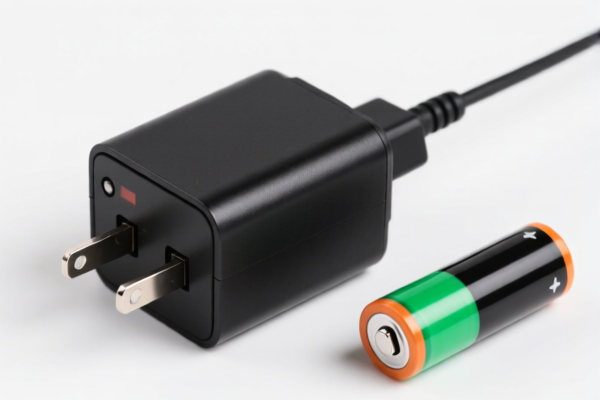
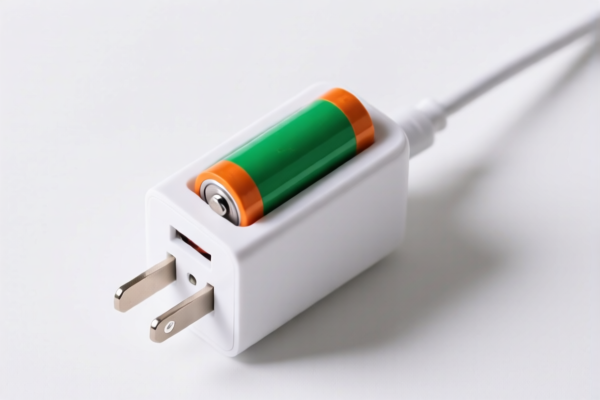
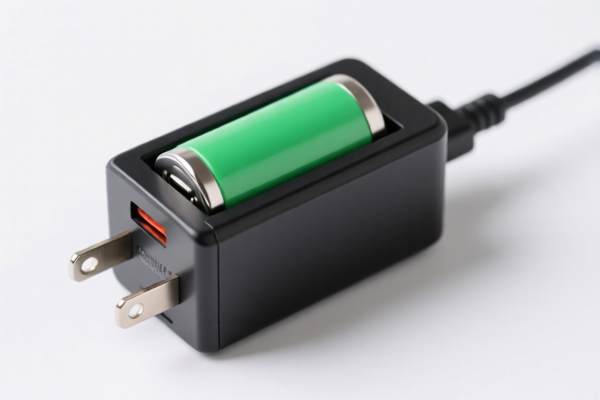
AI分析
🔋 Battery Chargers (Automotive & Portable)
🌐 HS Code Reference & Customs Clearance Guide | 2026 Latest Tariff Analysis | Professional Clearance Strategy
📌 Part 1: Product Definition & Classification: Do You Really Understand "Battery Chargers"?
Battery chargers are critical power management devices used to replenish energy in storage batteries. In international trade, they are not a single homogeneous category but are classified based on function, structure, and intended use.
For this analysis, we focus on four specific types found in the provided data: 1. Automotive Battery Chargers: Standalone devices with specific functions (Electronic components + Metal/Plastic casing). 2. Vehicle-Specific Connectors/Chargers: Devices connecting to specific equipment (Metal/Plastic assembly). 3. Rectifiers (AC to DC): Devices specifically converting alternating current to direct current. 4. EV (Electric Vehicle) Chargers: Static converters for power conversion/control. 5. Power Banks (Portable Batteries): Essentially portable storage batteries, not just chargers.
⚠️ Key Distinction Point:
- If the device is primarily a static converter (rectifier/inverter) for stationary or vehicle use → Look at 8504 or 8543.
- If the device is primarily a portable energy storage unit (Power Bank) → Look at 8507.
- Misclassification can lead to significant tariff discrepancies due to the complex tax details (Base Tariff vs. Section 301/122 tariffs).
📦 Part 2: HS Code Classification Details (2026 Latest Tariff Authority Comparison)
| HS Code | Product Description | Application Scenario | Classification Logic |
|---|---|---|---|
8543.70.98.60 |
Automotive Battery Charger (Independent Function) | General automotive maintenance, standalone chargers | Classified as Other Machines/Apparatus with independent function. Material: Electronic components + Metal/Plastic casing. |
8543.70.60.00 |
Automotive Battery Charger (Equipment Connector) | Connectors for specific equipment | Classified as Other Machines/Apparatus. Inferred material: Metal/Plastic assembly. Purpose: Connecting to specific devices. |
8504.40.95.50 |
Automotive Battery Charger (Rectifier) | AC/DC conversion stations, industrial charging | Classified as Other Rectifiers. Function: Converting AC to DC via rectification components. Material: Electronic components + Metal casing. |
8504.40.40.00 |
EV Charger (Static Converter) | Electric Vehicle charging stations | Classified as Static Converters (under Motor Speed Controllers). Function: Power conversion/control. |
8507.80.82.00 |
Power Bank (Portable Battery) | Mobile phones, portable electronics | Classified as Other Accumulators (Batteries). Essence: Portable energy storage, not just a charging circuit. |
🔍 Key Reminder:
- Chargers vs. Batteries: A "Power Bank" is classified as a battery (8507), not a charger/converter. This has a different tax profile.
- Rectifiers vs. Independent Machines: If the device's main function is purely rectification (AC→DC), it may fall under8504. If it has additional independent control/processing functions, it may fall under8543.
- EV Chargers: Often treated as static converters (8504) rather than simple chargers.
💰 Part 3: 2026 Latest Tariff Rate Breakdown (Including Surcharges & Policy Add-ons)
✅ Applicable Country: United States (US)
✅ Origin: China (CN)
✅ Effective Time: Current Rates (Includes Section 301 & Section 122 tariffs)
🎯 1. 8543.70.98.60 —— Automotive Battery Charger (Independent Function)
| Item | Content |
|---|---|
| Base Tariff | 2.6% (ad valorem) |
| Section 301 Surcharge | +25.0% (USITC Footnote 9903.88.01 equivalent logic) |
| Section 122 Surcharge | +10.0% (Retaliatory/Additional duty) |
| Total Tax Rate | 37.6% |
| Tax Calculation | CIF Value × 37.6% |
| De Minimis Exemption | ❌ Not Eligible (High rates exclude small package exemptions) |
| Legal Basis Path | Base:8543.70.98.60 → Sec301:25% → Sec122:10% → Total:37.6% |
📌 Explanation:
- 2.6% Base: The standard MFN duty for other machines/apparatus.
- 25% Surcharge: Standard Section 301 duty on Chinese electronics.
- 10% Surcharge: Additional Section 122 duty (often related to specific trade remedies).
- Total 37.6%: A significant cost factor. Proper classification as "Independent Function" (8543) rather than a simple electrical part is crucial to avoid higher base rates.
🎯 2. 8543.70.60.00 —— Automotive Battery Charger (Equipment Connector)
| Item | Content |
|---|---|
| Base Tariff | 0.0% (ad valorem) |
| Section 301 Surcharge | +25.0% |
| Section 122 Surcharge | +10.0% |
| Total Tax Rate | 35.0% |
| Tax Calculation | CIF Value × 35.0% |
| De Minimis Exemption | ❌ Not Eligible |
| Legal Basis Path | Base:8543.70.60.00 → Sec301:25% → Sec122:10% → Total:35.0% |
📌 Note:
- Lower total rate (35.0%) compared to8543.70.98.60because the Base Tariff is 0%.
- This classification applies if the device is specifically designed to connect to particular equipment. Ensure the "connection" function is dominant in your technical documentation.
🎯 3. 8504.40.95.50 —— Automotive Battery Charger (Rectifier)
| Item | Content |
|---|---|
| Base Tariff | 0.0% (ad valorem) |
| Section 301 Surcharge | +25.0% |
| Section 122 Surcharge | +10.0% |
| Total Tax Rate | 35.0% |
| Tax Calculation | CIF Value × 35.0% |
| De Minimis Exemption | ❌ Not Eligible |
| Legal Basis Path | Base:8504.40.95.50 → Sec301:25% → Sec122:10% → Total:35.0% |
📌 Note:
- Similar to above, 0% base rate results in a 35.0% total.
- Applicable if the primary function is rectification (AC to DC). If your device has complex smart charging algorithms,8543might be more accurate, but8504is cheaper if technically defensible.
🎯 4. 8504.40.40.00 —— EV Charger (Static Converter)
| Item | Content |
|---|---|
| Base Tariff | 0.0% (ad valorem) |
| Section 301 Surcharge | +25.0% |
| Section 122 Surcharge | +10.0% |
| Total Tax Rate | 35.0% |
| Tax Calculation | CIF Value × 35.0% |
| De Minimis Exemption | ❌ Not Eligible |
| Legal Basis Path | Base:8504.40.40.00 → Sec301:25% → Sec122:10% → Total:35.0% |
📌 Note:
- Specifically for Electric Vehicle Chargers.
- Classified under static converters. Ensure documentation highlights "Power Conversion/Control" to match this subheading.
🎯 5. 8507.80.82.00 —— Power Bank (Portable Battery)
| Item | Content |
|---|---|
| Base Tariff | 3.4% (ad valorem) |
| Section 301 Surcharge | +25.0% |
| Section 122 Surcharge | +10.0% |
| Total Tax Rate | 38.4% |
| Tax Calculation | CIF Value × 38.4% |
| De Minimis Exemption | ❌ Not Eligible |
| Legal Basis Path | Base:8507.80.82.00 → Sec301:25% → Sec122:10% → Total:38.4% |
📌 Important:
- This is for Power Banks (Portable Accumulators).
- Highest Total Rate (38.4%) among the options due to the 3.4% Base Tariff.
- Do not misclassify a Power Bank as a Charger: If it stores energy, it’s a battery (8507). If it only converts power, it’s a converter/charger (8504/8543).
🛠️ Part 4: Customs Clearance Practical Advice (Real-World Pitfall Guide)
✅ 1. Document Preparation Checklist (Mandatory)
| Document | Required? | Description |
|---|---|---|
| ✅ Product Specifications | ✔️ | Must clearly state: Input (AC), Output (DC), Power (Watts/Amps), Intended Use (Car vs. EV vs. Portable). |
| ✅ Circuit Diagram / Block Diagram | ✔️ | Critical to prove if it’s a "Rectifier" (8504) or an "Independent Apparatus" (8543). |
| ✅ Product Photos (Label) | ✔️ | Show model number, input/output ratings, and "Made in China" marking. |
| ✅ Third-Party Test Reports | ✔️ | UL, FCC, CE, RoHS certificates are often requested to verify safety standards. |
| ✅ Commercial Invoice | ✔️ | Must match HS Code. Use precise descriptions like "AC to DC Rectifier" or "Portable Lithium Battery Pack". |
| ✅ Packing List | ✔️ | List all components. If a Power Bank is sold with a charging cable, declare the whole kit appropriately. |
✅ 2. Declaration Strategy (Key Mantras)
🔥 “Function Dictates Code, Material Matters, Tax Varies by 3.4%!”
| Scenario | Correct HS Code | Risk if Incorrect |
|---|---|---|
| Standard Car Charger (Standalone) | 8543.70.98.60 (37.6%) or 8543.70.60.00 (35.0%) |
Misclassifying as simple parts may trigger audits. |
| AC/DC Rectifier (Pure Conversion) | 8504.40.95.50 (35.0%) |
If it has smart features, 8543 is safer; 8504 is cheaper. |
| EV Charger | 8504.40.40.00 (35.0%) |
Must be a "Static Converter". |
| Power Bank (Stores Energy) | 8507.80.82.00 (38.4%) |
High Risk: Do NOT classify as 8504 or 8543. The 3.4% base tariff is unavoidable for batteries. |
✅ 3. Special Case Handling
| Situation | Handling Advice |
|---|---|
| 2-in-1 Devices (Charger + Power Bank) | If it can store energy, customs will likely classify it as a Battery (8507, 38.4%). |
| OEM Custom Chargers | Provide client specs. If the device is unique, 8543.70.98.60 is the best "Other Machines" bucket. |
| Low Power Chargers (< 10W) | Still subject to tariffs. No de minimis exemption for Chinese electronics over $800 (or currently lower thresholds depending on policy). |
| EV Chargers | Ensure documentation emphasizes "Static Converter" status to justify 8504. |
🌍 Part 5: Global Market Comparison (2026 Latest)
| Country/Region | Recommended HS Code | Est. Tariff (China Origin) | Certification Required | Notes |
|---|---|---|---|---|
| 🇺🇸 USA | 8543.70.60.00 / 8504.40.40.00 |
35.0% - 37.6% | FCC, UL (if applicable) | High tariffs due to Sec 301 & 122. |
| 🇨🇳 China | 8504.40.40.00 |
~10-13% | CCC | Lower base tariffs, no Section 301. |
| 🇪🇺 EU | 8504.40.40.00 |
0% (Most cases) | CE, RoHS, WEEE | Generally duty-free for electronics. |
| 🇬🇧 UK | 8504.40.40.00 |
0% | UKCA | Post-Brexit alignment with EU mostly. |
📌 Conclusion:
- USA is the most expensive market for battery chargers due to the 25% Section 301 + 10% Section 122 surcharges.
- Tariff Optimization: If your product is technically a pure rectifier (8504), it saves 2.6% in base tariff compared to some "Other Machines" (8543).
- Power Banks are the most expensive to import into the US due to the higher base tariff (3.4% vs 0-2.6%).
📌 Part 6: Common Errors & Pitfalls (Lessons Learned)
❌ Error 1: Calling a Power Bank a "Battery Charger".
👉 Consequence: Customs will reclassify it as 8507.80.82.00 (38.4%) if it stores energy, or penalize for misdeclaration.
👉 Fix: Be honest. If it stores energy, it’s a battery.
❌ Error 2: Misclassifying a Smart Charger as a Rectifier.
👉 Consequence: While 8504 (35.0%) is cheaper than 8543 (37.6%), if the device has microprocessors for battery management, it should be 8543. Risk of audit if the technical nature doesn't match "simple rectification".
❌ Error 3: Ignoring Section 122 Tariffs.
👉 Consequence: Many importers forget the 10% Surcharge. If you only calculate Base + Sec 301 (25%), you are off by 10% (e.g., calculating 25% instead of 35%).
👉 Fix: Always add the 10% Section 122 duty for Chinese electronics.
✅ Correct Declaration Example:
"AC to DC Battery Charger, Model XYZ, Input: 110-240V AC, Output: 12V DC, 5A, Plastic/Metal Casing, FCC Certified, HS 8543.70.60.00"
🎯 Part 7: Conclusion: Professional Declaration Saves Money!
🎯 Remember the Mantra:
🔹 "Rectifier 0%, Base 0%, Total 35%; Battery 3.4%, Base 3.4%, Total 38.4%."
🔹 "Sec 301 is 25%, Sec 122 is 10%, Don't Forget the 35% or 37.6%!"
📌 Tip:
If your chargers are manufactured in Vietnam, Mexico, or Thailand, you may be eligible to avoid US Section 301/122 tariffs, reducing the total duty to the Base Rate only (0% - 2.6%).
Consider supply chain diversification for large volumes to save 35%+ in duties.
📣 Immediate Action:
📞 Consult a licensed customs broker + Provide circuit diagrams + Apply for HS Code Advance Ruling if the product is novel.
🚀 Ensure your Invoice and Packing List match the HS Code exactly to avoid delays.
✨ Professional Clearance Starts with Accurate Classification!
💼 Every percentage point matters in high-tariff electronics!
用户评价
关于 HS 编码归类
协调制度(HS)是由世界海关组织(WCO)制定的国际贸易商品分类标准。全球 200 多个国家采用 HS 系统作为海关关税、贸易统计和进出口监管的基础。
每个 HS 编码遵循以下层级结构:
- 章(2 位)——商品大类(例如:第 84 章:机器和机械设备)
- 品目(4 位)——章内的更具体分类
- 子目(6 位)——国际通用细分,所有 WCO 成员国统一使用
- 本国细分(8-10 位)——各国自行扩展的细分编码,如美国 HTSUS 10 位编码
正确的 HS 编码归类对于顺利通关、准确缴纳关税和遵守贸易法规至关重要。错误归类可能导致海关延误、多缴关税或罚款。
从CN进口到US时,适用的关税税率可能包括:
- 最惠国(MFN)税率——适用于 WTO 成员国的标准关税税率
- 普通税率——适用于无贸易协定国家
- 贸易救济关税——附加关税,如 301 条款(反倾销)、232 条款(国家安全)或反补贴税
本页内容仅供参考。如需正式归类,请咨询当地海关或持牌报关代理。