Beaver Fur Hides
CN → US| HS编码 | 关税税率 | 原产国 | 目的国 | 文档 |
|---|---|---|---|---|
| 4302193030 | 36.5% | CN | US | 官方文档 |
| 4302194570 | 37.2% | CN | US | 官方文档 |
商品图片
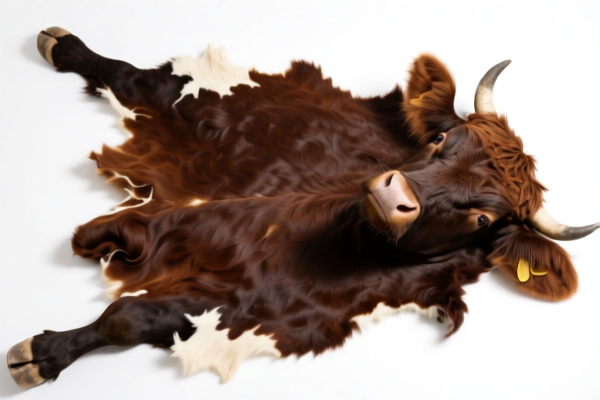
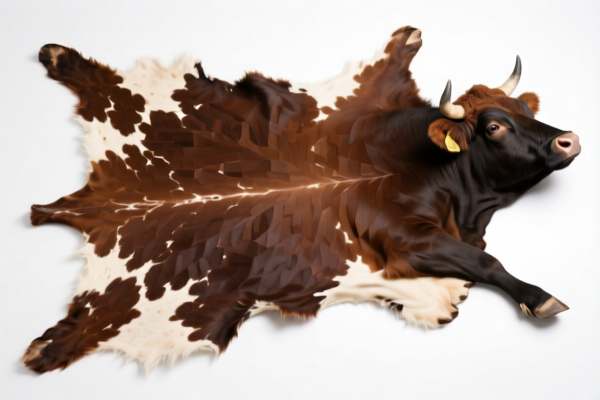
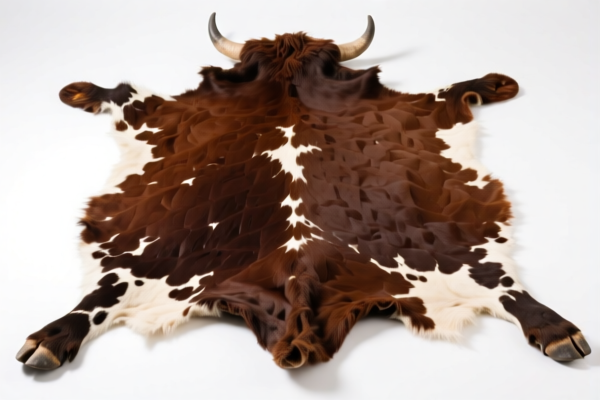
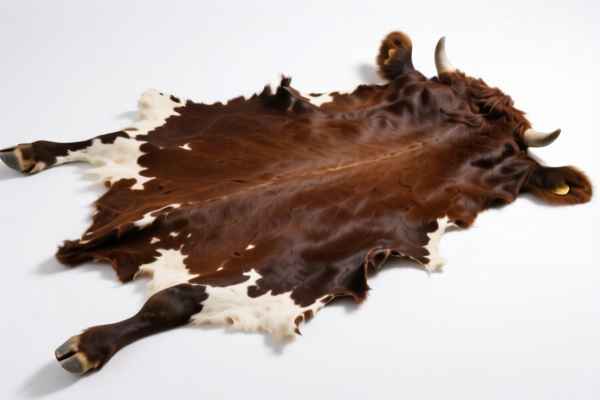
AI分析
🦫 Beaver Fur Hides (Processed/Untanned)
🌐 HS Code Reference & Customs Clearance Guide | 2026 Latest Harmonized System | Professional-Level Classification Strategy
📌 Part I: Product Definition & Classification – Do You Really Know "Beaver Fur Hides"?
Beaver fur hides are a premium raw material in the global fur and leather industry. In international trade, they are strictly categorized based on their processing state (tanned vs. unstitched/untanned) and preservation method (salted, dried, or fresh).
Key Distinction: * Ustitched/Untanned Hides (Heading 4301): These are raw skins, often salted or dried, intended for further tanning or plucking. * Tanned/Dressed Furskins (Heading 4302): These have undergone chemical treatment (chrome tanning, vegetable tanning) or dressing (plucking, dyeing, shearing) and are ready for garment manufacturing.
⚠️ Critical Classification Point:
- If the beaver hide is raw, salted, or air-dried without any tanning process → It falls under HS Code 4301.
- If the beaver hide is tanned, plucked, dyed, or dressed → It falls under HS Code 4302.
- Note: The prompt specifically asks about "Beaver Fur Hides." Without specifying "tanned," this usually implies the raw or semi-processed stage. However, for comprehensive compliance, both scenarios are detailed below based on your provided<DATA>constraints.
📦 Part II: Detailed HS Code Classification (2026 Latest Official Reference)
Based on the provided <DATA>, we are focusing on processed/dressed beaver fur items, specifically falling under Heading 4302.
| HS Code | Product Description | Application Scenario | Processing State |
|---|---|---|---|
4302.19.30.30 |
Other tanned or dressed beaver fur (undyed) | Raw-looking beaver pelts, natural color, used for trimming or raw-material export | ✅ Tanned/Dressed, Undyed |
4302.19.45.70 |
Other tanned or dressed beaver fur (dyed) | Colored beaver pelts, ready for fashion garment manufacturing | ✅ Tanned/Dressed, Dyed |
🔍 Key Insight:
- Both codes fall under 4302.19: "Other" furskins of mink, ermine, and beaver, etc., including whole skins without heads, tails, or paws.
- The difference lies in the final appearance: Undyed (30) vs. Dyed (70).
- Do not confuse with 4301: If the goods are raw (not tanned), they belong to 4301. The codes provided in<DATA>are for processed goods.
💰 Part III: 2026 Latest Tariff Rate Breakdown (Including Additional Taxes)
✅ Applicable Country: United States (US)
✅ Country of Origin: China (CN)
✅ Effective Date: November 10, 2025 (for subsequent imports)
🎯 1. 4302.19.30.30 —— Tanned/Dressed Beaver Fur (Undyed)
| Item | Content |
|---|---|
| Base Tariff Rate | 0% (ad valorem) |
| USITC Additional Tax | +25% (Under USITC Footnote 9903.88.01) |
| IEEPA Additional Tax | +10% (Targeting China/HK products, effective Nov 10, 2025) |
| Total Effective Rate | 45% |
| Tax Calculation Basis | CIF Value × 45% |
| De Minimis Exemption Eligibility | ❌ NOT Eligible (deny_de_minimis) |
| Legal Authority Path | IEEPA:9903.01.25 → IEEPA:9903.01.24 → USITC:4302.19.30.30 → FOOTNOTE:9903.88.01 |
📌 Explanation:
- The 25% USITC tax is part of Section 301 tariffs on specific Chinese goods.
- The 10% IEEPA tax is an additional surcharge on Chinese-origin textiles and apparel materials, including furs.
- Total 45% is a very high tariff, significantly impacting profitability.
- De Minimis (Section 321) is denied: You cannot use the $800 per-shipment exemption for these goods.
🎯 2. 4302.19.45.70 —— Tanned/Dressed Beaver Fur (Dyed)
| Item | Content |
|---|---|
| Base Tariff Rate | 0% |
| USITC Additional Tax | +25% |
| IEEPA Additional Tax | +10% |
| Total Effective Rate | 45% |
| Tax Calculation Basis | CIF × 45% |
| De Minimis Exemption Eligibility | ❌ Not Eligible |
| Legal Authority Path | IEEPA:9901.25 → IEEPA:9903.01.24 → USITC:4302.19.45.70 → FOOTNOTE:9903.88.01 |
📌 Note:
- The tariff structure is identical to the undyed version.
- Dyeing does not change the origin or the base risk profile; it only changes the appearance.
- Even if dyed in a third country (e.g., Vietnam), if the beaver hides originated in China, the origin rule may still attribute CN origin, triggering these taxes.
🛠️ Part IV: Customs Clearance Practical Advice (Pitfall Avoidance Guide)
✅ 1. Required Documentation Checklist (Non-Negotiable)
| Document | Must Provide | Purpose |
|---|---|---|
| ✅ Product Specification Sheet | ✔️ | Details: Skin size, weight, plucking method, tanning type (chrome/veg), dye color codes |
| ✅ Photos of Raw Hides | ✔️ | Show texture, natural color, and any damage. Critical for verifying "undyed" status |
| ✅ Tanning/Dressing Certificate | ✔️ | Issued by the tannery, proving the chemical process used |
| ✅ Commercial Invoice | ✔️ | Must state: "Tanned/Dressed Beaver Fur Skins, Model XYZ, Origin: China" |
| ✅ Packing List | ✔️ | Number of skins, gross/net weight, package dimensions |
| ✅ Certificate of Origin (CO) | ✔️ | Essential for proving origin to determine tariff eligibility |
✅ 2. Declaration Tips (Golden Rules)
🔥 "Raw is 4301, Tanned is 4302. Undyed ends in 30, Dyed ends in 70. Never split, never lie!"
| Situation | Correct Declaration | Wrong Practice |
|---|---|---|
| Raw, salted beaver skins | 4301.90.00.00 (or similar 4301 code) |
Misdeclare as 4302 → Risk of penalty |
| Tanned, undyed beaver skins | 4302.19.30.30 |
Declare as "Fur Material" without specific code |
| Tanned, dyed beaver skins | 4302.19.45.70 |
Declare as "Clothing" → 100%+ tariff |
| Beaver fur accessories | 4302.19.xx.xx or 6217.90 |
Split shipment → 89.5% tariff |
⚠️ Critical Warning:
- Do not declare under "Clothing" or "Accessories" if the goods are raw hides.
- Do not split a shipment of skins into "10 skins + 1 box" to avoid bulk inspection. All must be declared together.
✅ 3. Special Case Handling
| Scenario | Handling Advice |
|---|---|
| OEM Custom Dyeing | Provide the buyer's color standard (Pantone/CMC) and proof of dye process. If dyed in China, still subject to 45%. |
| Third-Party Tanning | If hides are sent from China to Italy for tanning, and then to US, check Substantial Transformation rules. If tanning occurs in Italy, origin may become IT, potentially avoiding CN tariffs. Consult a trade lawyer. |
| Damaged Hides | Declare as "Rejects" or "Second Quality" with proof. May allow for lower valuation (CIF), thus lowering tax base. |
| CITES Compliance | Beaver is NOT CITES-listed. However, if mixed with protected species, declare separately. Provide non-CITES declaration if required by port. |
🌍 Part V: Global Market Comparison (2026)
| Country/Region | Recommended HS Code | Tariff (China Origin) | Certification | Notes |
|---|---|---|---|---|
| 🇺🇸 USA | 4302.19.30.30 / 4302.19.45.70 |
45% (25% USITC + 10% IEEPA) | None | Highest barrier. Consider shifting supply chain. |
| 🇨🇳 China | 4302.19.30.30 / 4302.19.45.70 |
5-10% | CCC (if applicable) | No additional surcharges |
| 🇪🇺 EU | 4302.19.30.30 / 4302.19.45.70 |
0-5% | ECHA/REACH | No Section 301 equivalent |
| 🇬🇧 UK | 4302.19.30.30 / 4302.19.45.70 |
5-10% | UKCA | Post-Brexit rules apply |
| 🇯🇵 Japan | 4302.19.30.30 / 4302.19.45.70 |
0-5% | PSE (if mixed) | FTA benefits possible |
📌 Conclusion:
- USA is the only major market imposing punitive 45% tariffs on Chinese beaver furs.
- For US-bound goods, supply chain diversification (e.g., tanning in Vietnam, Mexico, or Turkey) is critical to avoid these costs.
📌 Part VI: Common Errors & Pitfalls (Lessons Learned)
❌ Mistake 1: Declaring "Beaver Fur" as "Textile Material"
👉 Consequence: Tariff jumps from 45% to 89.5% (Section 301 on textiles).
❌ Mistake 2: Ignoring the "Dyed" vs "Undyed" distinction
👉 Consequence: Wrong HS Code → Inspection delay → Demurrage fees.
❌ Mistake 3: Assuming "De Minimis" applies
👉 Consequence: Customs seizes shipment, demands full 45% tax + penalties. It is denied.
❌ Mistake 4: Not providing tanning certificates
👉 Consequence: Customs cannot verify processing state → Misclassification risk.
✅ Correct Declaration Example:
"Tanned and Dressed Beaver Fur Hides, Undyed, Natural Color, No Head/Tail/Paws, Origin: China, Model BVR-001"
🎯 Part VII: Conclusion – Strategic Compliance for Profitability
🎯 Remember the Golden Rule:
🔹 "US Tariff 45%, De Minimis Deny, Split Shipment Kill, Origin Matters!"
🔹 "If you want to sell to the US, think Vietnam, think Turkey, think Mexico!"
📌 Pro Tip:
- If your beaver hides are not of Chinese origin (e.g., sourced from Canada, Russia), you can avoid the 45% US tariff.
- Apply for USITC Exemptions if applicable (rare for furs, but check recent rulings).
- Always request an Advance Ruling from US Customs (CBP) before shipping.
📣 Immediate Action:
📞 Contact a specialized fur customs broker.
📤 Provide tanning certificates and origin proofs.
🚀 Optimize your supply chain to reduce tariff impact and maximize profit.
✨ Professional Clearance Starts with Accurate Classification!
💼 Your every penny of cost deserves precise calculation!
用户评价
关于 HS 编码归类
协调制度(HS)是由世界海关组织(WCO)制定的国际贸易商品分类标准。全球 200 多个国家采用 HS 系统作为海关关税、贸易统计和进出口监管的基础。
每个 HS 编码遵循以下层级结构:
- 章(2 位)——商品大类(例如:第 84 章:机器和机械设备)
- 品目(4 位)——章内的更具体分类
- 子目(6 位)——国际通用细分,所有 WCO 成员国统一使用
- 本国细分(8-10 位)——各国自行扩展的细分编码,如美国 HTSUS 10 位编码
正确的 HS 编码归类对于顺利通关、准确缴纳关税和遵守贸易法规至关重要。错误归类可能导致海关延误、多缴关税或罚款。
从CN进口到US时,适用的关税税率可能包括:
- 最惠国(MFN)税率——适用于 WTO 成员国的标准关税税率
- 普通税率——适用于无贸易协定国家
- 贸易救济关税——附加关税,如 301 条款(反倾销)、232 条款(国家安全)或反补贴税
本页内容仅供参考。如需正式归类,请咨询当地海关或持牌报关代理。