Bee Smoker
CN → US| HS编码 | 关税税率 | 原产国 | 目的国 | 文档 |
|---|---|---|---|---|
| 8419899560 | 39.2% | CN | US | 官方文档 |
| 8205600000 | 37.9% | CN | US | 官方文档 |
| 8205591000 | 42.2% | CN | US | 官方文档 |
商品图片
AI分析
🐝 Bee Smoker: The Essential Apiary Tool
🌐 HS Code Reference & Customs Clearance Guide | 2024 Latest Tariff Analysis | Professional Clearance Strategy
📌 Part I: Product Definition – Do You Really Know a "Bee Smoker"?
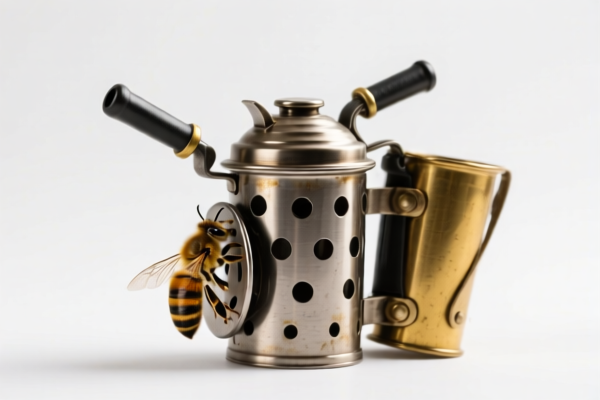
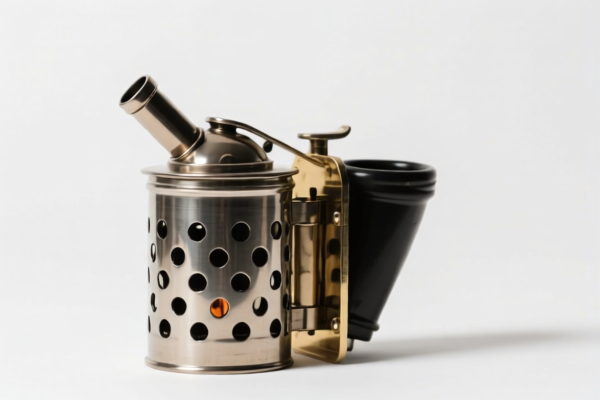
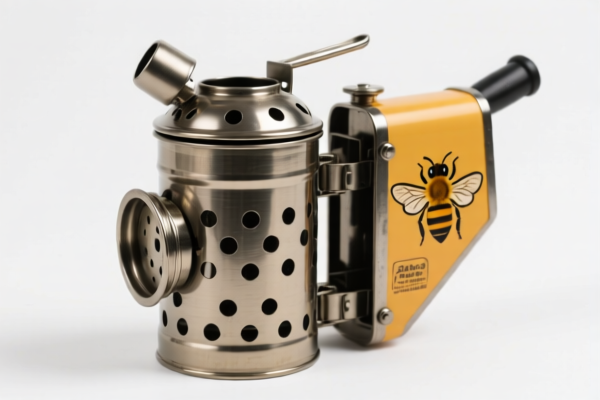
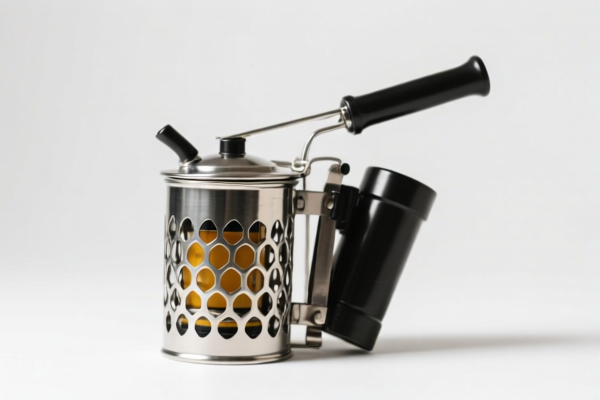
A Bee Smoker is a handheld device used in beekeeping to calm bees by masking alarm pheromones (isopentyl acetate) with smoke. It typically consists of a bellows, a fire pan, and a nozzle. While simple in appearance, its functional classification in international trade is complex because it combines mechanical parts (bellows) with heating elements (fuel combustion).
⚠️ Key Classification Ambiguity:
- Is it a machine for heat treatment (Chapter 84)?
- Or is it a hand tool (Chapter 82)?
The answer depends on whether customs prioritizes the heating function or the manual handling aspect.
📦 Part II: HS Code Classification Details (Based on Provided Data)
Based on the specific data provided, three potential HS Codes have been identified. Each reflects a different interpretive approach by customs authorities.
🆚 Comparison Table of Potential Classifications
| HS Code | Classification Logic | Total Tax Rate (China-US) | Breakdown of Taxes |
|---|---|---|---|
| 8419.89.95.60 | Function-Driven: Viewed as a device that uses heat to process materials (smoke generation for calming). Fits Chapter 84 (Machinery for heat treatment). | 39.2% | Base: 4.2% Add. Tariff: 25.0% Section 301 (122 Clause): 10% |
| 8205.60.00.00 | Tool-Driven: Viewed as a self-contained portable torch or similar heating tool. Fits Chapter 82 (Tools of base metal). | 37.9% | Base: 2.9% Add. Tariff: 25.0% Section 301 (122 Clause): 10% |
| 8205.59.10.00 | Hand Tool/Extension: Viewed as a handheld tool extension of plumb bobs or similar manual tools. Fits Chapter 82 (Other hand tools). | 42.2% | Base: 7.2% Add. Tariff: 25.0% Section 301 (122 Clause): 10% |
💰 Part III: Detailed Tariff Analysis & Tax Clause Explanation
✅ Applicable Country: United States (US)
✅ Origin: China (CN)
✅ Status: High Tariff Environment for Apiary Tools
🎯 1. HS Code 8419.89.95.60 – The "Heat Treatment Machine" Approach
Most logical for automated or industrial-style smokers, but often contested for manual ones.
| Item | Detail |
|---|---|
| Base Duty | 4.2% (General Rate) |
| Section 301 Additional Duty | +25.0% (Standard USITC Footnote for China) |
| Section 122 / IEEPA Duty | +10.0% (Specific clause for certain Chinese goods) |
| Total Effective Tax | 39.2% |
| Calculation Base | CIF Value (Cost + Insurance + Freight) × 39.2% |
| De Minimis Exemption | ❌ NOT APPLICABLE |
| Legal Path | USITC:8419.89.95.60 → Section 301: 25% → Section 122: 10% |
📌 Why this applies:
Customs may view the smoker as a "machine" because it produces heat (smoke) to alter the biological state of the bees. This is the most "functional" interpretation.
🎯 2. HS Code 8205.60.00.00 – The "Portable Torch/Tool" Approach
Often the most competitive rate among the options provided.
| Item | Detail |
|---|---|
| Base Duty | 2.9% (General Rate) |
| Section 301 Additional Duty | +25.0% |
| Section 122 / IEEPA Duty | +10.0% |
| Total Effective Tax | 37.9% |
| Calculation Base | CIF Value × 37.9% |
| De Minimis Exemption | ❌ NOT APPLICABLE |
| Legal Path | USITC:8205.60.00.00 → Section 301: 25% → Section 122: 10% |
📌 Why this applies:
The summary notes this is considered a "similar self-contained torch or portable heat source." Since a smoker is essentially a manual torch producing smoke, this functional analogy is strong.
🎯 3. HS Code 8205.59.10.00 – The "Other Hand Tool" Approach
Highest tax rate; least favorable.
| Item | Detail |
|---|---|
| Base Duty | 7.2% (General Rate) |
| Section 301 Additional Duty | +25.0% |
| Section 122 / IEEPA Duty | +10.0% |
| Total Effective Tax | 42.2% |
| Calculation Base | CIF Value × 42.2% |
| De Minimis Exemption | ❌ NOT APPLICABLE |
| Legal Path | USITC:8205.59.10.00 → Section 301: 25% → Section 122: 10% |
📌 Why this applies:
This归类 is based on a logical inference that the smoker is an extension of "plumb bobs or similar hand tools." However, this is a weaker functional match than the torch analogy, hence the higher base duty.
🛠️ Part IV: Customs Clearance Practical Advice
✅ 1. Documentation Checklist (Critical for Clearance)
| Document | Required? | Purpose |
|---|---|---|
| Product Description | ✔️ | Must clearly state "Bee Smoker," "Apiary Tool," or "Manual Beekeeping Smoker." Avoid vague terms like "Smoke Generator." |
| Material Composition | ✔️ | Specify metal type (e.g., Zinc Alloy, Steel) and plastic parts (if any). Crucial for Chapter 82 vs. 85/84 distinction. |
| Operation Manual | ✔️ | Demonstrates it is a manual tool (bellows operated), supporting HS 82 classification over automated machinery. |
| Commercial Invoice | ✔️ | Value must be accurate. Note that de minimis ($800) does not apply due to Section 301/122 duties. |
| Origin Certificate | ✔️ | Proof of Chinese origin to apply the correct 25% + 10% surcharges. |
✅ 2. Declaration Strategy: How to Lower Risk & Cost
🔥 Golden Rule: "Function First, Tool Second."
| Strategy | Recommended Action | Rationale |
|---|---|---|
| Preferred HS Code | 8205.60.00.00 (37.9%) | Lowest total tax rate among options. Justify it as a "portable heating tool" similar to a torch. |
| Avoid HS Code | 8205.59.10.00 (42.2%) | Highest tax rate. Only use if customs insists on "hand tool" classification but rejects "torch" analogy. |
| Alternative HS Code | 8419.89.95.60 (39.2%) | Use only if the device has electronic ignition/temperature control. For manual bellows smokers, this is often misapplied. |
| Description Tip | "Manual Bee Smoker, Zinc Alloy, Bellows-Operated" | Emphasize "Manual" and "Beekeeping" to avoid being classified as an industrial smoke generator. |
✅ 3. Special Considerations for US Imports
- No De Minimis Exemption:
Even if the shipment value is under $800, Section 301 (25%) and Section 122 (10%) duties still apply. You must pay the ~38-42% tax on every entry. - Section 122 Clause:
The additional 10% is significant. Ensure your supplier’s country of origin is correctly declared as China. - Pre-Ruling Recommendation:
Given the ambiguity between Chapter 82 (Tools) and Chapter 84 (Machinery), consider applying for an Advance Ruling (Pre-Decision) from US Customs and Border Protection (CBP). This locks in the classification and avoids retroactive duty adjustments.
🌍 Part V: Global Market Comparison (Snapshot)
| Market | Likely HS Code | Estimated Total Duty | Notes |
|---|---|---|---|
| 🇺🇸 USA | 8205.60.00.00 |
37.9% | High duties due to 301 + 122. |
| 🇨🇳 China | 8205.60.00.00 |
~7-10% | Low base duty, no US-style surcharges. |
| 🇪🇺 EU | 8205.60.00.00 |
~4-6% | No Section 301/122 equivalents. |
| 🇨🇦 Canada | 8205.60.00.00 |
~5-10% | Check CUSMA eligibility for duty reduction. |
📌 Conclusion:
The US market is the most expensive for importing Bee Smokers from China due to叠加 tariffs (Base + 25% + 10%). Suppliers in Vietnam or Thailand may offer significant cost advantages due to lower tariff rates.
📌 Part VI: Common Mistakes & Pitfalls
❌ Mistake 1: Declaring as "Industrial Smoke Machine"
👉 Consequence: Misclassification under Chapter 84, potential penalties for fraud if deemed manual.
❌ Mistake 2: Assuming De Minimis ($800) Applies
👉 Consequence: Package seized, duties + storage fees + fines.
❌ Mistake 3: Using Generic Description "Smoker"
👉 Consequence: CBP may assign a default high-duty code or request further documentation, causing delays.
✅ Correct Description Example:
"Beekeeping Smoker, Manual, Zinc Alloy Body, Plastic Handle, Used to Calm Honeybees, Model BS-100"
🎯 Part VII: Final Recommendation
- Best HS Code:
8205.60.00.00
Reason: Lowest tax burden (37.9%) and strong functional argument as a "portable heat source/torch." - Action Plan:
- Prepare detailed product specs showing manual operation.
- Label clearly as "Apiary Tool" or "Beekeeping Equipment."
- Budget for ~38% total landed cost increase due to taxes.
- Consider sourcing from non-China origins if profit margins are thin.
📣 Pro Tip:
"In the beekeeping trade, smoke calms bees. In customs, clear documentation calms your accountant. Classify as
8205.60.00.00, pay 37.9%, and sleep well!"
✨ Precise Classification = Predictable Costs = Profitable Imports
💼 Don’t let tariff ambiguity sting your business like an angry bee!
用户评价
关于 HS 编码归类
协调制度(HS)是由世界海关组织(WCO)制定的国际贸易商品分类标准。全球 200 多个国家采用 HS 系统作为海关关税、贸易统计和进出口监管的基础。
每个 HS 编码遵循以下层级结构:
- 章(2 位)——商品大类(例如:第 84 章:机器和机械设备)
- 品目(4 位)——章内的更具体分类
- 子目(6 位)——国际通用细分,所有 WCO 成员国统一使用
- 本国细分(8-10 位)——各国自行扩展的细分编码,如美国 HTSUS 10 位编码
正确的 HS 编码归类对于顺利通关、准确缴纳关税和遵守贸易法规至关重要。错误归类可能导致海关延误、多缴关税或罚款。
从CN进口到US时,适用的关税税率可能包括:
- 最惠国(MFN)税率——适用于 WTO 成员国的标准关税税率
- 普通税率——适用于无贸易协定国家
- 贸易救济关税——附加关税,如 301 条款(反倾销)、232 条款(国家安全)或反补贴税
本页内容仅供参考。如需正式归类,请咨询当地海关或持牌报关代理。