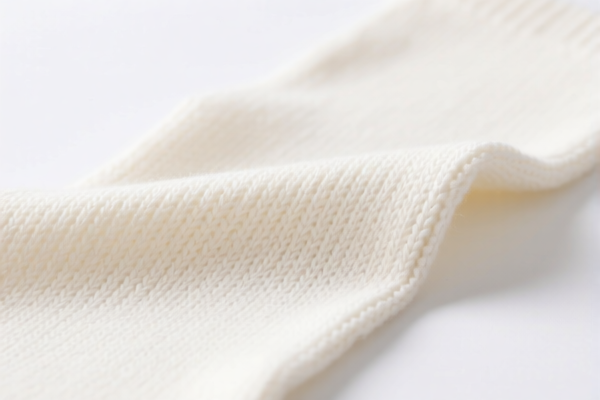
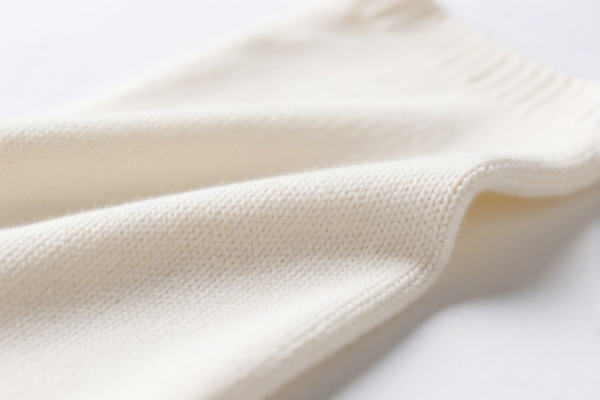
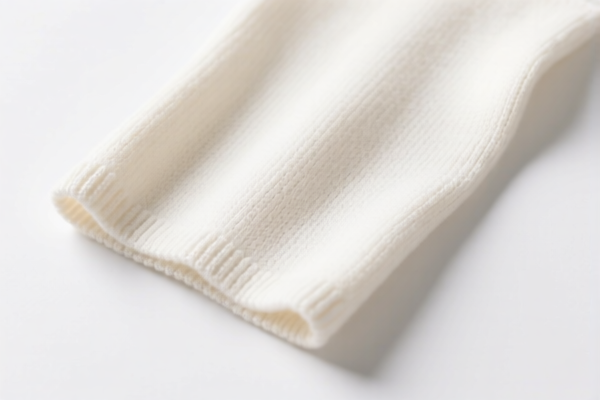
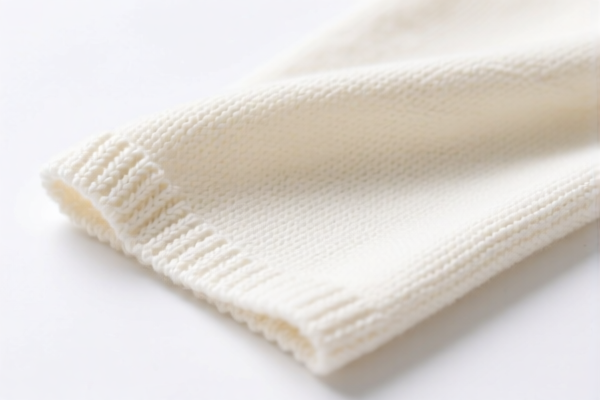
Bleached Knitted/Crocheted Cotton Decorative Fabric
CN → US| HS编码 | 关税税率 | 原产国 | 目的国 | 文档 |
|---|---|---|---|---|
| 6006219080 | 45.0% | CN | US | 官方文档 |
| 6004100085 | 47.3% | CN | US | 官方文档 |
| 6006219020 | 45.0% | CN | US | 官方文档 |
| 6001910020 | 53.5% | CN | US | 官方文档 |
| 5209210020 | 42.7% | CN | US | 官方文档 |
商品图片
AI分析
🧵 Bleached Knitted/Crocheted Cotton Decorative Fabric
🌐 HS Code Reference & Customs Clearance Guide | 2026 Latest Tariff Analysis | Professional-Level Customs Strategy
📌 I. Product Definition and Classification: Do You Really Understand "Bleached Knitted Cotton Fabric"?
Bleached knitted/crocheted cotton decorative fabric is a versatile textile material widely used in home decor, fashion, and interior design. In international trade, its classification depends heavily on structural characteristics (single vs. double knit), width/structure specifics, and processing state.
Key Distinctions: * Knitted vs. Woven: This product is knitted or crocheted (Chapter 60), not woven (Chapter 52/54). Confusing these is a common and costly error. * Single vs. Double Face: Double-face knitted fabrics (like interlock) often have different duty rates than single-face jerseys. * Fabric Type: Specific widths or loop structures (e.g., terry, pile) may push classification into different subheadings.
⚠️ Critical Classification Point:
- If it is double-face knitted cotton (e.g., interlock, rib with specific loop structure) → Likely 6006.21.90 or 6006.21.80
- If it is other knitted cotton fabric (single face, jersey, etc.) → Likely 6004.10.00 or 6006.21.90
- If it has pile/terry characteristics → Likely 6001.91.00
- If it is mistakenly classified as woven → 5209.21.00 (Incorrect but possible if structure is ambiguous)
📦 II. HS Code Classification Details (2026 Latest Tariff Authority Comparison)
| HS Code | Product Description | Applicable Scenario | Key Structural Feature |
|---|---|---|---|
6006.21.90.80 |
Bleached cotton knitted fabric, double-face structure, other | Double-knit fabrics (e.g., interlock, fine rib) | ✅ Double-face knit |
6004.10.00.85 |
Bleached cotton knitted/crocheted fabric, other | Single-face jersey, standard knit fabrics | ✅ Knitted/Crocheted |
6006.21.90.20 |
Bleached cotton knitted fabric, double-face, other | Similar to .80 but different sub-sub-category | ✅ Double-face knit |
6001.91.00.20 |
Bleached cotton knitted fabric with pile/terry | Terry cloth, fleece, looped fabrics | ✅ Pile/Terry loop |
5209.21.00.20 |
Bleached cotton woven fabric, plain weave, ≤ 200 g/m² | Misclassification Risk: If fabric is actually woven, not knitted | ❌ Woven (Incorrect if knitted) |
🔍 Important Note:
- Chapter 60 is for Knitted/Crocheted fabrics.
- Chapter 52 is for Cotton Textiles (Woven).
- Do not confuse knitted structure with woven structure. A microscope or tactile inspection is often required for customs verification.
💰 III. 2026 Latest Tariff Rate Breakdown (Including Additional Duties, Policy Surcharges)
✅ Applicable Country: United States (US)
✅ Country of Origin: China (CN)
✅ Effective Date: November 10, 2025 (and subsequent imports)
🎯 1. 6006.21.90.80 & 6006.21.90.20 —— Bleached Cotton Knitted Fabric, Double-Face
| Item | Content |
|---|---|
| Base Duty Rate | 10.0% (ad valorem) |
| Section 301 Additional Duty | +25.0% |
| 122 Provision Duty | +10.0% |
| Total Duty Rate | 45.0% |
| Tax Calculation | CIF Value × 45% |
| De Minimis Exemption? | ❌ No (deny_de_minimis) |
| Legal Basis Path | USITC:6006.21.90.80 → USITC:Footnote_301 → 122_Provision |
📌 Explanation:
- 10.0% Base: Standard MFN rate for double-face knitted cotton fabric.
- 25.0% Section 301: Additional duty under U.S. Trade Act Section 301 for Chinese goods.
- 10.0% 122 Provision: Additional duty under Section 122 of the Trade Act of 1974 (emergency action).
- Total 45%: High tariff burden. Must be accounted for in pricing strategy.
🎯 2. 6004.10.00.85 —— Bleached Cotton Knitted/Crocheted Fabric, Other
| Item | Content |
|---|---|
| Base Duty Rate | 12.3% (ad valorem) |
| Section 301 Additional Duty | +25.0% |
| 122 Provision Duty | +10.0% |
| Total Duty Rate | 47.3% |
| Tax Calculation | CIF Value × 47.3% |
| De Minimis Exemption? | ❌ No (deny_de_minimis) |
| Legal Basis Path | USITC:6004.10.00.85 → USITC:Footnote_301 → 122_Provision |
📌 Note:
- This category often applies to standard single-face knitted fabrics.
- The base rate is slightly higher than double-face variants, leading to a higher total duty (47.3%).
- Ensure the fabric structure is accurately described to avoid misclassification penalties.
🎯 3. 6001.91.00.20 —— Bleached Cotton Knitted Fabric with Pile/Terry
| Item | Content |
|---|---|
| Base Duty Rate | 18.5% (ad valorem) |
| Section 301 Additional Duty | +25.0% |
| 122 Provision Duty | +10.0% |
| Total Duty Rate | 53.5% |
| Tax Calculation | CIF Value × 53.5% |
| De Minimis Exemption? | ❌ No (deny_de_minimis) |
| Legal Basis Path | USITC:6001.91.00.20 → USITC:Footnote_301 → 122_Provision |
📌 Warning:
- Pile fabrics (terry, fleece) carry the highest base duty due to their specialized nature.
- Total duty of 53.5% is extremely high. Consider alternative sourcing if volume is large.
🎯 4. 5209.21.00.20 —— Bleached Cotton Woven Fabric (Plain Weave)
| Item | Content |
|---|---|
| Base Duty Rate | 7.7% (ad valorem) |
| Section 301 Additional Duty | +25.0% |
| 122 Provision Duty | +10.0% |
| Total Duty Rate | 42.7% |
| Tax Calculation | CIF Value × 42.7% |
| De Minimis Exemption? | ❌ No (deny_de_minimis) |
| Legal Basis Path | USITC:5209.21.00.20 → USITC:Footnote_301 → 122_Provision |
📌 Caution:
- This classification applies ONLY if the fabric is woven, not knitted.
- If customs determines the fabric is actually knitted, you may face misclassification penalties and owe the difference between 42.7% and the correct knitted rate (45%+).
- Do not use this code to reduce duties unless the fabric is definitively woven.
🛠️ IV. Customs Clearance Practical Advice (Real-World Pitfall Avoidance Guide)
✅ 1. Required Documentation Checklist (Missing Items = Delays)
| Document | Required | Description |
|---|---|---|
| ✅ Product Specification Sheet | ✔️ | Must detail: Fiber content (100% Cotton), Construction (Knitted/Crocheted), Weight (g/m²), Width, Weave/Knit Type (Single/Double/Pile) |
| ✅ Fabric Sample/Photo | ✔️ | Close-up of loop structure to prove knitted vs. woven |
| ✅ Commercial Invoice | ✔️ | Must state "Bleached Knitted Cotton Fabric" |
| ✅ Packing List | ✔️ | Include roll dimensions, weight, and quantity |
| ✅ Origin Certificate | ✔️ | Required for China origin verification |
| ✅ Third-Party Test Report | ✔️ | Fiber content analysis from accredited lab (e.g., SGS, BV) |
✅ 2. Declaration Tips (Key Mantra)
🔥 “Structure Defines Code, Pile Means Higher Duty, Woven is Not Knit!”
| Scenario | Correct Declaration | Wrong Practice |
|---|---|---|
| Double-face interlock | 6006.21.90.80 (45%) |
Misclassified as woven → 5209... → Penalty |
| Standard jersey | 6004.10.00.85 (47.3%) |
Labeled as "textile" → Vague declaration → Audit |
| Terry cloth/Fleece | 6001.91.00.20 (53.5%) |
Listed as "cotton fabric" → Under-declared duty |
| Woven poplin | 5209.21.00.20 (42.7%) |
Labeled as "knitted" → Misclassification |
✅ 3. Special Situations Handling
| Situation | Handling Advice |
|---|---|
| OEM Custom Fabric | Provide design sheets and sample approvals to prove specific structure |
| Mixed Fabric | If <50% cotton, chapter changes entirely → Check fiber content rigorously |
| Urgent Shipment | Apply for Advance Ruling (CBP Ruling Letter) to confirm HS Code before shipment |
| Small Sample Shipments | Still subject to duties; de minimis does not apply for China-origin textiles |
🌍 V. Global Market Comparison (2026 Latest)
| Country/Region | Recommended HS Code | Duty Rate (China Origin) | Certification Requirement | Notes |
|---|---|---|---|---|
| 🇺🇸 USA | 6006.21.90.80 / 6004.10.00.85 |
45% - 47.3% | None specific | High additional duties (301 + 122) |
| 🇨🇳 China | 6006.21.90 / 6004.10.00 |
~5-10% | No special | Lower base duties |
| 🇪🇺 EU | 6006.21.90 / 6004.10.00 |
0-4.5% | CE (if consumer good) | No anti-dumping duties on textiles |
| 🇬🇧 UK | 6006.21.90 / 6004.10.00 |
0-4.5% | UKCA (if applicable) | Post-Brexit rules apply |
| 🇦🇺 Australia | 6006.21.90 / 6004.10.00 |
5-10% | No special | FTAs may reduce rates |
📌 Conclusion:
- USA is the most costly market for Chinese knitted cotton fabrics due to layered additional duties.
- EU/UK/Australia offer significantly lower duties, making them more competitive for pricing.
- Consider supply chain diversification (e.g., sourcing from Vietnam, India) to avoid US additional duties.
📌 VI. Common Errors & Pitfall Avoidance (Lessons Learned)
❌ Error 1: Classifying knitted fabric as woven (5209 vs 6006)
👉 Consequence: 42.7% vs 45%+ duty → Underpayment detected → Penalties + Back Taxes
❌ Error 2: Ignoring pile/terry structure
👉 Consequence: 6006 (45%) vs 6001 (53.5%) → 8.5% extra duty per unit
❌ Error 3: Vague description "Cotton Fabric"
👉 Consequence: Customs request for additional info → Shipment delay
❌ Error 4: Assuming de minimis applies
👉 Consequence: Small packages seized or assessed duties → No exemption for China textiles
✅ Correct Practice:
"Bleached Knitted Cotton Fabric, Interlock Structure, 100% Cotton, 200gsm, Double-Face, Roll 50m"
🎯 VII. Conclusion: Precision in Classification Saves Money!
🎯 Remember the Mantra:
🔹 "Knit is 60, Woven is 52, Pile is 6001, Duty is High!"
🔹 "301 + 122 = 35% Extra, Total Duty 45%+, Plan Ahead!"
📌 Pro Tip:
If your fabric is not knitted but woven, use 5209.21.00.20 for a lower total duty (42.7%). However, misclassification is risky. Always verify fabric structure with a lab test if unsure.
For US imports, consider Advance Rulings from CBP to lock in the correct HS Code and duty rate.
📣 Immediate Action:
📞 Consult a licensed customs broker + Provide fabric swatch + Request HS Code Advance Ruling
🚀 Ensure smooth clearance, avoid penalties, and optimize your textile supply chain!
✨ Professional Customs Clearance Starts with Accurate Classification!
💼 Every cent counts in global trade!
用户评价
关于 HS 编码归类
协调制度(HS)是由世界海关组织(WCO)制定的国际贸易商品分类标准。全球 200 多个国家采用 HS 系统作为海关关税、贸易统计和进出口监管的基础。
每个 HS 编码遵循以下层级结构:
- 章(2 位)——商品大类(例如:第 84 章:机器和机械设备)
- 品目(4 位)——章内的更具体分类
- 子目(6 位)——国际通用细分,所有 WCO 成员国统一使用
- 本国细分(8-10 位)——各国自行扩展的细分编码,如美国 HTSUS 10 位编码
正确的 HS 编码归类对于顺利通关、准确缴纳关税和遵守贸易法规至关重要。错误归类可能导致海关延误、多缴关税或罚款。
从CN进口到US时,适用的关税税率可能包括:
- 最惠国(MFN)税率——适用于 WTO 成员国的标准关税税率
- 普通税率——适用于无贸易协定国家
- 贸易救济关税——附加关税,如 301 条款(反倾销)、232 条款(国家安全)或反补贴税
本页内容仅供参考。如需正式归类,请咨询当地海关或持牌报关代理。