Blow Molding Grade HDPE
CN → US| HS编码 | 关税税率 | 原产国 | 目的国 | 文档 |
|---|---|---|---|---|
| 3901205000 | 41.5% | CN | US | 官方文档 |
| 3902900050 | 41.5% | CN | US | 官方文档 |
| 3916100000 | 40.8% | CN | US | 官方文档 |
| 3916903000 | 41.5% | CN | US | 官方文档 |
| 3902100000 | 41.5% | CN | US | 官方文档 |
商品图片

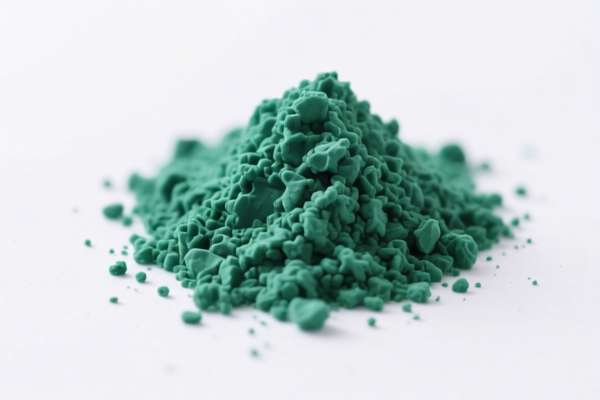
AI分析
🏭 Blow Molding Grade HDPE (High-Density Polyethylene)
🌐 HS Code Reference & Customs Clearance Guide | 2026 Latest Tariff Analysis | Professional Entry Strategy
📌 I. Product Definition & Classification: Do You Really Know "Blow Molding Grade HDPE"?
High-Density Polyethylene (HDPE) is a thermoplastic polymer made from the monomer ethylene. It is known for its high strength-to-density ratio. In international trade, the classification of HDPE depends heavily on its form (primary shape vs. semi-finished products) and processing method (specifically "Blow Molding Grade" vs. "Injection Molding Grade").
"Blow Molding Grade" implies the resin is optimized for blow molding processes (used for making hollow objects like bottles, drums, and tanks). However, if the material is in primary shapes (resin pellets/granules), it is generally classified under Chapter 39, regardless of the specific processing grade, unless it has been processed into a specific article.
⚠️ Key Distinction Point: - Raw Resin/Pellets (Primary Shape): Even if labeled "Blow Molding Grade," if it is just raw plastic resin in pellet form, it is classified under HS Code 3901 (Polyethylene, with specific gravity ≥ 0.94). - Semi-finished Articles (e.g., Sheets/Plates): If processed into specific shapes other than primary forms, it might fall under different subheadings (e.g., 3916), but for standard bulk resin imports, 3901 is the standard. - Common Misclassification: Importers often confuse HDPE with LLDPE or LDPE. HDPE has a specific gravity ≥ 0.94, while LDPE is < 0.94.
📦 II. HS Code Classification Details (2026 Latest Tariff Authority Comparison)
Based on the provided data and standard international trade practices for Blow Molding Grade HDPE, the following HS Codes apply:
| HS Code | Product Description | Application Scenario | Classification Logic |
|---|---|---|---|
3901.20.50.00 |
High-Density Polyethylene (HDPE), Primary Shape | Bulk resin pellets for blow molding bottles, containers, pipes | ✅ Correct for HDPE (Specific Gravity ≥ 0.94) |
3902.10.00.00 |
Polypropylene (PP), Primary Shape | Note: This code is for PP, not HDPE. Often confused if label is unclear. | ❌ Incorrect for HDPE (Only if material is actually PP) |
3916.10.00.00 |
Polyethylene Monofilaments/Strands | Note: This is for processed forms (strands/fibers), not raw resin. | ❌ Incorrect for Raw Resin (Only for specific articles) |
🔍 Key Reminder: - HDPE is primarily classified under 3901.20. The subheading
.20specifically refers to Polyethylene with a specific gravity of 0.94 or higher. - "Blow Molding Grade" is a functional description, not a tariff determinant. If it is raw resin, it falls under 3901.20.50.00. - Do NOT use 3902.x.x unless the material is actually Polypropylene (PP). Many "Blow Molding" applications use PP, but for HDPE, the correct chapter is 3901.
💰 III. 2026 Latest Tariff Rate Details (Including Additional Duties & Policy Surcharges)
✅ Applicable Country: USA (US)
✅ Country of Origin: China (CN)
✅ Effective Date: 2025/2026 (Current Trade Environment)
🎯 1. 3901.20.50.00 — High-Density Polyethylene (HDPE), Primary Shape
| Item | Content |
|---|---|
| Base Tariff Rate | 6.5% (Ad Valorem) |
| USITC Additional Duty | +25% (Under Section 301/1221 provisions) |
| IEEPA Additional Duty | +10% (For China/HK products, effective since Nov 10, 2025) |
| Total Tariff Rate | 41.5% |
| Tax Calculation | CIF Value × 41.5% |
| De Minimis Exemption Available? | ❌ No (Subject to high tariffs, no $800 exemption) |
| Legal Basis Path | IEEPA:9903.01.25 → IEEPA:9903.01.24 → USITC:3901.20.50.00 → FOOTNOTE:9903.88.01 |
📌 Explanation: - "Base Tariff 6.5%": The standard Most Favored Nation (MFN) duty rate for HDPE resin. - "USITC Additional Duty 25%": Imposed under Section 301 of the Trade Act of 1974 against Chinese imports. - "IEEPA 10%": An additional surcharge on Chinese origin goods under the International Emergency Economic Powers Act. - Total 41.5%: This is a very high tariff. Cost calculation must include this fully.
💡 Why not 3902.10.00.00 (PP)? - If your product is truly HDPE, using 3902 (PP) is misclassification. Customs may penalize for false declaration. - However, if the product is actually Polypropylene (PP) for blow molding, the rate is also 41.5% (Base 6.5% + 25% + 10%). - Critical: Ensure your COO (Certificate of Origin) and Material Safety Data Sheet (MSDS) match the HS Code. HDPE and PP have different densities and melting points.
🛠️ IV. Customs Clearance Practical Advice (Avoid Pitfalls)
✅ 1. Preparation Checklist (Missing Items = Delay)
| Document | Required | Explanation |
|---|---|---|
| ✅ Product Specification Sheet | ✔️ | Must state: "Blow Molding Grade," Melt Flow Index (MFI), Density (≥0.94 g/cm³). |
| ✅ MSDS (Material Safety Data Sheet) | ✔️ | Confirms chemical composition (Polyethylene). |
| ✅ Certificate of Origin (CO) | ✔️ | Must state "Made in China." If from other countries, rates may differ. |
| ✅ Commercial Invoice | ✔️ | Clearly describe as "HDPE Resin, Primary Shape, Blow Molding Grade." |
| ✅ Packing List | ✔️ | Show net weight and gross weight. |
| ✅ Bill of Lading (B/L) | ✔️ | Ensure commodity description matches invoice. |
✅ 2. Declaration Tips (Key Mantras)
🔥 "Resin Pellets, Primary Shape, HDPE, 3901.20.50.00"
| Scenario | Correct Declaration | Wrong Action |
|---|---|---|
| Bulk HDPE Pellets | 3901.20.50.00 |
Reporting as "Plastic Parts" → 89.5% tariff |
| HDPE Sheets/Plates | 3916.10.00.00 (if applicable) |
Reporting as "Pellets" → Misclassification |
| PP Resin (Blow Molding) | 3902.10.00.00 |
Reporting as HDPE → Penalty for false origin |
| LLDPE (Low Density) | 3901.10.xxxx |
Reporting as HDPE → Wrong tariff rate |
✅ 3. Special Cases
| Situation | Handling Advice |
|---|---|
| OEM Custom Resin | Provide customer specs + material test report to prove it is HDPE (not PP or LDPE). |
| Mixed Packaging | If HDPE is packed with additives (color masterbatch), still classify as HDPE if polymer is dominant. |
| Transshipment | If shipped via Vietnam/Malaysia, ensure Certificate of Origin reflects the actual country of manufacture. "Substantial Transformation" rules apply. |
🌍 V. Global Market Comparison (2026 Latest)
| Country/Region | Recommended HS Code | Tariff (China Origin) | Certification | Remarks |
|---|---|---|---|---|
| 🇺🇸 USA | 3901.20.50.00 |
41.5% | N/A | High tariff due to Section 301 + IEEPA |
| 🇨🇳 China | 3901.20.50.00 |
5% | N/A | Low tariff for domestic use |
| 🇪🇺 EU | 3901.20.00.00 |
0% | REACH | No additional duties if properly declared |
| 🇯🇵 Japan | 3901.20.00.00 |
0% - 5% | JIS | Varies by trade agreement |
📌 Conclusion: - USA is the most challenging market due to 41.5% total tariff. - EU and Japan offer more favorable rates (0-5%) for Chinese HDPE. - Strategy: If importing to the US, consider supply chain diversification (e.g., sourcing from Korea, Saudi Arabia, or the US itself) to avoid Chinese origin tariffs.
📌 VI. Common Errors & Pitfalls (Lessons Learned)
❌ Error 1: Misclassifying HDPE as PP (3902.10.00.00) to "test" rates.
👉 Consequence: If customs tests and finds it’s HDPE, you face back taxes + penalties.
❌ Error 2: Reporting "Plastic Pellets" without specifying "HDPE" or density. 👉 Consequence: Customs may classify under the highest residual rate or request extensive testing, causing delay.
❌ Error 3: Ignoring the 1221/IEEPA 10% surcharge. 👉 Consequence: Underestimating landed cost. Total cost is Base + 25% + 10%, not just Base + 25%.
✅ Correct Declaration Example:
"HDPE RESIN, PRIMARY SHAPE, BLOW MOLDING GRADE, DENSITY 0.950 G/CM3, MELT FLOW INDEX 15 G/10MIN, MODEL XYZ, MADE IN CHINA"
🎯 VII. Conclusion: Professional Classification Saves Money!
🎯 Remember the Mantra:
🔹 "HDPE is 3901.20, PP is 3902.10. Don't mix them!"
🔹 "41.5% is the total US tariff. Plan your cost accordingly!"
🔹 "Primary Shape = Resin. Article = Product. Know the difference!"
📌 Pro Tip:
If your HDPE is sourced from Non-China countries (e.g., South Korea, UAE, USA), you may avoid the 25% + 10% surcharges, reducing the total tariff to ~6.5%.
Action: Verify the Country of Origin on the Certificate of Origin before booking.
📣 Immediate Action:
📞 Consult your customs broker + Provide MSDS + Verify Country of Origin
🚀 Clear customs smoothly, optimize your landed cost, and maximize profit!
✨ Professional Customs Clearance Starts with Accurate Classification!
💼 Every cent of duty matters!
用户评价
关于 HS 编码归类
协调制度(HS)是由世界海关组织(WCO)制定的国际贸易商品分类标准。全球 200 多个国家采用 HS 系统作为海关关税、贸易统计和进出口监管的基础。
每个 HS 编码遵循以下层级结构:
- 章(2 位)——商品大类(例如:第 84 章:机器和机械设备)
- 品目(4 位)——章内的更具体分类
- 子目(6 位)——国际通用细分,所有 WCO 成员国统一使用
- 本国细分(8-10 位)——各国自行扩展的细分编码,如美国 HTSUS 10 位编码
正确的 HS 编码归类对于顺利通关、准确缴纳关税和遵守贸易法规至关重要。错误归类可能导致海关延误、多缴关税或罚款。
从CN进口到US时,适用的关税税率可能包括:
- 最惠国(MFN)税率——适用于 WTO 成员国的标准关税税率
- 普通税率——适用于无贸易协定国家
- 贸易救济关税——附加关税,如 301 条款(反倾销)、232 条款(国家安全)或反补贴税
本页内容仅供参考。如需正式归类,请咨询当地海关或持牌报关代理。