Blue Coaster
CN → US| HS编码 | 关税税率 | 原产国 | 目的国 | 文档 |
|---|---|---|---|---|
| 3924104000 | 13.4% | CN | US | 官方文档 |
| 3924901050 | 13.3% | CN | US | 官方文档 |
| 6912004810 | 19.8% | CN | US | 官方文档 |
| 4420110010 | 13.2% | CN | US | 官方文档 |
| 4420110090 | 13.2% | CN | US | 官方文档 |
商品图片

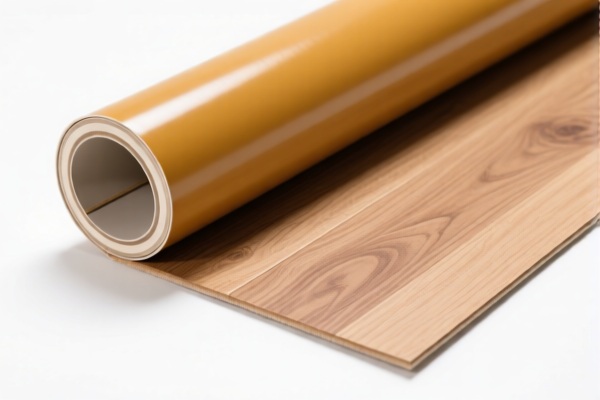
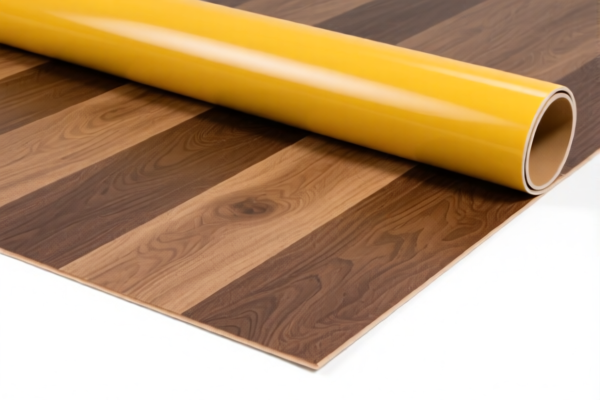

AI分析
🍷 Blue Coaster (Furniture/Table Mats)
🌐 HS Code Reference & Customs Clearance Guide | 2026 Latest Tariff Analysis | Professional Strategy
📌 I. Product Definition & Classification: What Exactly is a "Blue Coaster"?
A "Blue Coaster" typically refers to a small mat placed under drinking vessels to protect furniture surfaces from moisture, heat, and stains. In international trade, the Harmonized System (HS) classification depends heavily on material composition and specific use case (e.g., purely decorative vs. functional tableware).
The provided data suggests four primary classification paths based on material inference: 1. Plastic: Most common for mass-produced, durable coasters. 2. Ceramic/Resin/Wood: Common for premium or decorative sets. 3. Wood/Bamboo: Specifically for natural material coasters.
⚠️ Key Distinction:
- If made of Plastic → Falls under Chapter 39 (Plastics).
- If made of Ceramic/Resin → Falls under Chapter 69 (Ceramics) or other non-metal categories.
- If made of Wood → Falls under Chapter 44 (Wood).
📦 II. HS Code Classification Details (Based on Provided Data)
| HS Code | Product Description | Material Inference | Key Characteristics |
|---|---|---|---|
3924.10.40.00 |
Table Mats / Coasters | Plastic | Plastic material, used as tableware/home accessory. |
3924.90.10.50 |
Table Mats | Plastic | Specifically classified under "Table Mats," plastic material. |
6912.00.48.10 |
Table Mats / Accessories | Ceramic, Wood, or Resin | Functional tableware accessory; material inferred as non-metallic composite or ceramic. |
4420.11.00.10 |
Table Mats | Non-Metallic / Other | Shape and use match table mats; material倾向 (tendency) for other non-metallic materials. |
4420.11.00.90 |
Table Mats / Kitchen Utensils | Wood / Bamboo | Specifically classified as tableware/kitchen utensils; material inferred as wood or bamboo. |
🔍 Important Note:
- Plastic Coasters (3924.10.40.00/3924.90.10.50) generally attract the lowest base tariff (3.3%-3.4%).
- Ceramic/Composite Coasters (6912.00.48.10) attract a higher base tariff (9.8%).
- Wood/Bamboo Coasters (4420.11.00.10/4420.11.00.90) share the same low base tariff (3.2%) as plastics.
💰 III. 2026 Latest Tariff Rate Breakdown (Including Additional Duties)
✅ Applicable Country: United States (US)
✅ Origin: China (CN) (Inferred from "122 Clause" and typical trade context)
✅ Effective Time: Current regulations apply
🎯 1. Plastic Coasters (3924.10.40.00 & 3924.90.10.50)
| Item | Detail |
|---|---|
| Base Tariff | 3.4% (3924.10.40.00) / 3.3% (3924.90.10.50) |
| Section 301 / Section 122 Tariff | +10% (Specific "122 Clause" tariff applied) |
| Total Tariff Rate | 13.4% (3924.10.40.00) / 13.3% (3924.90.10.50) |
| Calculation Basis | CIF Value × Total Rate |
| Section 301 Footnote | 0.0% (No additional Section 301 footnote listed beyond the 122 clause) |
📌 Explanation:
- The Base Rate is very low because plastics are generally favored for home accessories.
- The 122 Clause Tariff adds a flat 10% surcharge on top of the base rate.
- Total Cost Impact: For every $1,000 of goods, expect ~$133-$134 in duties.
🎯 2. Ceramic/Resin Coasters (6912.00.48.10)
| Item | Detail |
|---|---|
| Base Tariff | 9.8% |
| Section 301 / Section 122 Tariff | +10% |
| Total Tariff Rate | 19.8% |
| Calculation Basis | CIF Value × 19.8% |
📌 Explanation:
- Ceramics face a significantly higher base tariff (9.8%) compared to plastics or wood.
- With the 10% surcharge, the total duty is nearly 20%, making this the most expensive classification among the options.
🎯 3. Wood/Bamboo Coasters (4420.11.00.10 & 4420.11.00.90)
| Item | Detail |
|---|---|
| Base Tariff | 3.2% |
| Section 301 / Section 122 Tariff | +10% |
| Total Tariff Rate | 13.2% |
| Calculation Basis | CIF Value × 13.2% |
📌 Explanation:
- Wood and bamboo coasters benefit from the lowest base rate (3.2%).
- Total duty is 13.2%, making it highly competitive with plastic options.
🛠️ IV. Customs Clearance Practical Advice
✅ 1. Critical Documentation Checklist
| Document | Required? | Purpose |
|---|---|---|
| Product Specification Sheet | ✔️ | Must specify material (e.g., "Polypropylene," "Bamboo," "Ceramic"). |
| Material Composition Report | ✔️ | Essential to prove if the product is >50% plastic/wood/ceramic for HS classification. |
| Product Images | ✔️ | Show texture, thickness, and any decorative elements to distinguish from "tableware" vs. "furniture accessory." |
| Commercial Invoice | ✔️ | Clearly state "Coaster" or "Table Mat" and material. |
| Origin Certificate | ✔️ | To confirm Country of Origin (China) for surcharge application. |
✅ 2. Classification Strategy & Pitfalls
🔥 Golden Rule: "Material Dictates the Code, Use Defines the Chapter."
| Scenario | Recommended HS Code | Risk if Misclassified |
|---|---|---|
| Plastic Coasters | 3924.10.40.00 or 3924.90.10.50 |
If classified as 6912 (Ceramic), you overpay 6.4% duty. |
| Wood/Bamboo Coasters | 4420.11.00.10 or 4420.11.00.90 |
If classified as 4420 but declared as metal, customs will reclassify and fine. |
| Mixed Material (e.g., Cork + Plastic) | Depends on Essential Character | If cork is the main character, it may fall under 4602 (Basketware); if plastic, 3924. Test for essential character! |
| Set of Coasters with Tray | Check if Tray is "Integral" | If the tray is part of a set, the entire set may be classified under the accessory's code (3924), not separate. |
✅ 3. Special Notes on "122 Clause" Tariff
⚠️ Alert: The 10% surcharge (referenced as "122 Clause" in the data) is applied regardless of material for these HS codes.
- This is not a Section 301 tariff (which is typically 7.5% or 25% based on product lists), but a specific administrative surcharge.
- No de minimis exemption: This duty applies to all commercial shipments.
🌍 V. Global Market Comparison (2026)
| Market | Recommended HS Code | Est. Duty Rate | Key Requirement |
|---|---|---|---|
| 🇺🇸 USA | 3924.10.40.00 |
13.4% | Must specify material; 10% surcharge applies. |
| 🇨🇳 China | 3924.10.40.00 |
~3-4% | Lower base rate; no 10% surcharge. |
| 🇪🇺 EU | 3924.10.00 |
4.2% | No additional surcharges for plastics. |
| 🇬🇧 UK | 3924.10.00 |
4.2% | Post-Brexit tariff schedule applies. |
📌 Conclusion:
- The USA has the highest effective duty due to the 10% surcharge.
- For cost optimization, Plastic (3924) and Wood (4420) are the most tariff-efficient categories (~13.2%-13.4%).
- Avoid Ceramic (6912) if duty minimization is the goal, as it attracts 19.8%.
📌 VI. Common Errors & Avoidance Guide
❌ Error 1: Declaring "Coasters" without specifying material.
👉 Consequence: Customs will request additional info, causing delays, or assign a default high-duty rate.
❌ Error 2: Misclassifying Wood Coasters as Plastic.
👉 Consequence: If inspected and found to be wood, you may face penalties for under-declaring material characteristics, though duty difference is small (3.2% vs 3.4%). However, if classified as Plastic but is Ceramic, the penalty is severe (6.4% overpayment + risk of fraud investigation).
❌ Error 3: Ignoring the 10% Surcharge.
👉 Consequence: Profit margin erosion. Always factor in the 10% "122 Clause" in your landed cost calculation.
✅ Correct Declaration Example:
"Plastic Table Mats, Blue, Round, 4-inch diameter, for home use. Material: Polypropylene. HS Code: 3924.10.40.00"
🎯 VII. Conclusion: Professional Clearance, Cost Efficiency!
🎯 Key Takeaways:
1. Material is King: Choose Plastic or Wood for the lowest base tariff.
2. Expect 10% Surcharge: Add 10% to your duty calculation for all these codes in the US market.
3. Total Duty Range: 13.2% - 19.8%.
💡 Pro Tip: If you are importing large volumes, consider Advance Rulings from US Customs and Border Protection (CBP) to confirm the HS Code and tariff applicability before shipment. This prevents surprises at the port.
✨ Accurate classification saves money. Professional clearance ensures speed.
💼 Your profit margin depends on precise duty calculations!
用户评价
关于 HS 编码归类
协调制度(HS)是由世界海关组织(WCO)制定的国际贸易商品分类标准。全球 200 多个国家采用 HS 系统作为海关关税、贸易统计和进出口监管的基础。
每个 HS 编码遵循以下层级结构:
- 章(2 位)——商品大类(例如:第 84 章:机器和机械设备)
- 品目(4 位)——章内的更具体分类
- 子目(6 位)——国际通用细分,所有 WCO 成员国统一使用
- 本国细分(8-10 位)——各国自行扩展的细分编码,如美国 HTSUS 10 位编码
正确的 HS 编码归类对于顺利通关、准确缴纳关税和遵守贸易法规至关重要。错误归类可能导致海关延误、多缴关税或罚款。
从CN进口到US时,适用的关税税率可能包括:
- 最惠国(MFN)税率——适用于 WTO 成员国的标准关税税率
- 普通税率——适用于无贸易协定国家
- 贸易救济关税——附加关税,如 301 条款(反倾销)、232 条款(国家安全)或反补贴税
本页内容仅供参考。如需正式归类,请咨询当地海关或持牌报关代理。