Bonded Textile Belts Containing Vegetable Fibers
CN → US| HS编码 | 关税税率 | 原产国 | 目的国 | 文档 |
|---|---|---|---|---|
| 4010121000 | 39.1% | CN | US | 官方文档 |
| 4010191000 | 39.1% | CN | US | 官方文档 |
| 5911310010 | 38.8% | CN | US | 官方文档 |
| 5911310020 | 38.8% | CN | US | 官方文档 |
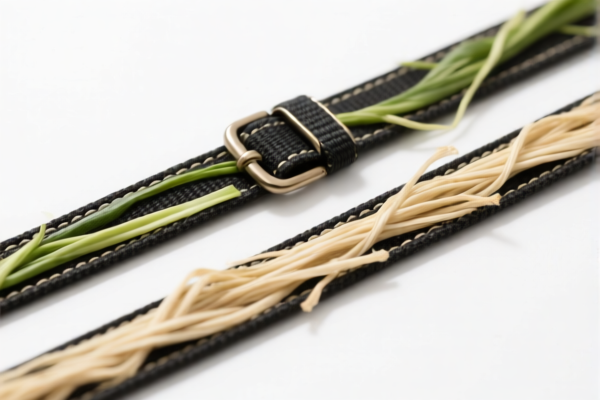
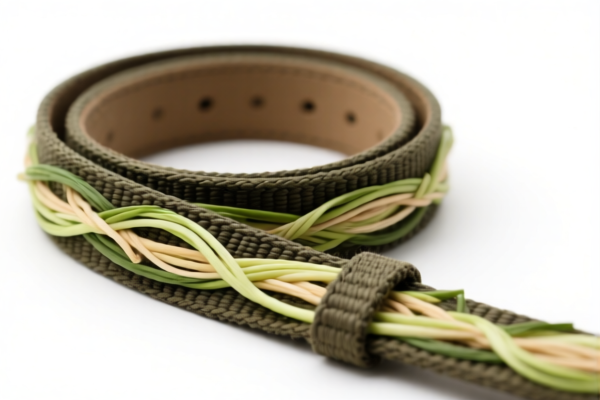
商品图片


AI分析
🌿 Industrial Textile Belts & Felts (Containing Vegetable Fibers)
🌐 HS Code Reference & Customs Clearance Guide | 2026 Tariff Analysis | Technical Textiles Specialist Strategy
📌 I. Product Definition & Classification: What Are "Bonded Textile Belts"?
In international trade, "Bonded Textile Belts" typically refer to technical textile articles used in industrial machinery. The term "Bonded" often implies vulcanization (for rubber) or chemical bonding (for non-wovens). Based on the provided data, these products fall into two distinct technical categories:
- Papermaking/Processing Felts (HS 5911): Endless textile fabrics/felts used in papermaking machines.
- Vulcanized Rubber Conveyor Belts (HS 4010): Rubber belts reinforced with textiles, where vegetable fibers (e.g., cotton, hemp) are the dominant component.
⚠️ Critical Distinction Point: * If it is a felt for papermaking/pulp machines, regardless of weight, it falls under HS 5911. * If it is a conveyor/transmission belt made of vulcanized rubber with a textile core where vegetable fibers predominate by weight, it falls under HS 4010.
📦 II. HS Code Classification Details (2026 Latest Tariff Authority对照)
Based on the provided <DATA>, here is the precise breakdown:
| HS Code | Product Description | Key Characteristics | Application Scenario |
|---|---|---|---|
5911.31.00.10 |
Press Felts (Textile fabrics/felts for papermaking) |
• Weight: < 650 g/m² • Endless or linked • For pulp/asbestos-cement machines |
Paper machine press section, industrial dewatering |
5911.31.00.20 |
Dryer Felts and Dryer Fabrics (Textile fabrics/felts for papermaking) |
• Weight: < 650 g/m² • Endless or linked • For pulp/asbestos-cement machines |
Paper machine dryer section, heat transfer applications |
4010.12.10.00 |
Conveyor Belts (Vulcanized Rubber) Reinforced ONLY with textiles |
• Vegetable fibers predominate by weight • No other single fiber exceeds vegetable fiber weight |
Light-duty conveyor systems, agriculture, mining (low-load) |
4010.19.10.00 |
Other Conveyor Belts (Vulcanized Rubber) Combined with textile materials |
• Vegetable fibers predominate by weight • Other reinforcement types may exist |
Heavy-duty conveyors, industrial sorting, bulk material transport |
🔍 Key Reminder: * HS 5911 products are classified as "Technical Textiles" specifically for papermaking/pulp processing. They are not considered general conveyor belts under Chapter 40. * HS 4010 products are classified under Rubber because the primary material is vulcanized rubber, even though the reinforcing structure is textile. The key identifier is "Vegetable Fibers Predominate".
💰 III. 2026 Tariff Rate Detail (Zero Duty Advantage)
✅ Applicable Jurisdiction: China Customs (Import/Export)
✅ Origin: Any (Base Tariff applies)
✅ Status: 0% Total Tax for all listed codes
🎯 1. Papermaking Felts (HS 5911.31.00.10 & .20)
| Item | Content |
|---|---|
| Product | Press Felts (5911.31.00.10) & Dryer Felts (5911.31.00.20) |
| Base Tariff | 0.0% |
| Additional Tariff | 0.0% |
| Total Tax Rate | 0.0% |
| Tax Calculation | Duty = CIF Value × 0% = $0 |
| Legal Basis | Chapter 59 Note 8; Subheading 5911 specific provisions |
📌 Explanation: * These are specialized industrial textiles with zero duty to promote technical upgrades in paper/pulp industries. * No anti-dumping or countervailing duties apply. * VAT (Value Added Tax): Standard 13% VAT applies (standard import tax, separate from customs duty).
🎯 2. Vegetable Fiber-Reinforced Rubber Belts (HS 4010.12.10 & .19)
| Item | Content |
|---|---|
| Product | Conveyor Belts with Vegetable Fiber Reinforcement (4010.12.10.00, 4010.19.10.00) |
| Base Tariff | 0.0% |
| Additional Tariff | 0.0% |
| Total Tax Rate | 0.0% |
| Tax Calculation | Duty = CIF Value × 0% = $0 |
| Legal Basis | Chapter 40; Note on Vegetable Fiber Predominance |
📌 Explanation: * The 0% duty is contingent on the textile component being vegetable fibers (e.g., cotton, jute, hemp). * If the belt uses synthetic fibers (polyester, nylon) or animal fibers (silk, wool) as the predominant reinforcement, it may fall under a different subheading with a different tariff rate (not covered in the provided data). * VAT: Standard 13% VAT applies.
🛠️ IV. Customs Clearance Practical Advice (Real-World Pitfall Avoidance)
✅ 1. Preparation Checklist (Non-Negotiable)
| Document | Required? | Explanation |
|---|---|---|
| ✅ Product Specification Sheet | ✔️ | Must clearly state: Weight (g/m² for felts), Material Composition (% Vegetable Fiber vs. Others), Machine Compatibility. |
| ✅ Material Composition Test Report | ✔️ | Critical for HS 4010: Third-party lab report proving vegetable fibers >50% by weight in the textile component. |
| ✅ Product Photos | ✔️ | Clear images showing: Label, Texture, Endless Loop Structure, and Any Linking Devices. |
| ✅ Commercial Invoice | ✔️ | Description must match HS Code exactly (e.g., "Vulcanized Rubber Conveyor Belt Reinforced with Cotton"). |
| ✅ Packing List | ✔️ | Detailed dimensions and weight. |
| ✅ Certificate of Origin | ✔️ | Standard CO for verification. |
✅ 2. Declaration Tips (Golden Rules)
🔥 "Weight Matters for Felts; Fiber Type Matters for Rubber!"
| Scenario | Correct Declaration | Wrong Practice | Consequence |
|---|---|---|---|
| Papermaking Felt | "Textile Felt, Press Type, Weight 600g/m², For Paper Machine" | "Fabric Belt" or "Rubber Belt" | Misclassification → Potential 5-10% duty + Penalties |
| Rubber Belt (Cotton Core) | "Vulcanized Rubber Conveyor Belt, Reinforced with Cotton (Vegetable Fiber), Width 500mm" | "Synthetic Fiber Belt" or generic "Rubber Belt" | If actual fiber is synthetic, tariff may rise. Must prove vegetable predominance. |
| Rubber Belt (Polyester Core) | Not in provided data | Using 4010.19.10.00 for Polyester core |
High Risk: If vegetable fiber is not predominant, this code is incorrect. May incur higher duties. |
| Dryer Felt | "Dryer Felt, Textile, <650g/m², Endless" | "Filter Cloth" | HS 5911 vs. HS 5911/other confusion. Ensure it’s for papermaking/pulp use. |
✅ 3. Special Handling Scenarios
| Scenario | Handling Advice |
|---|---|
| Mixed Fiber Belts | If the belt contains both cotton (vegetable) and polyester, and cotton >50% by weight → Use 4010 codes. If polyester >50%, the provided 0% rates do not apply. |
| Used/Recycled Belts | HS 5911 and 4010 typically apply to new goods. Used goods may fall under different chapters (e.g., Chapter 63 or 40 parts). |
| Samples | Clearly mark as "Samples" in invoice. Tax rate is still 0% for duty, but VAT may be refundable or payable depending on local policy. |
| Machine Integration | If the belt is sold with the paper machine or conveyor system, it may be classified as part of the machine (e.g., HS 8441 for paper machines). Declare separately if possible to utilize 0% duty on the belt. |
🌍 V. Global Market Comparison (2026 Snapshot)
| Country/Region | Recommended HS Code | Base Tariff | Key Requirement | Notes |
|---|---|---|---|---|
| 🇨🇳 China | 5911.31.00.10 / 4010.19.10.00 |
0% | Material Test Report (Vegetable Fiber) | 0% Duty is a key advantage for industrial import. |
| 🇺🇸 USA | Varies (US HTS) | Check Specifics | Detailed Component Breakdown | US may apply Section 301 tariffs if originating from China. Verify USITC codes. |
| 🇪🇺 EU | 5911.31 / 4010.19 | 0% - 3.7% | CE Marking (if applicable) | Generally low duty for technical textiles. |
| 🇮🇳 India | 5911.31 / 4010.19 | 10% - 15% | BIS Certification (for rubber) | No 0% rate in India for these categories typically. |
📌 Conclusion: * China Import: Highly favorable with 0% Customs Duty for both felts and vegetable-fiber rubber belts. * Export to US/India: Tariffs may be significantly higher. Focus on HS Code precision to avoid penalties.
📌 VI. Common Errors & Pitfalls (Blood Lessons)
❌ Error 1: Declaring a polyester-reinforced rubber belt as 4010.19.10.00 (Vegetable Fiber Code).
👉 Result: Customs rejects the 0% rate. Backdated duty assessment + Penalty.
✅ Fix: Verify fiber composition. If synthetic, find the correct subheading with applicable duty.
❌ Error 2: Calling a Papermaking Felt a "Filter Cloth" or "Industrial Fabric" without specifying weight.
👉 Result: Delay in clearance. Customs may suspect it’s a general textile (higher duty).
✅ Fix: Explicitly state "Weight: <650g/m²" and "For Papermaking Machine Use".
❌ Error 3: Ignoring the "Vegetable Fiber Predominance" requirement for HS 4010.
👉 Result: If the belt is 60% Cotton + 40% Nylon, it qualifies. If it’s 49% Cotton + 51% Nylon, it does not.
✅ Fix: Obtain a certified material analysis report before shipment.
❌ Error 4: Combining Machine and Belt in one HS Code.
👉 Result: The entire value may be taxed at the machine’s rate (e.g., 5-10%), losing the 0% benefit on the belt.
✅ Fix: Separate Line Items in Invoice. Belt on one line (0% duty), Machine on another.
🎯 VII. Conclusion: Maximize Savings with Precision!
🎯 Key Takeaways:
🔹 Felts: Focus on Weight (<650g/m²) and Application (Papermaking/Pulp).
🔹 Rubber Belts: Focus on Vegetable Fiber >50% by weight.
🔹 Tax Benefit: 0% Customs Duty is available, but 13% VAT is still payable.
🔹 Documentation: Material Test Reports are your best friend. Never guess the fiber composition.
📌 Pro Tip:
If you are importing these goods for high-tech manufacturing, consider applying for Bonded Warehouse status or Processing Trade permits to defer or reduce VAT payments.
📣 Immediate Action Required:
📞 Before Shipment:
1. Confirm fiber composition % with your supplier.
2. Verify weight for felts.
3. Prepare Material Analysis Report.
🚀 Ensure Smooth Clearance with 0% Duty!
✨ Accurate Classification = Cost Savings.
💼 Don’t Let Misclassification Cost You Money.
用户评价
关于 HS 编码归类
协调制度(HS)是由世界海关组织(WCO)制定的国际贸易商品分类标准。全球 200 多个国家采用 HS 系统作为海关关税、贸易统计和进出口监管的基础。
每个 HS 编码遵循以下层级结构:
- 章(2 位)——商品大类(例如:第 84 章:机器和机械设备)
- 品目(4 位)——章内的更具体分类
- 子目(6 位)——国际通用细分,所有 WCO 成员国统一使用
- 本国细分(8-10 位)——各国自行扩展的细分编码,如美国 HTSUS 10 位编码
正确的 HS 编码归类对于顺利通关、准确缴纳关税和遵守贸易法规至关重要。错误归类可能导致海关延误、多缴关税或罚款。
从CN进口到US时,适用的关税税率可能包括:
- 最惠国(MFN)税率——适用于 WTO 成员国的标准关税税率
- 普通税率——适用于无贸易协定国家
- 贸易救济关税——附加关税,如 301 条款(反倾销)、232 条款(国家安全)或反补贴税
本页内容仅供参考。如需正式归类,请咨询当地海关或持牌报关代理。