Bone Char Powder
CN → US| HS编码 | 关税税率 | 原产国 | 目的国 | 文档 |
|---|---|---|---|---|
| 2530908015 | 10.0% | CN | US | 官方文档 |
| 2530908050 | 10.0% | CN | US | 官方文档 |
| 3802901000 | 40.8% | CN | US | 官方文档 |
| 3802100050 | 39.8% | CN | US | 官方文档 |
| 2301100000 | 35.0% | CN | US | 官方文档 |
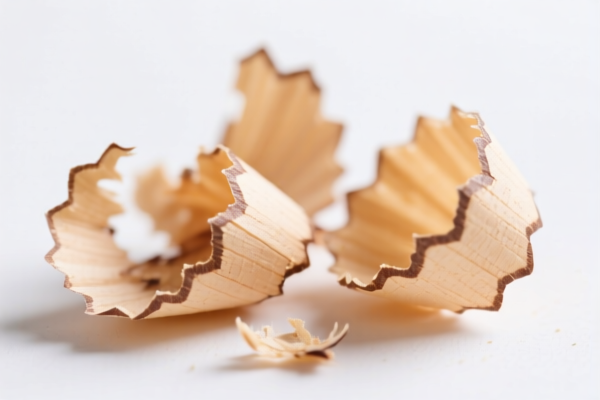
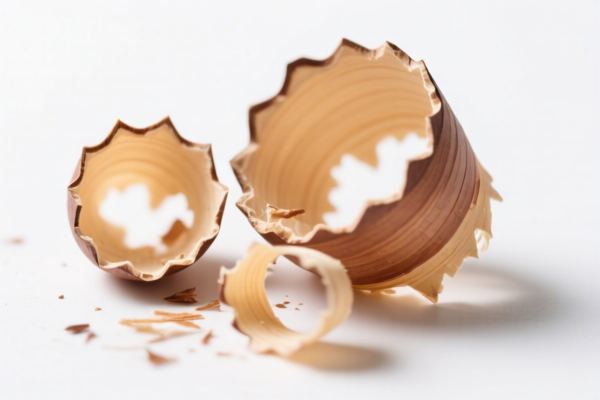
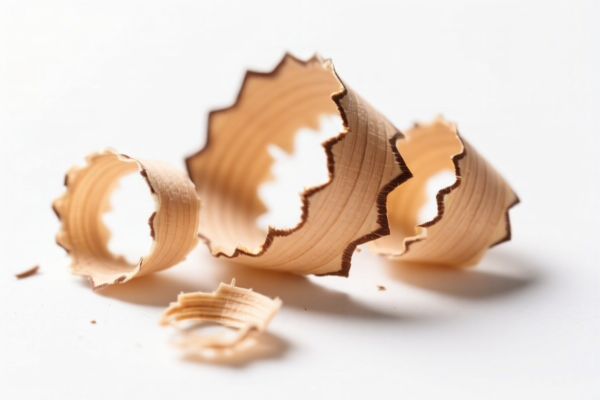
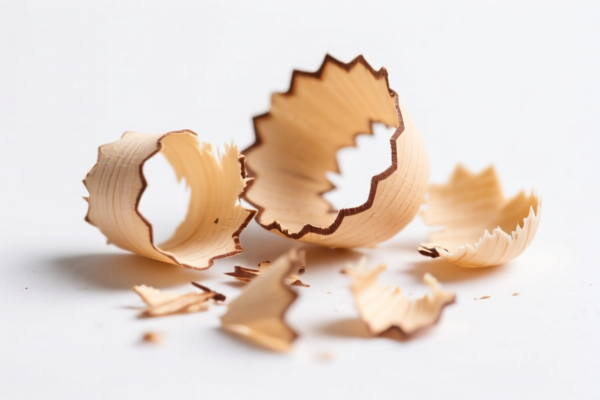
商品图片
AI分析
🦴 Bone Char Powder (Granules/Powder) | HS Code Classification & Customs Clearance Guide
🌐 HS Code Reference & Customs Clearance Strategy | 2026 Latest Tariff Analysis | Professional Level Clearance Guide
📌 I. Product Definition & Classification: Do You Really Understand "Bone Char"?
Bone Char (Bone Charcoal) is a porous, black granular or powdery substance made by charring animal bones, typically cattle bones, in the absence of air. It is primarily used for: * Decolorization in sugar refining (removing impurities from sugar syrups). * Water filtration (removing fluoride and heavy metals). * Chemical recovery of bone components.
In international trade, its classification is highly controversial and depends heavily on material composition and processing degree. It can fall under Minerals/Animal Products/Activated Carbon. Misclassification can lead to massive tax differences (from 10% to 40.8%).
⚠️ Key Distinction Points: - If viewed as a processed mineral-like substance (inorganic residue) → May fall under Chapter 25. - If viewed as Activated Carbon → May fall under Chapter 38. - If viewed as a by-product of meat/meat processing → May fall under Chapter 23.
📦 II. HS Code Classification Details (2026 Latest Tariff Authority Comparison)
Based on the provided data, here are the potential classifications for Bone Char Granules/Powder:
| HS Code | Product Description | Logic & Summary | Total Tax Rate |
|---|---|---|---|
2530.90.80.15 |
Other Mineral Substances (Granular) | Classified as "other mineral substances" in granular form. Based on inference of mineral pigment or mineral product material. | 10.0% |
2530.90.80.50 |
Other Mineral Substances (Granular) | Belongs to "mineral/carbon-based products." Granular form fits "other unlisted mineral substances." No conflict with mineral category definitions. | 10.0% |
3802.90.10.00 |
Other Activated Carbon (Granular) | The term "Bone" aligns with "Bone Black" material logic. Granular form fits "other categories." Classified as activated carbon under "other" heading. | 40.8% |
3802.10.00.50 |
Activated Carbon (Granular, Non-Coal/Coconut) | Classified as a type of activated carbon. Granular form fits the category for activated carbon excluding coal-based and coconut shell-based types. | 39.8% |
2301.10.00.00 |
Flour & Pellets of Meat/Offal | Form is powder/granules. Material is animal-derived processed product. Fits the logic of "powder of meat or meat offal." | 35.0% |
🔍 Critical Warning: - HS Code
2530.90assumes Bone Char is an inorganic/mineral residue. This yields the lowest tax (10%). - HS Code3802.10/3802.90assumes Bone Char is Activated Carbon. This yields the highest tax (39.8% - 40.8%). - HS Code2301.10.00.00assumes Bone Char is a meat by-product. This yields a mid-range tax (35%). - Selection Strategy: Customs authorities often scrutinize Bone Char due to its dual nature (organic origin vs. inorganic use). You must provide proof of decarbonization or purification to argue for Chapter 25, or proof of adsorption properties for Chapter 38.
💰 III. 2026 Latest Tariff Rate Breakdown (Including Surcharges & Policy Add-ons)
✅ Applicable Country: United States (US) ✅ Origin: China (CN) ✅ Effective Date: November 10, 2025 (and subsequent imports)
🎯 1. 2530.90.80.15 & 2530.90.80.50 —— Other Mineral Substances (Lowest Tax Route)
| Item | Content |
|---|---|
| Base Tariff | 0% (ad valorem) |
| USITC Surcharge (Section 301) | +0.0% |
| IEEPA Surcharge (Section 122/Other) | +10.0% |
| Total Tax Rate | 10.0% |
| Tax Calculation | CIF Value × 10% |
| De Minimis Exemption? | ❌ No (deny_de_minimis) |
| Legal Basis Path | IEEPA:122 → USITC:2530.90.80.15/50 |
📌 Explanation: - Base Tariff: 0%. - 122 Clause Tariff: 10%. This specific surcharge applies to these mineral categories. - Why it's attractive: This is the most cost-effective classification if you can substantiate that Bone Char is primarily an inorganic/mineral material (after high-temperature charring, organic components are removed). - Risk: Customs may challenge this if the product retains significant organic matter or is clearly marketed as "activated carbon."
🎯 2. 3802.10.00.50 —— Activated Carbon (Non-Coal/Non-Coconut)
| Item | Content |
|---|---|
| Base Tariff | 4.8% |
| USITC Surcharge (Section 301) | +25.0% |
| IEEPA Surcharge | +10.0% |
| Total Tax Rate | 39.8% |
| Tax Calculation | CIF Value × 39.8% |
| De Minimis Exemption? | ❌ No |
| Legal Basis Path | IEEPA:9903.01.24 → USITC:3802.10.00.50 → FOOTNOTE:9903.88.01 |
📌 Note: - This classifies Bone Char as Activated Carbon but excluding coal-based and coconut shell-based types. - High Tax Warning: 39.8% is a significant cost increase compared to the 10% mineral classification. - Usage: Typically used if the product is marketed for its adsorption properties (e.g., water filtration, sugar decolorization) and lacks a specific "coal/coconut" descriptor.
🎯 3. 3802.90.10.00 —— Other Activated Carbon
| Item | Content |
|---|---|
| Base Tariff | 5.8% |
| USITC Surcharge (Section 301) | +25.0% |
| IEEPA Surcharge | +10.0% |
| Total Tax Rate | 40.8% |
| Tax Calculation | CIF Value × 40.8% |
| De Minimis Exemption? | ❌ No |
| Legal Basis Path | IEEPA:9903.01.25 → IEEPA:9903.01.24 → USITC:3802.90.10.00 → FOOTNOTE:9903.88.01 |
📌 Note: - This is a "catch-all" for activated carbons that don't fit other specific subheadings. - Highest Tax: At 40.8%, this is the most expensive option. Only use if required by specific product characteristics.
🎯 4. 2301.10.00.00 —— Flour & Pellets of Meat or Meat Offal
| Item | Content |
|---|---|
| Base Tariff | 0.0% |
| USITC Surcharge (Section 301) | +25.0% |
| IEEPA Surcharge | +10.0% |
| Total Tax Rate | 35.0% |
| Tax Calculation | CIF Value × 35.0% |
| De Minimis Exemption? | ❌ No |
| Legal Basis Path | IEEPA:9903.01.24 → USITC:2301.10.00.00 |
📌 Note: - This classifies Bone Char as a processed animal product. - Mid-Range Tax: 35.0% is lower than the activated carbon rates but higher than the mineral rates. - Risk: Customs may reject this if the product has been heavily processed (charred at high temperatures) to the point where it is no longer considered a "meat product" but rather an industrial chemical/mineral.
🛠️ IV. Customs Clearance Practical Advice (Pitfall Avoidance Guide)
✅ 1. Required Documentation Checklist (None of these are optional)
| Document | Required | Description |
|---|---|---|
| ✅ Product Specification Sheet | ✔️ | Must include: Particle size, ash content, moisture content, adsorption capacity, and charring temperature. |
| ✅ Material Safety Data Sheet (MSDS) | ✔️ | Essential to prove it is non-hazardous and stable. |
| ✅ Certificate of Origin (CO) | ✔️ | Must clearly state the country of origin. |
| ✅ Commercial Invoice | ✔️ | Must describe the product accurately (e.g., "Bone Char Granules for Water Filtration"). Avoid vague terms like "Black Powder." |
| ✅ Packing List | ✔️ | Detail weight, dimensions, and packaging type. |
| ✅ Third-Party Lab Report | ✔️ | Crucial: Proof of ash content and organic carbon content. High ash/inorganic content supports HS 2530. High carbon content supports HS 3802. |
| ✅ Intended Use Declaration | ✔️ | Explain how it will be used (e.g., "Decolorization of sugar," "Water filtration"). |
✅ 2. Declaration Tips (Key Mantra)
🔥 "Characterize the Material, Not Just the Name! Clarify Process, Avoid Misclassification!"
| Situation | Correct Declaration | Incorrect Action |
|---|---|---|
| High Ash Content (>80%) | Declare as Mineral Substances (2530.90) |
Declare as Activated Carbon → 40.8% Tax |
| High Adsorption Capacity | Declare as Activated Carbon (3802) |
Declare as Mineral → Risk of Rejection & Audit |
| Fine Powder vs. Granules | Specify Particle Size (Mesh Size) | Generic "Bone Char" → Delays |
| Animal Source | State Cattle Bone or Specific Source | "Bone Char" → Ambiguity |
| Processed Degree | Highlight High-Temperature Charring | "Raw Bone Powder" → Wrong Chapter |
✅ 3. Special Case Handling
| Situation | Handling Advice |
|---|---|
| OEM Customization | Provide customer specs to prove intended use. If for sugar refining, lean towards 3802 (Activated Carbon) as it's a standard industrial chemical. |
| Water Filtration | Lean towards 3802 (Activated Carbon). Emphasize adsorption properties in specs. |
| Agricultural/Fertilizer Use | Leans towards 2301 (Animal By-product) or 31 (Fertilizers, if applicable). Check HS 31 codes. |
| High Organic Residue | If not fully charred, may be considered Animal By-product (2301). |
🌍 V. Global Market Comparison (2026 Latest)
| Country/Region | Recommended HS Code | Tax Rate | Certification | Remarks |
|---|---|---|---|---|
| 🇺🇸 USA | 2530.90.80.15 (Mineral) |
10% | MSDS, CO | Lowest tax if mineral argument holds. |
| 🇺🇸 USA | 3802.10.00.50 (Activated Carbon) |
39.8% | MSDS, CO | High tax. Use if adsorption is key. |
| 🇨🇳 China | 2530.90 or 3802 |
Varies | CCC (if applicable) | Lower import tariffs generally. |
| 🇪🇺 EU | 2530.90 or 3802 |
0% - 5% | REACH, SDS | No US-style surcharges. |
| 🇦🇺 Australia | 2530.90 or 3802 |
5% - 10% | QS, SDS | Lower overall costs. |
📌 Conclusion: - USA is the most critical market due to high surcharges (10%-25%). - Choosing
2530.90(10% Tax) can save ~30% in taxes compared to3802. - However, the risk of Customs challenging the classification is high. You must have strong lab reports proving inorganic/mineral nature.
📌 VI. Common Mistakes & Pitfall Guide (Lessons Learned)
❌ Mistake 1: Declaring Bone Char as "Activated Carbon" without lab reports. 👉 Consequence: Customs may dispute the classification, leading to back taxes + penalties (up to 30.8% extra).
❌ Mistake 2: Declaring as "Mineral" when the product is highly adsorbent.
👉 Consequence: Customs may reclassify to 3802 and assess 10%~30.8% higher tax + interest.
❌ Mistake 3: Vague Description ("Bone Char") on Invoice. 👉 Consequence: Customs may flag for security review or animal product restrictions, causing delays.
❌ Mistake 4: Ignoring "122 Clause" or "Section 301" Tariffs. 👉 Consequence: Unexpected high bills at customs. Always calculate total tax, not just base rate.
✅ Correct Action:
"Bone Char Granules (Cattle Bone Origin), High Temperature Charred, Particle Size 2-4mm, Ash Content >80%, for Industrial Decolorization/Water Filtration. MSDS Attached."
🎯 VII. Conclusion: Professional Declaration, Cost Optimization, Risk Control
🎯 Remember the Mantra:
🔹 "Mineral Route: 10% Tax, Low Risk if Ash High."
🔹 "Activated Carbon: 40% Tax, High Risk if Adsorption High."
🔹 "Material Proof is King! Lab Reports Save Money!"
📌 Pro Tip:
If your Bone Char has high ash content and low organic carbon, argue for HS 2530.90 to benefit from the 10% tax rate. If it is marketed as Activated Carbon, accept the 39.8%-40.8% tax rate but ensure compliance with adsorption standards. Request an Advance Ruling (Pre-classification) from CBP before large shipments to mitigate risk.
📣 Immediate Action:
📞 Contact a licensed Customs Broker. 📄 Prepare Lab Reports (Ash Content, Carbon Content, Adsorption Capacity). 🚀 Optimize Your Supply Chain with accurate classification!
✨ Professional Clearance Starts with Accurate Classification! 💼 Every Percent of Tax Saved is Pure Profit!
用户评价
关于 HS 编码归类
协调制度(HS)是由世界海关组织(WCO)制定的国际贸易商品分类标准。全球 200 多个国家采用 HS 系统作为海关关税、贸易统计和进出口监管的基础。
每个 HS 编码遵循以下层级结构:
- 章(2 位)——商品大类(例如:第 84 章:机器和机械设备)
- 品目(4 位)——章内的更具体分类
- 子目(6 位)——国际通用细分,所有 WCO 成员国统一使用
- 本国细分(8-10 位)——各国自行扩展的细分编码,如美国 HTSUS 10 位编码
正确的 HS 编码归类对于顺利通关、准确缴纳关税和遵守贸易法规至关重要。错误归类可能导致海关延误、多缴关税或罚款。
从CN进口到US时,适用的关税税率可能包括:
- 最惠国(MFN)税率——适用于 WTO 成员国的标准关税税率
- 普通税率——适用于无贸易协定国家
- 贸易救济关税——附加关税,如 301 条款(反倾销)、232 条款(国家安全)或反补贴税
本页内容仅供参考。如需正式归类,请咨询当地海关或持牌报关代理。