Bonnet Lock
CN → US| HS编码 | 关税税率 | 原产国 | 目的国 | 文档 |
|---|---|---|---|---|
| 8301200060 | 40.7% | CN | US | 官方文档 |
| 8301406030 | 23.2% | CN | US | 官方文档 |
| 8708295110 | 0.0% | CN | US | 官方文档 |
商品图片
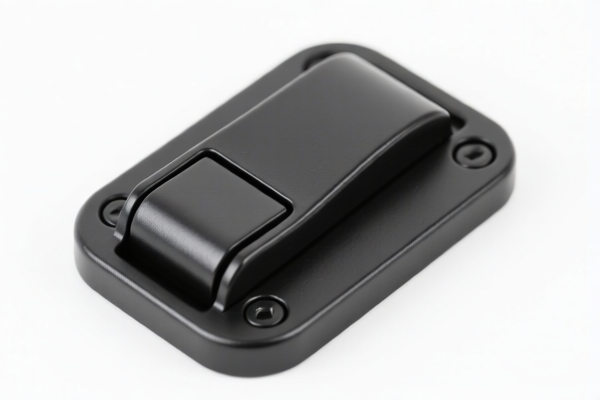
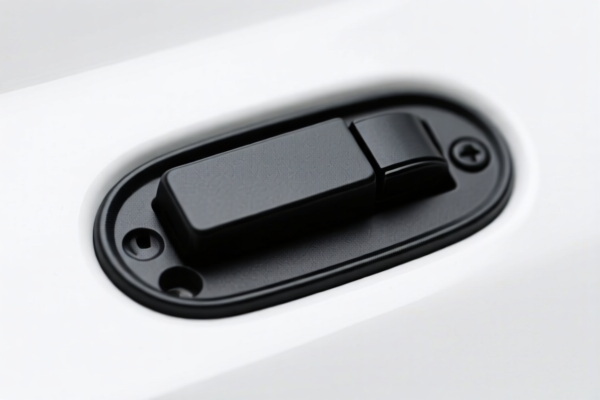
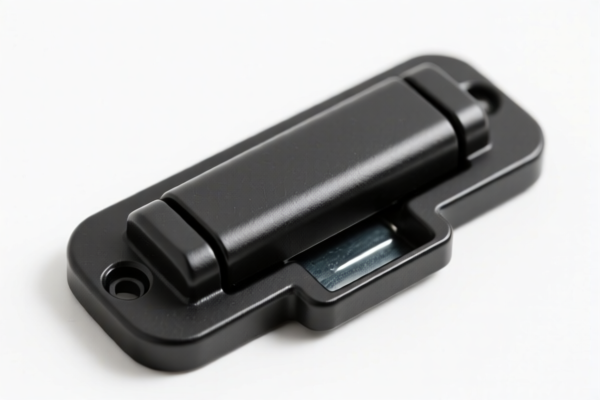
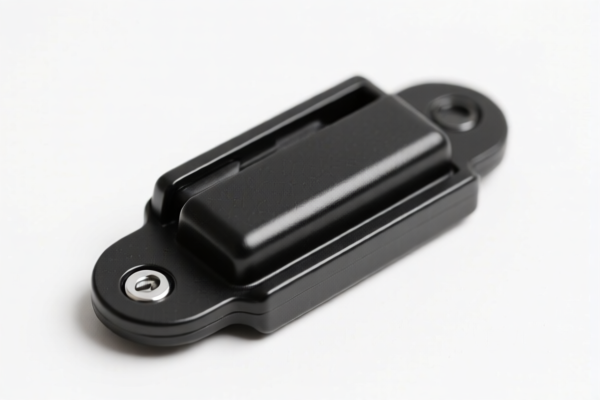
AI分析
🔐 Bonnet Lock (Hood Latch) – Global HS Code Classification & Tax Strategy Guide
🌐 HS Code Reference & Customs Clearance Guide | 2026 Latest Tariff Analysis | Professional Clearance Strategy
📌 I. Product Definition: What is a Bonnet Lock?
A Bonnet Lock (commonly known as a Hood Latch or Bonnet Catch) is a critical safety component used in the automotive industry to secure the engine hood (bonnet) of a vehicle to the chassis. It ensures the hood remains closed during operation and allows for quick release in emergencies.
In international trade, the classification of Bonnet Locks is often debated because they straddle two major categories: 1. Metal Hardware/Locks (Chapter 83): Viewed as a general metal locking device. 2. Automotive Parts (Chapter 87): Viewed as a specific part of a motor vehicle.
The correct HS Code significantly impacts the total tax liability, especially when importing into high-tariff markets like the United States.
⚠️ Key Distinction:
- If classified as a General Lock, it falls under Chapter 83. This often attracts higher additional tariffs (e.g., Section 301, IEEPA) because it is not explicitly exempt as an auto part. - If classified as an Auto Part, it falls under Chapter 87. While the base tariff is lower, it may still be subject to trade wars penalties depending on the specific subheading and origin.
📦 II. HS Code Classification Details (Based on Provided Data)
According to the provided data, there are three possible classifications for Bonnet Locks. Each has a different tax implication.
| HS Code | Classification Logic | Total Tax Rate | Tax Breakdown |
|---|---|---|---|
| 8301.20.00.60 | General Lock (Metal) Classified as "Locks of base metal for motor vehicles (other)." Logic: It is a metal lock, regardless of auto use. |
40.7% | Base: 5.7% + Section 301: 25.0% + IEEPA (122): 10% |
| 8301.40.60.30 | General Lock (Other) Classified as "Other locks." Logic: A "catch-all" category for locks that don't fit specific metal auto-lock descriptions. |
23.2% | Base: 5.7% + Section 301: 7.5% + IEEPA (122): 10% |
| 8708.29.51.10 | Auto Part (Body) Classified as "Body parts/accessories." Logic: It is a specific component of the vehicle body. |
37.5% (2.5% + 35.0%) |
Base: 2.5% + Section 301: 25.0% + IEEPA (122): 10% |
🔍 Critical Analysis:
- 8301.20.00.60 has the highest total tax (40.7%) due to the higher Section 301 rate (25%) combined with base tax.
- 8301.40.60.30 is the cheapest in Chapter 83 (23.2%) because it benefits from a lower Section 301 rate (7.5%).
- 8708.29.51.10 (Auto Part) has a lower base rate (2.5%), but the total tax is 37.5% (2.5% + 25% + 10%).
- Surprise: The "General Lock" classification (8301.40.60.30) is actually cheaper than the "Auto Part" classification (8708.29.51.10) in this specific dataset!
💰 III. Detailed Tax Clause Explanation (2026 Latest)
✅ Applicable Country: United States (US)
✅ Origin: China (CN)
✅ 生效时间: 2025年11月10日起 (November 10, 2025 onwards)
🎯 1. HS Code 8301.20.00.60 – Metal Locks for Motor Vehicles (Other)
| Item | Details |
|---|---|
| Base Tariff | 5.7% |
| Section 301 Tariff | +25.0% (High penalty for general locks) |
| IEEPA (122) Tariff | +10.0% (China-specific emergency power) |
| Total Tax | 40.7% |
| De Minimis Exemption | ❌ NO (Denied) |
| Legal Path | IEEPA:9903.01.24 → USITC:8301.20.00.60 → FOOTNOTE:301 |
📌 Explanation:
- This classification treats the bonnet lock as a generic metal locking device.
- The 25% Section 301 is the dominant cost driver.
- Total 40.7% makes this the most expensive option.
🎯 2. HS Code 8301.40.60.30 – Other Locks (General)
| Item | Details |
|---|---|
| Base Tariff | 5.7% |
| Section 301 Tariff | +7.5% (Lower penalty for "other" locks) |
| IEEPA (122) Tariff | +10.0% |
| Total Tax | 23.2% |
| De Minimis Exemption | ❌ NO (Denied) |
| Legal Path | IEEPA:9903.01.24 → USITC:8301.40.60.30 → FOOTNOTE:301 |
📌 Explanation:
- This is a "catch-all" category for locks that don't fit the "motor vehicle" specific subheading.
- The Section 301 rate is only 7.5%, significantly lower than 25%.
- Total 23.2% is the lowest tax rate among all three options.
- Strategy: If your product description can be argued as "Other Locks" rather than "Auto Parts" or "Specific Auto Locks," this is the optimal classification for cost savings.
🎯 3. HS Code 8708.29.51.10 – Auto Parts (Body)
| Item | Details |
|---|---|
| Base Tariff | 2.5% |
| Section 301 Tariff | +25.0% (Same as locks) |
| IEEPA (122) Tariff | +10.0% |
| Total Tax | 37.5% |
| De Minimis Exemption | ❌ NO (Denied) |
| Legal Path | IEEPA:9903.01.24 → USITC:8708.29.51.10 → FOOTNOTE:301 |
📌 Explanation:
- This classifies the item as a part of the motor vehicle body.
- Although the base tariff is very low (2.5%), the Section 301 rate is still 25%.
- Many importers assume auto parts have lower total taxes, but in this case, it is more expensive than8301.40.60.30.
🛠️ IV. Customs Clearance Recommendations (Practical Pitfall Guide)
✅ 1. Material Preparation Checklist
| Document | Required | Notes |
|---|---|---|
| ✅ Product Specification Sheet | ✔️ | Must include material (metal), function (latch), and installation method. |
| ✅ Product Photos | ✔️ | Show the lock from multiple angles. Clearly label "Bonnet Lock" or "Hood Latch." |
| ✅ Commercial Invoice | ✔️ | Clearly state "Bonnet Lock for Automotive Use." Avoid vague terms like "Metal Part." |
| ✅ Packing List | ✔️ | List quantity and weight per unit. |
| ✅ Certificate of Origin | ✔️ | Essential for proving Chinese origin and applying correct trade war tariffs. |
| ✅ Technical Diagram | ✔️ | Helps customs officers understand the function. If possible, highlight it as a "General Lock" mechanism. |
✅ 2. Declaration Strategy (Crucial Tips)
🔥 "Classification is Key: 'Other Locks' may save you 17%!"
| Scenario | Recommended HS Code | Total Tax | Why? |
|---|---|---|---|
| Optimal Cost Savings | 8301.40.60.30 | 23.2% | Uses "Other Locks" category to benefit from lower Section 301 (7.5%). |
| Standard Auto Part | 8708.29.51.10 | 37.5% | Safe for auto parts, but higher total tax due to 25% Section 301. |
| Specific Auto Lock | 8301.20.00.60 | 40.7% | Highest tax due to 25% Section 301 + higher base. Avoid unless necessary. |
⚠️ Warning:
- Do not simply declare as "Auto Part" if you can argue it is a "General Lock."
- However, ensure the product description is accurate. Misclassification can lead to fines, penalties, and shipment delays.
- If the lock is exclusively for automotive use and structurally distinct from general locks, customs may insist on 8708 or 8301.20.
- Consult with a customs broker to determine if "Other Locks" is justifiable for your specific product design.
✅ 3. Special Cases
| Case | Handling Advice |
|---|---|
| OEM Bonnet Locks | Provide OEM contracts to prove automotive use. However, if classifying as "Other Locks," emphasize the locking mechanism rather than the auto application. |
| Mixed Containers | If shipping with other auto parts, ensure Bonnet Locks are separately listed in the invoice with their correct HS Code. |
| Non-China Origin | If sourced from Vietnam, Mexico, etc., IEEPA tariffs (10%) may be exempt. Check eligibility for Section 301 exemptions. |
🌍 V. Global Market Comparison (2026)
| Market | Recommended HS Code | Base Tariff | Additional Taxes | Total Est. |
|---|---|---|---|---|
| 🇺🇸 USA (China) | 8301.40.60.30 | 5.7% | 17.5% (301+IEEPA) | 23.2% |
| 🇨🇳 China | 8301.40.60.30 | 5.7% | None | 5.7% |
| 🇪🇺 EU | 8301.40.60 | 2.7% | None | 2.7% |
| 🇬🇧 UK | 8301.40.60 | 3.0% | None | 3.0% |
📌 Conclusion:
- The USA is the only market with significant additional tariffs due to trade wars.
- China, EU, UK have low or no additional tariffs.
- For US imports, optimizing the HS Code to 8301.40.60.30 is the most cost-effective strategy.
📌 VI. Common Mistakes & Pitfalls (Lessons Learned)
❌ Mistake 1: Assuming "Auto Parts" always have lower taxes.
👉 Reality: In the US, Section 301 applies to many auto parts, making 8708 more expensive than 8301.40.60.30 in this case.
❌ Mistake 2: Vague declaration ("Metal Lock").
👉 Consequence: Customs may assign the highest default rate (e.g., 40.7%) due to lack of specificity.
❌ Mistake 3: Ignoring IEEPA (122) Tariffs.
👉 Consequence: Missing the 10% additional tax leads to underpayment and penalties.
✅ Best Practice:
- Use 8301.40.60.30 if justifiable.
- Clearly declare "Bonnet Lock" or "Hood Latch."
- Include technical drawings to support the classification.
🎯 VII. Conclusion: Professional Classification for Cost Savings
🎯 Key Takeaway:
🔹 "Don't default to 'Auto Part'! 'Other Locks' (8301.40.60.30) saves you 14.3% compared to 'Auto Part' (8708.29.51.10)."
🔹 "Total Tax is Base + 301 + IEEPA. Always calculate the sum!"
🔹 "Consult a customs broker to justify 'Other Locks' classification."
📌 Pro Tip:
If your Bonnet Locks are sourced from Vietnam or Mexico, you may be exempt from IEEPA (10%) and potentially Section 301. This could reduce the total tax to 0-7.5%.
Always verify the origin!
📣 Immediate Action:
📞 Contact a licensed customs broker to review your product photos and specifications.
🚀 Optimize your HS Code to 8301.40.60.30 if possible.
💰 Save up to 17.5% on tariffs!
✨ Professional Classification Starts with Precision!
💼 Every percentage point counts in global trade!
用户评价
关于 HS 编码归类
协调制度(HS)是由世界海关组织(WCO)制定的国际贸易商品分类标准。全球 200 多个国家采用 HS 系统作为海关关税、贸易统计和进出口监管的基础。
每个 HS 编码遵循以下层级结构:
- 章(2 位)——商品大类(例如:第 84 章:机器和机械设备)
- 品目(4 位)——章内的更具体分类
- 子目(6 位)——国际通用细分,所有 WCO 成员国统一使用
- 本国细分(8-10 位)——各国自行扩展的细分编码,如美国 HTSUS 10 位编码
正确的 HS 编码归类对于顺利通关、准确缴纳关税和遵守贸易法规至关重要。错误归类可能导致海关延误、多缴关税或罚款。
从CN进口到US时,适用的关税税率可能包括:
- 最惠国(MFN)税率——适用于 WTO 成员国的标准关税税率
- 普通税率——适用于无贸易协定国家
- 贸易救济关税——附加关税,如 301 条款(反倾销)、232 条款(国家安全)或反补贴税
本页内容仅供参考。如需正式归类,请咨询当地海关或持牌报关代理。