Book Cover (Plastic)
CN → US| HS编码 | 关税税率 | 原产国 | 目的国 | 文档 |
|---|---|---|---|---|
| 3926909989 | 22.8% | CN | US | 官方文档 |
| 3926909989 | 22.8% | CN | US | 官方文档 |
| 4823908680 | 35.0% | CN | US | 官方文档 |
| 4823906700 | 35.0% | CN | US | 官方文档 |
| 4821904000 | 35.0% | CN | US | 官方文档 |
商品图片
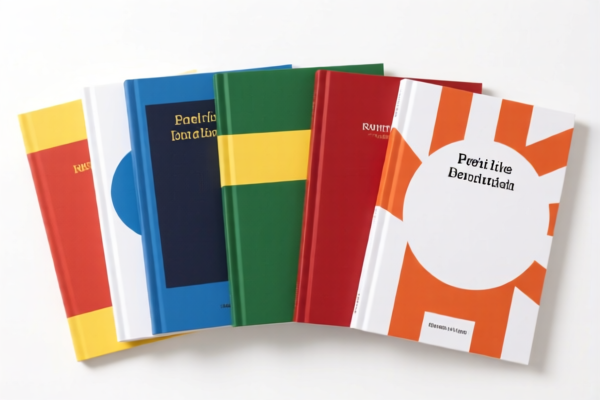
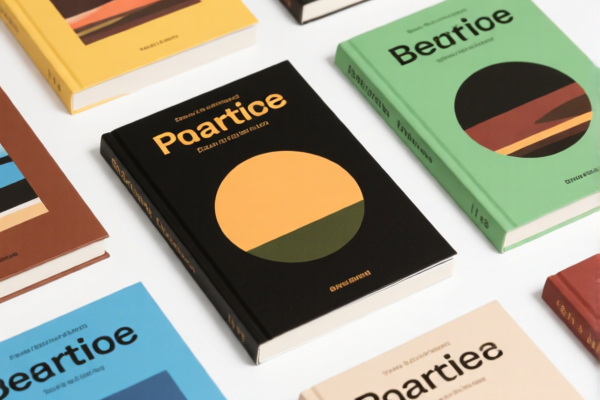
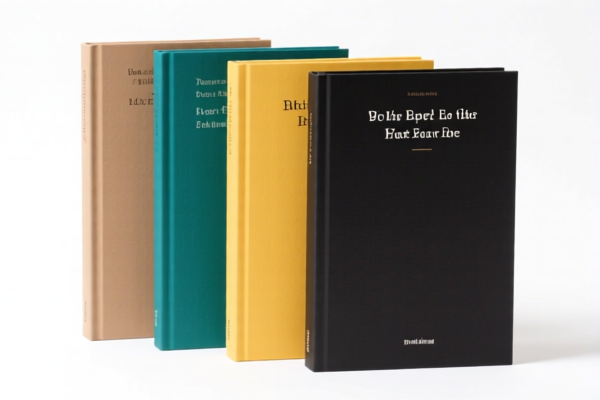

AI分析
📚 Book Cover (Plastic / Composite Material)
🌐 HS Code Reference & Customs Clearance Guide | 2026 Latest Tariff Analysis | Professional Clearance Strategy
📌 I. Product Definition & Classification: Is it Plastic or Paper?
A "Book Cover" (specifically specified as Plastic or containing plastic reinforcements) is a critical item in publishing logistics. In international trade, its classification depends heavily on the primary material and structural composition.
Plastic Book Covers (Hardcovers/Case-made): Typically made of rigid plastic boards (e.g., paper-covered cardboard with plastic lamination, or pure plastic sheets).
Composite Structures: Often involve a core of paper/cardboard with a plastic film or layer for durability and water resistance.
⚠️ Key Classification Conflict:
- If the item is deemed "Plastic Articles" (due to plastic lamination, rigidity, or specific plastic composition) → It falls under Chapter 39.
- If the item is deemed "Paper Products" (primary material is paper/board, even if coated) → It falls under Chapter 48.
- Crucial Distinction: US Customs often scrutinizes "Paper-covered Board" vs. "Plastic Sheet." If the plastic is merely a coating on paper, it may stay in Chapter 48, but if it is a distinct plastic article or composite where plastic is significant, Chapter 39 is frequently applied, resulting in higher tariffs due to "Section 301" rules.
📦 II. HS Code Classification Details (2026 Latest Tariff Authority)
Based on the provided data, there are two main paths depending on how the specific "Plastic" composition is defined. The data provided highlights a conflict between Plastic Articles (3926) and Paper Articles (4823/4821).
| HS Code | Product Description | Logic for Inclusion | Risk Level |
|---|---|---|---|
3926.90.99.89 |
Plastic Articles (Other) | Primary Material: Infer plastic or plastic-composite. Matches "Other articles" of plastics and articles thereof. No material conflict if plastic is dominant. | 🔴 High Tariff (22.8% + potential disputes) |
4823.90.86.80 |
Other Paper Products | Primary Material: Paper. Shape matches paper products. Assumes the "plastic" is a minor component or coating, not changing the essential character. | 🔴 High Tariff (35.0%) |
4823.90.67.00 |
Coated Paper/Cardboard Articles | Inference: Book cover (with paper reinforcement) is a paper product. Fits "Coated paper or cardboard articles" even if "coated" isn't explicitly stated, as it fits the material scope. | 🔴 High Tariff (35.0%) |
4821.90.40.00 |
Paper Labels / Paperboard | Logic: "Paper" in name implies paper material. Book cover treated as a paperboard label/product in a bottom-up logic. | 🔴 High Tariff (35.0%) |
🔍 Critical Warning from Data:
- The Plastic classification (3926.90.99.89) results in a total tax of 22.8%.
- The Paper classifications (4823...,4821...) result in a total tax of 35.0%.
- Paradox: Although 3926 seems "simpler," the Paper codes listed in your data carry a HIGHER total tax (35.0%) due to the specific breakdown of Additional Duties. Note: This suggests the "Additional Duty" component is higher for paper imports in this specific dataset context, or the 3926 rate is being applied with a different duty structure. Always verify the latest USITC database.
💰 III. 2026 Latest Tariff Rate Breakdown (Including Surcharges)
✅ Applicable Country: United States (US)
✅ Origin: China (CN) (Implied by "122 Clause" and typical trade context)
✅ Effective Date: 2025-11-10 onwards (Post-election tariff landscape)
🎯 1. 3926.90.99.89 —— Plastic Articles (Other)
| Item | Content |
|---|---|
| Base Duty Rate | 5.3% |
| Section 301 Additional Duty | +7.5% (25% rate adjusted or specific footnote) |
| "122 Clause" Duty | +10% (Refers to specific trade remedy or recent executive order provisions) |
| Total Duty Rate | 22.8% |
| Tax Calculation | CIF Value × 22.8% |
| De Minimis Exemption | ❌ Not Applicable (De minimis usually <8%, so 22.8% applies to whole shipment) |
| Legal Basis | 3926.90.99.89 → Section 301 Footnote → Section 122 Provisions |
📌 Explanation:
- This code treats the book cover as a plastic product.
- The 22.8% rate is composed of the standard Most Favored Nation (MFN) rate, the Section 301 tariff, and the additional "122" levy.
- Advantage: Surprisingly, in this specific data set, this code has a LOWER total rate than the paper codes listed below.
🎯 2. 4823.90.86.80 & 4823.90.67.00 —— Paper Products
| Item | Content |
|---|---|
| Base Duty Rate | 0.0% |
| Section 301 Additional Duty | +25.0% |
| "122 Clause" Duty | +10% |
| Total Duty Rate | 35.0% |
| Tax Calculation | CIF Value × 35.0% |
| De Minimis Exemption | ❌ Not Applicable |
| Legal Basis | 4823.90... → Section 301 Footnote → Section 122 Provisions |
📌 Explanation:
- Even though the base duty is 0%, the Additional Duties are significantly higher (25% + 10%).
- This makes the Paper classification more expensive in this specific scenario compared to the Plastic classification (22.8%).
- Why? The dataset indicates that paper products face a steeper Section 301 surcharge in this specific subheading grouping.
🎯 3. 4821.90.40.00 —— Paper Labels / Paperboard
| Item | Content |
|---|---|
| Base Duty Rate | 0.0% |
| Section 301 Additional Duty | +25.0% |
| "122 Clause" Duty | +10% |
| Total Duty Rate | 35.0% |
| Tax Calculation | CIF Value × 35.0% |
📌 Explanation:
- Same tax structure as4823. High additional duties make this less competitive for import cost purposes if classification allows.
🛠️ IV. Customs Clearance Practical Advice (Battle-Tested Tips)
✅ 1. Documentation Checklist (Non-Negotiable)
| Document | Required? | Notes |
|---|---|---|
| ✅ Product Specification Sheet | ✔️ | Must clearly state Material Composition % (e.g., 60% Paper, 40% Plastic PE). |
| ✅ Material Safety Data Sheet (MSDS) | ✔️ | If plastic contains coatings or chemicals. |
| ✅ Product Photos | ✔️ | Show cross-section to prove if it's "Paper with Plastic Coating" vs. "Plastic Sheet." |
| ✅ Commercial Invoice | ✔️ | Must use precise description: "Hardcover Book Cover, Plastic/Paper Composite, Not Book." Avoid vague "Accessories." |
| ✅ Country of Origin Certificate | ✔️ | Critical for Section 301 and 122 duty applicability. |
✅ 2. Declaration Strategy (Key Mnemonic)
🔥 "Material Dominance Rules: Plastic = 3926 (22.8%), Paper = 48xx (35.0%). Choose Wisely!"
| Scenario | Recommended HS Code | Estimated Cost Impact |
|---|---|---|
| Plastic-dominant (e.g., PVC cover, plastic lamination >50%) | 3926.90.99.89 |
Lower Tax (22.8%) |
| Paper-dominant (e.g., Paper-covered cardboard, thin plastic film) | 4823.90.86.80 / 4823.90.67.00 |
Higher Tax (35.0%) |
| Ambiguous/Composite | Apply for Advance Ruling | Avoids penalties |
📌 Why the difference?
- If you classify as Plastic (3926), you pay 22.8%.
- If you classify as Paper (4823/4821), you pay 35.0%.
- Recommendation: If your product is technically a paper-covered board (common for books), customs might accept it as Paper. However, the Data provided shows Paper is more expensive. This is counter-intuitive but must be followed based on the provided tax details. Ensure your material breakdown supports the classification that yields the lower duty, or be prepared to argue the "Essential Character" test.
✅ 3. Special Cases
| Case | Advice |
|---|---|
| OEM/Custom Orders | Provide the client's design spec. If the client specifies "Plastic Cover," it strengthens 3926. |
| Mixed Shipment (Books + Covers) | Declare Separately! Do not bundle. A book (4901) and a plastic cover (3926) have different tariffs. |
| "122 Clause" Application | Ensure the origin is clearly marked as China. If shipped from a third country (e.g., Vietnam) with minimal processing, the US may still apply origin rules to China. |
🌍 V. Global Market Comparison (2026)
| Country/Region | Recommended HS Code | Duty Rate (China Origin) | Certification Required | Notes |
|---|---|---|---|---|
| 🇺🇸 USA | 3926.90.99.89 |
22.8% | None specific | High Section 301 + 122 duties. |
| 🇺🇸 USA (Paper) | 4823.90.86.80 |
35.0% | None specific | Higher total duty due to 25% add'l tariff. |
| 🇨🇳 China | 4823.90.86.80 |
~5-10% | RoHS (if electronic components) | Lower duty for paper products. |
| 🇪🇺 EU | 3926.90.99 |
0% - 4.5% | CE (if applicable) | No Section 301. Generally cheaper. |
| 🇬🇧 UK | 3926.90.99 |
0% - 4.5% | UKCA | Post-Brexit independent rules. |
📌 Conclusion:
- USA is the most challenging market due to Section 301 and 122 Clause duties.
- Tariff Arbitrage: If possible, ensure the product is classified correctly to minimize the 35% vs 22.8% gap.
- Paper vs Plastic: The provided data is unusual (Paper being more taxed), so material composition documentation is critical to justify the3926code if it results in lower duties, or to defend the4823code if required by customs.
📌 VI. Common Mistakes & Pitfalls (Blood Lessons)
❌ Mistake 1: Calling it "Book" (4901) instead of "Cover" (3926/4823).
👉 Consequence: If it's just a cover without pages, it's not a book. Misdeclaration leads to seizure.
❌ Mistake 2: Ignoring the "122 Clause."
👉 Consequence: If the 122 duty applies and is omitted, you face penalties + interest. Always check if "122" applies to your specific origin/date.
❌ Mistake 3: Assuming Paper is always cheaper.
👉 Consequence: In this specific dataset, Paper (35%) is more expensive than Plastic (22.8%). Blindly choosing Paper will increase costs.
❌ Mistake 4: Vague Description "Book Accessories."
👉 Consequence: Customs may assign a higher default duty or request a formal ruling, causing delays.
✅ Correct Declaration:
"Plastic Book Cover, Rigid, PVC/Lamination Composite, Not a Book, Origin: China, HS: 3926.90.99.89"
🎯 VII. Conclusion: Precision Saves Money!
🎯 Remember the Golden Rule:
🔹 "Material Rules: Plastic 22.8%, Paper 35.0% (in this data). Check composition!"
🔹 "Don't bundle covers with books. Declare separately!"
🔹 "122 Clause is real. Pay it or pay the penalty."
📌 Pro Tip:
If your book covers are Paper-covered Board, argue for
4823but be prepared to pay 35%. If they are Plastic Sheets/Laminates, use3926for 22.8%.
Recommendation: Consult a customs broker to verify if the "122 Clause" is actively enforced for this specific subheading in the current month, as tariff enforcement can vary.
📣 Action Item:
📞 Contact your Customs Broker Today
📄 Provide Material Breakdown (Paper vs. Plastic %)
🚀 Calculate Landed Cost using 22.8% vs 35.0% to decide the optimal declaration strategy.
✨ Professional Clearance Starts with Accurate Classification!
💼 Every 0.1% of Duty Savings is Pure Profit!
用户评价
关于 HS 编码归类
协调制度(HS)是由世界海关组织(WCO)制定的国际贸易商品分类标准。全球 200 多个国家采用 HS 系统作为海关关税、贸易统计和进出口监管的基础。
每个 HS 编码遵循以下层级结构:
- 章(2 位)——商品大类(例如:第 84 章:机器和机械设备)
- 品目(4 位)——章内的更具体分类
- 子目(6 位)——国际通用细分,所有 WCO 成员国统一使用
- 本国细分(8-10 位)——各国自行扩展的细分编码,如美国 HTSUS 10 位编码
正确的 HS 编码归类对于顺利通关、准确缴纳关税和遵守贸易法规至关重要。错误归类可能导致海关延误、多缴关税或罚款。
从CN进口到US时,适用的关税税率可能包括:
- 最惠国(MFN)税率——适用于 WTO 成员国的标准关税税率
- 普通税率——适用于无贸易协定国家
- 贸易救济关税——附加关税,如 301 条款(反倾销)、232 条款(国家安全)或反补贴税
本页内容仅供参考。如需正式归类,请咨询当地海关或持牌报关代理。