Borosilicate Laboratory Beaker
CN → US| HS编码 | 关税税率 | 原产国 | 目的国 | 文档 |
|---|---|---|---|---|
| 7017200000 | 41.7% | CN | US | 官方文档 |
| 7017905000 | 41.7% | CN | US | 官方文档 |
| 7020006000 | 40.0% | CN | US | 官方文档 |
| 7020004000 | 41.6% | CN | US | 官方文档 |
商品图片
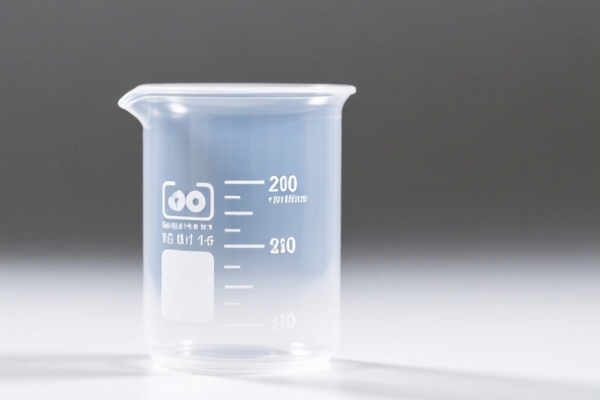
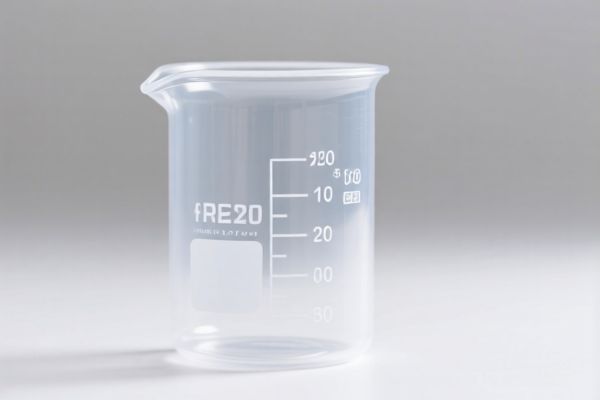
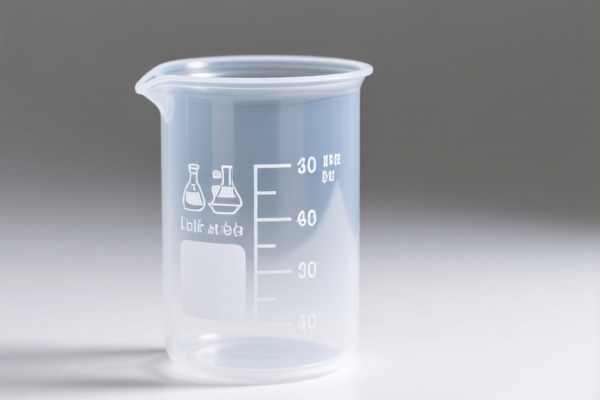
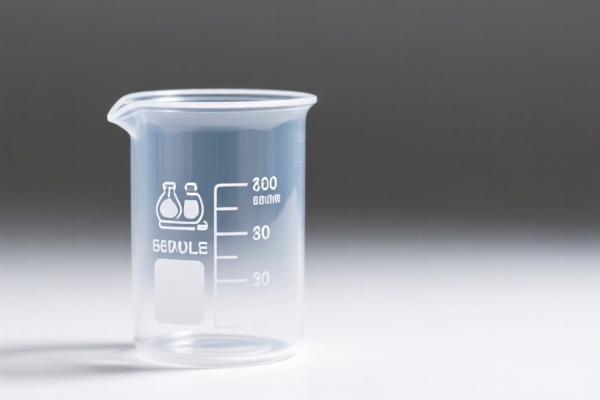
AI分析
🧪 Borosilicate Laboratory Beaker (Borosilicate Glass Laboratory Ware)
🌐 HS Code Reference & Customs Clearance Guide | 2026 Latest Tariff Analysis | Professional Entry Strategy
📌 I. Product Definition & Classification: Do You Really Understand "Laboratory Beakers"?
Borosilicate laboratory beakers are essential tools in chemical analysis, pharmaceutical testing, and industrial research. Characterized by their low coefficient of thermal expansion (≤ 5 x 10⁻⁶/K), they offer superior resistance to thermal shock and chemical corrosion compared to soda-lime glass.
In international trade, these items are categorized based on their specific designation and material composition:
1. Specific Laboratory Ware (Heading 7017):
Beakers explicitly designated for laboratory use, often made of borosilicate glass (Pyrex/Kimax types). These are the primary category for standard lab equipment.
2. General Glass Articles (Heading 7020):
Items that may serve a laboratory function but are classified under broader "other glass articles" if not strictly defined as "laboratory, chemical, or pharmaceutical glassware" in Chapter 70 Note 1. This applies when the specific intent is less clear or when they fall under generic container definitions.
⚠️ Key Distinction:
- If the product is explicitly labeled, designed, and marketed for laboratory/chemical analysis → Heading 7017 is preferred.
- If the product is a general-purpose glass vessel used in a lab but not strictly defined as "lab ware" (e.g., generic containers) → Heading 7020 may apply.
📦 II. HS Code Classification Details (2026 Latest Tariff Authority Match)
Based on the provided data, here are the specific HS Codes and their corresponding tax implications for Borosilicate Laboratory Beakers.
| HS Code | Product Description | Tax Detail Breakdown | Total Tax Rate |
|---|---|---|---|
| 7017.20.00.00 | Borosilicate glass, laboratory use beakers, with linear expansion coefficient ≤ 5 x 10⁻⁶/K | Base Tariff: 6.7% Add'l Tariff: 25.0% Section 122 Tariff: 10% |
41.7% |
| 7017.90.50.00 | Borosilicate glass, laboratory use beakers, falling under glass articles & lab use classification | Base Tariff: 6.7% Add'l Tariff: 25.0% Section 122 Tariff: 10% |
41.7% |
| 7020.00.60.00 | Borosilicate glass material, other glass articles, beakers categorized under glass ware | Base Tariff: 5.0% Add'l Tariff: 25.0% Section 122 Tariff: 10% |
40.0% |
| 7020.00.40.00 | Borosilicate glass material, other glass articles, for vacuum flasks or other containers (no conflict) | Base Tariff: 6.6% Add'l Tariff: 25.0% Section 122 Tariff: 10% |
41.6% |
🔍 Critical Observation:
- The lowest total tax rate is 40.0% under HS Code 7020.00.60.00.
- The standard lab-specific codes (7017.20.00.00 and 7017.90.50.00) carry a higher total rate of 41.7%.
- All codes include a 25% Add'l Tariff (likely Section 301) and a 10% Section 122 Tariff (likely Section 232 or specific bilateral measures).
💰 III. 2026 Latest Tariff Rate Breakdown (Including Surtaxes & Policy Add-ons)
✅ Applicable Country: United States (US)
✅ Country of Origin: China (CN)
✅ Effective Date: Current rates as per 2026 data provided.
🎯 1. HS Code 7017.20.00.00 & 7017.90.50.00 — Standard Laboratory Beakers
| Item | Content |
|---|---|
| Base Tariff | 6.7% (Ad Valorem) |
| Add'l Tariff (301) | +25% |
| Section 122 Tariff | +10% |
| Total Effective Rate | 41.7% |
| Calculation Basis | CIF Value × 41.7% |
| De Minimis Exemption | ❌ Not Eligible (High tariff rate exceeds threshold) |
| Legal Basis | HTSUS 7017/7020 + Section 301 Footnotes + Section 122 Provisions |
📌 Explanation:
- Base Rate (6.7%): Standard MFN rate for glass laboratory ware.
- Add'l Tariff (25%): Applied under Section 301 of the Trade Act of 1974 for Chinese imports.
- Section 122 Tariff (10%): Specific additional duty applied to these glass articles.
- Total (41.7%): This is a high-cost entry category. Importers must budget accordingly.
🎯 2. HS Code 7020.00.60.00 — "Other Glass Articles" (Lowest Tax Option)
| Item | Content |
|---|---|
| Base Tariff | 5.0% (Ad Valorem) |
| Add'l Tariff (301) | +25% |
| Section 122 Tariff | +10% |
| Total Effective Rate | 40.0% |
| Calculation Basis | CIF Value × 40.0% |
| De Minimis Exemption | ❌ Not Eligible |
| Legal Basis | HTSUS 7020 + Section 301 + Section 122 |
📌 Explanation:
- By classifying beakers as "other glass articles" rather than strict "laboratory ware," the base tariff drops from 6.7% to 5.0%.
- This results in a 1.7% savings on the total tax burden.
- Risk: Customs may challenge this if the product is clearly labeled and designed for laboratory use. It requires careful documentation to support the "general use" argument.
🎯 3. HS Code 7020.00.40.00 — Vacuum Flask/Container Category
| Item | Content |
|---|---|
| Base Tariff | 6.6% (Ad Valorem) |
| Add'l Tariff (301) | +25% |
| Section 122 Tariff | +10% |
| Total Effective Rate | 41.6% |
| Calculation Basis | CIF Value × 41.6% |
| De Minimis Exemption | ❌ Not Eligible |
📌 Explanation:
- This code is relevant if the beaker is used in a context similar to vacuum flasks or general containers.
- It offers a slight advantage over the 7017 codes but is slightly higher than 7020.00.60.00.
🛠️ IV. Customs Clearance Operational Advice (Pitfall Avoidance Guide)
✅ 1. Documentation Checklist (Essential for Clearance)
| Document | Required? | Notes |
|---|---|---|
| ✅ Product Specification Sheet | ✔️ | Must specify Borosilicate Glass, Linear Expansion Coefficient ≤ 5 x 10⁻⁶/K, and Laboratory Use. |
| ✅ Commercial Invoice | ✔️ | Clearly state "Laboratory Beaker" or "Glass Article". Avoid vague terms like "Glass Cup". |
| ✅ Packing List | ✔️ | Include weight, dimensions, and quantity. |
| ✅ Certificate of Origin (CO) | ✔️ | Required for proving Chinese origin (to assess Section 301/122 tariffs). |
| ✅ Material Safety Data Sheet (MSDS) | ✔️ | Optional but helpful to confirm borosilicate composition. |
| ✅ Customs Valuation Declaration | ✔️ | Justify CIF value to avoid undervaluation penalties. |
✅ 2. Classification Strategy (Key Tips)
🔥 "Choose the Right Heading: Lab vs. General Glass"
| Scenario | Recommended HS Code | Tax Rate | Reason |
|---|---|---|---|
| Explicit Lab Use (Labeled "For Lab Use", graduated markings) | 7017.20.00.00 |
41.7% | Most accurate, but higher base tariff. |
| General Purpose Glass Beakers (No lab markings, generic design) | 7020.00.60.00 |
40.0% | Lowest Tax. Use if product design allows. |
| Vacuum/Container Style | 7020.00.40.00 |
41.6% | Niche use case. |
📌 Important:
- If you choose7020.00.60.00to save 1.7%, ensure your product does not have explicit laboratory graduations or branding that strictly ties it to "laboratory use" under HTSUS Note 1 to Chapter 70.
- Customs officers may request evidence of general use (e.g., for cosmetic mixing, home brewing, etc.).
✅ 3. Special Considerations
| Issue | Solution |
|---|---|
| High Tariff Impact | Factor in 40-42% of the CIF value as direct duty cost. |
| Section 122 Compliance | Ensure all documentation aligns with Section 122 requirements to avoid delays. |
| De Minimis Exclusion | Be aware that small packages (under $800) may still be subject to duties if classified under these high-tariff codes, depending on current CBP enforcement. |
| Origin Labeling | Products must be clearly marked "Made in China" on packaging and glassware. |
🌍 V. Global Market Comparison (2026 Snapshot)
| Country/Region | Recommended HS Code | Est. Total Tax (China Origin) | Key Certification |
|---|---|---|---|
| 🇺🇸 USA | 7020.00.60.00 |
40.0% | None specific, but accurate classification is critical. |
| 🇨🇳 China | 7017.20.00.00 |
~5-6% (Domestic) | CCC (if applicable) |
| 🇪🇺 EU | 7017.20.00.00 |
4.5% | CE Marking (if sold as lab equipment) |
| 🇬🇧 UK | 7017.20.00.00 |
4.5% | UKCA Marking |
| 🇦🇺 Australia | 7017.20.00.00 |
5% | None specific |
📌 Conclusion:
- The US market is the most costly due to the 25% Section 301 tariff and 10% Section 122 tariff.
- Diversification Strategy: Consider sourcing from Vietnam or Thailand for US-bound goods to potentially avoid Section 301 tariffs (if origin rules are met).
- Tax Optimization: Using7020.00.60.00provides a modest savings but requires careful product design and documentation.
📌 VI. Common Mistakes & Pitfalls (Lessons Learned)
❌ Mistake 1: Classifying lab beakers under 7020 without proper justification.
👉 Consequence: Customs may reclassify to 7017, leading to back taxes, penalties, and shipment delays.
❌ Mistake 2: Ignoring the Linear Expansion Coefficient.
👉 Consequence: If the product does not meet ≤ 5 x 10⁻⁶/K, it may not qualify for specific borosilicate subheadings, leading to misclassification.
❌ Mistake 3: Overlooking Section 122 Tariffs.
👉 Consequence: Unexpected tax liabilities if the 10% duty is not included in cost calculations.
❌ Mistake 4: Vague Product Description on Invoice.
👉 Consequence: Customs may assign a default high tariff or hold the shipment for further inspection.
✅ Best Practice:
"Borosilicate Glass Beaker, Laboratory Grade, 500ml, Graduated, Expansion Coeff. ≤ 5x10⁻⁶/K, Made in China"
🎯 VII. Conclusion: Precision Classification Saves Money!
🎯 Key Takeaway:
🔹 "Lab Beakers = High Tariff (41.7%) in US"
🔹 "General Glass Beakers = Lower Tariff (40.0%) in US"
🔹 "Always Check Linear Expansion Coefficient!"
📌 Pro Tip:
If your volume is significant, consider Advance Rulings from US Customs (CBP) to lock in your HS Code classification and avoid future disputes.
📣 Immediate Action:
📞 Consult a licensed customs broker.
📄 Prepare precise product specifications.
🚀 Optimize your supply chain to mitigate high US tariffs.
✨ Professional clearance starts with accurate classification!
💼 Your profit margin depends on this 1.7% difference!
用户评价
关于 HS 编码归类
协调制度(HS)是由世界海关组织(WCO)制定的国际贸易商品分类标准。全球 200 多个国家采用 HS 系统作为海关关税、贸易统计和进出口监管的基础。
每个 HS 编码遵循以下层级结构:
- 章(2 位)——商品大类(例如:第 84 章:机器和机械设备)
- 品目(4 位)——章内的更具体分类
- 子目(6 位)——国际通用细分,所有 WCO 成员国统一使用
- 本国细分(8-10 位)——各国自行扩展的细分编码,如美国 HTSUS 10 位编码
正确的 HS 编码归类对于顺利通关、准确缴纳关税和遵守贸易法规至关重要。错误归类可能导致海关延误、多缴关税或罚款。
从CN进口到US时,适用的关税税率可能包括:
- 最惠国(MFN)税率——适用于 WTO 成员国的标准关税税率
- 普通税率——适用于无贸易协定国家
- 贸易救济关税——附加关税,如 301 条款(反倾销)、232 条款(国家安全)或反补贴税
本页内容仅供参考。如需正式归类,请咨询当地海关或持牌报关代理。