Boys Knitted
CN → US| HS编码 | 关税税率 | 原产国 | 目的国 | 文档 |
|---|---|---|---|---|
| 6109100014 | 34.0% | CN | US | 官方文档 |
| 6111203000 | 32.4% | CN | US | 官方文档 |
| 6110202015 | 34.0% | CN | US | 官方文档 |
| 6110303015 | 49.5% | CN | US | 官方文档 |
| 6109901009 | 49.5% | CN | US | 官方文档 |
商品图片
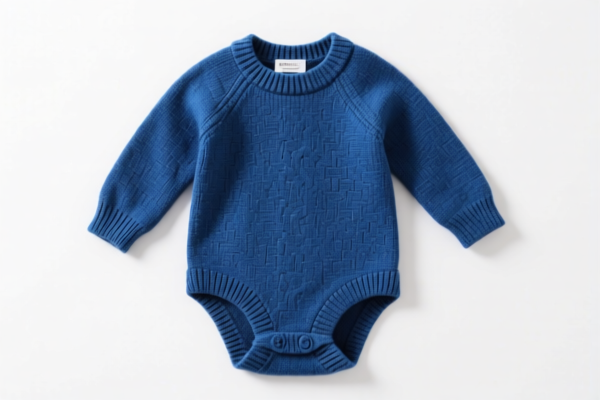


AI分析
👕 Boys Knitted Garments: HS Code Classification & Tax Analysis (2026 Edition)
🌐 HS Code Reference & Customs Clearance Guide | Latest 2026 Tariff Breakdown | Professional Entry Strategy
📌 I. Product Definition & Classification: Are You Sure You Know "Boys Knitted"?
"Boys Knitted" is a broad category in international trade, primarily encompassing boys' knitted or crocheted apparel. In the context of current trade data, this category is further细分 (subdivided) based on: * Material Composition: Cotton, Synthetic Fibers, or Artificial Fibers. * Garment Type: T-shirts (undergarments/outerwear), Sweaters, or Baby/Kids specific wear. * Target Age Group: General boys' wear vs. Infant/Toddler specific wear.
⚠️ Key Distinction Point:
- Cotton-based items (e.g., T-shirts, Sweaters) typically fall under 6109, 6111, or 6110.20.
- Synthetic/Artificial Fiber items (e.g., Polyester T-shirts, Acrylic Sweaters) fall under 6109.90, 6110.30, etc.
- Infant/Toddler specific items may have different duty rates under 6111.20.
📦 II. HS Code Classification Details (2026 Latest Tariff Authority Comparison)
The following HS Codes are derived from the provided data for "Boys Knitted" products, categorized by material and specific use.
| HS Code | Product Description | Application Scenario | Primary Material Inferred | Total Tax Rate |
|---|---|---|---|---|
6109.10.00.14 |
Knitted T-shirts (Undergarments/Outerwear) | Boys' Cotton T-shirts | ✅ Cotton or Synthetic Blend | 34.0% |
6111.20.30.00 |
Baby/Kids Knitted Clothing | Boys' Infant/Toddler Wear | ✅ Cotton | 32.4% |
6110.20.20.15 |
Knitted Sweaters/Jumpers | Boys' Cotton Sweaters | ✅ Cotton | 34.0% |
6110.30.30.15 |
Knitted Sweaters/Jumpers | Boys' Synthetic/Acrylic Sweaters | ❌ Synthetic/Artificial | 49.5% |
6109.90.10.09 |
Knitted T-shirts (Other) | Boys' Synthetic/Artificial T-shirts | ❌ Artificial Fiber | 49.5% |
🔍 Key Insight:
- Cotton-based boys' knitted wear generally faces a total tax burden of 32.4% - 34.0%.
- Synthetic/Artificial fiber boys' knitted wear faces a significantly higher burden of 49.5% due to higher base tariffs.
- Infant/Toddler specific cotton wear (6111.20.30.00) has a slightly lower total rate (32.4%) compared to general boys' cotton wear.
💰 III. 2026 Latest Tariff Rate Breakdown (Including Surtaxes & Policy Add-ons)
✅ Applicable Country: United States (US)
✅ Origin: China (CN)
✅ Effective Time: 2025/2026 (Current Trade Policy)
🎯 1. Cotton-Based Items (6109.10.00.14, 6110.20.20.15, 6111.20.30.00)
| Item | Content |
|---|---|
| Base Tariff | 14.9% - 16.5% (ad valorem) |
| Section 301 Surtax | +7.5% (Specific to certain textile categories) |
| Section 122 Surtax | +10% (Specific import provision) |
| Total Tax Rate | 32.4% - 34.0% |
| Tax Calculation | CIF Value × Total Rate |
| De Minimis Eligibility | ❌ Not Eligible (Textiles are generally excluded from Section 321 de minimis exemptions) |
| Legal Basis Path | HTSUS:6109/6110/6111 → Section 301 Footnote → Section 122 Provision |
📌 Explanation:
- The base tariff varies slightly depending on whether it is a T-shirt (6109), Sweater (6110), or Infant wear (6111).
- The Section 301 surtax (7.5%) is a standard penalty on many Chinese textile imports.
- The Section 122 surtax (10%) is an additional protectionist measure applied to specific textile and apparel categories.
- Total rates range from 32.4% to 34.0%. This is a high-cost category for US importers.
🎯 2. Synthetic/Artificial Fiber Items (6110.30.30.15, 6109.90.10.09)
| Item | Content |
|---|---|
| Base Tariff | 32.0% (ad valorem) |
| Section 301 Surtax | +7.5% |
| Section 122 Surtax | +10% |
| Total Tax Rate | 49.5% |
| Tax Calculation | CIF Value × 49.5% |
| De Minimis Eligibility | ❌ Not Eligible |
| Legal Basis Path | HTSUS:6109/6110 (Synthetic) → Section 301 Footnote → Section 122 Provision |
📌 Explanation:
- Base tariff is significantly higher (32.0%) for synthetic/artificial fiber garments compared to cotton.
- The same surtaxes (7.5% + 10%) apply, pushing the total rate to 49.5%.
- High-cost Alert: Synthetic boys' knitted wear is nearly 15-17% more expensive in duties than cotton equivalents.
🛠️ IV. Customs Clearance Practical Advice (Battle-Tested Pitfall Guide)
✅ 1. Required Document Checklist (Non-Negotiable)
| Document | Must Provide | Description |
|---|---|---|
| ✅ Product Spec Sheet | ✔️ | Details: Fabric content (e.g., 100% Cotton vs. 100% Polyester), garment type, size range. |
| ✅ Laboratory Test Report | ✔️ | Fiber composition analysis is critical to determine HS Code (Cotton vs. Synthetic). |
| ✅ Product Photos (with Labels) | ✔️ | Clear view of care labels showing material composition (e.g., "100% Cotton"). |
| ✅ Commercial Invoice | ✔️ | Must explicitly state "Boys Knitted T-Shirt/Sweater" and material. |
| ✅ Packing List | ✔️ | Item count, weights, and dimensions. |
| ✅ Origin Certificate (CO) | ✔️ | To prove origin as China (CN) for surtax calculation. |
✅ 2. Declaration Tips (Key Mantras)
🔥 "Material Defines Code, Label Defines Truth, Don't Split Shipments!"
| Scenario | Correct Declaration | Incorrect Practice |
|---|---|---|
| 100% Cotton T-Shirt | 6109.10.00.14 |
Declare as "Synthetic" → 49.5% (Overpay) |
| Polyester Sweater | 6110.30.30.15 |
Declare as "Cotton" → 34% (Underpay, High Risk of Penalty) |
| Baby Knitted Onesie | 6111.20.30.00 |
Declare as "Boys Sweater" → 34% (Missed 32.4% saving) |
| Mixed Pack (Cotton + Synthetic) | Split Declaration | Mixed declaration → Audit risk, delayed clearance |
✅ 3. Special Cases Handling
| Situation | Handling Advice |
|---|---|
| OEM/Private Label | Ensure the label matches the declaration. If the label says 100% Cotton but you declare 100% Polyester, Customs will reject or penalize. |
| Blended Fabrics (e.g., 80% Cotton, 20% Polyester) | Generally classified based on principal material (Cotton). Declare under 6109.10 or 6110.20 if cotton is >50%. |
| "Unisex" or "Kids" Labeling | If explicitly marketed as "Boys" or fits boys' size charts, use boys' specific codes. If ambiguous, consult with a customs broker to avoid misclassification. |
| Sample Shipments | Even for samples, duties apply. Do not rely on "De Minimis" for textiles. |
🌍 V. Global Market Comparison (2026 Latest)
| Country/Region | Recommended HS Code | Duty Rate (China Origin) | Certification Requirements | Notes |
|---|---|---|---|---|
| 🇺🇸 United States | 6109.10.00.14 / 6110.20.20.15 |
32.4% - 49.5% | CPC (Consumer Product Safety) | High Surcharge: 301 + 122 |
| 🇨🇳 China | 6109.10.00.14 |
5% - 7% | CCC (if applicable) | Low duty, no surcharge |
| 🇪🇺 European Union | 6109.10.00 |
12% - 16% | CE (if applicable) | No Section 301/122 |
| 🇬🇧 United Kingdom | 6109.10.00 |
12% - 16% | UKCA | Post-Brexit, no US-style surcharges |
| 🇨🇦 Canada | 6109.10.00 |
17.5% | Not Applicable | No US-style surcharges |
📌 Conclusion:
- The US market is the most expensive for Chinese-born textile imports due to Section 301 (7.5%) and Section 122 (10%) surcharges.
- EU/UK/Canada have standard tariffs without these punitive add-ons, making them more cost-effective for Chinese manufacturers.
📌 VI. Common Errors & Pitfall Guide (Lessons Learned)
❌ Error 1: Misdeclaring Cotton as Synthetic (or vice versa)
👉 Consequence: Audit, penalties, and retroactive duty payments. Fiber composition is the #1 reason for customs holds.
❌ Error 2: Ignoring Age Group (Boys vs. Infants)
👉 Consequence: Using 6110 (Sweater) for a baby onesie (6111) results in higher duties (34% vs. 32.4%).
❌ Error 3: Assuming De Minimis applies to Textiles
👉 Consequence: Section 321 de minimis exemption (under $800) does NOT apply to most Chinese textile imports. Expect full duty payment.
❌ Error 4: Vague Description "Knitted Shirt"
👉 Consequence: Customs may apply the highest duty rate (49.5%) or hold the shipment for classification review.
✅ Correct Practice:
"Boys' 100% Cotton Knitted T-Shirt, Short Sleeve, Crew Neck, Size 4-6, Made in China, HS: 6109.10.00.14"
🎯 VII. Conclusion: Precision Classification, Cost Optimization!
🎯 Remember the Mantra:
🔹 "Cotton is Cheaper (34%), Synthetic is Costly (49.5%)."
🔹 "Label Matches Declaration, Avoid Customs Holds."
🔹 "Textiles Don't Qualify for De Minimis – Pay Up Early!"
📌 Pro Tip:
- If your product is 100% Cotton, aim for 6109.10.00.14 or 6110.20.20.15.
- If it's Synthetic, prepare for 6109.90.10.09 or 6110.30.30.15 with a 49.5% duty hit.
- For Infants, check 6111.20.30.00 for a slight saving (32.4%).
📞 Action Item:
- Test your fabric for exact composition.
- Align labels with HS Code declaration.
- Consult a broker for pre-classification if unsure.
✨ Professional Clearance Starts with Accurate Classification!
💼 Every Percent of Duty Saved is Pure Profit!
用户评价
关于 HS 编码归类
协调制度(HS)是由世界海关组织(WCO)制定的国际贸易商品分类标准。全球 200 多个国家采用 HS 系统作为海关关税、贸易统计和进出口监管的基础。
每个 HS 编码遵循以下层级结构:
- 章(2 位)——商品大类(例如:第 84 章:机器和机械设备)
- 品目(4 位)——章内的更具体分类
- 子目(6 位)——国际通用细分,所有 WCO 成员国统一使用
- 本国细分(8-10 位)——各国自行扩展的细分编码,如美国 HTSUS 10 位编码
正确的 HS 编码归类对于顺利通关、准确缴纳关税和遵守贸易法规至关重要。错误归类可能导致海关延误、多缴关税或罚款。
从CN进口到US时,适用的关税税率可能包括:
- 最惠国(MFN)税率——适用于 WTO 成员国的标准关税税率
- 普通税率——适用于无贸易协定国家
- 贸易救济关税——附加关税,如 301 条款(反倾销)、232 条款(国家安全)或反补贴税
本页内容仅供参考。如需正式归类,请咨询当地海关或持牌报关代理。