Braided Handbag (Casual Shopping)
CN → US| HS编码 | 关税税率 | 原产国 | 目的国 | 文档 |
|---|---|---|---|---|
| 3926903300 | 16.5% | CN | US | 官方文档 |
| 4202223500 | 43.4% | CN | US | 官方文档 |
| 4602192920 | 40.3% | CN | US | 官方文档 |
| 4602192940 | 40.3% | CN | US | 官方文档 |
| 4202224020 | 42.4% | CN | US | 官方文档 |
商品图片
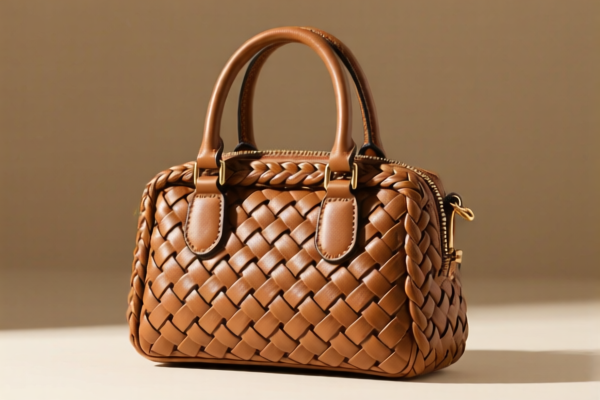
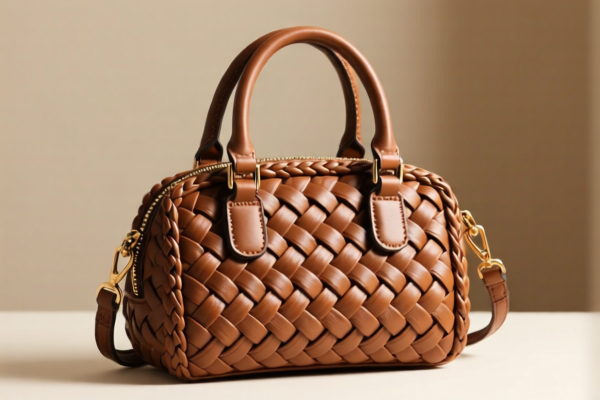
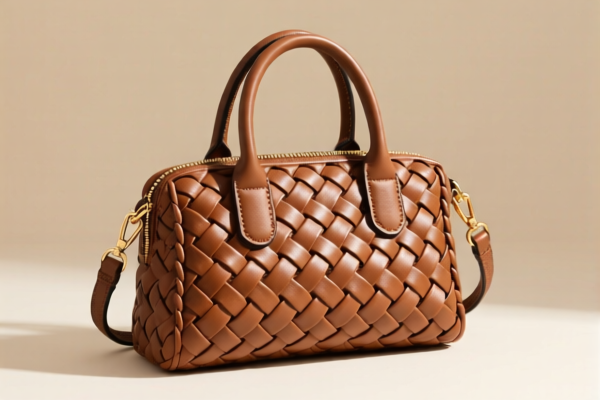
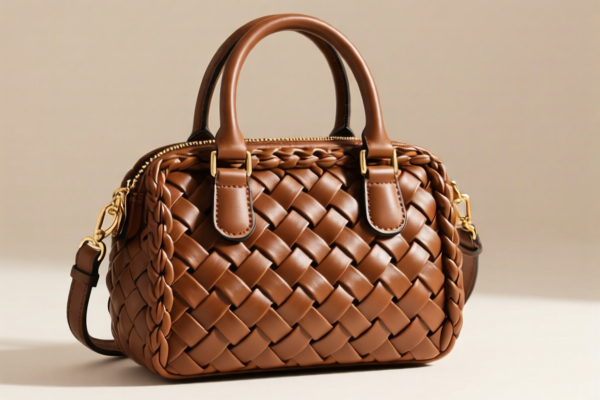
AI分析
👜 Braided Handbag (Casual Shopping)
🌐 HS Code Reference & Customs Clearance Guide | 2026 Latest Tariff Analysis | Professional Entry Strategy
📌 I. Product Definition & Classification: Do You Really Know "Braided Handbag"?
A Braided Handbag is a versatile accessory used for casual shopping, daily carrying, and fashion styling. In international trade, classification is strictly determined by the raw material. Misclassification leads to significant tariff differences and customs delays.
Key Distinction:
- Plastic Fiber/Material: If the braiding uses plastic strips, synthetic fibers, or PVC-like materials → HS 3926.90.33.00
- Textile/Plant Fiber: If the braiding uses cotton, linen, hemp, straw, seagrass, or other natural/plant-based fibers → HS 4202.22.35.00 / 4602.19.29.20 / 4602.19.29.40 / 4202.22.40.20
⚠️ Critical Point:
- "Braided" alone is not enough for classification.
- The primary material dictates the HS Code and the Total Tax Rate (ranging from 16.5% to 43.4%).
📦 II. HS Code Classification Details (2026 Latest Tariff Authority)
Based on the provided data, here are the four possible classifications for braided handbags, depending on material composition:
| HS Code | Product Description | Material Type | Total Tax Rate |
|---|---|---|---|
3926.90.33.00 |
Plastic Fiber or Plastic Material Braided Handbag | Synthetic/Plastic | 16.5% |
4202.22.35.00 |
Textile or Plant Fiber Material Braided Handbag | Cotton/Linen/Synthetic Blend | 43.4% |
4602.19.29.20 |
Plant Material Products Meeting Braiding Craft & Handbag Use | Straw/Seagrass/Natural Fiber | 40.3% |
4602.19.29.40 |
Plant Fiber Material Braided Handbag | Natural Plant Fiber | 40.3% |
4202.22.40.20 |
Cotton, Linen, or Straw Braided Handbag | Cotton/Linen/Straw | 42.4% |
🔍 Key Observation:
- Plastic-based bags are the least taxed (16.5%).
- Natural/Plant-based bags are heavily taxed (40.3% – 43.4%) due to higher base duties + Section 301 tariffs.
- Textile-based (cotton/linen blends) face the highest tax (43.4%).
💰 III. 2026 Latest Tariff Rate Breakdown (Detailed Tax Terms)
✅ Applicable Country: United States (US)
✅ Origin: China (CN) (Assumed based on "122 Clause" and high surtax context)
✅ Effective Time: Current enforcement period
🎯 1. 3926.90.33.00 —— Plastic Fiber/Plastic Braided Handbag
| Item | Content |
|---|---|
| Base Duty | 6.5% |
| Additional Duty (Section 301) | 0.0% |
| 122 Clause Duty | 10% |
| Total Tax Rate | 16.5% |
| Tax Calculation | CIF Value × 16.5% |
| De Minimis Eligibility | ❌ No (Deny De Minimis for this category under current rules) |
| Legal Basis Path | USITC:3926.90.33.00 → IEEPA:9903.01.15 (122 Clause) |
📌 Explanation:
- This is the most cost-effective classification for plastic-based bags.
- The 122 Clause adds a flat 10% duty on certain Chinese goods.
- No Section 301 surcharge applies here, making it significantly cheaper than plant/textile alternatives.
🎯 2. 4202.22.35.00 —— Textile/Plant Fiber Braided Handbag
| Item | Content |
|---|---|
| Base Duty | 8.4% |
| Additional Duty (Section 301) | 25.0% |
| 122 Clause Duty | 10% |
| Total Tax Rate | 43.4% |
| Tax Calculation | CIF Value × 43.4% |
| De Minimis Eligibility | ❌ No |
| Legal Basis Path | USITC:4202.22.35.00 → IEEPA:9903.01.25 (Section 301) → IEEPA:9903.01.15 (122 Clause) |
📌 Explanation:
- High base duty (8.4%) + 25% Section 301 + 10% 122 Clause.
- This is the highest tax bracket for braided handbags.
- Common for cotton/linen blends or mixed textile bags.
🎯 3. 4602.19.29.20 & 4602.19.29.40 —— Plant Material Braided Handbag
| Item | Content |
|---|---|
| Base Duty | 5.3% |
| Additional Duty (Section 301) | 25.0% |
| 122 Clause Duty | 10% |
| Total Tax Rate | 40.3% |
| Tax Calculation | CIF Value × 40.3% |
| De Minimis Eligibility | ❌ No |
| Legal Basis Path | USITC:4602.19.29.20/40 → IEEPA:9903.01.25 (Section 301) → IEEPA:9903.01.15 (122 Clause) |
📌 Explanation:
- Lower base duty (5.3%) compared to textile bags, but still hit by 25% Section 301 and 10% 122 Clause.
- Applies to straw, seagrass, rattan, bamboo, or other natural plant fibers.
- Despite lower base duty, total tax is still high due to附加 tariffs.
🎯 4. 4202.22.40.20 —— Cotton/Linen/Straw Braided Handbag
| Item | Content |
|---|---|
| Base Duty | 7.4% |
| Additional Duty (Section 301) | 25.0% |
| 122 Clause Duty | 10% |
| Total Tax Rate | 42.4% |
| Tax Calculation | CIF Value × 42.4% |
| De Minimis Eligibility | ❌ No |
| Legal Basis Path | USITC:4202.22.40.20 → IEEPA:9903.01.25 (Section 301) → IEEPA:9903.01.15 (122 Clause) |
📌 Explanation:
- Specifically for cotton, linen, or straw blends.
- Slightly lower total tax than4202.22.35.00(42.4% vs 43.4%) due to a lower base duty (7.4% vs 8.4%).
🛠️ IV. Customs Clearance Practical Advice (Avoid Pitfalls)
✅ 1. Preparation Checklist (Essential Documents)
| Document | Required | Notes |
|---|---|---|
| Product Specification Sheet | ✔️ | Must clearly state material composition (e.g., "100% Plastic PVC Strips" vs. "100% Natural Straw") |
| Product Photos (Clear & Detailed) | ✔️ | Show braiding texture, handles, lining, and any brand tags |
| Commercial Invoice | ✔️ | Must match HS Code and declare accurate CIF value |
| Packing List | ✔️ | Include dimensions, weight, and package count |
| Material Test Report | ✔️ | Optional but recommended: Prove if material is plastic vs. natural fiber |
| Brand Authorization | ✔️ | If branded, provide IP authorization to avoid counterfeit claims |
✅ 2. Declaration Tips (Key Rules)
🔥 “Material Dictates Code, Code Dictates Tax!”
| Scenario | Correct HS Code | Wrong Declaration | Consequence |
|---|---|---|---|
| Plastic/PE/PVC Braided Bag | 3926.90.33.00 |
Declared as "Straw Bag" | Under-tax → Audit & Penalty |
| Natural Straw/Rattan Bag | 4602.19.29.20 or 40 |
Declared as "Plastic Bag" | Over-tax → Lost Profit Margin |
| Cotton/Linen Blend Bag | 4202.22.40.20 or 35.00 |
Declared as "Plant Fiber" | 42-43% Tax instead of 16.5% |
| Mixed Material Bag | Primary Material Rule | Vague description ("Handbag") | Customs Detention & Re-classification |
✅ 3. Special Cases Handling
| Situation | Handling Advice |
|---|---|
| OEM Private Label | Provide brand authorization and design specs to prove material origin |
| Sample vs. Bulk | Samples under $800 may qualify for De Minimis, but check current rules as many categories are denied |
| Plastic vs. Plant Ambiguity | If the bag looks like straw but is plastic, declare as Plastic (16.5%) to save tax. If it looks like plastic but is natural fiber, declare as Plant (40.3%) to avoid fraud charges |
| Accessories Included | If the bag includes a pouch, mirror, or strap, declare as Single Item under the main bag’s HS Code |
🌍 V. Global Market Comparison (2026 Latest)
| Country/Region | Recommended HS Code | Tax Rate (China Origin) | Certification | Notes |
|---|---|---|---|---|
| 🇺🇸 USA | 3926.90.33.00 (Plastic) |
16.5% | None | Best Margin |
| 🇺🇸 USA | 4202.22.35.00 (Textile) |
43.4% | None | Highest Cost |
| 🇨🇳 China | 4202.22.35.00 |
8-10% | N/A | No Section 301 |
| 🇪🇺 EU | 4202.22.00 |
0-4% (if FTA) | CE (if plastic) | No 122 Clause |
| 🇬🇧 UK | 4202.22.00 |
0-6% | None | Post-Brexit Rules |
📌 Conclusion:
- USA is the most expensive market for braided handbags due to Section 301 + 122 Clause.
- Plastic-based bags (16.5%) are significantly cheaper than plant/textile bags (40-43%).
- Consider supply chain shifting to Vietnam/Mexico for plant-based bags to avoid US tariffs.
📌 VI. Common Mistakes & Pitfalls (Blood Lessons)
❌ Mistake 1: Declaring a plastic bag as "Straw Bag" to avoid Section 301
👉 Consequence: Customs detects material mismatch → Fine + Seizure + Blacklist
❌ Mistake 2: Declaring a natural straw bag as "Plastic Bag"
👉 Consequence: Over-declaration → Refund Denied + Audit
❌ Mistake 3: Vague description "Handbag" without material specification
👉 Consequence: Customs uses Highest Duty Rate (43.4%) as default → Profit Loss
✅ Correct Practice:
“Braided Handbag, 100% Polyvinyl Chloride (PVC) Strips, Model XYZ, 12x10x5 inches”
→ HS 3926.90.33.00 → 16.5% Tax
🎯 VII. Conclusion: Precision Classification, Maximize Profit!
🎯 Remember the Rule:
🔹 “Plastic = 16.5%, Plant = 40.3%, Textile = 43.4%!”
🔹 “Material is King, Description is Queen, Tax is the Judge!”
🔹 “One HS Code Mistake = 27% Profit Loss!”
📌 Pro Tip:
- If your handbag is 100% Natural Straw, consider sourcing from non-Chinese origins to avoid 122/Section 301.
- For plastic bags, emphasize "PVC/PE Material" in invoice to secure 16.5%.
- Always apply for Pre-Ruling if uncertain about material classification.
📣 Immediate Action:
📞 Verify Material Composition → Select Correct HS Code → Calculate Landed Cost
🚀 Customs Clearance Success Starts with Accurate Declaration!
✨ Professional Customs Clearance, Start with Precise Classification!
💼 Your Every Penny of Cost Deserves Precise Calculation!
用户评价
关于 HS 编码归类
协调制度(HS)是由世界海关组织(WCO)制定的国际贸易商品分类标准。全球 200 多个国家采用 HS 系统作为海关关税、贸易统计和进出口监管的基础。
每个 HS 编码遵循以下层级结构:
- 章(2 位)——商品大类(例如:第 84 章:机器和机械设备)
- 品目(4 位)——章内的更具体分类
- 子目(6 位)——国际通用细分,所有 WCO 成员国统一使用
- 本国细分(8-10 位)——各国自行扩展的细分编码,如美国 HTSUS 10 位编码
正确的 HS 编码归类对于顺利通关、准确缴纳关税和遵守贸易法规至关重要。错误归类可能导致海关延误、多缴关税或罚款。
从CN进口到US时,适用的关税税率可能包括:
- 最惠国(MFN)税率——适用于 WTO 成员国的标准关税税率
- 普通税率——适用于无贸易协定国家
- 贸易救济关税——附加关税,如 301 条款(反倾销)、232 条款(国家安全)或反补贴税
本页内容仅供参考。如需正式归类,请咨询当地海关或持牌报关代理。