Braided sheets for research
CN → US| HS编码 | 关税税率 | 原产国 | 目的国 | 文档 |
|---|---|---|---|---|
| 7314126000 | 85.0% | CN | US | 官方文档 |
| 5911900080 | 38.8% | CN | US | 官方文档 |
| 5407932030 | 47.0% | CN | US | 官方文档 |
| 5911900040 | 38.8% | CN | US | 官方文档 |
商品图片
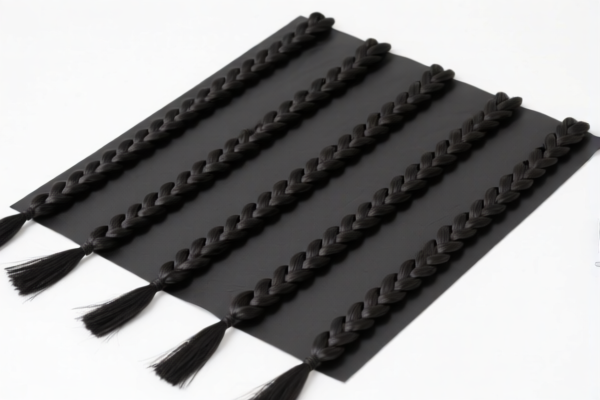
AI分析
🔬 Braided Sheets for Research
🌐 HS Code Reference & Customs Clearance Guide | 2026 Latest Tariff Analysis | Professional-Level Strategy for Lab & Industrial Goods
📌 I. Product Definition: What Are "Braided Sheets for Research"?
"Braided sheets for research" is a generic commercial term that lacks a precise technical description in customs classification. In international trade, the material composition and end-use dictate the correct HS Code. These sheets are typically used in laboratories for filtration, insulation, reinforcement, or as technical textile components.
⚠️ Critical Distinction for Researchers & Importers:
- Is the sheet made of metal (wire mesh)? → Classified as Steel/Aluminum products (High Tariff).
- Is the sheet made of textile fibers (nylon, polyester, glass)? → Classified as Technical Textiles (Moderate Tariff).
- Is the sheet made of synthetic filaments woven into a fabric? → Classified as Synthetic Fabrics (Moderate Tariff).Misclassification Risk: Declaring a metallic mesh as a "textile sheet" will result in severe penalties due to tariff evasion. Conversely, declaring a textile sheet as metal will lead to unnecessary high tariffs.
📦 II. HS Code Classification Matrix (2026 Data)
Based on the provided data, here are the four potential classifications. The correct code depends entirely on the material of the braid.
| HS Code | Product Description | Material Inference | Primary Use | Tariff Complexity |
|---|---|---|---|---|
| 7314.12.60.00 | Industrial Braided Sheet | Metal (Steel, Aluminum, Copper) | Industrial filtration, reinforcement, or heating elements | ⛔ EXTREME (85%) |
| 5911.90.00.80 | Technical Textile Product | Textile (Any fiber) | Technical/Industrial applications (e.g., lab filtration, precision screening) | ⚠️ HIGH (38.8%) |
| 5407.93.20.30 | Synthetic Filament Fabric | Synthetic Fibers (Long filaments) | Other synthetic woven fabrics | ⚠️ HIGH (47.0%) |
| 5911.90.00.40 | Industrial Woven Fabric | Textile (Woven) | General industrial use | ⚠️ HIGH (38.8%) |
🔍 Key Insight:
- If your research sheet is a metallic mesh (e.g., stainless steel wire cloth), it falls under 7314.12.60.00. This is a steel/aluminum/copper product subject to Section 301 and other trade remedies.
- If your research sheet is a non-metallic textile (e.g., nylon, polyester, or glass fiber cloth), it falls under 5911 or 5407.
💰 III. 2026 Tariff Rate Breakdown (Detailed Analysis)
✅ Applicable Country: United States (US)
✅ Origin: China (CN)
✅ Context: Includes Base Tariff, Section 301 Tariffs, and IEEPA Add-ons.
🎯 1. HS Code 7314.12.60.00 — Metallic Braided Sheet
⚠️ WARNING: Highest Risk Category
| Item | Details |
|---|---|
| Base Tariff | 0.0% |
| Section 301 Tariff (List 3) | +25.0% |
| IEEPA Section 122 (Steel/Alum/Copper) | +50.0% |
| Total Effective Tax Rate | 85.0% |
| Tax Calculation | CIF Value × 85% |
| Legal Basis Path | USITC:7314.12.60.00 → IEEPA:9903.01.25 (Steel/Alum) → Section 301 |
📌 Explanation:
- This code is for metal wire cloth, gauze, or grill.
- The +50% IEEPA tariff applies specifically to steel, aluminum, and copper products under recent executive orders.
- Combined with the standard +25% Section 301 tariff, the total burden is 85%.
- De Minimis Exemption: ❌ NOT ELIGIBLE for $800 exemption (likely due to country of origin or product type restrictions).
🎯 2. HS Code 5911.90.00.80 — Technical Textile Product
Best for: Research-specific filtration, insulation, or specialized technical fabrics.
| Item | Details |
|---|---|
| Base Tariff | 3.8% |
| Section 301 Tariff (List 3) | +25.0% |
| IEEPA Add-on | +10.0% |
| Total Effective Tax Rate | 38.8% |
| Tax Calculation | CIF Value × 38.8% |
| Legal Basis Path | USITC:5911.90.00.80 → IEEPA:9903.01.24 → Section 301 |
📌 Explanation:
- Chapter 59 covers "Textile articles... suitable for technical use."
- This is a catch-all for technical textiles not specified elsewhere.
- While significantly lower than metal, the +10% IEEPA and +25% Section 301 still make it expensive.
🎯 3. HS Code 5407.93.20.30 — Synthetic Filament Fabric
Best for: Research sheets made of woven synthetic long-fiber fabrics (e.g., polyester, nylon).
| Item | Details |
|---|---|
| Base Tariff | 12.0% |
| Section 301 Tariff (List 3) | +25.0% |
| IEEPA Add-on | +10.0% |
| Total Effective Tax Rate | 47.0% |
| Tax Calculation | CIF Value × 47.0% |
| Legal Basis Path | USITC:5407.93.20.30 → IEEPA:9903.01.24 → Section 301 |
📌 Explanation:
- Chapter 54 covers "Man-made filaments."
- The base rate is higher (12%) than 5911 (3.8%), leading to a higher total tax.
- Use this only if the fabric is specifically defined as a "synthetic filament woven fabric" rather than a "technical textile."
🎯 4. HS Code 5911.90.00.40 — Industrial Woven Fabric
Best for: General industrial use textiles.
| Item | Details |
|---|---|
| Base Tariff | 3.8% |
| Section 301 Tariff (List 3) | +25.0% |
| IEEPA Add-on | +10.0% |
| Total Effective Tax Rate | 38.8% |
| Tax Calculation | CIF Value × 38.8% |
| Legal Basis Path | USITC:5911.90.00.40 → IEEPA:9903.01.24 → Section 301 |
📌 Explanation:
- Similar to 5911.90.00.80 but categorized under "Industrial Use."
- If your research sheet is for general industrial purposes (e.g., factory filtration) rather than specific scientific instrumentation, this code may apply.
- Tax rate is identical to 5911.90.00.80.
🛠️ IV. Customs Clearance Strategy & Recommendations
✅ 1. Material Verification (The Most Critical Step)
Before importing, you MUST determine the exact material composition.
- Metallic? → Use 7314.12.60.00. Expect 85% tax. Consider sourcing from non-China origins if possible to avoid Section 301/IEEPA.
- Textile/Synthetic? → Avoid 7314. Use 5911 or 5407. Expect 38.8%–47% tax.
✅ 2. Documentation Requirements
| Document | Requirement | Purpose |
|---|---|---|
| Product Specification Sheet | Must state: Material (%), Density, Weave Pattern, Mesh Size | To justify HS Code classification. |
| Letter of Explanation | Detail "Research Use" | Helps customs distinguish between "Industrial" (5911) vs. "Consumer" goods. |
| Commercial Invoice | Clear description: "Braided Sheet for Laboratory Research, Material: [Nylon/Steel/Polyester]" | Prevents misclassification by CBP officers. |
| Bill of Lading | Matches invoice details | Standard requirement. |
| Certificate of Origin | Required for Trade Remedy assessments | Determines if Section 301/IEEPA applies. |
✅ 3. Smart Classification Strategy
| Scenario | Recommended HS Code | Why? |
|---|---|---|
| Lab Filter Made of Stainless Steel Wire | 7314.12.60.00 |
It is a metal wire cloth. No other code fits. Accept 85% tax or find alternative source. |
| Lab Filter Made of Nylon Mesh | 5911.90.00.80 |
"Technical textile" fits research applications best. Lower tax (38.8%). |
| Reinforcement Cloth Made of Polyester | 5407.93.20.30 |
If it's a standard woven fabric, not a specialized technical article. |
| General Industrial Screen | 5911.90.00.40 |
If the primary use is industrial, not strictly scientific research. |
🚀 Pro Tip:
If the braided sheet is used exclusively in scientific research instruments, argue for 5911.90.00.80 ("Technical use") rather than general industrial uses. This ensures consistency with the "Research" label in your invoice.
🌍 V. Global Market Comparison (2026)
| Region | Recommended HS Code | Est. Total Duty (China Origin) | Notes |
|---|---|---|---|
| 🇺🇸 USA | 7314.12.60.00 (Metal) |
85.0% | Extremely high due to IEEPA + 301. |
| 🇺🇸 USA | 5911.90.00.80 (Textile) |
38.8% | High due to 301 + IEEPA. |
| 🇪🇺 EU | Varies by Material | ~5-12% | No Section 301/IEEPA. Lower tariffs. |
| 🇨🇳 China | Varies | ~3-8% | Low import duty. No trade war surcharges. |
| 🇬🇧 UK | Varies | ~5-12% | Post-Brexit, generally lower than US. |
📌 Conclusion:
The US market is the most hostile for Chinese-sourced braided sheets due to layered tariffs. If your research requires these materials, consider:
1. Sourcing from Vietnam, Mexico, or EU to avoid IEEPA/301.
2. Using textile materials (38.8%) instead of metallic materials (85%) if performance allows.
3. Applying for HS Code Pre-Rulings to ensure correct classification and avoid penalties.
📌 VI. Common Mistakes & Pitfalls
❌ Mistake 1: Calling a steel mesh a "textile sheet" to avoid the 85% tariff.
👉 Result: CBP will seize goods, impose fines, and potentially charge back-taxes + interest.
❌ Mistake 2: Using 7314 for a synthetic fabric.
👉 Result: Overpayment of duties. You may be paying 85% instead of 38.8%.
❌ Mistake 3: Not specifying "Research Use" in documentation.
👉 Result: CBP may classify it as general industrial goods, leading to ambiguity or rejection of specialized technical textile codes.
🎯 VII. Final Recommendation
🔥 Golden Rule:
"Material Determines Code, Code Determines Cost."
- Metal = 85% Tax
- Textile = 38.8% TaxIf your research can be done with textile-based braided sheets, switch materials to save 46.2% in duties.
If you must use metal, budget for the 85% tariff or explore non-China supply chains.
📢 Immediate Action:
1. Confirm Material: Is it metal or fiber?
2. Draft Invoice: Use precise HS Code and description.
3. Consult Broker: Submit product photos to a customs broker for a Pre-Ruling.
💼 Precision in Classification = Savings in Logistics!
用户评价
关于 HS 编码归类
协调制度(HS)是由世界海关组织(WCO)制定的国际贸易商品分类标准。全球 200 多个国家采用 HS 系统作为海关关税、贸易统计和进出口监管的基础。
每个 HS 编码遵循以下层级结构:
- 章(2 位)——商品大类(例如:第 84 章:机器和机械设备)
- 品目(4 位)——章内的更具体分类
- 子目(6 位)——国际通用细分,所有 WCO 成员国统一使用
- 本国细分(8-10 位)——各国自行扩展的细分编码,如美国 HTSUS 10 位编码
正确的 HS 编码归类对于顺利通关、准确缴纳关税和遵守贸易法规至关重要。错误归类可能导致海关延误、多缴关税或罚款。
从CN进口到US时,适用的关税税率可能包括:
- 最惠国(MFN)税率——适用于 WTO 成员国的标准关税税率
- 普通税率——适用于无贸易协定国家
- 贸易救济关税——附加关税,如 301 条款(反倾销)、232 条款(国家安全)或反补贴税
本页内容仅供参考。如需正式归类,请咨询当地海关或持牌报关代理。