Brake System Components
CN → US| HS编码 | 关税税率 | 原产国 | 目的国 | 文档 |
|---|---|---|---|---|
| 6813200015 | 35.0% | CN | US | 官方文档 |
| 8431499084 | 85.0% | CN | US | 官方文档 |
| 8708301090 | 35.0% | CN | US | 官方文档 |
| 6813810050 | 35.0% | CN | US | 官方文档 |
商品图片
AI分析
🛑 Brake System Components (Brake Pads, Shoes, & Parts)
🌐 HS Code Reference & Customs Clearance Guide | 2026 Latest Tariff Analysis | Professional Clearance Strategy
📌 I. Product Definition: What Are "Brake System Components"?
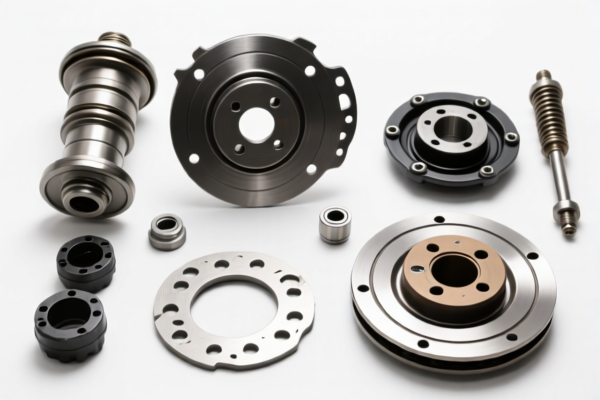
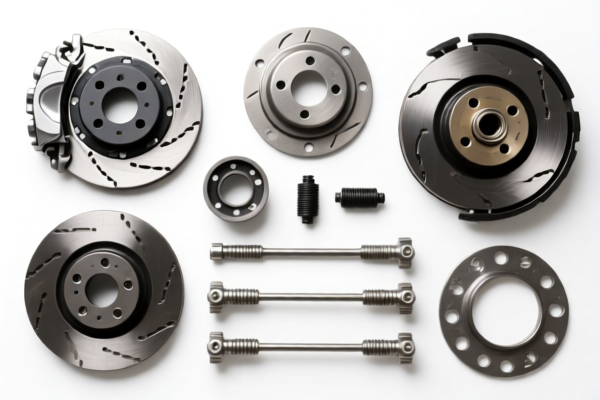
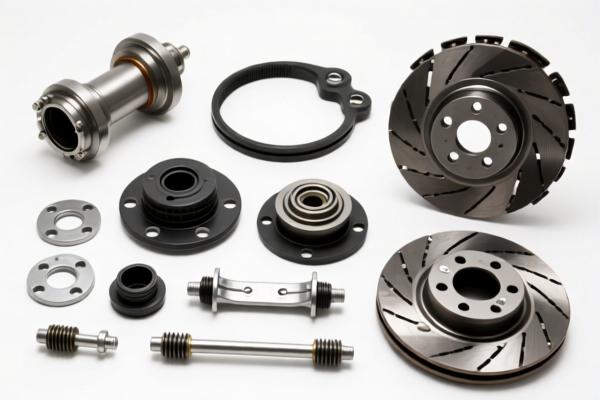
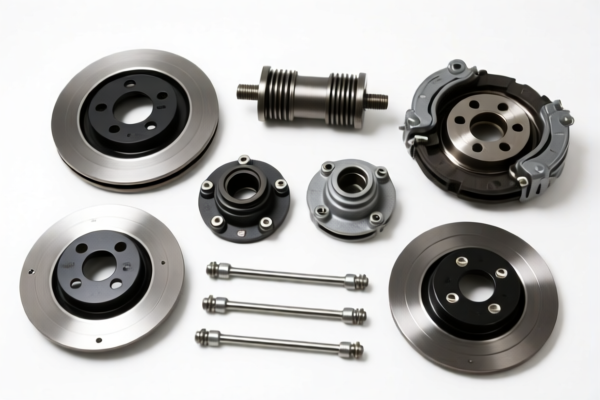
Brake system components are critical safety parts used to slow down or stop vehicles and machinery. In international trade, they are primarily categorized by material and function:
- Friction Materials (Brake Pads/Shoes): The core wear parts that create friction against the rotor/drum. These are often made of composite materials (asbestos-free organic, ceramic, semi-metallic).
- Mechanical Hardware: Backing plates, calipers, pistons, and other metal parts that hold the friction material or transfer force.
⚠️ Key Classification Distinction:
- If the item is primarily a friction material (pad/shoe assembly) → It often falls under Chapter 68 (Stone, Plaster, Cement) or specific friction material codes.
- If the item is a metal mechanical part (caliper, backing plate) → It falls under Chapter 84 (Machinery) or Chapter 87 (Vehicles) parts.
- Misclassification Risk: Declaring a friction pad as a "metal part" (Ch 84) can lead to severe penalties because the material composition dictates the primary function.
📦 II. HS Code Classification Details (2026 Latest Tariff Reference)
Based on the provided data, here are the four potential HS Codes for Brake System Components, with their specific logic and tax implications:
| HS Code | Product Description & Logic | Material/Type | Total Tax Rate (US) | Key Tax Breakdown |
|---|---|---|---|---|
| 6813.20.00.15 | Friction Material Parts: Brake accessories where the primary nature is friction material. | Friction Composite | 35.0% | Base: 0% + 25% (Sec 301) + 10% (122 Clause) |
| 8431.49.90.84 | Machinery Parts: Brake parts classified as general mechanical components for machinery. | Steel, Aluminum, Copper | 85.0% | Base: 0% + 25% (Sec 301) + 10% (122 Clause) + 50% (Steel/Al/Cu) |
| 8708.30.10.90 | Vehicle Parts: Brake accessories specifically for vehicles, under "other" fallback category. | Mixed/Material Agnostic | 35.0% | Base: 0% + 25% (Sec 301) + 10% (122 Clause) |
| 6813.81.00.50 | Other Friction Articles: Other brake-related friction material products. | Friction Composite | 35.0% | Base: 0% + 25% (Sec 301) + 10% (122 Clause) |
🔍 Critical Insight:
- Code8431.49.90.84is the DANGER ZONE. If your brake part contains Steel, Aluminum, or Copper, and you classify it under Machinery Parts, you incur an additional 50% tariff on top of the standard 35%, totaling 85%.
- Codes6813...and8708...are generally safer for pure friction materials or specific vehicle parts, keeping the total at 35%.
💰 III. 2026 Latest Tariff Rate Breakdown (Detailed Policy Analysis)
✅ Applicable Country: United States (US)
✅ Origin: China (CN)
✅ Effective Date: Post-2025 November (Current Policy Window)
🎯 1. The "Friction Material" Route (HS Codes: 6813.20.00.15, 6813.81.00.50)
Best for: Brake pads, brake shoes, friction linings.
| Item | Detail |
|---|---|
| Base Tariff | 0% |
| Section 301 Tariff | +25% (Retaliatory tariff on Chinese goods) |
| 122 Clause Tariff | +10% (Specific provision for certain Chinese imports) |
| Total Rate | 35.0% |
| De Minimis Exemption? | ❌ NO (Value > $800 rule does not apply to these classifications under current enforcement) |
📌 Explanation:
- These codes classify the item by its material nature (friction/composite).
- Since they are not classified as "Steel/Aluminum/Copper products," the 50% metal surcharge does NOT apply.
- Cost Efficiency: This is the lowest risk/lowest cost path for friction-based brake parts.
🎯 2. The "Vehicle Parts" Route (HS Code: 8708.30.10.90)
Best for: Brake assemblies, calipers (if non-metal heavy), or generic vehicle brake parts.
| Item | Detail |
|---|---|
| Base Tariff | 0% |
| Section 301 Tariff | +25% |
| 122 Clause Tariff | +10% |
| Total Rate | 35.0% |
| De Minimis Exemption? | ❌ NO |
📌 Explanation:
- This is a "fallback" category for vehicle parts.
- Risk: Requires proving the item is primarily a "brake accessory" for vehicles. If it’s a raw metal component, customs may reclassify it to Chapter 84 and trigger the 85% rate.
🎯 3. The "Machinery Parts" Route (HS Code: 8431.49.90.84)
Best for: Metal brake hardware, backing plates, steel brake lines (Use with CAUTION)
| Item | Detail |
|---|---|
| Base Tariff | 0% |
| Section 301 Tariff | +25% |
| 122 Clause Tariff | +10% |
| Steel/Al/Cu Surcharge | +50% (Specific to metal products) |
| Total Rate | 85.0% |
| De Minimis Exemption? | ❌ NO |
📌 Explanation:
- HIGHEST COST.
- If your product contains steel, aluminum, or copper, and you file under this code, you are hit with the 50% metal tariff.
- Avoid this code for brake pads/shoes. Only use if the part is unequivocally a mechanical metal component AND you have accepted the 85% cost.
🛠️ IV. Customs Clearance Practical Advice (Avoiding Pitfalls)
✅ 1. Documentation Checklist (Non-Negotiable)
| Document | Requirement | Why It Matters |
|---|---|---|
| Product Spec Sheet | Must list Material Composition (e.g., "Ceramic Fiber, Resin, Steel Backing") | Determines if it falls under Ch 68 (Friction) or Ch 84 (Metal). |
| Commercial Invoice | Must specify "Brake Pad" or "Brake Accessory", NOT just "Mechanical Part" | Vague descriptions lead to misclassification (and 85% tax). |
| HS Code Pre-Ruling | HIGHLY RECOMMENDED | Secure a binding ruling from CBP to lock in the 35% rate before shipping. |
| Origin Certificate | Proof of Origin (China) | Required to calculate exact 301/122 tariffs. |
✅ 2. Declaration Strategy (The "Right Way")
🔥 "Material First, Function Second!"
| Scenario | Recommended HS Code | Tax Rate | Why? |
|---|---|---|---|
| Brake Pads/Shoes (Ceramic/Organic) | 6813.20.00.15 or 6813.81.00.50 |
35% | Classified as friction material, not metal. Avoids 50% surcharge. |
| Brake Calipers (Aluminum Cast) | 8708.30.10.90 (Consult Ruling) |
35% | Classify as "Vehicle Part". Do NOT use 8431 unless necessary. |
| Steel Brake Rotors | 8431.49.90.84 (High Risk) |
85% | Hard to avoid if classified as machinery part. Consider if it fits 8708 better. |
| Brake Lines/Hoses | 8708.94.00.00 (Check Data) |
Varies | Not in provided data, but often lower tax. Avoid 8431. |
✅ 3. Critical Warning: The "Metal Trap"
🚨 DO NOT declare brake pads as "Steel Parts" or "Machinery Components" just to sound technical.
- Result: Customs will inspect, find the friction material, reclassify to Ch 68, and potentially fine you for misdeclaration.
- Result: If you declare steel brake lines as "Machinery Parts" (8431), you pay 85% tax. If you declare them as "Vehicle Parts" (8708), you may pay 35%. Always prioritize Chapter 87 for vehicle-specific items.
🌍 V. Global Market Comparison (2026 Context)
| Region | Recommended HS Approach | Estimated Tax Burden | Note |
|---|---|---|---|
| 🇺🇸 USA | Ch 68 (Friction) or Ch 87 (Vehicle Parts) | 35% | Avoid Ch 84 for metal parts if possible (85%!). |
| 🇪🇺 EU | Ch 87 (Parts of Vehicles) | ~10-15% | No Section 301/122 tariffs. Lower barrier. |
| 🇨🇳 China | Ch 87 or Ch 68 | ~0-10% | Varies by specific subheading. |
| 🇲🇽 Mexico | Ch 87 | ~0-5% (if under USMCA) | Potential for zero tariff if rules of origin met. |
📌 Conclusion for US Market:
The 35% vs. 85% difference is massive. For any brake component, prove it is either a Friction Material (Ch 68) or a Vehicle Part (Ch 87). Never default to "Machinery Parts" (Ch 84) unless you have no other option.
📌 VI. Common Mistakes & How to Avoid Them
❌ Mistake 1: Declaring "Brake Pad" as "Automotive Spare Part" without HS Code specificity.
👉 Consequence: Customs assigns 8708.99 or 8431 arbitrarily. If 8431, you pay 85%.
✅ Fix: Specify HS Code 6813.20.00.15 for pads.
❌ Mistake 2: Including metal backing plates and calling the whole assembly a "Metal Hardware Item".
👉 Consequence: Risk of Ch 84 classification and 50% metal surcharge.
✅ Fix: Highlight that the primary function and value come from the friction material. Use Ch 68.
❌ Mistake 3: Ignoring the "122 Clause" (10%).
👉 Consequence: Underpayment of duties, leading to audits and penalties later.
✅ Fix: Always budget for 35% (0% Base + 25% 301 + 10% 122) for safe clearance.
🎯 VII. Conclusion: Optimize Your Clearance Strategy
🎯 Key Takeaway:
🔹 Brake Pads = Friction Material (Ch 68) = 35% Tax
🔹 Brake Metal Parts = Vehicle Part (Ch 87) = 35% Tax
🔹 Brake Metal Parts = Machinery Part (Ch 84) = 85% Tax (AVOID!)
📌 Action Plan:
1. Audit your Bill of Materials: Identify if the item is primarily friction or metal.
2. Apply for Pre-Ruling: Get CBP confirmation for 6813.20.00.15 or 8708.30.10.90.
3. Label Correctly: "Brake Pad Set, Ceramic, with Steel Backing" → Declare under 6813.
4. Budget Accordingly: Assume 35% total duty for US imports.
📣 Immediate Next Step:
📞 Contact your customs broker with the material breakdown.
📄 Request a Pre-Import Ruling for your specific brake component SKU.
🚀 Save 50% in duties by choosing the right HS Code!
✨ Precision in Classification Saves Fortune!
💼 Don't let an 85% tariff eat your margin when 35% is available!
用户评价
关于 HS 编码归类
协调制度(HS)是由世界海关组织(WCO)制定的国际贸易商品分类标准。全球 200 多个国家采用 HS 系统作为海关关税、贸易统计和进出口监管的基础。
每个 HS 编码遵循以下层级结构:
- 章(2 位)——商品大类(例如:第 84 章:机器和机械设备)
- 品目(4 位)——章内的更具体分类
- 子目(6 位)——国际通用细分,所有 WCO 成员国统一使用
- 本国细分(8-10 位)——各国自行扩展的细分编码,如美国 HTSUS 10 位编码
正确的 HS 编码归类对于顺利通关、准确缴纳关税和遵守贸易法规至关重要。错误归类可能导致海关延误、多缴关税或罚款。
从CN进口到US时,适用的关税税率可能包括:
- 最惠国(MFN)税率——适用于 WTO 成员国的标准关税税率
- 普通税率——适用于无贸易协定国家
- 贸易救济关税——附加关税,如 301 条款(反倾销)、232 条款(国家安全)或反补贴税
本页内容仅供参考。如需正式归类,请咨询当地海关或持牌报关代理。