Bread Slicer
CN → US| HS编码 | 关税税率 | 原产国 | 目的国 | 文档 |
|---|---|---|---|---|
| 8210000000 | 38.7% | CN | US | 官方文档 |
| 8438100090 | 17.5% | CN | US | 官方文档 |
| 8479896500 | 20.3% | CN | US | 官方文档 |
| 8438100010 | 17.5% | CN | US | 官方文档 |
| 7323930080 | 62.0% | CN | US | 官方文档 |
商品图片
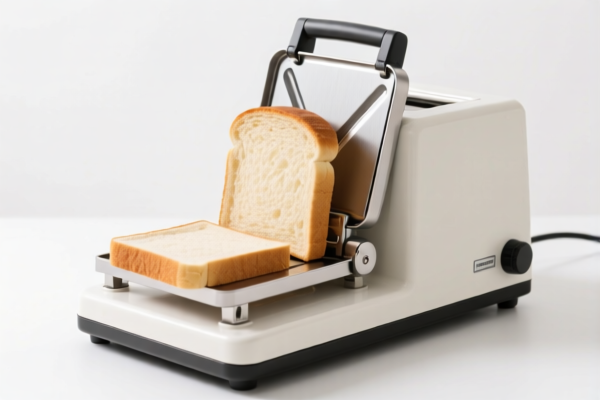
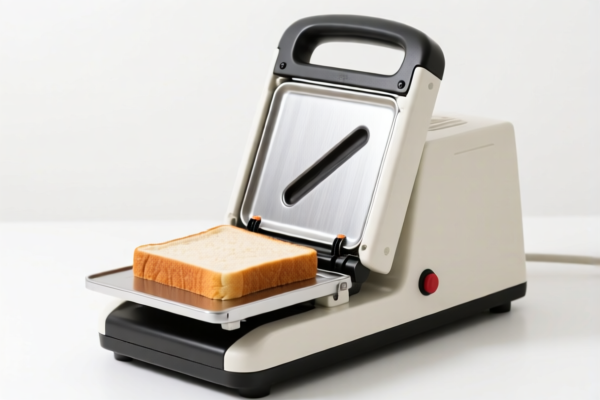
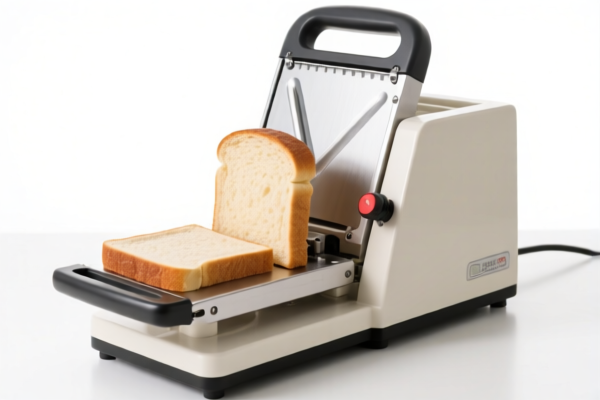

AI分析
🥪 Bread Slicer: The Ultimate HS Code & Customs Clearance Guide (2026)
🌐 HS Code Reference & Customs Strategy | Precision Classification for High-Value Logistics
📌 I. Product Definition: Is it a Machine or a Tool?
A Bread Slicer is a device used to cut bread into uniform slices. In international trade, its classification is highly controversial and depends entirely on its mechanism and power source.
There are two distinct categories: 1. Manual Wire Slicers: A frame with a wire, often with a wooden or plastic base. It is a simple kitchen gadget. → Usually falls under Chapter 73 (Steel Articles). 2. Mechanical/Electric Slicers: A machine with a motor, moving blades, or a lever-driven mechanical system. → Falls under Chapter 84 (Machinery).
⚠️ Critical Distinction:
- If it is manual, simple, and lacks a motor → Think 7323.
- If it has a motor, gears, or complex mechanical action → Think 8438 or 8479.
- If it is a small hand-held tool for food prep → Think 8210.
📦 II. HS Code Classification Matrix (2026 Latest Tariff)
Based on the provided data, here are the 5 potential HS Codes for Bread Slicers, ranging from simple steel tools to complex machinery.
| HS Code | Product Description | Key Classification Logic | Total Tax Rate (CN→US) |
|---|---|---|---|
8210.00.00.00 |
Manual/Small Electric Food Prep Tools | Matches use (food prep) + form (mechanical appliances, portable). | 38.7% |
8438.10.00.90 |
Baking Machinery (General) | Matches logic for "machinery for producing baked goods." | 17.5% |
8479.89.65.00 |
Other Independent Mechanical Appliances | Contains self-contained electric motor; independent function. | 20.3% |
8438.10.00.10 |
Specific Bread Machinery | Best Match: Explicitly includes "bread machinery." | 17.5% |
7323.93.00.80 |
Steel Kitchen Articles | Material: Stainless Steel; Use: Bread slicer (non-motorized). | 62.0% |
🔍 Strategic Insight:
- 8438.10.00.10 and 8438.10.00.90 offer the lowest duty rates (17.5%) if the device is classified as industrial/baking machinery.
- 7323.93.00.80 is the highest risk/lowest cost trap. While the base duty is low, the additional steel tariffs (50%) and Section 301/IEEPA taxes push the total to 62.0%. Avoid this unless you are sure it’s a simple manual steel frame.
- 8210.00.00.00 is a "catch-all" for small tools, but the 38.7% rate is steep due to high additional tariffs.
💰 III. 2026 Detailed Tax Breakdown & Legal Basis
✅ Applicable Country: United States (US)
✅ Origin: China (CN)
✅ Effective Date: Post-2025 Policy Adjustments
🎯 1. 8438.10.00.10 – Bread Machinery (Recommended for Motorized/Complex Slicers)
| Item | Detail |
|---|---|
| Base Duty | 0.0% |
| Additional Duty (Section 301) | +7.5% |
| IEEPA Section 122 Duty | +10.0% |
| Total Effective Rate | 17.5% |
| Calculation | CIF Value × 17.5% |
| De Minimis Eligibility | ❌ No (Deny de minimis for Chinese goods) |
| Legal Path | HTSUS:8438.10.00.10 → USITC Footnote → IEEPA:9903.01.24 |
📌 Why this code?
The summary states: "Product use (bread slicing) matches the classification explanation of 'bread machinery' completely." This is the most precise fit for dedicated bread slicing equipment.
🎯 2. 8438.10.00.90 – Other Baking Machinery
| Item | Detail |
|---|---|
| Base Duty | 0.0% |
| Additional Duty (Section 301) | +7.5% |
| IEEPA Section 122 Duty | +10.0% |
| Total Effective Rate | 17.5% |
| Calculation | CIF Value × 17.5% |
| De Minimis Eligibility | ❌ No |
📌 Why this code?
Used if the slicer is part of a broader "bakery production line" or doesn't fit the specific "bread machinery" subheading. Logically consistent with "machinery for manufacturing dough products."
🎯 3. 8479.89.65.00 – Other Mechanical Appliances (Motorized)
| Item | Detail |
|---|---|
| Base Duty | 2.8% |
| Additional Duty (Section 301) | +7.5% |
| IEEPA Section 122 Duty | +10.0% |
| Total Effective Rate | 20.3% |
| Calculation | CIF Value × 20.3% |
| De Minimis Eligibility | ❌ No |
📌 Why this code?
For slicers that are electric but not strictly "baking machinery." The logic relies on the presence of a self-contained electric motor providing an independent mechanical function.
🎯 4. 8210.00.00.00 – Small Manual/Electric Appliances
| Item | Detail |
|---|---|
| Base Duty | 3.7% |
| Additional Duty (Section 301) | +25.0% |
| IEEPA Section 122 Duty | +10.0% |
| Total Effective Rate | 38.7% |
| Calculation | CIF Value × 38.7% |
| De Minimis Eligibility | ❌ No |
📌 Why this code?
Classifies as "mechanical appliances" for food preparation that are hand-operated or small electric. Note the high 25% Section 301 tariff, making this a less optimal choice compared to 8438.
🎯 5. 7323.93.00.80 – Steel Kitchen Articles (High Risk)
| Item | Detail |
|---|---|
| Base Duty | 2.0% |
| Additional Duty (Section 301) | 0.0% |
| IEEPA Section 122 Duty | +10.0% |
| Steel/Alloy/Copper Surcharge | +50.0% |
| Total Effective Rate | 62.0% |
| Calculation | CIF Value × 62.0% |
| De Minimis Eligibility | ❌ No |
📌 Why this code?
For manual, stainless steel slicers (frames/wires). WARNING: The +50% steel surcharge makes this the most expensive option despite the low base duty. Only use if the product is purely a static steel structure with no moving mechanical parts or motors.
🛠️ IV. Customs Clearance Practical Advice
✅ 1. Documentation Checklist
| Document | Required? | Description |
|---|---|---|
| ✅ Product Specification Sheet | ✔️ | Must specify: Motor? Weight? Material (Steel vs. Plastic)? Manual vs. Electric? |
| ✅ Operational Photos/Video | ✔️ | Show how it works. Is there a plug? Are gears moving? |
| ✅ Bill of Materials (BOM) | ✔️ | List all components. Separate steel parts from motors. |
| ✅ Commercial Invoice | ✔️ | Use precise language: "Electric Bread Slicer, Model XYZ" vs. "Steel Wire Rack." |
| ✅ Certificate of Origin | ✔️ | Proves CN origin (triggers tariffs). |
✅ 2. Declaration Strategy (The "Golden Rules")
🔥 Rule #1: If it has a motor, DO NOT use 7323.
Misclassifying a motorized slicer as "Steel Kitchenware" is considered fraud. The 50% steel tariff and penalties will destroy your margin.🔥 Rule #2: If it is manual, consider 7323 ONLY if you accept the 62% tax.
Actually, check if it fits 8210 (38.7%) or if a simpler "steel article" code exists with lower surcharges. However, based on the data, 8438 is the safest low-tax route for any powered device.🔥 Rule #3: Prioritize
8438.10.00.10.
This code has the lowest total tax (17.5%) and the most accurate description ("Bread Machinery"). Use this for any slicer that is more than a simple wire frame.
✅ 3. Common Pitfalls
| Mistake | Consequence | Solution |
|---|---|---|
Declaring Electric Slicer as 7323 |
Severe penalty, back-taxes, seizure. | Classify as 8438 or 8479. |
Declaring Manual Slicer as 8438 |
Over-classification, potential audit for false "machinery" claim. | Ensure no motor/complex mechanism exists. If simple, 7323 might be technically correct but expensive; consider if 8210 is a better fit for "small appliances." |
| Ignoring the 50% Steel Surcharge | Unexpected 62% duty instead of expected 3-10%. | Calculate total landed cost including all surcharges before shipping. |
🌍 V. Global Market Comparison (2026)
| Market | Recommended HS Code | Est. Total Tax | Notes |
|---|---|---|---|
| 🇺🇸 USA | 8438.10.00.10 |
17.5% | Best balance of accuracy and cost. |
| 🇨🇳 China | 8438.10.00.10 |
5-8% | Low import duty; no US-style surcharges. |
| 🇪🇺 EU | 8438.80 |
3-4% | No Section 301 or IEEPA taxes. |
| 🇬🇧 UK | 8438.80 |
3-5% | Post-Brexit tariffs vary but are generally lower than US. |
📌 Conclusion:
The US market is the most complex due to layered tariffs (Base + Section 301 + IEEPA + Steel Surcharge).
Strategy: Aim for Machinery (8438) classification to avoid the punishing 50% Steel Surcharge associated with Chapter 73.
📌 VI. Final Recommendation
-
For Electric/Complex Slicers:
Use HS Code8438.10.00.10.- Tax: 17.5%
- Reason: Precise match for "Bread Machinery." Low base duty, manageable additional taxes.
-
For Manual Steel Wire Slicers:
Use HS Code7323.93.00.80(if purely steel) OR8210.00.00.00(if considered a small appliance).- Warning:
7323carries a 62.0% effective tax rate due to the 50% steel surcharge. - Advice: Even if manual, if it has any moving mechanical parts, consider
8210(38.7%) as it avoids the steel surcharge.
- Warning:
-
Clearance Tip:
Always include a product video showing the mechanism. If the customs officer sees a motor or complex gears, they will reject a7323declaration immediately. If they see a simple wire, they may accept7323but charge the high steel tax. Best value is8438for powered devices.
🎯 Summary Quote:
"Don't let the 'Steel' trap catch you. If it moves with a motor, declare it as Machinery (8438). You save 25% in taxes compared to the Steel trap (7323). Precision in classification is the key to profit!"
✨ Professional Customs Brokerage Services Available
💼 Let us calculate your exact landed cost before you ship!
用户评价
关于 HS 编码归类
协调制度(HS)是由世界海关组织(WCO)制定的国际贸易商品分类标准。全球 200 多个国家采用 HS 系统作为海关关税、贸易统计和进出口监管的基础。
每个 HS 编码遵循以下层级结构:
- 章(2 位)——商品大类(例如:第 84 章:机器和机械设备)
- 品目(4 位)——章内的更具体分类
- 子目(6 位)——国际通用细分,所有 WCO 成员国统一使用
- 本国细分(8-10 位)——各国自行扩展的细分编码,如美国 HTSUS 10 位编码
正确的 HS 编码归类对于顺利通关、准确缴纳关税和遵守贸易法规至关重要。错误归类可能导致海关延误、多缴关税或罚款。
从CN进口到US时,适用的关税税率可能包括:
- 最惠国(MFN)税率——适用于 WTO 成员国的标准关税税率
- 普通税率——适用于无贸易协定国家
- 贸易救济关税——附加关税,如 301 条款(反倾销)、232 条款(国家安全)或反补贴税
本页内容仅供参考。如需正式归类,请咨询当地海关或持牌报关代理。