Buffalo Leather Tool Bags
CN → US| HS编码 | 关税税率 | 原产国 | 目的国 | 文档 |
|---|---|---|---|---|
| 4202110030 | 43.0% | CN | US | 官方文档 |
| 4202110090 | 43.0% | CN | US | 官方文档 |
| 4205008000 | 35.0% | CN | US | 官方文档 |
| 4205004000 | 36.8% | CN | US | 官方文档 |
| 4202316000 | 43.0% | CN | US | 官方文档 |
商品图片
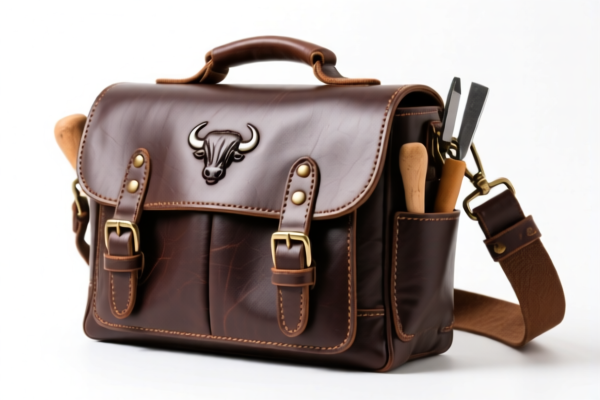
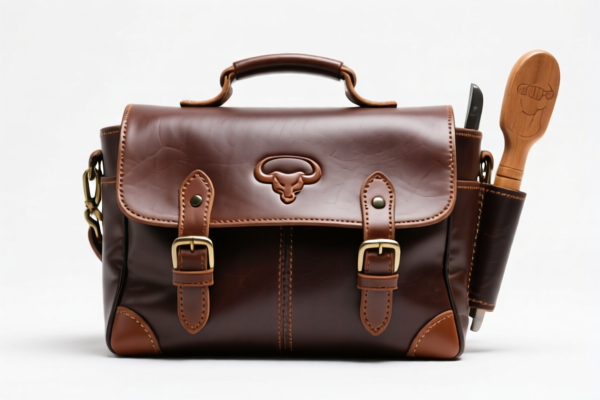
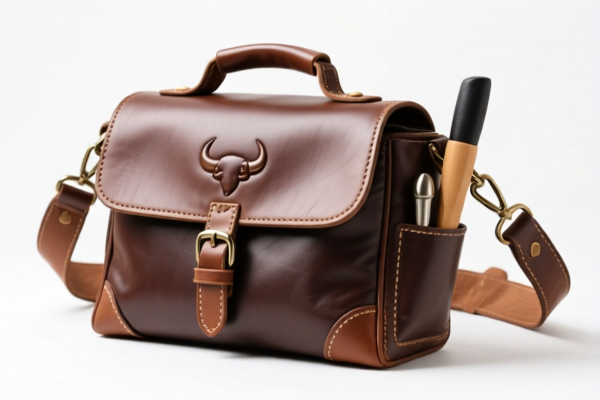
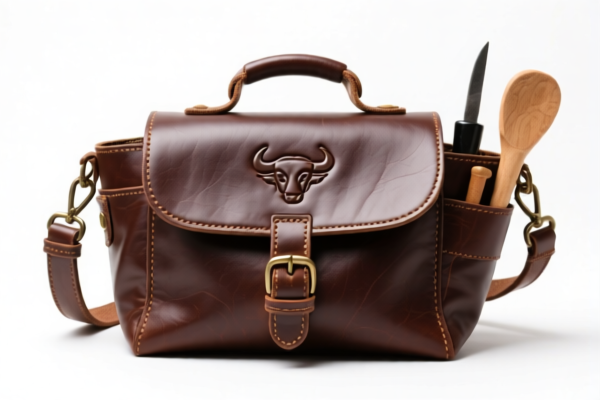
AI分析
🐂 Buffalo Leather Tool Bags: HS Code Classification & Duty Breakdown (2026 Update)
🌐 HS Code Reference & Customs Clearance Guide | 2026 Latest Tariff Analysis | Professional Logistics Strategy
📌 I. Product Definition & Classification: What Exactly is a "Buffalo Leather Tool Bag"?
Buffalo leather tool bags are robust, durable containers designed specifically for carrying hand tools, power tools, or hardware supplies. In international trade, the classification depends heavily on the primary function and specific design of the bag, rather than just the material (buffalo leather).
Key Distinctions: * General Carriers (Briefcases/Luggages): If the bag is designed to carry general items, documents, or a mix of tools in a generic format, it may fall under "luggage" or "briefcases." * Specialized Tool Cases: If the bag has specific compartments, loops, or padding designed exclusively for tools, it falls under specific tool bag classifications. * Accessories (Straps/Folders): If the item is a simple leather strap, binder, or folder not designed as a standalone carrying case, it falls under "other leather articles."
⚠️ Critical Classification Point:
- If it is a structured bag with handles/straps for carrying tools → Likely 4202.11 or 4202.31.
- If it is a loose folder, binder, or strap → Likely 4205.00.
- Misclassification Risk: Declaring a specialized tool bag as a general "leather folder" to avoid higher duties is a common audit trigger.
📦 II. HS Code Classification Details (2026 Latest Tariff Cross-Reference)
Based on the provided data, Buffalo Leather Tool Bags are classified into three primary categories depending on their specific form:
| HS Code | Product Description | Applicable Scenario | Material/Feature |
|---|---|---|---|
4202.11.00.30 |
Briefcases & Similar Containers | General-purpose buffalo leather tool bag, resembling a briefcase or satchel. | Exterior surface: Leather (Buffalo) |
4202.11.00.90 |
Notebook/Laptop Cases & Similar | Tool bag specifically designed to hold laptop-sized tools, tablet devices, or rigid cases. | Exterior surface: Leather (Buffalo) |
4202.31.60.00 |
Pouches & Similar Containers | Handbags, purses, or smaller pouch-style tool carriers made of leather. | Leather material, similar to a clutch or small bag |
4205.00.80.00 |
Other Leather Articles (Folders/Accessories) | Leather folders, document holders, or simple straps not classified as bags. | General leather article |
4205.00.40.00 |
Belts & Straps | Leather tool belts, suspenders, or straps. | Leather belt/strap category |
🔍 Key Reminder:
- The term "Tool Bag" is not a standalone HS heading. You must determine if it’s a briefcase (4202.11), a pouch (4202.31), or an accessory (4205.00).
- Buffalo Leather is treated as "Leather" in HS Code Chapter 42. The tanning process doesn’t change the code, but the object's function does.
💰 III. 2026 Latest Tariff Rate Breakdown (Including Surtaxes & Policy Add-ons)
✅ Origin: China (CN)
✅ Destination Market: United States (US)
✅ Effective Date: 2025/2026 (Current Active Rates)
🎯 1. 4202.11.00.30 & 4202.11.00.90 —— Briefcases & Similar Containers
These are the most common classifications for structured buffalo leather tool bags.
| Item | Detail |
|---|---|
| Base Tariff (MFN) | 8.0% |
| Section 301 Surcharge | 25.0% |
| Section 122 Tariff (IEEPA) | 10.0% |
| Total Tax Rate | 43.0% |
| Tax Calculation | CIF Value × 43% |
| De Minimis Exemption | ❌ Not Applicable (Denied) |
| Legal Basis | Base Tariff → USITC Footnote 301 → IEEPA Section 122 |
📌 Explanation:
- These HS codes carry the highest surtaxes among leather goods because they are classified as "luggage/containers."
- The 25% is the standard Section 301 tariff for Chinese goods.
- The 10% is an additional policy surcharge (often linked to recent trade actions or Section 122).
- Total Cost Impact: You are paying 43 cents in tax for every $1 of CIF value.
🎯 2. 4202.31.60.00 —— Pouches & Similar Containers
For smaller, pouch-style tool carriers.
| Item | Detail |
|---|---|
| Base Tariff (MFN) | 8.0% |
| Section 301 Surcharge | 25.0% |
| Section 122 Tariff (IEEPA) | 10.0% |
| Total Tax Rate | 43.0% |
| Tax Calculation | CIF Value × 43% |
| De Minimis Exemption | ❌ Not Applicable |
📌 Note:
- Even though it’s a "pouch," if it’s made of leather and structured like a bag, it attracts the same 43% rate as briefcases.
🎯 3. 4205.00.80.00 & 4205.00.40.00 —— Other Leather Articles / Belts
For folders, straps, or tool belts that are not standalone bags.
| Item | Detail |
|---|---|
| Base Tariff (MFN) | 0.0% - 1.8% |
| Section 301 Surcharge | 25.0% |
| Section 122 Tariff (IEEPA) | 10.0% |
| Total Tax Rate | 35.0% - 36.8% |
| Tax Calculation | CIF Value × (35% or 36.8%) |
| De Minimis Exemption | ❌ Not Applicable |
📌 Strategy Insight:
- If your product is a tool belt (4205.00.40.00) or a simple leather folder/strap (4205.00.80.00), the rate is lower (35-36.8%) than a full tool bag (43%).
- ⚠️ Warning: Do not misdeclare a "tool bag" as a "belt" or "folder" to save 6%+. Customs may audit based on product photos and descriptions, leading to penalties.
🛠️ IV. Customs Clearance Practical Advice (Avoid Pitfalls)
✅ 1. Documentation Checklist (Mandatory)
| Document | Required? | Notes |
|---|---|---|
| Product Specifications | ✔️ | Must detail: Material (100% Buffalo Leather), Dimensions, Weight, Compartments. |
| Product Photos | ✔️ | Clear images of all sides, including interior lining and tool loops. |
| Commercial Invoice | ✔️ | Must specify "Buffalo Leather Tool Bag" or "Leather Pouch," NOT generic "Leather Goods." |
| Packing List | ✔️ | List net/gross weight accurately. |
| Origin Certificate | ✔️ | Required to prove CN origin (triggers surtaxes). |
| Material Declaration | ✔️ | Confirm tanning process and leather percentage. |
✅ 2. Declaration Tips (Key Phrases)
🔥 "Be Specific, Not Generic!"
| Scenario | Recommended Description | Avoid |
|---|---|---|
| Structured Tool Bag | "Buffalo Leather Tool Bag, Hard-Shell, with Laptop Compartment" | "Leather Bag" |
| Soft Pouch | "Buffalo Leather Tool Pouch, Zipper Closure" | "Leather Folder" |
| Tool Belt | "Buffalo Leather Tool Belt, with Holsters" | "Leather Belt" (unless it's just a belt) |
| Accessory | "Buffalo Leather Strap, for Tool Holder" | "Tool Bag" |
✅ 3. Special Cases
| Situation | Handling Advice |
|---|---|
| Mixed Materials | If <10% plastic/metal, still classified as leather. If >50% non-leather, it may move to Chapter 42 other subheadings or Chapter 39/40. Check material %! |
| OEM/White Label | Provide OEM agreement. Customs may verify brand ownership to prevent trademark issues. |
| Used vs. New | New Only. Used leather goods have different HS codes and higher restrictions. |
🌍 V. Global Market Comparison (2026)
| Market | Recommended HS Code | Base Rate | Surtaxes | Total Est. Rate |
|---|---|---|---|---|
| 🇺🇸 USA | 4202.11.00.30 |
8% | 35% (301+122) | 43% |
| 🇨🇳 China | 4202.11.00.30 |
20% | 0% | 20% |
| 🇪🇺 EU | 4202.11.00 |
6.4% | 0% | 6.4% |
| 🇬🇧 UK | 4202.11.00 |
6.4% | 0% | 6.4% |
| 🇨🇦 Canada | 4202.11.00 |
0% (CUSMA) | 0% | 0% |
📌 Insight:
- The USA is the most expensive market for buffalo leather tool bags due to the 35% combined surtax.
- If you are exporting to the US, consider cost-padding or re-packaging strategies (if legal) to optimize CIF value.
- For EU/UK/Canada, duties are significantly lower, making these regions more attractive for high-value leather tools.
📌 VI. Common Errors & Pitfalls (Learn from Mistakes)
❌ Error 1: Declaring a Tool Bag as a Handbag (4202.21) to get a lower rate.
👉 Result: Customs will inspect the interior. If it has tool loops/padding, they will reclassify it and charge back taxes + penalties.
❌ Error 2: Ignoring Section 122 Tariff.
👉 Result: You calculated 33% (8% + 25%), but the actual rate is 43% (8% + 25% + 10%). You are underpaying by 10%.
❌ Error 3: Vague Description: "Leather Bag."
👉 Result: Customs officer has discretion. They may choose the highest duty rate or require additional documentation, causing delays.
❌ Error 4: Misclassifying Tool Belts as Clothing Accessories.
👉 Result: Tool belts are leather articles (4205), not clothing. Wrong HS code leads to incorrect duty calculation.
🎯 VII. Conclusion: Smart Classification, Smarter Profits
🎯 Key Takeaway:
🔹 Buffalo Leather Tool Bags are high-tariff items in the US (43%).
🔹 Specificity is your best defense. Describe the bag’s function accurately.
🔹 Don’t guess the HS Code. Use the product’s physical features (handles, compartments, lining) to match4202.11or4205.00.
✅ Pro Tip:
If you are shipping tool belts or straps, consider classifying them under 4205.00 if legally permissible, as the rate is ~35% instead of 43%. This 8% difference can significantly impact margins on high-volume shipments.
📣 Action Plan:
1. Audit your product photos. Do they look like a bag or a belt?
2. Verify the HS Code with a licensed customs broker.
3. Budget for 43% duty if exporting to the US.
4. Prepare detailed specs to justify your classification.
✨ Accurate Classification Saves Money.
💼 Don’t let hidden tariffs eat your profit.
用户评价
关于 HS 编码归类
协调制度(HS)是由世界海关组织(WCO)制定的国际贸易商品分类标准。全球 200 多个国家采用 HS 系统作为海关关税、贸易统计和进出口监管的基础。
每个 HS 编码遵循以下层级结构:
- 章(2 位)——商品大类(例如:第 84 章:机器和机械设备)
- 品目(4 位)——章内的更具体分类
- 子目(6 位)——国际通用细分,所有 WCO 成员国统一使用
- 本国细分(8-10 位)——各国自行扩展的细分编码,如美国 HTSUS 10 位编码
正确的 HS 编码归类对于顺利通关、准确缴纳关税和遵守贸易法规至关重要。错误归类可能导致海关延误、多缴关税或罚款。
从CN进口到US时,适用的关税税率可能包括:
- 最惠国(MFN)税率——适用于 WTO 成员国的标准关税税率
- 普通税率——适用于无贸易协定国家
- 贸易救济关税——附加关税,如 301 条款(反倾销)、232 条款(国家安全)或反补贴税
本页内容仅供参考。如需正式归类,请咨询当地海关或持牌报关代理。