Buffalo Marble Pattern Belt Material
CN → US| HS编码 | 关税税率 | 原产国 | 目的国 | 文档 |
|---|---|---|---|---|
| 4203300000 | 37.7% | CN | US | 官方文档 |
| 4107927030 | 15.0% | CN | US | 官方文档 |
| 4107997030 | 15.0% | CN | US | 官方文档 |
| 4203406000 | 35.0% | CN | US | 官方文档 |
商品图片
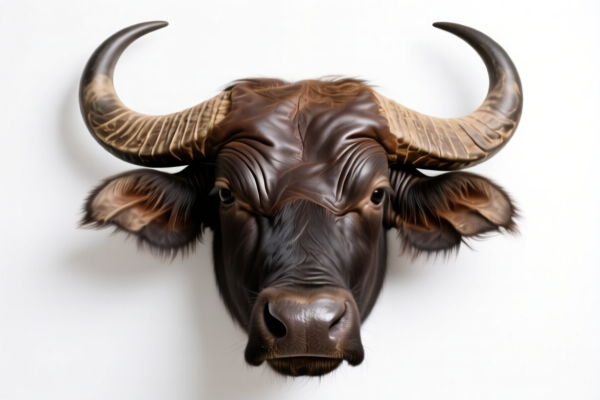
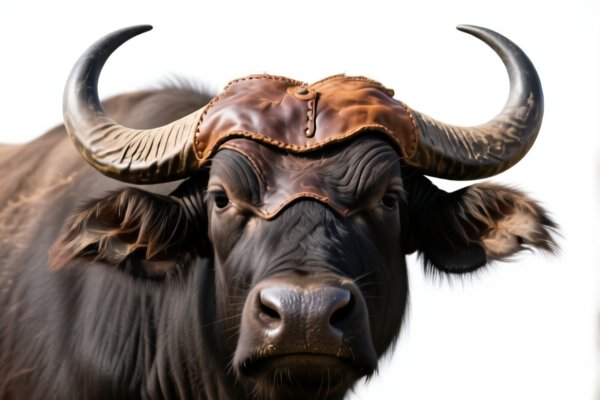
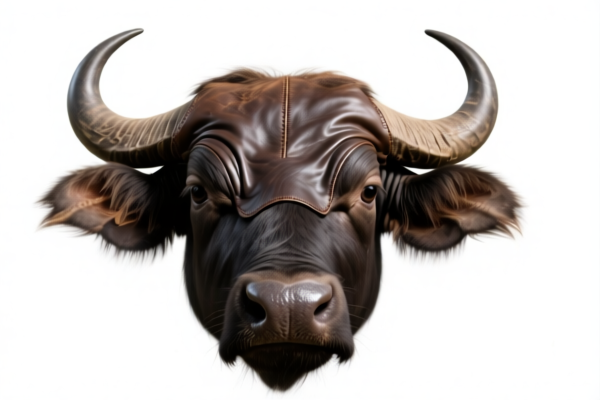
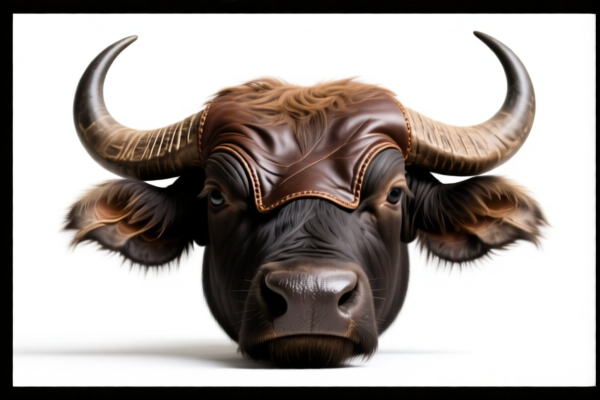
AI分析
🐃 Buffalo Marble Pattern Belt | Leather Accessories
🌐 HS Code Reference & Customs Clearance Guide | 2026 Latest Tariff Analysis | Professional-Level Entry Strategies
📌 I. Product Definition & Classification: Do You Really Understand "Buffalo Marble Pattern Belts"?
A belt with a "buffalo marble pattern" is a fashion accessory typically made from leather (specifically split leather or grain leather) featuring a distinctive veined or marbled texture, often mimicking the hide of a buffalo or using a specific tanning/dyeing process to achieve a "marble" effect. In international trade, the classification depends heavily on the specific material composition (grain vs. split) and the intended use (fashion belt vs. industrial belting vs. garment accessory).
⚠️ Key Distinction Points:
- If the product is a fashion belt for clothing wear → Likely Chapter 42
- If the product is industrial belting (conveyor/power transmission) → Likely Chapter 41
- The critical difference lies in whether it is classified as an "article of apparel" or "raw leather/semi-manufactured leather."
📦 II. HS Code Classification Details (2026 Latest Tariff Authoritative Comparison)
Based on the provided data for "Buffalo Marble Pattern Belt," here are the four possible classifications depending on material and use:
| HS Code | Product Description | Application / Use | Material Specifics |
|---|---|---|---|
4203.30.00.00 |
Belts (Fashion/Apparel) | Used as Belts (Apparel accessory) | Leather (General) |
4107.92.70.30 |
Leather Belting (Industrial/semi-finished) | Used as Belting (Specific material: Grain Split Leather of Bovine/Equine) | Bovine/Horse Grain Split Leather |
4107.99.70.30 |
Other Leather Belting | Used as Belting (General leather belting) | General Leather |
4203.40.60.00 |
Other Accessories | Used as Clothing Accessories (Non-belt specific apparel parts) | Leather |
🔍 Critical Reminder:
- "Belts" (4203.30) generally refer to finished fashion belts worn by humans.
- "Belting" (4107.xx) often refers to industrial leather belts or semi-finished leather strips not yet processed into finished apparel goods.
- Misclassifying a fashion belt as industrial belting (or vice versa) can lead to significant duty differences and customs delays.
💰 III. 2026 Latest Tariff Rate Breakdown (Including Additional Duties & Policy Surcharges)
✅ Applicable Country: United States (US)
✅ Origin: China (CN)
✅ Effective Time: Current trade policies (Section 301, IEEPA)
🎯 1. 4203.30.00.00 —— Fashion Belts (Leather)
| Item | Content |
|---|---|
| Base Tariff | 2.7% |
| Section 301 Additional Duty | +25.0% |
| Section 122 Tariff (IEEPA) | +10.0% |
| Total Effective Rate | 37.7% |
| Calculation Method | CIF Value × 37.7% |
| De Minimis Eligibility | ❌ No (High risk of audit) |
| Legal Basis | HTSUS:4203.30.00.00 → USITC:301 → IEEPA:122 |
📌 Explanation:
- This is the standard classification for finished leather fashion belts.
- The total duty of 37.7% is significant. It includes the base MFN rate (2.7%), the major Section 301 tariff (25%) for Chinese goods, and the additional 122 IEEPA surcharge (10%).
- Cost Impact: High. Must be factored into pricing strategy.
🎯 2. 4107.92.70.30 —— Bovine/Equine Grain Split Leather Belting
| Item | Content |
|---|---|
| Base Tariff | 5.0% |
| Section 301 Additional Duty | 0.0% |
| Section 122 Tariff (IEEPA) | +10.0% |
| Total Effective Rate | 15.0% |
| Calculation Method | CIF Value × 15.0% |
| De Minimis Eligibility | ❌ No |
| Legal Basis | HTSUS:4107.92.70.30 → IEEPA:122 |
📌 Explanation:
- This code applies if the product is classified as "Belting" made of Bovine (cow) or Equine (horse) Grain Split Leather.
- Crucial Advantage: The 25% Section 301 tariff is waived (0%), resulting in a much lower total duty of 15%.
- Risk: Customs must agree that the item is "Belting" (industrial/semi-finished) rather than a "Fashion Belt." Misdeclaration here can lead to penalties.
🎯 3. 4107.99.70.30 —— Other Leather Belting
| Item | Content |
|---|---|
| Base Tariff | 5.0% |
| Section 301 Additional Duty | 0.0% |
| Section 122 Tariff (IEEPA) | +10.0% |
| Total Effective Rate | 15.0% |
| Calculation Method | CIF Value × 15.0% |
| De Minimis Eligibility | ❌ No |
| Legal Basis | HTSUS:4107.99.70.30 → IEEPA:122 |
📌 Explanation:
- Similar to the previous code but for other types of leather belting not specifically bovine/equine grain split.
- Also benefits from the 0% Section 301 rate, keeping total duty at 15%.
- Use only if the material does not qualify for4107.92.
🎯 4. 4203.40.60.00 —— Other Clothing Accessories (Leather)
| Item | Content |
|---|---|
| Base Tariff | 0.0% |
| Section 301 Additional Duty | +25.0% |
| Section 122 Tariff (IEEPA) | +10.0% |
| Total Effective Rate | 35.0% |
| Calculation Method | CIF Value × 35.0% |
| De Minimis Eligibility | ❌ No |
| Legal Basis | HTSUS:4203.40.60.00 → USITC:301 → IEEPA:122 |
📌 Explanation:
- Classified as Clothing Accessories rather than specifically "Belts."
- Lower base tariff (0%) but still subject to 25% Section 301 and 10% IEEPA, totaling 35%.
- Warning: This rate is slightly lower than4203.30(37.7%) but higher than the "Belting" codes (15%). Only use if the product strictly fits the "Accessory" definition (e.g., decorative straps, non-functional parts).
🛠️ IV. Customs Clearance Practical Advice (Battle-Tested Pitfall Avoidance Guide)
✅ 1. Required Documentation Checklist (None Are Optional)
| Document | Mandatory? | Description |
|---|---|---|
| ✅ Product Specification Sheet | ✔️ | Must detail material (Leather type, split vs. grain), dimensions, and "Buffalo Marble" processing method. |
| ✅ Composition Certificate | ✔️ | Proves whether the leather is Bovine, Equine, or other. Critical for choosing between 4107.92 and 4107.99. |
| ✅ Product Photos (Including Label) | ✔️ | Show the "marble pattern" and any brand labels. Helps Customs distinguish between fashion vs. industrial use. |
| ✅ Commercial Invoice | ✔️ | Clearly state the product name. Avoid ambiguous terms like "Leather Strip" if it's clearly a fashion belt. |
| ✅ Packing List | ✔️ | Detail packaging to ensure items are not split into incorrect components. |
✅ 2. Declaration Strategy (Key Mnemonics)
🔥 “Use Defines HS, Material Defines Rate, Don’t Mix Fashion with Industry!”
| Scenario | Correct Declaration | Incorrect Declaration | Consequence |
|---|---|---|---|
| Fashion Belt (Worn on waist) | 4203.30.00.00 |
4107.92.70.30 |
High Duty (37.7%) or Penalty for misclassification |
| Industrial Belting (Conveyor/Motor) | 4107.92.70.30 or 4107.99.70.30 |
4203.30.00.00 |
Low Duty (15%) but Risk of Audit if it looks like a fashion belt |
| Decorative Leather Strap | 4203.40.60.00 |
4203.30.00.00 |
Minor duty difference (35% vs 37.7%), but must justify "Accessory" vs "Belt" |
📌 Critical Note:
- If you declare a fashion belt as4107.92.70.30to save 22.7% in duties, Customs will likely request proof that it is not an apparel item.
- Solution: Provide clear usage instructions, marketing materials, and photos showing it is not for direct waist-wear if claiming4107codes.
✅ 3. Special Case Handling
| Situation | Recommendation |
|---|---|
| OEM Custom Belts | Provide client contract and design specs. Ensure the "Buffalo Marble" finish is documented as a leather treatment, not a composite material. |
| Mixed Materials | If the belt has metal buckles or fabric inserts, the leather portion determines classification. Ensure leather is >50% by weight/value. |
| Samples | Even for samples, declare accurately. Misdeclaration leads to flags on future shipments. |
| Origin Marking | Ensure all belts are marked "Made in China" to comply with IEEPA 122 requirements. |
🌍 V. Global Market Comparison (2026 Latest)
| Country/Region | Recommended HS Code | Tariff (China Origin) | Certification | Notes |
|---|---|---|---|---|
| 🇺🇸 USA | 4203.30.00.00 |
37.7% | None specific | High duty due to 301 + 122. Consider 4107 if structurally industrial. |
| 🇨🇳 China | 4203.30.00.00 |
5% (Import) | CCC (if applicable) | Low import duty, but focus on domestic sales. |
| 🇪🇺 EU | 4203.29 |
12% | CE (if protective) | No Section 301 equivalent, but standard customs duties apply. |
| 🇬🇧 UK | 4203.29 |
12% | UKCA | Post-Brexit rules apply. |
| 🇯🇵 Japan | 4203.29 |
14% | None | Standard MFN rate. |
📌 Conclusion:
- The USA is the only major market with significant punitive tariffs (301 + 122).
- Cost Saving Opportunity: If the product can be legitimately classified as Industrial Belting (4107), you can reduce the tariff from 37.7% to 15%. However, this requires strong evidence of non-apparel use.
📌 VI. Common Mistakes & Pitfall Guide (Lessons Learned)
❌ Mistake 1: Declaring a fashion belt as 4107.92.70.30 to save taxes.
👉 Consequence: Customs audit, retroactive duties (22.7% difference), and potential fraud penalties.
Fix: Only use 4107 for actual industrial belts.
❌ Mistake 2: Ignoring the "122 Tariff" (IEEPA 10%).
👉 Consequence: Underpayment of 10% on top of the 37.7% or 15%.
Fix: Always include the 10% IEEPA surcharge in cost calculations for US-bound leather goods.
❌ Mistake 3: Vague product description ("Leather Belt").
👉 Consequence: Customs may classify it as the highest duty bracket or delay clearance.
Fix: Use precise terms: "Fashion Belt, Bovine Leather, Buffalo Marble Finish, for Apparel."
❌ Mistake 4: Splitting Buckle and Belt into separate shipments.
👉 Consequence: Each component may be taxed separately, potentially increasing total cost or creating logistical nightmares.
Fix: Declare as a set if sold together.
✅ Correct Approach:
“Fashion Belt, 30mm Width, Bovine Split Leather with Buffalo Marble Grain Finish, Metal Buckle, Model BM-2026, For Women’s Apparel”
🎯 VII. Conclusion: Precise Classification Saves Money!
🎯 Remember the Mnemonic:
🔹 "Fashion Belt = 4203 (37.7% Total)"
🔹 "Industrial Belting = 4107 (15% Total)"
🔹 "Don’t Mix Up Use or Pay the Penalty!"
🔹 "301 + 122 = 35% Extra, Know Your Code or Lose Profit!"
📌 Pro Tip:
If your leather sourcing or manufacturing can shift towards industrial applications (e.g., machine belts), consider the
4107codes for significant savings. However, for fashion accessories,4203.30.00.00is the standard.
Recommendation: Apply for a Binding Ruling from US Customs (CBP) if your product sits in a gray area between fashion and industrial use. This provides legal certainty and protects against audits.
📣 Immediate Action:
📞 Contact Your Freight Forwarder: Confirm if your product is considered "Apparel" or "Industrial Belting."
📄 Prepare Documentation: Have leather type certificates and product photos ready.
🚀 Optimize Costs: Use the correct HS code to avoid overpaying or facing fines.
✨ Professional Clearance Starts with Accurate Classification!
💼 Every Percent of Duty Counts in the Battle for Profitability!
用户评价
关于 HS 编码归类
协调制度(HS)是由世界海关组织(WCO)制定的国际贸易商品分类标准。全球 200 多个国家采用 HS 系统作为海关关税、贸易统计和进出口监管的基础。
每个 HS 编码遵循以下层级结构:
- 章(2 位)——商品大类(例如:第 84 章:机器和机械设备)
- 品目(4 位)——章内的更具体分类
- 子目(6 位)——国际通用细分,所有 WCO 成员国统一使用
- 本国细分(8-10 位)——各国自行扩展的细分编码,如美国 HTSUS 10 位编码
正确的 HS 编码归类对于顺利通关、准确缴纳关税和遵守贸易法规至关重要。错误归类可能导致海关延误、多缴关税或罚款。
从CN进口到US时,适用的关税税率可能包括:
- 最惠国(MFN)税率——适用于 WTO 成员国的标准关税税率
- 普通税率——适用于无贸易协定国家
- 贸易救济关税——附加关税,如 301 条款(反倾销)、232 条款(国家安全)或反补贴税
本页内容仅供参考。如需正式归类,请咨询当地海关或持牌报关代理。