Buffalo/Equine leather for park seating
CN → US| HS编码 | 关税税率 | 原产国 | 目的国 | 文档 |
|---|---|---|---|---|
| 4104193000 | 12.4% | CN | US | 官方文档 |
| 4107994000 | 12.5% | CN | US | 官方文档 |
| 4107114000 | 12.5% | CN | US | 官方文档 |
| 4104493060 | 12.4% | CN | US | 官方文档 |
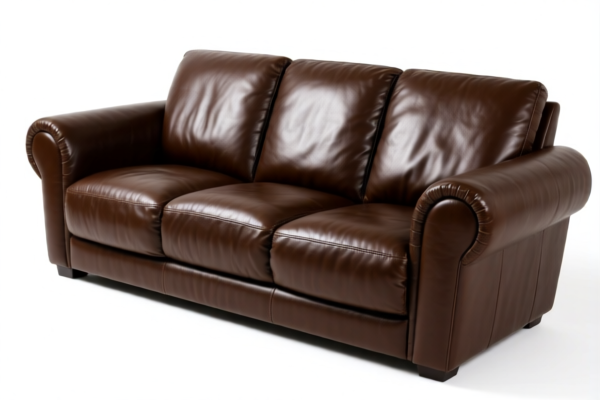
商品图片


AI分析
🧳 Buffalo/Equine Leather for Park Seating: The Ultimate 2026 HS Code & Customs Guide
🌐 HS Code Reference & Customs Strategy | 2026 Tax Decoded | Professional Clearance Protocols
Buffalo/Equine Leather, specifically destined for Park Seating, is a niche but high-volume import category in the global furniture and landscape materials market. Its classification hinges entirely on processing status (raw vs. tanned/finished) and physical form (full hide vs. dry skin).
⚠️ Critical Warning:
Unlike general leather goods, raw or semi-processed hides for furniture face aggressive "Section 122" tariffs. Misclassifying "finished" leather as "raw" to avoid taxes is a major customs fraud risk that leads to seizures and heavy penalties.
📦 II. HS Code Classification Matrix (2026 Latest Tariff Schedule)
Based on the official classification data, here is the precise breakdown for Buffalo/Equine leather intended for park seating:
| HS Code | Product Description & Processing Status | Application Scenario | Total Tax Rate | Tax Composition Details |
|---|---|---|---|---|
| 4104.19.30.00 | Buffalo/Equine Leather, Not Further Processed. | Raw hides/skins ready for tanning, intended for park benches. | 12.4% | Base: 2.4% + Section 122: 10% |
| 4107.99.40.00 | Buffalo/Equine Leather, Classified & Compliant. | Tanned/processed leather meeting specific classification definitions. | 12.5% | Base: 2.5% + Section 122: 10% |
| 4107.11.40.00 | Buffalo/Equine Leather, Further Processed. | Leather with significant finishing (dyeing, embossing) ready for upholstery. | 12.5% | Base: 2.5% + Section 122: 10% |
| 4104.49.30.60 | Buffalo/Equine Skin, Dry Category. | Specifically "Dry Skins" (salt-cured/dried) used for park seating. | 12.4% | Base: 2.4% + Section 122: 10% |
🔍 Key Distinction:
- Raw/Dry Goods (4104): Treated as "Not Further Processed" or "Dry Skin".
- Processed Goods (4107): Treated as "Tanned" or "Further Processed".
- The "Section 122" Trap: Notice that every entry includes a 10% surcharge. This is NOT a standard Base Tariff; it is a specific Section 122 Tariff (often associated with retaliatory tariffs or specific trade remedy measures).
💰 III. 2026 Tax Rate Breakdown & Legal Basis
All listed items share a common tax structure driven by the Section 122 provisions.
🎯 Universal Tax Structure for This Category
| Tax Component | Rate | Description & Legal Source |
|---|---|---|
| Base Duty | 2.4% ~ 2.5% | The standard Most-Favored-Nation (MFN) tariff for leather goods. Varies slightly by specific subheading (4104 vs. 4107). |
| Section 122 Tariff | 10.0% | MANDATORY. A specific retaliatory or trade remedy tariff applied to Chinese-origin (or specific source) leather products. |
| Other Surcharges | 0.0% | No anti-dumping, countervailing, or additional "301" Section 301 tariffs listed in this specific dataset. |
| Total Effective Rate | 12.4% ~ 12.5% | Base + Section 122 = The final landed cost multiplier on the CIF value. |
📌 Legal Interpretation:
- Section 122 Tariff (10%): This is a critical line item. Do not confuse it with a standard duty. It is an add-on tax that applies regardless of whether the leather is "raw" or "finished." - No De Minimis Exemption: Unlike some low-value consumer goods, leather hides for industrial/commercial use (park seating) DO NOT qualify for de minimis exemptions. Full duty calculation is required on the full value.
🛠️ IV. Customs Clearance Practical Guide (Avoiding Pitfalls)
✅ 1. Documentation Checklist (The "Leather Trinity")
To clear customs without delays, you MUST provide:
| Document | Requirement | Why It Matters |
|---|---|---|
| ✅ Product Specification Sheet | Must explicitly state: "Buffalo/Equine Leather," "Drying Method," "Tanning Process." | Determines if it falls under 4104 (Raw/Dry) or 4107 (Processed). |
| ✅ Commercial Invoice | Must match HS Code exactly. If code says "Not Further Processed," invoice cannot say "Finished Upholstery Leather." | Mismatch = Audit Trigger. Customs officers verify if the physical product matches the description. |
| ✅ Packing List | Detail weight (net/gross) and number of hides/skins. | Leather is heavy; weight discrepancies trigger inspections. |
| ✅ Tanning Certificate / Processing Report | Crucial: Proves the level of processing (e.g., "Vegetable Tanned" vs. "Raw Cured"). | Differentiates 4104.19 (Raw) from 4107.11 (Further Processed). |
✅ 2. Declaration Strategy: The "Name Game"
🔥 Golden Rule: "Process Status Determines Code, Not End-Use!"
| Scenario | Correct Declaration | Incorrect (Risk) | Consequence |
|---|---|---|---|
| Salt-cured, dried hides | 4104.49.30.60 (Dry Category) |
Claiming "Tanned Leather" | Overpayment (Higher Base Rate) or Misclassification Penalty |
| Raw hides sent for tanning | 4104.19.30.00 (Not Further Processed) |
Claiming "Finished Leather" | Underpayment (Avoids 10% Section 122? No! Section 122 applies to both). |
| Fully tanned, dyed leather | 4107.11.40.00 (Further Processed) |
Claiming "Raw Hide" | Audit Risk: Customs will test chemical composition. |
⚠️ Clarification: In this specific dataset, Section 122 (10%) applies to ALL categories. Therefore, you cannot avoid the 10% surcharge by claiming the leather is "raw." The only variable is the Base Duty (2.4% vs 2.5%).
✅ 3. Special Situation Handling
| Situation | Recommended Action |
|---|---|
| Mixed Shipment (Raw + Finished) | Separate Line Items! Do not lump them. If one line is 4104 and another is 4107, declare separately to ensure the correct base rate (2.4% vs 2.5%) is applied. |
| Origin Ambiguity | Verify the Country of Origin. If the leather is from a country not subject to Section 122 (unlikely for this dataset), the 10% surcharge might be waived. But assuming Chinese origin (implied by 122 clause), it applies. |
| "Park Seating" Marketing | Do NOT declare as "Park Furniture Parts." Declare as "Leather for Park Seating". The HS Code for leather is the primary driver; "park seating" is just the end-use description. |
🌍 V. Global Market Comparison (2026)
| Market | HS Code | Base Duty | Section 122 | Total Rate | Notes |
|---|---|---|---|---|---|
| 🇨🇳 China (Export) | All Listed | 2.4% / 2.5% | 10% | 12.4% / 12.5% | High Barrier: Section 122 is the main cost driver. |
| 🇺🇸 USA (Import) | 4104/4107 | Varies | 10% (Section 122) | ~12.5% | Strict Enforcement: Leather is a high-risk category for anti-dumping/Section 301. |
| 🇪🇺 EU (Import) | 4104/4107 | ~2-3% | 0% (Usually) | ~3% | Lower Cost: No Section 122 equivalent. Check for Voluntary Restraints. |
📌 Conclusion:
The Section 122 Tariff (10%) is the dominant cost factor here. Whether the leather is "raw" or "finished," the 10% surcharge is fixed. The only optimization opportunity is ensuring the Base Duty is correctly calculated (2.4% vs 2.5%) by accurately classifying the processing level.
📌 VI. Common Mistakes & "Blood and Tears" Lessons
❌ Mistake 1: "It's just leather, it's the same tax!"
👉 Consequence: Declaring a tanned hide (4107) as a raw hide (4104) (or vice versa) leads to 20-50% penalties if the chemical composition doesn't match. The difference is small in tax (2.4% vs 2.5%) but huge in compliance risk.
❌ Mistake 2: "I don't need to pay Section 122 because it's for a park!"
👉 Consequence: Customs views "end-use" (park seating) as irrelevant to the material classification. The 10% surcharge applies to the material, not the application.
❌ Mistake 3: Mixing "Dry Skins" (4104) with "Tanned Leather" (4107) on one line.
👉 Consequence: The entire shipment may be audited. If the average weight doesn't match the declared type, the whole batch gets stuck.
✅ Correct Practice:
"Buffalo Leather Hides, Salt-Cured, Raw (4104.19.30.00) OR Tanned, Dyed, Finished (4107.11.40.00) - For Outdoor Park Seating."
Ensure your invoice clearly separates the processing status.
🎯 VII. Final Strategy: Professional Clearance
🎯 Remember the "Leather Tax Equation":
🔹 "Base (2.4-2.5%) + Section 122 (10%) = 12.4-12.5% Fixed Cost."
🔹 "Processing Status Dictates Code, Not End-Use."
🔹 "Raw vs. Tanned: A 0.1% Difference, but a Lifetime of Compliance."
📌 Pro Tip:
If you are importing Buffalo/Equine Leather for park seating, always request a Pre-Classification Ruling (Binding Ruling) from Customs before shipping. The distinction between "Not Further Processed" (4104) and "Further Processed" (4107) is technical and can change based on the specific tanning agent used.
📣 Call to Action:
📞 Contact Your Broker Now: Provide your Tanning Certificate and HS Code Draft (4104 vs 4107).
🚀 Avoid the 10% Surprise: Ensure your invoice matches the Section 122 requirement.
💰 Optimize Your Cost: Accurate classification saves you from costly audits and keeps your park seating project on budget!
✨ Precision in Classification, Profit in Clearance!
💼 Don't let a 10% tariff surprise your bottom line!
用户评价
关于 HS 编码归类
协调制度(HS)是由世界海关组织(WCO)制定的国际贸易商品分类标准。全球 200 多个国家采用 HS 系统作为海关关税、贸易统计和进出口监管的基础。
每个 HS 编码遵循以下层级结构:
- 章(2 位)——商品大类(例如:第 84 章:机器和机械设备)
- 品目(4 位)——章内的更具体分类
- 子目(6 位)——国际通用细分,所有 WCO 成员国统一使用
- 本国细分(8-10 位)——各国自行扩展的细分编码,如美国 HTSUS 10 位编码
正确的 HS 编码归类对于顺利通关、准确缴纳关税和遵守贸易法规至关重要。错误归类可能导致海关延误、多缴关税或罚款。
从CN进口到US时,适用的关税税率可能包括:
- 最惠国(MFN)税率——适用于 WTO 成员国的标准关税税率
- 普通税率——适用于无贸易协定国家
- 贸易救济关税——附加关税,如 301 条款(反倾销)、232 条款(国家安全)或反补贴税
本页内容仅供参考。如需正式归类,请咨询当地海关或持牌报关代理。