Buffalo/Horse Leather Theater Seats
CN → US| HS编码 | 关税税率 | 原产国 | 目的国 | 文档 |
|---|---|---|---|---|
| 9401710031 | 35.0% | CN | US | 官方文档 |
| 9401698090 | 35.0% | CN | US | 官方文档 |
| 4203406000 | 35.0% | CN | US | 官方文档 |
| 4203104085 | 16.0% | CN | US | 官方文档 |
| 4107915000 | 12.8% | CN | US | 官方文档 |
| 4107925000 | 12.8% | CN | US | 官方文档 |
商品图片
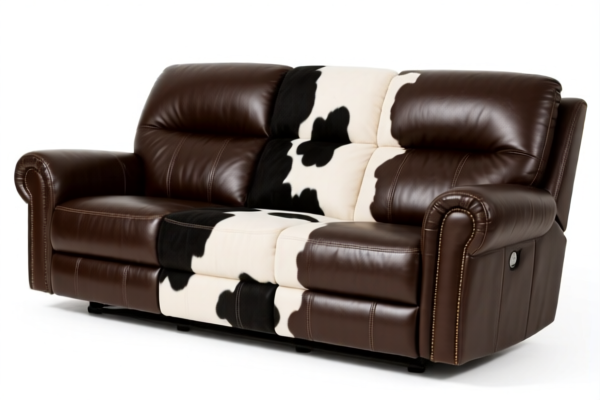


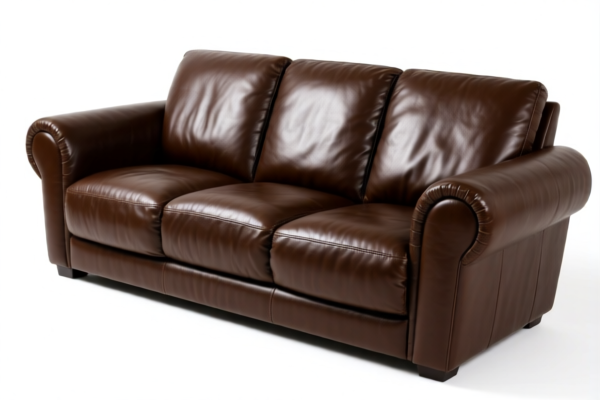
AI分析
🎬 Buffalo/Horse Leather Theater Seats
🌐 HS Code Classification & Customs Clearance Strategy | 2026 Tax Regime Breakdown | Premium Seating Compliance
📌 I. Product Definition & Classification: What Exactly Are "Theater Seats"?
"Buffalo/Horse Leather Theater Seats" refer to upholstered seating units specifically designed for performance venues, cinemas, lecture halls, or premium lounges. These are not ordinary furniture; they are convertible or fixed seats with metal or wooden frames, often customized for acoustic, comfort, and aesthetic requirements.
In international trade, the classification hinges on two critical factors: 1. Material Composition: Are they made of genuine bovine (buffalo) or equine (horse) leather? 2. Frame Structure: Do they have metal frames or wooden frames?
⚠️ Critical Distinction:
- If the seat is upholstered leather with a metal frame → It falls under 9401.71.00.31.
- If the seat is upholstered leather with a wooden frame → It falls under 9401.69.80.90.
- Note: Pure leather hides (without frame) belong to Chapter 41, but "Seats" are Chapter 94.
📦 II. HS Code Classification Details (2026 Customs Tariff Reference)
Based on the provided data, here is the authoritative mapping for Buffalo/Horse Leather Theater Seats:
| HS Code | Product Description | Frame Type | Application | Leather Origin |
|---|---|---|---|---|
9401.71.00.31 |
Seats (other than 9402), convertible or not, with METAL FRAMES: Upholstered Other | 🔩 Metal | Theater, Cinema, Auditorium, Conference | Buffalo / Horse (Leather) |
9401.69.80.90 |
Seats (other than 9402), convertible or not, with WOODEN FRAMES: Other | 🪵 Wooden | Luxury Theater, Home Theater, Private Lounge | Buffalo / Horse (Leather) |
🔍 Key Clarification:
- Chapter 94 vs. Chapter 41: Even though the upholstery is buffalo/horse leather, the final form is a "Seat" (furniture), so it is classified under 9401, not leather hides (4107). - Heading 9402 Exclusion: Items like "Office chairs" or "Dental chairs" fall under 9402. Theaters seats are "Other seats" under 9401. - Frame Material is King: The HS Code splits strictly based on whether the skeleton is metal or wood.
💰 III. 2026 Tariff Rate Breakdown (Detailed Tax Analysis)
✅ Applicable Country: United States (US)
✅ Origin: China (CN) - Assumed based on typical trade patterns
✅ Effective Date: 2025 onwards (Current Trade War Tariffs)
🎯 1. 9401.71.00.31 — Upholstered Seats with Metal Frames
| Tax Component | Rate | Description |
|---|---|---|
| Base Duty | 0.0% | Standard MFN tariff for general furniture. |
| Section 301 Additional Duty | +25.0% | Crucial! Levied under US Trade Act Section 301 targeting specific Chinese furniture categories. |
| Total Effective Rate | 25.0% | High Impact: Every $100,000 of value incurs $25,000 in duty. |
| Tax Detail String | Base: 0.0%, Additional: 25.0% |
📌 Explanation:
The 25% tariff is a "Section 301" penalty tariff. Unlike base duties (0%), this is a punitive measure on Chinese exports. It applies regardless of the leather quality or frame design, as long as it fits the metal-frame seat definition.
🎯 2. 9401.69.80.90 — Upholstered Seats with Wooden Frames
| Tax Component | Rate | Description |
|---|---|---|
| Base Duty | 0.0% | Standard MFN tariff. |
| Section 301 Additional Duty | +25.0% | Crucial! Same Section 301 penalty as metal frames. |
| Total Effective Rate | 25.0% | High Impact: Equal burden to metal frames. |
| Tax Detail String | Base: 0.0%, Additional: 25.0% |
📌 Explanation:
Even with a wooden frame, the 25% tariff applies. Many importers mistakenly believe "wooden furniture" gets a lower rate. In this specific sub-category, the Section 301 tax is identical to the metal frame version.
⚠️ Special Note on Raw Leather vs. Finished Seats
(For context, though not the final product) If you were importing the raw buffalo/horse leather before making the seats, the taxes would be 0.0% (as seen in items 4107.91.50.00 and 4107.92.50.00 in the data). - Strategy: Importing raw leather (0% tax) + manufacturing the seats in a third country (e.g., Vietnam/Mexico) + shipping to US could potentially avoid the 25% tariff. - Risk: Must avoid "transshipment" rules. The transformation must be substantial.
🛠️ IV. Customs Clearance Practical Advice (Step-by-Step)
✅ 1. Critical Documentation Checklist
To clear these seats without delays, ensure the following are on your commercial invoice and packing list:
| Document | Requirement | Why It Matters |
|---|---|---|
| Detailed Product Description | "Theater Seat, Upholstered in Buffalo/Horse Leather, Frame: [Metal/Wood], Model: XYZ" | Must explicitly state Frame Material to avoid misclassification. |
| Material Declaration | Specify % of leather vs. synthetic fabric. | Proof of "Leather" classification; if synthetic >50%, HS Code might change. |
| Dimensions & Weight | Total dimensions per unit and per pallet. | Needed for volumetric weight calculation and customs inspection. |
| Origin Certificate (CO) | Certificate of Origin for China (if applicable). | Required to prove origin for Section 301 applicability. |
| Photos of Interior Structure | Clear shot of the frame (metal vs. wood). | Customs officers verify the frame material against your HS Code claim. |
✅ 2. Classification Strategy (Do's & Don'ts)
🔥 Golden Rule: "Frame First, Upholstery Second!"
| Scenario | Correct HS Code | Common Error | Consequence |
|---|---|---|---|
| Metal Frame + Leather | 9401.71.00.31 |
Misclassify as 9401.61 (Wood) |
Risk of penalty for incorrect declaration. |
| Wooden Frame + Leather | 9401.69.80.90 |
Misclassify as 9401.61 (Incorrect subhead) |
Audit risk, potential back-taxes. |
| Raw Leather Hides | 4107.91.50.00 |
Import as "Seats" to save tax | Severe Fraud: Goods will be seized if frame exists. |
| Partial Assembly (Kit) | Depends on "Complete" status | Splitting parts | May trigger "kit" classification rules (different tax). |
✅ 3. Cost Optimization Suggestions
-
Manufacturing Hub Shift:
- Current: China → US = 25% Duty.
- Strategy: Manufacture in Vietnam, Mexico, or Thailand.
- Benefit: Avoids Section 301 "Additional Duty". The base tax remains 0%, but the 25% penalty disappears (if origin rules are met).
-
Leather Sourcing:
- Import raw leather (0% tax) to your manufacturing hub (e.g., Vietnam), then assemble the seats there.
- Caution: Ensure the transformation is sufficient to change the "Country of Origin" to the manufacturing hub.
-
Hybrid Frames:
- If a frame has both metal and wood, customs usually classifies based on the primary structural material. Be prepared to justify this if challenged.
🌍 V. Market Comparison (2026 View)
| Destination | HS Code | Base Tax | Section 301 / Add-On | Total Effective Tax |
|---|---|---|---|---|
| 🇺🇸 USA | 9401.71 / 9401.69 |
0% | +25% (China Origin) | 25% ⚠️ |
| 🇨🇳 China | 9401.71 / 9401.69 |
Varies | N/A | Low (Local Market) |
| 🇪🇺 EU | 9401.61 / 9401.71 |
0-3% | N/A (unless anti-dumping) | ~3% ✅ |
| 🇯🇵 Japan | 9401.71 / 9401.69 |
5-8% | N/A | ~6% ✅ |
📌 Conclusion:
The 25% tariff in the US is the biggest hurdle. It effectively doubles the cost of production compared to Asian/EU markets.
🚨 VI. Common Pitfalls & Avoidance
❌ Pitfall 1: Confusing "Leather Seats" with "Leather Hides" * Mistake: Declaring finished theater seats as "Leather, further prepared" (4107). * Result: Goods rejected at customs; fines applied; shipment detained. * Fix: Always declare as "Seats" (9401) if the frame and upholstery are assembled.
❌ Pitfall 2: Ignoring the Frame Material
* Mistake: Declaring a metal-framed seat as a wooden one (or vice versa) to "guess" the tax rate.
* Result: Customs audit. If discovered, you pay the 25% regardless of the intent, plus penalties.
* Fix: Inspect the prototype. Metal = 9401.71; Wood = 9401.69.
❌ Pitfall 3: Under-declaring the Value * Mistake: Trying to lower the declared value to reduce the 25% duty. * Result: Seizure, blacklisting, and legal action. * Fix: Use accurate CIF values. The 25% is a percentage of value; accuracy is key.
🎯 VII. Final Verdict & Action Plan
Summary:
Buffalo/Horse Leather Theater Seats imported into the US from China face a 25% Additional Tariff (Section 301), regardless of whether the frame is metal (9401.71.00.31) or wood (9401.69.80.90). The base duty is 0%, but the total cost impact is 25%.
Action Plan: 1. Verify Frame Material: Ensure your production specs match the HS Code exactly. 2. Calculate Landed Cost: Add 25% to your FOB price immediately. 3. Explore Third-Country Manufacturing: If the 25% tariff eats your margin, consider shifting assembly to a non-China, non-Section 301 jurisdiction (e.g., Vietnam). 4. Prepare Documentation: Have structural diagrams ready to prove frame material to Customs.
🔥 Pro Tip: "If you can't avoid the 25%, make sure your product is so premium (Luxury Theater) that the market absorbs the cost. Otherwise, move production!"
✨ Professional Customs Clearance Starts with Accurate HS Codes!
💼 Don't let a 25% tax surprise destroy your profit margin!
用户评价
关于 HS 编码归类
协调制度(HS)是由世界海关组织(WCO)制定的国际贸易商品分类标准。全球 200 多个国家采用 HS 系统作为海关关税、贸易统计和进出口监管的基础。
每个 HS 编码遵循以下层级结构:
- 章(2 位)——商品大类(例如:第 84 章:机器和机械设备)
- 品目(4 位)——章内的更具体分类
- 子目(6 位)——国际通用细分,所有 WCO 成员国统一使用
- 本国细分(8-10 位)——各国自行扩展的细分编码,如美国 HTSUS 10 位编码
正确的 HS 编码归类对于顺利通关、准确缴纳关税和遵守贸易法规至关重要。错误归类可能导致海关延误、多缴关税或罚款。
从CN进口到US时,适用的关税税率可能包括:
- 最惠国(MFN)税率——适用于 WTO 成员国的标准关税税率
- 普通税率——适用于无贸易协定国家
- 贸易救济关税——附加关税,如 301 条款(反倾销)、232 条款(国家安全)或反补贴税
本页内容仅供参考。如需正式归类,请咨询当地海关或持牌报关代理。