Buffalo/Marsh Leather Belt Material (Other)
CN → US| HS编码 | 关税税率 | 原产国 | 目的国 | 文档 |
|---|---|---|---|---|
| 4203300000 | 37.7% | CN | US | 官方文档 |
| 4107127030 | 15.0% | CN | US | 官方文档 |
| 4205000500 | 37.9% | CN | US | 官方文档 |
| 4205004000 | 36.8% | CN | US | 官方文档 |
| 4203406000 | 35.0% | CN | US | 官方文档 |
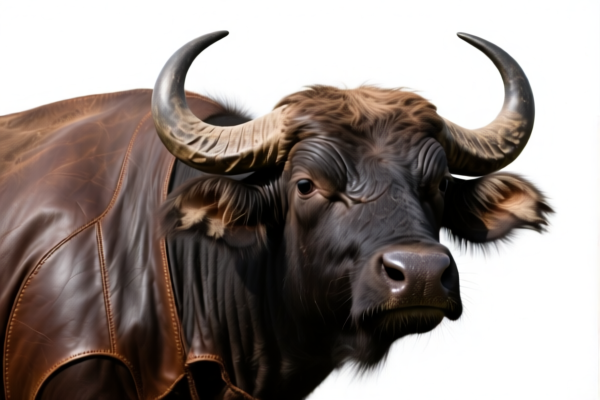
商品图片



AI分析
🧣 Buffalo/Marsh Leather Belt Material (Other)
🌐 HS Code Reference & Customs Clearance Guide | 2026 Latest Tariff Analysis | Professional Clearance Strategy
📌 I. Product Definition and Classification: Do You Really Understand "Leather Belt Material"?
Leather belt materials are the foundational components of the fashion accessory industry. In international trade, they are not simply "leather." They are categorized based on tanning method, surface finish, and intended use.
For the specific input "Buffalo/Marsh Leather Belt Material (Other)", we must distinguish between finished belt blanks and raw semi-finished leather. The classification depends heavily on whether the leather is already cut into "straps" (belting) or remains as general "leather goods" raw material.
⚠️ Key Distinction Point:
- If the material is specifically cut and prepared for belts (straps, blanks) → Likely 4203.30 or 4205.00.
- If the material is general cattle/horsehide (Buffalo/Marsh refers to the animal source or finish style) used for technical conversion or specific non-apparel uses → 4107.12.
- "Buffalo/Marsh" typically refers to a texture or animal hide type (Bison/Buffalo or specific marsh-tanned finishes).
📦 II. HS Code Classification Details (Based on Provided Data)
Below are the applicable HS Codes from your dataset, along with the rationale for why a product described as "Buffalo/Marsh Leather Belt Material" might fall into each category.
| HS Code | Product Description | Rationale for Classification | Total Tax Rate |
|---|---|---|---|
4107.12.70.30 |
Buffalo/Marsh Leather Material, Non-patterned (水牛/大理石纹皮革材料,非花式) |
This code specifically matches the "Buffalo" keyword. It covers untreated or simply tanned cattle/buffalo hides that are not yet cut into specific belt straps or garments. If your material is raw hide/split leather with a "marsh" or "marble" grain texture, this is the primary candidate. | 15.0% |
4203.30.00.00 |
Leather Belt Related Raw Materials or Semi-Finished Goods (皮制腰带相关原材料或半成品) |
If the "Belt Material" is already cut into straps, blanks, or semi-finished belt components intended specifically for belt assembly, it moves from Chapter 41 (Raw Leather) to Chapter 42 (Articles of Leather). This covers the "Belt" aspect of your query. | 37.7% |
4205.00.05.00 |
Leather Raw Material for Technical Use or Shape Conversion (皮革原材料,用于技术用途或转换形状) |
If the Buffalo/Marsh leather is being processed for industrial applications, belts for machinery, or complex shape conversions that don't fit standard apparel or simple belt straps, this "catch-all" for technical leather applies. | 37.9% |
4205.00.40.00 |
Belt Strap Material, Based on Material and Use Consistency (皮带条材质,基于材质与用途一致性) |
Similar to 4203.30, this code explicitly mentions "Belt Strap Material" (皮带条材质). If the product is clearly a strip/strap of leather for belts, and 4203.30 is deemed too narrow for the specific "technical" or "mixed" use, this code applies. It emphasizes the consistency of the material and its use. | 36.8% |
4203.40.60.00 |
Raw Material Category for Leather Garment Accessories (皮制服装附件的原料范畴) |
If the "Belt Material" is actually intended for garment accessories (e.g., belts worn as part of a jacket, decorative leather trims) rather than standalone fashion belts, it may be classified under garment accessories. This is less common for standard belts but possible for fashion-forward items. | 35.0% |
💰 III. Detailed Tariff Rate Breakdown (2026 Latest)
✅ Applicable Country: USA (US)
✅ Origin: China (CN)
✅ Effective Date: 2025/2026 (Current Trade Environment)
🎯 1. 4107.12.70.30 – The "Lowest Cost" Option (Raw Material)
- Description: Buffalo/Marsh Leather Material, Non-patterned.
- Total Tax: 15.0%
- Breakdown:
- Base Duty: 5.0%
- Section 301 Surcharge: 0.0% (No additional 301 tariff for this specific subheading)
- Section 122 Tariff: 10.0% (Added under specific executive orders/IEEPA provisions)
- Why it’s cheaper: It is classified as Chapter 41 (Raw/Hides), not Chapter 42 (Finished/Manufactured Goods). Chapter 41 often faces lower or zero Section 301 tariffs compared to Chapter 42.
- ⚠️ Risk: Customs may reject this if the leather is already cut into belt straps. If it’s just a sheet/roll of leather, this is the best rate.
🎯 2. 4203.30.00.00 – Standard "Belt Materials"
- Description: Leather Belt Related Raw Materials or Semi-Finished Goods.
- Total Tax: 37.7%
- Breakdown:
- Base Duty: 2.7%
- Section 301 Surcharge: 25.0% (Standard 301 tariff for leather goods/articles)
- Section 122 Tariff: 10.0%
- Why it’s higher: It is classified as Chapter 42. Chapter 42 articles are heavily targeted by Section 301 tariffs.
- Use Case: Standard fashion belt blanks, pre-cut belt straps.
🎯 3. 4205.00.40.00 – Belt Strap Material (Specific Use)
- Description: Belt Strap Material, Based on Material and Use Consistency.
- Total Tax: 36.8%
- Breakdown:
- Base Duty: 1.8%
- Section 301 Surcharge: 25.0%
- Section 122 Tariff: 10.0%
- Why it’s slightly lower than 4203.30: The base duty is lower (1.8% vs 2.7%), but the 301 and 122 tariffs are the same. This is a viable alternative if customs prefers "strap" classification over "belt accessory" classification.
🎯 4. 4205.00.05.00 – Technical/Industrial Leather
- Description: Leather Raw Material for Technical Use or Shape Conversion.
- Total Tax: 37.9%
- Breakdown:
- Base Duty: 2.9%
- Section 301 Surcharge: 25.0%
- Section 122 Tariff: 10.0%
- Use Case: If the Buffalo/Marsh leather is used for industrial belts, machinery parts, or non-fashion applications.
🎯 5. 4203.40.60.00 – Garment Accessories
- Description: Raw Material Category for Leather Garment Accessories.
- Total Tax: 35.0%
- Breakdown:
- Base Duty: 0.0%
- Section 301 Surcharge: 25.0%
- Section 122 Tariff: 10.0%
- Why it’s lower: Base duty is 0%. This is the lowest tax rate among Chapter 42 codes.
- Use Case: Only if the "belt material" is actually a garment accessory (e.g., a belt attached to a jacket, or a decorative leather strap for clothing). Do not use this for standalone fashion belts; it will be flagged as misclassification.
🛠️ IV. Customs Clearance Practical Advice (Real-World Pitfall Guide)
✅ 1. Prepare the Correct Documentation
| Document | Required? | Explanation |
|---|---|---|
| ✅ Product Specifications | ✔️ | Must specify: Animal source (Buffalo/Cattle), Tanning method, Finish (Marsh/Marble), Dimensions, Thickness. |
| ✅ Photos of Material | ✔️ | Must show the texture (to prove "Buffalo/Marsh" finish) and state (raw hide vs. cut strap). |
| ✅ Commercial Invoice | ✔️ | Clearly describe as "Leather Material" or "Leather Belting" depending on HS Code. Avoid vague terms like "Leather Parts." |
| ✅ Packing List | ✔️ | Detail rolls or sheets. If cut into strips, state "Cut to Size." |
| ✅ Certificate of Origin (CO) | ✔️ | Required for determining Section 122 tariff applicability. |
✅ 2. Classification Strategy (Critical!)
🔥 "Raw Sheets = Low Tax; Cut Straps = High Tax!"
| Scenario | Recommended HS Code | Tax Rate | Reason |
|---|---|---|---|
| Raw Hide/Split Leather (Buffalo/Marsh finish, not cut) | 4107.12.70.30 |
15.0% | Classifies as Chapter 41 (Raw). No Section 301 tariff. Best Option. |
| Pre-cut Belt Straps (Ready for buckle assembly) | 4203.30.00.00 or 4205.00.40.00 |
36.8% - 37.7% | Classifies as Chapter 42. Subject to 25% Section 301 + 10% Section 122. |
| Belts Attached to Garments (Accessory) | 4203.40.60.00 |
35.0% | Classifies as Garment Accessory. Base duty 0%. Risky if misused. |
| Industrial/Technical Leather Belts | 4205.00.05.00 |
37.9% | Classifies as Technical Use. |
✅ 3. Special Considerations
- "Buffalo" vs. "Cattle": Customs may scrutinize "Buffalo" claims. Ensure the CO and invoice match. If it’s actually cattle leather with a "buffalo grain" finish, declare as Cattle Leather to avoid scrutiny, unless specifically required to declare animal source.
- "Marsh" Finish: This is likely a textural description (grain pattern). Ensure photos clearly show this pattern to justify the description if audited.
- Section 122 Tariff (10%): This applies to all listed codes. It is a non-negotiable surcharge for Chinese-origin leather goods in the current trade climate. Do not expect waivers.
🌍 V. Global Market Comparison (2026)
| Country/Region | Recommended HS Code | Est. Tariff (China Origin) | Notes |
|---|---|---|---|
| 🇺🇸 USA | 4107.12.70.30 |
15.0% | Best if raw. If cut, 4203.30 at 37.7%. |
| 🇨🇳 China | 4107.12.70.30 |
Varies (Low) | Import duties on leather vary. Check local FTAs. |
| 🇪🇺 EU | 4107.12.70.30 |
~0% - 5% | Often lower tariffs for raw hides. Check EBA status. |
| 🇬🇧 UK | 4107.12.70.30 |
~0% - 5% | Post-Brexit tariffs may vary. Check UK Trade Tariff. |
📌 Conclusion:
- The US is the most challenging market due to the combination of Section 301 (25%) and Section 122 (10%) tariffs on Chapter 42 goods.
- Strategy: If your product is not yet cut into final belt shapes, import as Raw Leather (4107.12.70.30) to save ~22-25% in tariffs. Cut/shape it domestically or in a third country (e.g., Vietnam, Mexico) to avoid US Section 301 tariffs if possible.
📌 VI. Common Mistakes & Pitfall Guide (Lessons Learned)
❌ Mistake 1: Declaring cut belt straps as Raw Leather (4107)
👉 Consequence: Customs will reclassify to Chapter 42, apply 25% Section 301 + 10% Section 122, and issue penalties + back taxes.
👉 Solution: Be honest about the state of the goods. If cut, use Chapter 42 codes.
❌ Mistake 2: Using 4203.40.60.00 (Garment Accessory) for Standalone Belts
👉 Consequence: Misclassification. Customs may demand higher duties or reject the entry.
👉 Solution: Only use garment accessory codes for belts that are part of a garment or clearly marketed as such.
❌ Mistake 3: Ignoring Section 122 Tariff (10%)
👉 Consequence: Underpayment of duties.
👉 Solution: Always budget for the 10% Section 122 tariff on all Chinese-origin leather imports to the US in 2026.
✅ Correct Declaration Example:
"Buffalo Grain Cattle Leather, Raw, Unfinished, 1.2mm Thickness, For Belt Manufacturing, CN Origin"
(Use4107.12.70.30if raw/unfashioned)"Pre-Cut Buffalo Leather Belt Strips, 2cm Width, For Fashion Belts, CN Origin"
(Use4203.30.00.00or4205.00.40.00if cut)
🎯 VII. Conclusion: Professional Classification Saves Money!
🎯 Remember the Golden Rule:
🔹 "Raw Sheets = 15%; Cut Straps = ~37%."
🔹 "Section 122 (10%) is mandatory. Section 301 (25%) is the killer for Chapter 42."
📌 Pro Tip:
If you are a manufacturer, consider importing raw leather (4107) and cutting/shaping it outside the US (e.g., in Vietnam or Mexico) to avoid the high Chapter 42 tariffs. If you must import pre-cut belts, ensure your HS Code is 100% accurate to avoid audits.
✨ Professional Clearance Starts with Precise Classification!
💼 Every percentage point of tax savings is pure profit!
用户评价
关于 HS 编码归类
协调制度(HS)是由世界海关组织(WCO)制定的国际贸易商品分类标准。全球 200 多个国家采用 HS 系统作为海关关税、贸易统计和进出口监管的基础。
每个 HS 编码遵循以下层级结构:
- 章(2 位)——商品大类(例如:第 84 章:机器和机械设备)
- 品目(4 位)——章内的更具体分类
- 子目(6 位)——国际通用细分,所有 WCO 成员国统一使用
- 本国细分(8-10 位)——各国自行扩展的细分编码,如美国 HTSUS 10 位编码
正确的 HS 编码归类对于顺利通关、准确缴纳关税和遵守贸易法规至关重要。错误归类可能导致海关延误、多缴关税或罚款。
从CN进口到US时,适用的关税税率可能包括:
- 最惠国(MFN)税率——适用于 WTO 成员国的标准关税税率
- 普通税率——适用于无贸易协定国家
- 贸易救济关税——附加关税,如 301 条款(反倾销)、232 条款(国家安全)或反补贴税
本页内容仅供参考。如需正式归类,请咨询当地海关或持牌报关代理。